
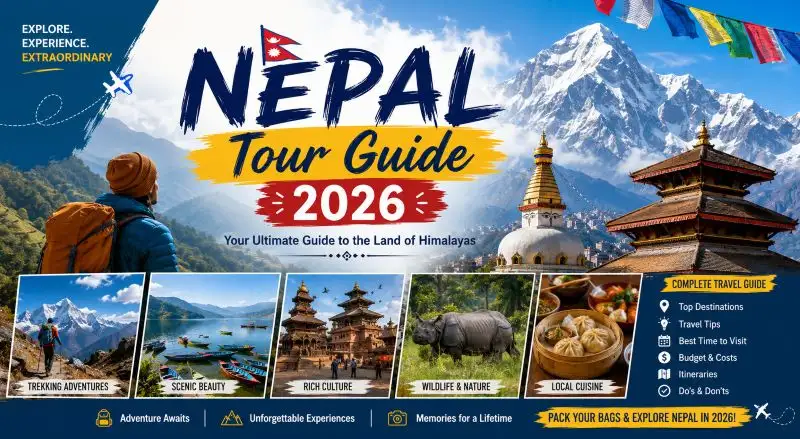
Explore the ultimate Nepal Tour Guide! Discover the best 5 places in Kathmandu & Pokhara for 2026. Get expert tips on sightseeing, budget travel, and more.
Introduction: Nepal Tour Guide – Kathmandu & Pokhara 2026
As you look toward Nepal in 2026, you are preparing for a journey that seamlessly bridges the gap between ancient heritage and breathtaking alpine landscapes. This year is an exceptional time to visit, with updated infrastructure and new travel modes—like high-speed roadwork and scenic cable cars—making the country’s wonders more accessible than ever. Whether your goal is to find spiritual peace in a centuries-old temple or to witness the first light of dawn hitting the world’s highest peaks, Nepal offers an intensity of experience that few other places can match.
The primary focus for most 2026 travelers remains the two “crown jewels”: Kathmandu, a vibrant hub of UNESCO World Heritage sites and deep-rooted culture, and Pokhara, the serene, adventure-filled gateway to the Annapurna range. Navigating these two cities has evolved; while a flight takes just 25 minutes, the scenic road journey now takes roughly 7 to 9 hours due to ongoing highway expansions designed to improve future travel.
In this guide, we dive deep into the essential highlights of 2026, from the golden sunrise at Sarangkot to the spiritual kora at Boudhanath. We will cover practical logistics, including the latest 2026 Price Index for meals and permits, to ensure your trip is as smooth as it is unforgettable. Prepare to be captivated by the “Queen of the Hills” and the bustling heart of the Himalayas.
Why Visit Nepal in 2026?
Nepal is surging in popularity as a top-tier destination for 2026, driven by significant infrastructure upgrades and enhanced road connectivity to remote regions. Travelers can now access iconic trekking circuits and hidden valleys with greater ease and safety. The expansion of boutique teahouses and eco-lodges offers diverse, budget-friendly options that cater to both luxury seekers and backpackers. Beyond the mountains, Nepal’s commitment to sustainable tourism and preserved cultural festivals provides an authentic, high-value experience. Whether you are seeking spiritual rejuvenation or high-altitude adventure, 2026 offers the perfect balance of modern accessibility and timeless Himalayan charm.
- Affordable travel compared to other Asian destinations
- Stunning views of the Himalayas
- Rich cultural and spiritual heritage
- Adventure activities like trekking, paragliding, and rafting
- Friendly locals and diverse cuisine

Choosing Your Base: Kathmandu vs. Pokhara
To truly appreciate Nepal’s diversity, one must understand the distinct personalities of its two primary hubs. While they are separated by only 200 kilometers, they offer vastly different atmospheres for the modern traveler.
- Kathmandu: The Gateway of Heritage:As the nation’s capital, Kathmandu serves as a living museum of Newari architecture and deep-seated spirituality. The city is a sensory tapestry of incense-filled alleys, vibrant street markets, and seven concentrated UNESCO World Heritage sites. It is the definitive destination for those looking to immerse themselves in ancient history, explore intricate pagoda-style temples, and witness the intersection of Hindu and Buddhist traditions in a bustling, high-energy urban environment.
- Pokhara: The Sanctuary of Serenity: In contrast, Pokhara is the “Adventure Capital” of Nepal, defined by its tranquil pace and breathtaking natural backdrop. Situated on the banks of Phewa Lake with the Annapurna Range looming overhead, it acts as the primary staging ground for world-class trekking. Pokhara is tailored for rejuvenation and adrenaline; here, you can spend a morning paragliding or zip-lining, followed by an afternoon of quiet boating or lakeside meditation. It is the ultimate retreat for nature enthusiasts seeking fresh mountain air and scenic vistas.
Top 5 Places in Kathmandu (2026)
1. Pashupatinath Temple
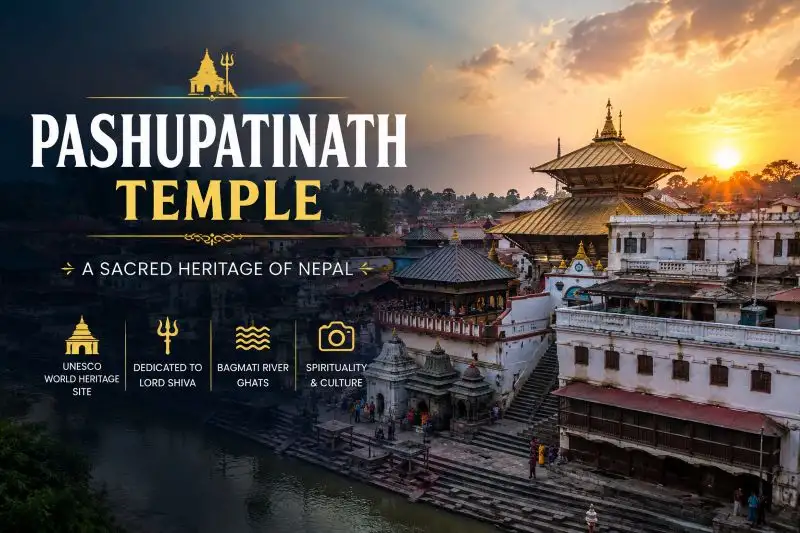
One of the most sacred Hindu temples in the world, Pashupatinath is dedicated to Lord Shiva. It sits along the Bagmati River and is a UNESCO World Heritage Site.
Highlights:
- Spiritual rituals and cremation ceremonies
- Stunning temple architecture
- Cultural insights into Hindu traditions
Travel Tip:
Visit early in the morning for a peaceful experience and to avoid crowds.
2. Boudhanath Stupa
This massive stupa is one of the largest in the world and a center for Tibetan Buddhism.
Highlights:
- Prayer wheels and chanting monks
- Colorful prayer flags
- Peaceful atmosphere
Best Time to Visit:
Evening, when the stupa lights up and locals gather for prayer walks.

3. Swayambhunath
Also known as the Monkey Temple, this hilltop site offers panoramic views of Kathmandu Valley.
Highlights:
- Scenic sunset views
- Buddhist and Hindu symbolism
- Playful monkeys
Pro Tip:
Climb the stairs for the full experience, but be cautious with food around monkeys.
4. Kathmandu Durbar Square
A historic complex showcasing Nepal’s royal heritage and traditional architecture.
Highlights:
- Ancient palaces and temples
- Kumari (Living Goddess) residence
- Local street markets
Entry Fee:
Approximately NPR 1000–1500 for foreigners.
5. Thamel
The heart of tourist activity in Kathmandu, filled with shops, restaurants, and nightlife.
Highlights:
- Budget hotels and hostels
- Souvenir shopping
- Local and international cuisine
Travel Tip:
Perfect place to stay for easy access to major attractions.
Top 5 Places in Pokhara (2026)
1. Phewa Lake
The second-largest lake in Nepal and the most iconic attraction in Pokhara.
Highlights:
- Boat rides with mountain reflections
- Peaceful lakeside cafes
- Sunset photography
2. Sarangkot
Famous for sunrise views over the Himalayas, including Annapurna and Machhapuchhre.
Highlights:
- Breathtaking sunrise
- Paragliding take-off point
- Mountain photography
Best Time:
Early morning (5:00–6:30 AM)
3. Davis Falls
A unique underground waterfall with an interesting local legend.
Highlights:
- Powerful waterfall disappearing underground
- Nearby caves to explore
- Cultural significance
4. Gupteshwor Mahadev Cave
Located near Davis Falls, this cave houses a sacred Shiva temple.
Highlights:
- Natural rock formations
- Spiritual atmosphere
- Waterfall views from inside the cave
5. World Peace Pagoda
A beautiful white stupa overlooking Pokhara city and Phewa Lake.
Highlights:
- Stunning panoramic views
- Peaceful environment
- Ideal for meditation and photography
The Ultimate Nepal Tour Guide: A 7-Day Journey Through the Heart of the Himalayas
Nepal is not just a destination; it is an experience that lingers in the soul. For travelers seeking a blend of ancient spirituality, vibrant urban energy, and breathtaking natural landscapes, a 7-day journey through Kathmandu and Pokhara offers the perfect introduction to the “Roof of the World.”
Day 1–2: The Cultural Pulse of Kathmandu
Your journey begins in the Kathmandu Valley, a sprawling basin where history lives in every brick and incense smoke carries prayers to the heavens.
The Spiritual Landmarks
The first two days are dedicated to the “Big Three” UNESCO World Heritage sites. Start at Pashupatinath, the holiest Hindu temple in Nepal, situated on the banks of the sacred Bagmati River. Observing the rituals here provides a profound look into the cycle of life and death.
Next, find serenity at Boudhanath Stupa, one of the largest spherical stupas in the world. Join the locals in Kora—walking clockwise around the dome—while the giant eyes of Buddha watch over the valley. Follow this with a visit to Swayambhunath, also known as the “Monkey Temple.” Perched atop a hill, it offers a panoramic view of the Kathmandu skyline. The climb is steep, but the sight of golden spires against the blue sky is worth every step.
Urban Energy and Flavors
No trip to Kathmandu is complete without getting lost in the labyrinthine alleys of Thamel. This is the city’s tourist hub, a kaleidoscope of trekking gear shops, bookstores, and artisan crafts. It is the perfect place to pick up prayer flags or hand-woven pashminas.
While exploring, dive into the local culinary scene. Momo (steamed or fried dumplings) is the unofficial national dish; try them with a spicy tomato chutney. It is more than a meal; it is the fuel that powers the nation.
Day 3: The Transit to Tranquility
On Day 3, you leave the bustling capital for the lakeside charm of Pokhara. Travelers generally have two distinct options for this transit:
- The Scenic Highway: A 6 to 8-hour tourist bus journey takes you along the Prithvi Highway. While the road can be bumpy, it offers intimate views of the Trishuli River and the terraced hillsides of rural Nepal.
- The Aerial Route: A short 25-minute flight provides a dramatic perspective of the Himalayan range. On a clear day, you can see the Annapurna and Manaslu ranges stretching across the horizon.
Arriving in Pokhara, the change in atmosphere is immediate. The air is crisper, and the pace of life slows down significantly.
Day 4–5: Pokhara’s Natural Splendor
Pokhara is the gateway to the Annapurna region and is arguably one of the most beautiful lakeside towns in the world.
Sunrise and Sacred Waters
Wake up before dawn on Day 4 for a drive to Sarangkot. As the sun rises, the peaks of Annapurna South, Machhapuchhre (Fishtail), and Dhaulagiri turn from ghostly grey to brilliant gold. It is a cinematic experience that stays with you forever.
After breakfast, head down to Phewa Lake. Rent a brightly colored Doonga (boat) and row to the center of the lake to visit the Tal Barahi Temple. The reflection of the Machhapuchhre peak on the calm water creates a mirror-perfect image that is a photographer’s dream.
Geological Wonders
Spend the afternoon exploring the city’s unique geology. Davis Falls is a fascinating waterfall where the water creates an underground tunnel. Just across the street is the Gupteshwor Mahadev Cave, a limestone cavern housing a sacred Shiva lingam. The sound of the waterfall echoing through the dark cave walls is hauntingly beautiful.
Day 6: Adventure and Reflection
Before your journey ends, Day 6 offers a choice between adrenaline and introspection.
Chasing the Wind
Pokhara is globally renowned for Paragliding. Taking off from Sarangkot, you can soar like a hawk over the lake, with the massive Himalayan peaks as your backdrop. For those who prefer staying closer to the ground, the world’s steepest zip-line is nearby, offering a high-speed thrill through the forest canopy.
The World Peace Pagoda
In the afternoon, hike or drive up to the Shanti Stupa (World Peace Pagoda). This brilliant white monument sits on a ridge overlooking the lake. It is a place of profound silence, designed to inspire peace among people of all races and creeds. Looking back at Pokhara from this height provides a sense of closure to your journey.
Day 7: The Journey Home
As you return to Kathmandu, take a moment to reflect on the transition from the ancient temples of the capital to the alpine beauty of the west. Whether you spend your final hours in Nepal grabbing a last-minute souvenir in Thamel or enjoying a final cup of Himalayan coffee, you leave with more than just photos.
Nepal’s magic lies in its ability to humble you with its mountains and warm you with its hospitality. This 7-day itinerary provides a glimpse into that magic, leaving the door open for your inevitable return to explore the higher trails.
Travel Tips for Your Trip
- Hydration: Always stick to bottled or purified water to ensure your journey remains uninterrupted by health hiccups.
- Best Time to Visit: March to May (Spring) for blossoms or September to November (Autumn) for the clearest mountain views.
- Permits: While this tour doesn’t require trekking permits, keep your passport handy for monument entry fees.
Travel Cost Breakdown (Per Person – 2026)
| Category | Cost (BDT Approx.) |
|---|---|
| Flight (Bangladesh to Nepal) | 15,000 – 25,000 |
| Accommodation | 1,000 – 3,000 per night |
| Food | 800 – 1,500 per day |
| Transport | 2,000 – 5,000 |
| Entry Fees | 1,500 – 3,000 |
Total Estimated Budget:
25,000 – 50,000 BDT (5–7 days trip)
Best Time to Visit Nepal
Choosing the right time can make your trip even better.
Spring (March–May)
- Best for trekking and sightseeing
- Clear skies and blooming flowers
Autumn (September–November)
- Peak tourist season
- Perfect mountain views
Winter (December–February)
- Cold but less crowded
- Budget-friendly
Monsoon (June–August)
- Heavy rainfall
- Not ideal for travel
How to Travel from Bangladesh to Nepal
By Air:
- Direct flights from Dhaka to Kathmandu
- Duration: ~1.5 hours
By Land:
- Via India border (long but cheaper)
Food to Try in Nepal
Nepalese cuisine is simple yet flavorful. Don’t miss:
- Dal Bhat (rice with lentils and curry)
- Momo (dumplings)
- Thukpa (noodle soup)
- Sel Roti (traditional sweet bread)
Travel Tips for Nepal 2026
- Carry cash (Nepalese Rupees)
- Respect local culture and dress modestly
- Bargain in local markets
- Stay hydrated and carry snacks
- Book hotels in advance during peak season
Why Kathmandu & Pokhara Are Must-Visit in Nepal
These two cities perfectly represent the essence of Nepal:
- Kathmandu = Culture, history, spirituality
- Pokhara = Nature, peace, adventure
Together, they create a balanced and unforgettable travel experience.
Final Thoughts
A journey to Nepal in 2026 can become one of the most memorable travel experiences for anyone who loves nature, culture, and adventure. This beautiful Himalayan country offers a perfect combination of breathtaking mountain scenery, spiritual heritage, and affordable travel opportunities. Whether you are walking through the lively streets of Kathmandu or enjoying the calm atmosphere beside the lakes in Pokhara, every destination creates unforgettable memories.
Nepal is not only famous for its stunning landscapes but also for the warmth and hospitality of its people. Travelers can explore ancient temples, colorful local markets, peaceful monasteries, and scenic viewpoints without spending a huge amount of money. From tasting authentic Nepali food to watching the sunrise over the Himalayas, each moment feels special and refreshing.
For budget travelers, Nepal remains one of the best international destinations in South Asia. Affordable hotels, low transportation costs, and inexpensive local meals make it possible to enjoy a fulfilling trip without exceeding your budget. If you are searching for an international getaway filled with culture, natural beauty, and adventure in 2026, Nepal deserves a place at the top of your travel list.
FAQs About Nepal Tour Guide (2026)
1. Is a guide mandatory for trekking in 2026?
Yes. As of the latest 2026 regulations, the Nepal Tourism Board requires all international trekkers to hire a licensed guide for most trekking regions, including the Annapurna and Langtang circuits. This rule is strictly enforced to enhance trekker safety and prevent disappearances in remote areas. Solo trekking is generally prohibited in these “restricted” and “protected” zones.
2. How much does a guide cost per day?
Prices vary based on experience and the region’s difficulty:
- Standard Trekking Guide: $30 – $50 per day.
- Specialized/Multilingual Guide: $60 – $75 per day (for French, Spanish, German, etc.).
- City Tour Guide: $30 – $60 per day for cultural tours in Kathmandu or Pokhara.
- Porters: $20 – $30 per day (carries approximately 20kg).
3. What is the difference between a Guide and a Porter?
A Guide is a licensed professional responsible for navigation, teahouse bookings, safety protocols, and cultural translation. A Porter focuses on physical labor, carrying your heavy gear. For those seeking a middle ground, “Porter-Guides” ($25 – $35) carry a lighter load (approx. 10kg) and provide basic assistance.
4. Can I trek without a guide in 2026?
Legitimate guides must carry a valid ID card issued by the Ministry of Tourism or the Trekking Agencies’ Association of Nepal (TAAN). It is highly recommended to book through a government-registered trekking agency to ensure your guide is insured and technically trained.
5. What are the tipping expectations?
While tipping is not legally required, it is a standard cultural practice. A typical tip for a successful trek is 10% to 15% of the total guide/porter fee, usually presented in a small ceremony or envelope on the final night of the trip.
6. Are there extra costs for restricted areas?
Yes. If you are heading to regions like Upper Mustang or Manaslu, you will need a “Restricted Area Permit” ($100/week or $500/10 days depending on the zone) which can only be processed through a registered agency with a licensed guide.