

Experience the true magic of Rajasthan Culture & Heritage in 2026. Explore vibrant local bazaars, golden desert safaris, and traditional folk dances.
Introduction: Rajasthan Culture & Heritage 2026
In northwestern India, the desert landscape comes alive with a striking burst of colors, the deep resonance of traditional stringed music, and the magnificent profiles of golden sandstone fortresses. This is Rajasthan, the legendary “Land of Kings.” For international explorers, historians, and luxury travelers, the immense depth of Rajasthan Culture & Heritage offers a captivating window into a historic era defined by chivalrous legends, artistic grandeur, and enduring desert lifestyles.
Stepping into 2026, Rajasthan is experiencing a remarkable cultural revival. The state has masterfully integrated its royal legacies with eco-friendly conservation, immersive museum narratives, and interactive heritage tourism. Whether you are walking across the sweeping expanses of the Thar Desert for the first time or venturing off the beaten path to uncover centuries-old stepwells hidden in the rural interior, this updated travel manual serves as your definitive guide to the region.
Today’s Rajasthan invites visitors to experience history as a living, breathing reality rather than a collection of static museum exhibits. Prepare to immerse yourself in legendary hospitality, vibrant local bazaars, and timeless traditions that continue to shape the unique identity of this enchanting desert kingdom.
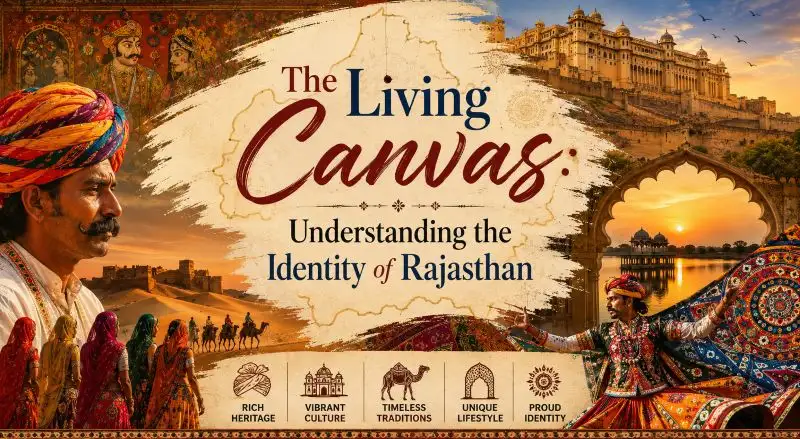
1. The Living Canvas: Understanding the Identity of Rajasthan
To truly grasp Rajasthan Culture & Heritage, one must understand that it was forged in the crucible of harsh desert geography and fierce martial pride. For centuries, the region was carved into independent princely states ruled by Rajput clans, alongside influential mercantile communities like the Marwaris.
The Architectural Blueprint of Royalty
The visual identity of Rajasthan is characterized by structural genius designed to withstand both military siege and extreme climate conditions. The region’s architectural heritage relies on indigenous building materials—such as the pink sandstone of Jodhpur, the yellow stone of Jaisalmer, and the pristine white marble of Makrana. From sprawling palaces featuring intricate cooling screens to stepwells that served as both water reservoirs and subterranean social spaces, the built environment tells a story of unmatched engineering.
The Social Mosaic: Community-Led Traditions
The cultural landscape is kept alive by distinct nomadic and settled communities. The Bhopas are priest-singers who narrate ancient folklore through painted scrolls, while the Rabari herdsmen, instantly recognizable by their massive white turbans and intricate silver jewelry, represent the nomadic pastoral heartbeat of the Thar Desert. It is this human element that ensures Rajasthani culture remains an active, daily practice rather than a static exhibit.
2. Architectural Marvels: The Hill Forts and Iconic Monuments
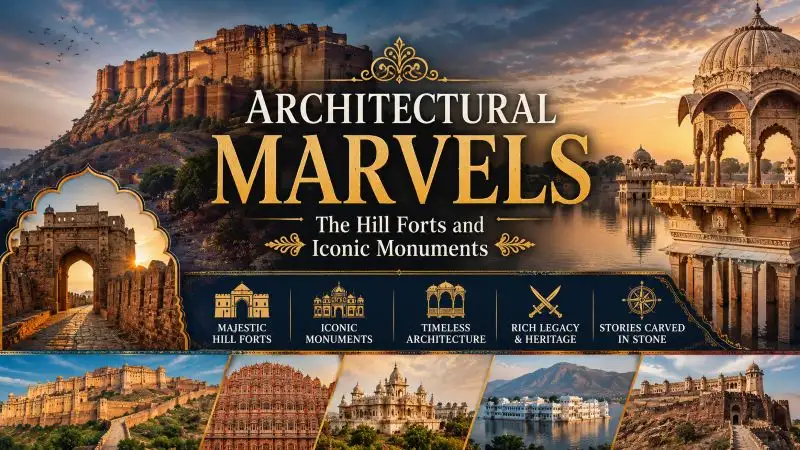
In 2013, UNESCO recognized six magnificent hill forts of Rajasthan as World Heritage Sites. These defensive complexes represent the pinnacle of military architecture, luxury palaces, and water harvesting systems. Exploring these fortresses is essential to understanding the defensive and courtly history of the region.
Chittorgarh Fort: The Epicenter of Chivalry
Sprawling across a 700-acre hilltop, Chittorgarh is the largest fort complex in India. It stands as a profound symbol of Rajput resistance, sacrifice, and romantic tragedy. The Vijay Stambha (Tower of Victory), built by Rana Kumbha to celebrate his triumph over invading armies, is covered in exquisite carvings of Hindu deities. The ruins of Padmini’s Palace overlook water tanks that once sustained thousands of residents during historic military sieges.
Kumbhalgarh Fort: The Infinite Wall
Nestled amidst the rugged Aravali hills, Kumbhalgarh boasts the second-longest continuous wall on Earth, stretching over 22 miles (36 kilometers). The fort is practically impenetrable due to its strategic position, hidden high within mountain folds. Inside, the Badal Mahal (Cloud Palace) offers panoramic views of the hills and valleys below, looking particularly mystical during the monsoon season.
Mehrangarh Fort: The Citadel of the Sun
Looming 400 feet above the blue-painted houses of Jodhpur, Mehrangarh is a masterpiece of vertical design. Mark Twain once described it as “the work of titans.” The fort’s museum houses an unparalleled collection of royal palanquins, weaponry, and miniature paintings. In 2026, the fort features newly integrated audio-visual rooms that simulate the sights and sounds of historic royal court proceedings.
Jaisalmer Fort: The Living Golden Fortress
Unlike other fortresses that function primarily as museums, Jaisalmer Fort (Sonar Qila) is a living ecosystem. Nearly a quarter of the old city’s population still resides within its sandstone walls. Built directly on the Trikuta Hill in the heart of the Thar Desert, the entire structure glows with a warm, honey-like hue at sunset, making it one of the most photogenic destinations in India.
3. The Rhythm of the Dunes: Folk Music and Dance Traditions of Rajasthan
Music and dance are the lifeblood of Rajasthan. In a region where water is scarce, creativity flows in abundance. The performing arts are traditionally preserved by specific hereditary communities of musicians and dancers who have passed down their crafts for generations.
The Melodies of the Desert: Langas and Manganiyars
The Langas and Manganiyars are two Muslim communities of folk musicians who historically performed for royal Rajput patrons. Their music features deep vocal delivery accompanied by traditional stringed and percussion instruments:
- The Kamaicha: A rare, 17-stringed instrument carved from a single piece of mango wood with a goatskin soundboard, producing a rich, haunting melody that echoes across the desert.
- The Khartal: Handheld wooden clappers made from teak wood, played with incredible speed and rhythmic complexity.
Iconic Dance Forms
The Chari Dance: Hailing from the Kishangarh region, this performance requires immense balance. Female dancers carry lit brass pots topped with burning cotton seeds on their heads while performing intricate footwork.
The Ghoomar Dance: Originally performed by the Bhil tribe and later adopted by Rajput royalty, this graceful dance involves women wearing swirling, heavily embroidered skirts called ghaghras. The beauty lies in the synchronized pirouettes that reveal intricate patterns on the fabric.
The Kalbeliya Dance: Recognized by UNESCO as Intangible Cultural Heritage, this energetic dance is performed by the snake-charmer community. Dancers wear flowing black costumes adorned with silver embroidery, mimicking the sensuous movements of a cobra to the rhythm of the pungi (woodwind instrument).

4. Masterpieces of Craftsmanship: Textiles, Art, and Pottery of Rajasthan
The artistic heritage of Rajasthan is an explosion of color, deliberately developed to counteract the monochrome landscape of the desert. The state’s traditional crafts are celebrated globally for their technical precision and use of organic elements. In 2026, a massive royal craft revival in Jaipur has brought historical patterns back to the global fashion stage.
The Textile Revolution: Block Printing and Bandhani
- Sanganeri and Bagru Block Printing: Utilizing hand-carved wooden blocks, artisans near Jaipur stamp intricate floral and geometric patterns onto fine cotton and silk fabrics. Bagru prints are famous for their eco-friendly approach, relying exclusively on natural vegetable dyes like indigo, madder root, and turmeric.
- Bandhani (Tie-Dye): This highly skilled textile technique involves tying thousands of tiny knots into a piece of fabric before dipping it into vibrant dye baths. When untied, it creates dazzling, wave-like configurations known as Leheriya.
Jaipur Blue Pottery
Introduced to India via Persian artistic influences, Jaipur’s signature blue pottery is unique because it is made without using clay. Instead, artisans craft a paste from ground quartz, glass, fuller’s earth, and water. The pottery is decorated with cobalt blue and copper green mineral oxides before being fired at low temperatures, resulting in delicate, semi-translucent vessels that never develop structural cracks.
Vanishing Arts: Jal Sanjhi Water Paintings
A highly specialized form of heritage art gaining immense traction among 2026 travelers is Jal Sanjhi, found in Udaipur. This incredible technique involves creating intricate devotional paintings entirely on the surface of water using natural mineral powders. Thanks to modern experiential tourism initiatives, travelers can now visit local ateliers to see master artists execute these delicate, floating masterpieces before they dissolve.
Meenakari and Jadau Jewelry
Rajasthan, particularly Jaipur, remains the gemstone cutting and jewelry capital of India. Meenakari involves the intricate art of engraving and enameling precious metals with rich mineral colors, while Jadau is a specialized technique where pure, unrefined gold is pressed around precious gemstones without the use of chemical adhesives.
5. What’s Fresh in 2026: Festivals, Events, and Travel Innovations of Rajasthan
The year 2026 marks a magnificent era for cultural tourism in Rajasthan. The state has invested heavily in digital accessibility, community-led rural homestays, and eco-conscious heritage conservation. Major exhibition spaces, like the newly restored Sabha Niwas hall inside Jaipur’s City Palace, now use digital touchscreens alongside ancestral artifacts to offer deep historical context.
The 2026 Festival Calendar Highlights
- January: Camel Festival & Shekhawati Revival: Kickstart the year in Bikaner with grand camel parades and beauty pageants. Simultaneously, the Shekhawati Festival in Sikar brings travelers deep into rural Rajasthan to explore historic mercantile havelis through organized heritage walks, fresco painting workshops, and traditional games like the Matka Race.
- February: Maru Mahotsav (Jaisalmer Desert Festival): Set against the sweeping Sam Sand Dunes, the 2026 edition of Maru Mahotsav has broken international attendance records. Global travelers flock here for turban-tying competitions, camel polo matches, and late-night open-air concerts where folk legends perform under a clear desert sky.
- March: Rajasthan State Foundation Day & Gangaur: In March, the entire state celebrates its foundation day with multi-day programs including police tattoo shows, grand closing ceremonies, and military pageants. This is followed immediately by the Gangaur Festival, where local women dress in fine traditional attire to carry beautifully decorated clay idols of Lord Shiva and Goddess Parvati through the historic streets of Jaipur.
- July: The Royal Monsoon Teej: Marking the arrival of the life-giving monsoon rains, the Teej Festival features grand royal processions wind through the Pink City. Beautifully adorned elephants, palanquins, and bullock carts pass by rows of spectators, capturing the timeless pageantry of old Marwar traditions.
- November: Pushkar Camel Fair: One of the world’s absolute largest livestock fairs continues to blend frantic animal trading with deeply spiritual lakeside rituals. Tens of thousands of pilgrims gather at Pushkar Lake for evening lamp-lighting ceremonies, creating a mesmerizing spectacle of fire and devotion.
6. Culinary Heritage: Tasting the Royal and Desert Flavors of Rajasthan
To experience the true depth of Rajasthan Culture & Heritage, one must explore its distinct culinary landscape. Traditional Rajasthani cuisine was heavily influenced by the scarcity of water, the absence of fresh green vegetables, and the logistics of long-lasting military campaigns.
The Staples of Desert Survival
- Dal Baati Churma: The undisputed national dish of Rajasthan. Baati consists of dense, unleavened whole wheat dough balls baked over charcoal and soaked in pure clarified butter (ghee). It is served alongside a savory lentil soup (Dal) and a sweet, coarsely ground wheat mixture (Churma).
- Ker Sangri: A true testament to human adaptability, this dish combines dried desert berries (Ker) and wild beans (Sangri) unique to the Thar Desert. Sauteed with local spices and oil, it yields a tangy flavor profile and can be preserved for days without refrigeration.
The Royal Non-Vegetarian Legacy
While the majority of Rajasthan’s population is traditionally vegetarian, the Rajput nobility developed an elite hunting cuisine. The most famous example is Laal Maas (Red Meat), a slow-cooked mutton curry prepared with a fiery paste of local Mathania red chilies, garlic, and ghee, creating a rich, smoky dish designed to mask the gamey flavor of wild meats.
7. Practical Logistics for the Cultural Explorer in Rajasthan 2026
Navigating Rajasthan comfortably requires a thoughtful blend of historical curiosity and practical preparation. Use these essential travel tips to maximize your 2026 itinerary:
The Best Time to Visit
The ideal window to explore Rajasthan is during the cooler winter months, running from October to March. During this period, daytime temperatures range between a comfortable 68°F to 82°F (20°C to 28°C), making it ideal for walking tours of forts and cities. Summer temperatures (April to June) can easily exceed 113°F (45°C), which completely halts afternoon sightseeing.
Transportation Methods
- By Luxury Rail: For a classic experience, travelers can book a journey on the Palace on Wheels, a luxury heritage train that recreates the personal carriages of the former Maharajas.
- By Private Car: For flexibility, hiring a private air-conditioned car with a local driver is highly recommended. The state’s major highways connecting Jaipur, Jodhpur, and Udaipur are excellent, though rural mountain passes near Kumbhalgarh require experienced handling.
Cultural Etiquette and Respect
- Sacred Spaces: When visiting historic temples (such as the Dilwara Jain Temples in Mount Abu or the Brahma Temple in Pushkar), visitors must remove their shoes and dress conservatively, ensuring shoulders and knees are fully covered.
- Photography: While Rajasthan is immensely photogenic, always ask for permission before taking close-up portraits of local residents, holy men, or artisans. Many historical museums charge a nominal fee for camera equipment.
8. The Ultimate 12-Day Royal Rajasthan Itinerary
This optimized, balanced itinerary connects the iconic “Imperial Triangle” of Rajasthan while including crucial detours into rural heritage zones.
Days 1–3: The Pink City (Jaipur)
Begin your journey by exploring the massive ramparts of Amber Fort, marveling at the geometric symmetry of the Hawa Mahal, and viewing the royal astronomical instruments at the Jantar Mantar observatory. Spend an afternoon in the Sanganer neighborhood participating in a hands-on block printing workshop with local master craftsmen.
Days 4–5: Sacred Waters and Hidden Stepwells (Pushkar & Bundi)
Drive to the holy town of Pushkar to witness evening prayers along the lakeside ghats. On the following day, head south to Bundi, an off-the-beaten-path heritage town famous for its pristine, architectural stepwells and intricate murals inside the Bundi Palace.
Days 6–8: The Blue City (Jodhpur)
Tour the majestic Mehrangarh Fort, taking advantage of the new interactive exhibits. Wander through the old city’s narrow lanes to see the iconic indigo-washed houses. In the evening, enjoy a private musical performance by Langa and Manganiyar musicians over a traditional dinner overlooking the illuminated fort walls.
Days 9–12: The City of Lakes (Udaipur & Ranakpur)
On your way south, stop at the mid-15th century Ranakpur Jain Temple, an architectural marvel featuring over one thousand uniquely carved marble pillars. Once in Udaipur, explore the grand City Palace complex along the shores of Lake Pichola, take a sunset boat ride past the pristine Lake Palace, and visit the Shilpgram crafts village to purchase authentic local souvenirs directly from rural tribal artisans.
Conclusion: The Timeless Allure of the Desert Kingdom
The true enchantment of Rajasthan Culture & Heritage lies in its spectacular continuity. In this iconic region of northwestern India, history is far from a forgotten concept locked inside dusty textbooks; instead, it serves as the pulsing, active foundation of modern daily life. Walking through a bustling Rajasthani bazaar allows you to breathe in the exact same aromas of rich cardamom, floral attar perfumes, and freshly roasted spices that greeted weary caravan traders centuries ago along ancient trade routes.
As Rajasthan moves confidently through 2026, it stands as an inspiring global model for how a destination can meticulously safeguard its historical treasures while dynamically embracing modern innovation. The state’s towering sandstone fortresses, hypnotic musical rhythms, and the legendary warmth of its communities extend a timeless invitation to travelers across the world.
Rather than asking you to be a passive observer looking at relics through glass displays, Rajasthan invites you to step across the threshold and fully immerse yourself in its living history. By embracing the deeply rooted local philosophy of “Padharo Mhare Desh” (Welcome to My Land), you are welcomed to actively participate in ancient traditions and write your very own unforgettable chapter in this desert kingdom’s ongoing story.