
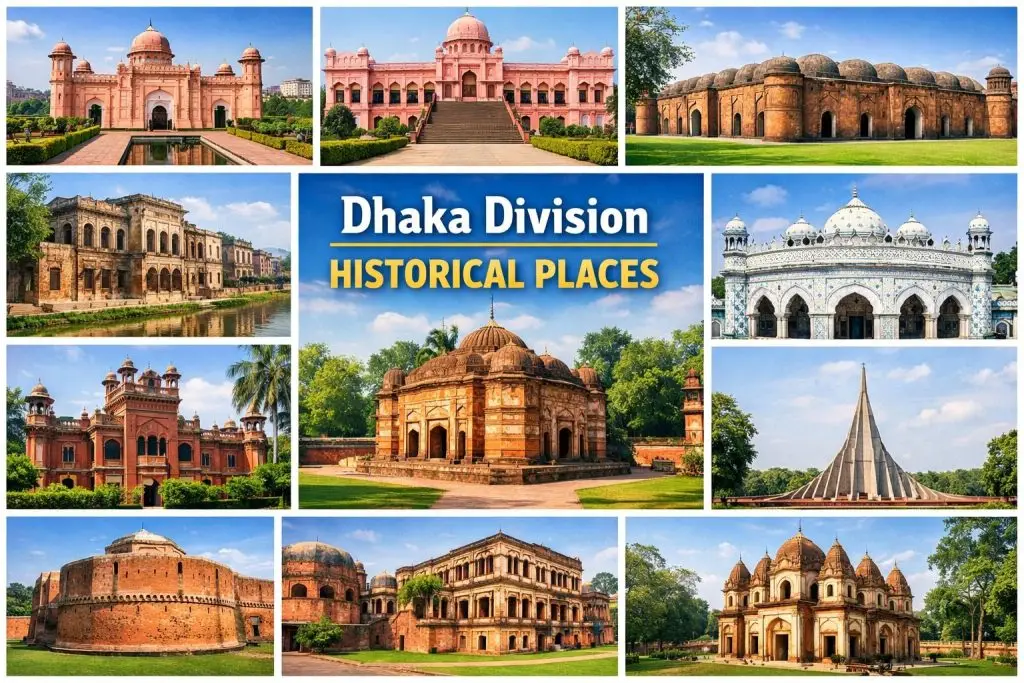
Historical Place In Dhaka Bangladesh showcases Mughal forts, ancient palaces, mosques, and heritage sites reflecting the city’s rich history and culture.
Introduction – Historical Place In Dhaka
Best 10 Historical Place In Dhaka Division showcase the rich heritage, culture, and ancient history of Bangladesh. From iconic landmarks like Ahsan Manzil and Lalbagh Fort to centuries-old mosques, temples, and archaeological sites, this region offers a fascinating journey through time. Exploring these best 10 Dhaka Division historical places helps travelers, students, and history lovers understand the roots of Bengali civilization while discovering must-visit destinations for cultural tourism in Bangladesh.
For centuries, this region has been the center of political power, trade, culture, and education. From ancient capitals and Mughal forts to colonial palaces and national monuments, Dhaka Region offers travelers a deep and meaningful journey through time. For history lovers and cultural travelers, exploring the historical places of Dhaka Division is not just sightseeing—it is an experience of understanding the roots of Bengal civilization.
This article presents the best 10 Dhaka Division historical places, with detailed historical background, travel-friendly information, best visiting time, and practical tips, making it ideal for tourists and researchers alike.
Dhaka Was Famous For: A Brief Historical Overview
Dhaka was famous for its rich history, fine craftsmanship, and vibrant culture. During the Mughal era, the city gained worldwide recognition for producing muslin fabric, one of the finest textiles ever made, exported to Europe and the Middle East. Located along major rivers, Dhaka was famous for its thriving river trade and commerce, attracting merchants from across Asia.
The city was also famous for its stunning Mughal and colonial architecture, including Lalbagh Fort and Ahsan Manzil, which highlight its historical importance. Additionally, Dhaka was famous for its diverse culture, traditional festivals, and flavorful cuisine, especially Old Dhaka’s biryani and kebabs.
Even today, Dhaka remains famous for blending centuries-old heritage with modern urban life, making it one of South Asia’s most historically significant cities.

Dhaka Culture and Heritage Through the Ages
Dhaka, the vibrant capital of Bangladesh, is a city where history, culture, and heritage have merged over centuries. The story of Dhaka culture and heritage through the ages showcases the city’s transformation from ancient settlements to a modern metropolis while preserving its rich traditions and historical significance.
Ancient Roots of Dhaka
The cultural foundation of Dhaka dates back to early Bengal, where Hindu and Buddhist influences shaped art, religious practices, and social life. These early traditions continue to influence festivals, crafts, and local customs in the city today, highlighting Dhaka’s long-standing cultural identity.
Mughal Influence
The Mughal era was a golden period for Dhaka culture and heritage through the ages. As the capital of Mughal Bengal in the 17th century, Dhaka gained fame for its fine muslin textiles, thriving trade, and magnificent architecture. Landmarks such as Lalbagh Fort, Choto Katra, and Bara Katra remain symbols of Mughal elegance. This period also shaped Dhaka’s culinary traditions, introducing rich flavors and royal dishes that are still enjoyed today.
Colonial Legacy
British colonial rule added another layer to Dhaka’s heritage. Colonial architecture, educational institutions, and administrative centers influenced the city’s urban layout and modern governance. Despite foreign influence, traditional Bengali culture continued to thrive alongside these changes.
Festivals and Traditions
Dhaka’s festivals, including Pahela Baishakh, Eid, and Durga Puja, highlight its cultural diversity. Folk music, dance, and traditional crafts are integral to city life, ensuring that Dhaka culture and heritage through the ages remain vibrant and alive.
Old Dhaka: The Cultural Heart
Old Dhaka preserves the city’s history with narrow streets, ancient mosques, temples, and bustling markets. Famous local foods like biryani and bakarkhani reflect centuries-old culinary traditions, making it a living museum of Dhaka’s past.
Dhaka today balances modern life with deep-rooted traditions, making its culture and heritage a unique experience for both residents and visitors.
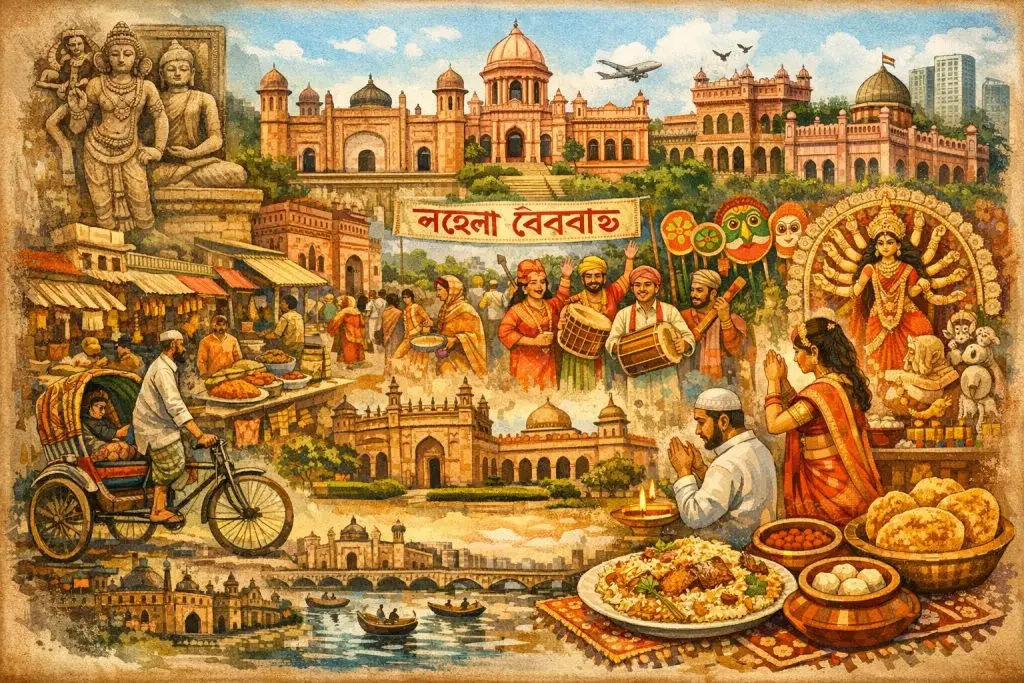
Dhaka Food Evolution: Traditional Flavors to Modern Delights
Dhaka, the bustling capital of Bangladesh, is not only rich in history and culture but also a paradise for food lovers. The story of Dhaka food evolution: traditional flavors to modern delights reflects how centuries-old culinary traditions have blended with contemporary tastes, creating a diverse and dynamic food scene.
Traditional Flavors of Old Dhaka
Old Dhaka remains the heart of the city’s culinary heritage. Narrow streets and historic neighborhoods are famous for their iconic dishes, including kacchi biryani, bakarkhani, kebabs, and nihari. These foods, often influenced by Mughal-era recipes, have retained their rich flavors and traditional cooking methods. Street vendors, local sweet shops, and centuries-old eateries keep these authentic tastes alive, giving visitors a glimpse into the city’s gastronomic past.
Transition to Modern Cuisine
In recent years, Dhaka’s food scene has expanded to include modern cafes, fusion restaurants, and international cuisines. Dhaka food evolution: traditional flavors to modern delights is visible in dishes that creatively combine local spices with global cooking techniques. From contemporary street food innovations to elegant fine dining, the city now offers a variety of options for every palate.
Festivals and Food Culture
Food remains central to Dhaka’s culture and celebrations. Festivals like Eid, Pahela Baishakh, and Durga Puja showcase both traditional and modern culinary creations. These events highlight the continuity of cultural heritage while embracing new tastes and trends.
The journey of Dhaka food evolution: traditional flavors to modern delights tells a story of resilience, creativity, and cultural pride. From the historic streets of Old Dhaka to modern urban eateries, the city offers a rich gastronomic experience that bridges centuries-old traditions with contemporary innovation. Exploring Dhaka’s food scene is not just a culinary adventure but also a journey through the city’s history and culture.

Dhaka Division Historical Places
The Dhaka Region is one of the most historically significant areas in Bangladesh, rich with Mughal, colonial, and ancient heritage sites. Exploring the historical places in the Dhaka Region offers travelers a fascinating journey through centuries of culture, architecture, and tradition.
Iconic landmarks such as Lalbagh Fort showcase the grandeur of Mughal architecture, while Ahsan Manzil, also known as the Pink Palace, reflects the legacy of the Nawabs of Dhaka. The historic streets of Old Dhaka are home to ancient mosques, temples, and colonial-era buildings that preserve the city’s cultural identity.
Beyond the city, the Dhaka Region also includes important heritage sites like Panam Nagar in Sonargaon, a former capital of Bengal known for its historic merchant houses. These Dhaka Region historical places highlight the area’s role as a political, cultural, and commercial center for centuries.
Visiting the historical places of the Dhaka Region is a must for anyone seeking to understand Bangladesh’s rich past and vibrant heritage.
1. Lalbagh Fort – The Symbol of Mughal Dhaka
Location: Old Dhaka
Best Time to Visit: November to February
Weekly Off Day: Monday
Lalbagh Fort is the most iconic historical monument in the Dhaka Division. Built in 1678 during the Mughal period by Prince Muhammad Azam, the fort was intended to be a grand imperial complex. Although it remained unfinished, Lalbagh Fort still stands as a powerful example of Mughal architectural excellence.
The fort complex includes a mosque, the tomb of Pari Bibi, gardens, water channels, and defensive walls. Walking through Lalbagh Fort offers travelers a peaceful break from Dhaka’s busy streets.
Travel Tips
Visit early in the morning to avoid crowds. Photography is best in soft daylight. Wear comfortable shoes for walking.
2. Ahsan Manzil – The Pink Palace of Old Dhaka
Location: Buriganga Riverbank
Best Time to Visit: Morning hours Weekly
Off Day: Thursday
Ahsan Manzil, widely known as the Pink Palace, was once the residence of the Nawabs of Dhaka. Built in the 19th century, this magnificent building played a significant role during the British colonial period.
Today, Ahsan Manzil operates as a museum showcasing furniture, paintings, documents, and lifestyle artifacts of the Nawab family. The palace’s riverside location adds extra charm for visitors.
Travel Tips
Combine your visit with a riverfront walk. Avoid weekends for a quieter experience. Allocate at least 1–2 hours.
3. Sonargaon – The Ancient Capital of Bengal
Location : Narayanganj
Best Time to Visit : Winter season
Weekly Off Day: No fixed off day
Sonargaon is one of the oldest historical cities in Bangladesh and served as the capital of Bengal during various periods. It was once a thriving center of trade, administration, and culture.
The area includes ancient ruins, traditional craft centers, and museums that reflect Bengal’s rich heritage. Sonargaon is perfect for a full-day trip from Dhaka.
Travel Tips
Hire a local guide for historical context. Carry water and sun protection. Ideal for family and educational tours
4. Panam Nagar – The Forgotten Merchant City
Location: Sonargaon
Best Time to Visit: Late afternoon
Weekly Off Day: No official off day
Panam Nagar is one of the most unique historical places in the Dhaka Division. This abandoned city features rows of beautifully designed buildings that once belonged to wealthy merchants during the colonial era.
Walking through Panam Nagar feels like stepping into a frozen past, making it a favorite destination for photographers and heritage travelers.
Travel Tips
Visit before sunset Avoid touching fragile structures. Maintain safety rules
5. Mainamati Ruins – Ancient Buddhist Heritage
Location: Comilla
Best Time to Visit: November to February
Weekly Off Day: Ruins open daily (Museum closed on Thursday)
Mainamati is an important archaeological site dating back to the 7th–12th centuries. It was once a major center of Buddhist learning and culture. Visitors can explore ancient monasteries, stupas, and relics surrounded by green landscapes. The on-site museum provides valuable historical insights.
Travel Tips:
Visit the museum first for background knowledge. Respect archaeological restrictions Wear light clothing
6. Dhakeshwari National Temple – Spiritual Heritage of Dhaka
Location: Old Dhaka
Best Time to Visit: Morning or festival days
Weekly Off Day: No off day
Dhakeshwari Temple is the oldest Hindu temple in Dhaka and is considered the national temple of Bangladesh. The temple represents centuries-old Hindu traditions and religious harmony. The peaceful environment makes it a meaningful stop for spiritual travelers.
Travel Tips
Dress modestly Respect prayer times Festival visits offer cultural insight.
7. Bara Katra – Mughal Trade and Travel Center
Location: Old Dhaka
Best Time to Visit: Daytime
Weekly Off Day: No official off day
Bara Katra was built in the 17th century as a caravanserai for traders and travelers during the Mughal era. Though partially ruined, its grand gateway still reflects Mughal urban planning.
Travel Tips:
Visit with a local guide. Combine with the Old Dhaka walking tour. Best explored during daylight
8. Central Shaheed Minar – Monument of Language Movement
Location: Dhaka University
Area Best Time to Visit: Early morning or evening
Weekly Off Day: No off day
Central Shaheed Minar commemorates the martyrs of the 1952 Language Movement. This monument holds deep emotional and historical importance for Bangladesh. Visiting the Shaheed Minar helps travelers understand the cultural struggle behind the Bengali language.
Travel Tips: Maintain respectful silence February visits are historically significant. Ideal for short cultural stops
9.Jatiya Sangsad Bhaban – National Parliament House
Weekly Off Day: No off day (exterior only)
Interior Visit: Permission required
Best Time to Visit: Late afternoon to sunset Ideal Visit
Duration: 30–60 minutes
Jatiya Sangsad Bhaban, the National Parliament House of Bangladesh, is one of the most internationally recognized architectural masterpieces in South Asia.
Designed by legendary American architect Louis I. Kahn, this monumental complex represents democracy, modernism, and national identity. Construction began in the 1960s and was completed in 1982, making it a symbol of both architectural brilliance and political history.
The building stands on a vast landscaped area surrounded by an artificial lake, open green fields, and geometric concrete forms. Even without entering the interior, the exterior design alone attracts thousands of visitors every year. Historical & Architectural Importance Jatiya Sangsad Bhaban is globally admired for its bold geometric shapes, massive concrete walls, and dramatic use of natural light.
Louis Kahn’s design philosophy focused on simplicity, symmetry, and spiritual presence rather than decoration. This building is frequently included in international architecture textbooks and academic studies and is considered one of the finest examples of 20th-century modern architecture.
Visitor Experience (Exterior) Tourists are allowed to walk around the outer perimeter and enjoy views from different angles. The reflection of the building on the surrounding water creates a stunning visual experience, especially during sunset.
The open area around the complex is calm, clean, and ideal for slow walking, photography, and quiet observation. Interior Visit Information Interior access is not open to general tourists Special permission is required from authorities Usually reserved for official guests, diplomats, or academic groups
Travel-Friendly Tips
Best viewed at sunset for golden-hour photography Visit during winter months for comfortable weather Tripods may be restricted near security zones Follow all security instructions strictly Do not attempt unauthorized entry.
10. Baliati Zamindar Bari – Colonial Aristocracy
Location: Manikganj
Best Time to Visit: Daytime
Weekly Off Day: No fixed off day
Baliati Zamindar Bari is a grand palace complex built during the British colonial period. The architecture reflects European influence blended with local styles. This site is ideal for travelers interested in colonial history and heritage photography.
10 Travel Guide Tips Dhaka Historical Places
Dhaka is the heart of Bangladesh’s history, featuring ancient forts, Mughal architecture, colonial buildings, mosques, temples, and archaeological sites.
Our expert travel guides help you explore the best Dhaka’s historical places with ease and confidence. From planning your route to choosing the right season, these guides cover everything you need to know about visiting famous landmarks like Ahsan Manzil, Lalbagh Fort, Sonargaon, and Panam Nagar. Each of our historical travel guides includes tips on transportation, entry fees, nearby food spots, and cultural etiquette, making your journey smooth and enjoyable. Whether you are a student, tourist, or history lover, our Dhaka Region travel guides ensure you don’t miss any important heritage sites while discovering the rich history of Bangladesh in the best possible way.
1. Visit in the Best Season
The best time to explore historical places in Dhaka is November to February, when the weather is cool and ideal for outdoor sightseeing.
2. Start Your Tour Early
Early morning visits help you avoid crowds and traffic while enjoying peaceful exploration of heritage sites.
3. Respect Cultural & Religious Values
Most historical places in Dhaka Region are active religious or cultural sites. Dress modestly and respect local traditions.
4. Use Convenient Local Transport
Public buses, metro rail, rickshaws, and ride-sharing services are the best ways to reach historical places in Dhaka city and nearby districts.
5. Hire a Local Guide
Local guides provide deep historical knowledge and hidden stories about Dhaka Region heritage sites.
6. Keep Cash for Local Areas
Many rural and archaeological sites in Dhaka Region do not support digital payments. Carry small cash notes for convenience.
7. Stay Prepared for Weather
Carry an umbrella, sunscreen, and drinking water, especially when visiting open historical places.
8. Follow Photography Rules
Some Dhaka Region historical places restrict photography. Always check and take permission before capturing photos.
9. Plan Multi-Spot Routes
Combine nearby historical places in one trip to save time and cost while maximizing your travel experience.
10. Support Local Tourism
Buy local food, crafts, and services to support communities around historical places in Dhaka Region.
Conclution
In conclusion, exploring the best 10 Dhaka Division historical places is the perfect way to experience the rich heritage and cultural legacy of Bangladesh. From ancient forts and royal palaces to historic mosques and archaeological sites, these best 10 historical places in Dhaka Region offer unforgettable journeys into the past. Whether you are a student, traveler, or history lover, visiting these landmarks helps you better understand Bangladesh’s identity while enjoying meaningful cultural tourism experiences.
Beautiful Dhaka!