
Google Adsense Approval Requirement 2026. Learn essential tips, policies, and strategies to get your new website approved without rejection.
Introduction: Google Adsense Approval Requirement
Getting approved for AdSense is one of the most important milestones for any new website owner aiming to earn online. Whether you manage a personal blog, a news portal, or a niche-focused content site, AdSense allows you to monetize your traffic and turn your hard work into consistent income. It’s a trusted advertising platform that connects publishers with advertisers, displaying relevant ads to your audience. However, despite its popularity, many beginners fail to get approval on their first attempt. The main reason is a lack of understanding of the Google Adsense Approval Requirements and how strictly they are applied.
In 2026, AdSense policies have become more focused on quality, user experience, and authenticity. Websites that lack original content, proper structure, or essential pages often face rejection. This is why it’s crucial to prepare your site before applying. In this complete guide, you’ll learn everything step by step—from the basic requirements like content quality and site design to advanced tips that increase your chances of fast approval. By following these proven strategies, you can avoid common mistakes, improve your website’s credibility, and significantly boost your chances of getting approved without delays.
What Is Google Adsence
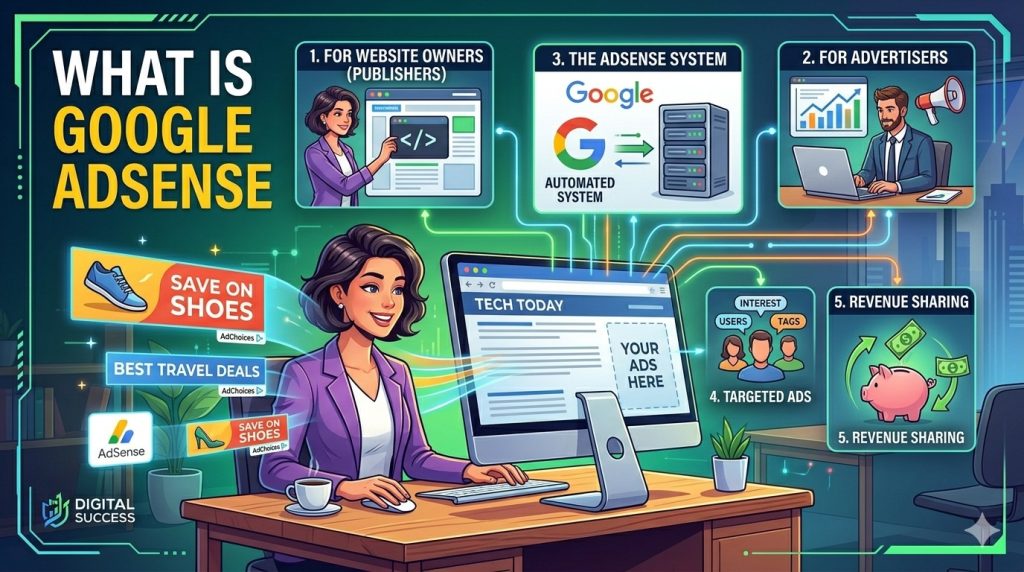
Google AdSense is one of the most popular advertising programs developed by Google that allows website owners, bloggers, and content creators to earn money online by displaying ads on their websites. It works as a bridge between advertisers who want to promote their products or services and publishers who have websites with traffic. Advertisers pay Google to show their ads, and Google shares a portion of that revenue with the website owners who publish those ads.
Once your website is approved for AdSense, the system automatically places relevant ads on your pages based on your content and visitors’ interests. This makes it easy for beginners to start earning without directly dealing with advertisers. You don’t need to manage ad placements manually, as Google handles everything through its automated system.
The main way you earn money is when visitors view or click on these ads, depending on the ad type and campaign. The more quality traffic your website gets, the higher your earning potential becomes. AdSense is widely used because it is free to join, easy to set up, and suitable for almost any type of content website, making it a reliable income source for digital publishers worldwide in 2026.
Why Understanding Google Adsense Approval Requirements Matters
Many new websites get rejected from Google AdSense simply because they fail to meet the basic quality and policy standards. Most beginners focus only on applying quickly, but they ignore important factors like content quality, website structure, and user experience. As a result, their applications are often denied, even if their website has potential.
Knowing the exact Google Adsense Approval Requirements helps you build a strong foundation before applying. It allows you to prepare your site properly, avoid common mistakes, and increase your chances of approval. When you clearly understand what Google expects, you can create a professional, policy-compliant website that stands a much better chance of getting accepted.
- Avoid unnecessary rejection – Helps you meet AdSense standards properly and prevents your website from getting rejected.
- Save time and effort – Lets you prepare your site correctly once instead of repeatedly fixing and reapplying.
- Build a high-quality website – Encourages better content, design, and user experience for long-term success.
- Get approval on the first try – Increases your chances of passing AdSense review without multiple rejections.
Google Adsense Approval Requirements for 2026
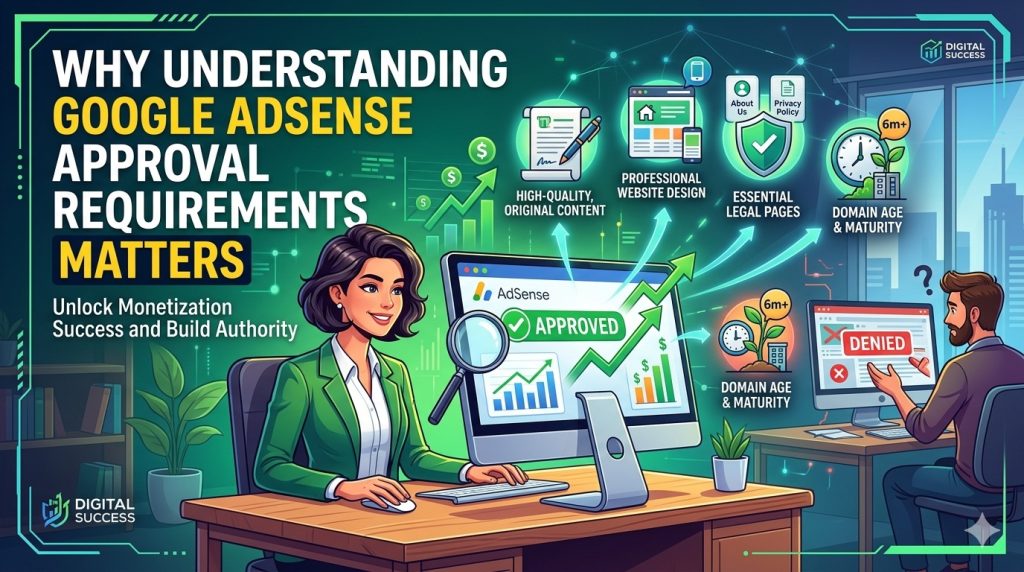
To get approved for Google AdSense in 2026, you must meet several important requirements before applying. First, your website should have high-quality, original, and useful content that provides real value to visitors. Second, your site must be well-designed, mobile-friendly, and easy to navigate. Third, you need essential pages like Privacy Policy, About Us, and Contact Us. Finally, your website must follow all AdSense policies and avoid prohibited content. Meeting these requirements increases your chances of fast approval and helps you build a strong, trustworthy website.
1. High-Quality Original Content
Unique, high-quality material serves as the cornerstone of a successful digital presence. Google prioritizes websites that offer insightful, well-researched information that genuinely helps readers. Instead of rehashing existing ideas, focus on providing fresh perspectives and expert analysis. Substantial, engaging writing not only secures approval but also builds long-term audience loyalty.
Your website must have:
- 100% original content (no copy-paste)
- Informative and valuable articles
- Proper grammar and readability
Recommended Content Length:
- At least 800–1500 words per article
- Minimum 15–30 quality posts before applying
Avoid:
- AI-generated spam content without editing
- Plagiarized or duplicate articles
- Thin content (very short posts)
👉 Tip: Focus on solving real problems for your audience.
2. Domain Age and Website Maturity
While Google doesn’t mandate a specific timeframe, established domains often find the vetting process smoother. Platforms that have been active for several months demonstrate stability and a commitment to longevity. This maturity suggests to reviewers that your site is a reliable resource rather than a temporary project seeking quick gains.
- Your domain is at least 1–3 months old
- Your website has consistent content publishing
Some countries may require a longer duration, but in most cases, quality matters more than age.
3. Professional Website Design
A polished, professional aesthetic is vital for gaining trust from both readers and advertisers. Your layout should be uncluttered, featuring intuitive navigation and a mobile-responsive design that works seamlessly across all devices. By prioritizing a clean user interface over flashy distractions, you signal that your platform is a high-quality, credible resource.
Key Design Elements:
- Mobile-friendly (responsive design)
- Fast loading speed
- Easy navigation menu
- Clear layout and structure
Must Have Pages:
- Home Page
- About Us
- Contact Us
- Privacy Policy
- Terms & Conditions
Without these pages, your approval chances drop significantly.
4. Essential Legal Pages
Legal pages are non-negotiable pillars of a compliant website, serving as proof of your platform’s transparency and professionalism. Including a dedicated Privacy Policy, Terms of Service, and Contact page helps satisfy regulatory standards and builds user trust. Without these essential sections, Google cannot verify your site’s commitment to data safety.
You must include:
- Privacy Policy (mandatory)
- Terms and Conditions
- Disclaimer (optional but recommended)
These pages show that your website is trustworthy and follows rules.
5. Sufficient Traffic (Not Mandatory but Helpful)
Although Google doesn’t set a hard visitor threshold, having consistent organic traffic signals that your content is valuable to real people. Steady engagement suggests your site is a functioning asset within its niche. This activity provides the review team with tangible data, often leading to a more confident approval.
- Having organic traffic improves approval chances
- Even 20–50 daily visitors can help
Focus on:
- SEO optimization
- Social media sharing
- Consistent posting
6. Unique and Clear Niche
Specializing in a distinct, well-defined niche is far more effective than maintaining a broad, generalized platform. Focusing on a specific subject allows you to build authority and demonstrate deep expertise to search engines. By avoiding disconnected topics, you create a cohesive user experience that aligns perfectly with Google’s quality standards.
Instead:
- Choose a specific niche (e.g., tech, health, education)
- Maintain topic consistency
Good Niches:
- Technology
- Education
- Finance
- Travel
- Lifestyle
Avoid:
- Mixed or random topics without focus
7. No Copyrighted Content
Stealing intellectual property is a primary catalyst for immediate application denial. To ensure success, every image, video, and paragraph must be your own or properly licensed for commercial use. Originality is a non-negotiable requirement, as Google’s algorithms are highly adept at identifying scraped or plagiarized material during the vetting process.
Avoid:
- Downloaded images without permission
- Copied videos or text
- Pirated content
Use:
- Free stock images
- Your own content
- Proper attribution if required
8. Website Must Be Fully Functional
Before applying, ensure:
- No broken links
- All pages are accessible
- No “under construction” sections
Your website should look complete and professional.
9. Easy Navigation and User Experience
Google prioritizes intuitive interfaces and seamless visitor interactions.
Improve UX by:
- Adding categories and menus
- Using internal linking
- Keeping layout simple
A confusing website can lead to rejection.
10. No Prohibited Content
Your website must follow content policies.
Strictly Avoid:
- Adult content
- Gambling
- Drugs or illegal activities
- Hacking or pirated software
- Hate speech or violence
Even one violation can cause rejection.
Step-by-Step Process to Apply for AdSense
Once your site meets all Google Adsense Approval Requirements, follow these steps:
- Step 1: Create an AdSense Account: Begin by visiting the official platform and registering with your primary Gmail credentials. Ensure all your personal details and payment information are accurate to prevent future delays. This initial setup links your identity to Google’s advertising network for all future earnings.
- Step 2: Add Your Website: Input your site’s URL into the dashboard and select the appropriate verification method provided. You must prove you own the domain by adding a meta tag or a text file. This connection allows Google to crawl your pages and determine if the content is eligible.
- Step 3: Add Ad Code: Copy the unique snippet of JavaScript generated by AdSense and paste it into your header. This code serves as the bridge that allows Google to display relevant ads to your visitors. Proper placement ensures that the review bot can successfully detect the script during evaluation.
- Step 4: Submit for Review: Request a formal inspection once your site is fully functional and populated with quality content. Google’s team and automated systems will check for compliance with their strict program policies. Avoid making drastic changes to your site’s structure while this active assessment is in progress.
- Step 5: Wait for Approval: The evaluation window typically spans anywhere from a single day to two full weeks. Timelines fluctuate based on the volume of applications and the complexity of your site’s niche. Stay patient and continue publishing original work while you await the final notification email.
Common Reasons for AdSense Rejection
Understanding rejection reasons can help you fix issues quickly.
- Low-Quality Content: Brief, shallow articles that offer little value to the reader often lead to immediate rejection. Focus on crafting well-researched, comprehensive pieces that solve specific problems for your audience.
- Insufficient Content: Launching with only a handful of posts makes your platform appear incomplete and unreliable to reviewers. Aim for a robust library of original work to demonstrate that your site is a long-term resource.
- Poor Website Design: A cluttered, unprofessional layout with broken links creates a frustrating experience for human users and bots alike. Prioritize a clean, responsive interface that allows for seamless navigation across all types of devices.
- Missing Legal Pages: Failing to include a Privacy Policy or Contact page signals a lack of transparency and professional accountability. These essential sections are mandatory for compliance, as they help establish a foundation of trust with visitors.
- Policy Violations: Using copyrighted material or publishing content in restricted niches will trigger an automatic disqualification. Ensure every sentence is unique and strictly adheres to current digital advertising standards and guidelines.
How to Fix AdSense Rejection
Receiving a rejection notice is simply a redirection, not a final verdict. Begin by meticulously analyzing Google’s feedback to identify specific shortcomings, such as “low-value content” or “site behavior” issues. Use this period to audit your existing articles, ensuring they provide unique insights rather than generic summaries. Enhance your site’s technical health by fixing broken links and optimizing mobile responsiveness. Once you have transformed your platform into a high-quality resource, wait at least fourteen days before reapplying to show consistent improvement.
Follow these steps:
- Read the rejection email carefully: Analyze the specific feedback provided by Google to understand the exact reasons for the disapproval.
- Identify the problem: Pinpoint whether the failure stems from technical site issues, layout flaws, or content quality concerns.
- Improve your content and design: Refine your articles for depth and polish your website’s interface to ensure a professional user experience.
- Add missing pages: Integrate essential legal and informational sections like Privacy Policy, Terms, and Contact to build legitimacy.
- Reapply after 2–3 weeks: Wait until you have implemented significant upgrades before submitting your site for a fresh evaluation.
Mastering AdSense Acceptance: Essential 2026 Strategies
Boost your success rate by prioritizing high-value, original content that addresses specific audience needs. Ensure your site features a professional, mobile-responsive layout with intuitive navigation and essential legal pages like Privacy Policy and About Us. Avoid utilizing AI-generated text without significant human editing, and focus on organic traffic growth. Maintaining a clean user interface, free from excessive widgets, will demonstrate the technical maturity Google requires for partnership.
- Focus on SEO: Research high-traffic keywords and naturally integrate them into your content to boost search visibility. Structure your pages with clear, descriptive titles and headings to help search engines understand your context.
- Publish Consistently: Maintain a steady flow of three to four weekly articles to show Google your site is active. Regular updates signal authority to search bots and keep your audience engaged with fresh, relevant information.
- Improve Page Speed: Select a high-performance hosting provider and compress all images to reduce your site’s total load time. A fast-loading website prevents visitor bounce rates and is a critical factor for ranking in search results.
- Use Clean Theme: Adopt a streamlined, professional design that prioritizes user experience over intrusive ads or aggressive popups. Minimalist layouts ensure that your content remains the primary focus, which significantly improves overall site readability.
- Build Trust: Establish credibility by including detailed author biographies that showcase your expertise and professional background. Provide transparent contact information to reassure both visitors and reviewers that your platform is a legitimate business.
Best Content Strategy for Approval
A strong content strategy is key.
Ideal Structure:
- 20–30 high-quality articles
- Each article 1000+ words
- Proper headings (H1, H2, H3)
- Internal linking
Content Ideas:
- Tutorials
- Guides
- Reviews
- Informational posts
How Long Does AdSense Approval Take?
Approval time varies:
- Fast approval: 1–3 days
- Average: 7–14 days
- Delayed cases: up to 3 weeks
Be patient and avoid making major changes during review.
Can You Get AdSense Approval Without Traffic?
Yes, but:
- Your content must be excellent
- Website must look professional
Traffic is not mandatory, but it helps.
Free vs Paid Domain: Which is Better?
For better approval chances:
Use:
- Custom domain (e.g., .com, .net)
Avoid:
- Free subdomains (e.g., blogspot, wordpress.com)
A custom domain builds trust and credibility.
Checklist Before Applying
Use this checklist to ensure your site meets all Google Adsense Approval Requirements:
✔ 20+ high-quality articles
✔ Original and unique content
✔ Mobile-friendly design
✔ Fast loading speed
✔ About, Contact, Privacy Policy pages
✔ No copyright violations
✔ Clear niche focus
✔ Easy navigation
✔ No prohibited content
Final Thoughts
Achieving the Google Adsense Approval Requirements in 2026 is entirely possible when you take a thoughtful and organized approach. Many beginners assume it’s complicated, but the real secret lies in building a website that genuinely helps users. Focus on publishing unique, informative content, keeping your design clean and user-friendly, and strictly following all AdSense guidelines. Ignoring these fundamentals or rushing to apply too early often results in rejection.
Instead of seeking quick validation, you should focus on fortifying your site’s underlying framework. A well-structured site with valuable content, quick loading speed, and essential pages like Privacy Policy and Contact not only improves approval chances but also sets you up for better long-term earnings. AdSense success isn’t just about getting accepted—it’s about creating a reliable income stream over time.
Consistency is another key factor. Regularly update your content, refine your SEO strategy, and continue improving user experience. Growth doesn’t happen overnight, but steady effort brings lasting results. When you stay patient and committed, approval becomes much more achievable. By applying the strategies outlined in this guide, you can confidently move forward and secure AdSense approval without facing repeated setbacks or unnecessary delays.