
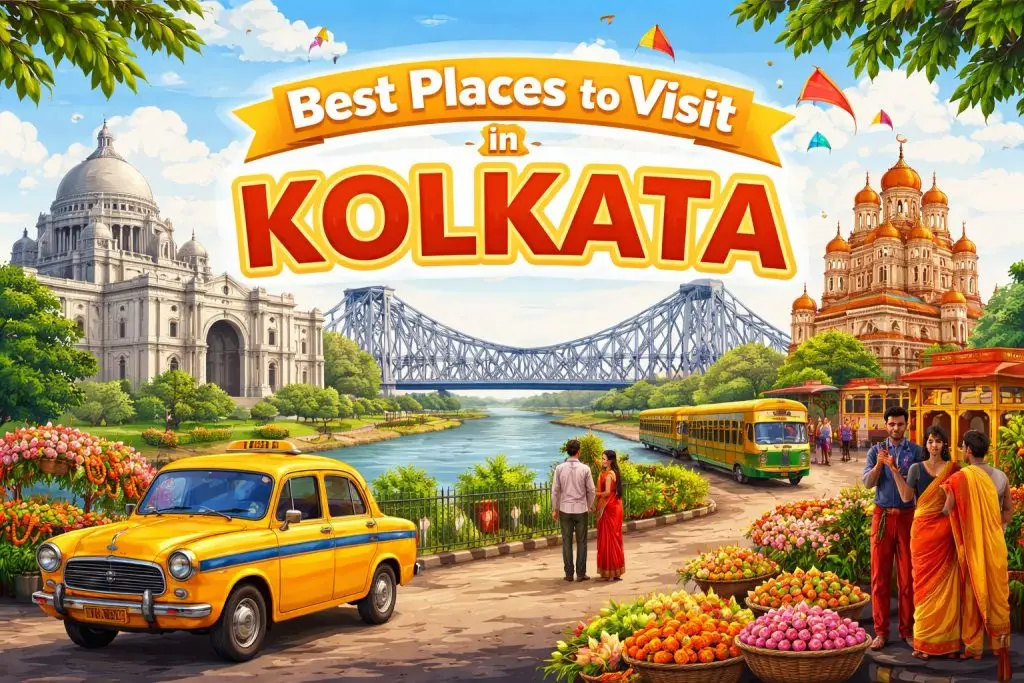
Discover the best places to visit in Kolkata for 2026! From Victoria Memorial to hidden local gems, our guide helps you plan the perfect trip. Explore now!
Introduction: Best Places to Visit in Kolkata 2026
Welcome to the “City of Joy,” a vibrant destination where the grand architecture of the British Raj harmoniously blends with the energetic chaos of narrow lanes and the irresistible aroma of freshly fried kachoris. Kolkata (formerly Calcutta) is far more than a simple stop on a map; it is an immersive experience that resonates within you long after your departure. In 2026, the city stands as India’s undisputed cultural capital, captivating travelers with its deep-rooted heritage, flourishing arts, and a modern, innovative food scene.
Whether you are a history enthusiast tracing colonial footprints, a spiritual seeker visiting the banks of the Hooghly, or a culinary adventurer exploring world-famous street food, Kolkata offers something remarkable at every turn. From the newly inaugurated riverfront promenades and the expanded Metro lines connecting iconic landmarks like Dakshineswar to the bustling heart of New Town, the city is more accessible than ever. This guide serves as your comprehensive roadmap for a 2026 journey, ensuring you experience the majesty of the Victoria Memorial alongside the city’s best-kept hidden gems. Prepare to dive into a world of “Adda,” heritage, and heartwarming hospitality. Your 2026 Kolkata adventure starts right here!
1. Iconic Historical Landmarks
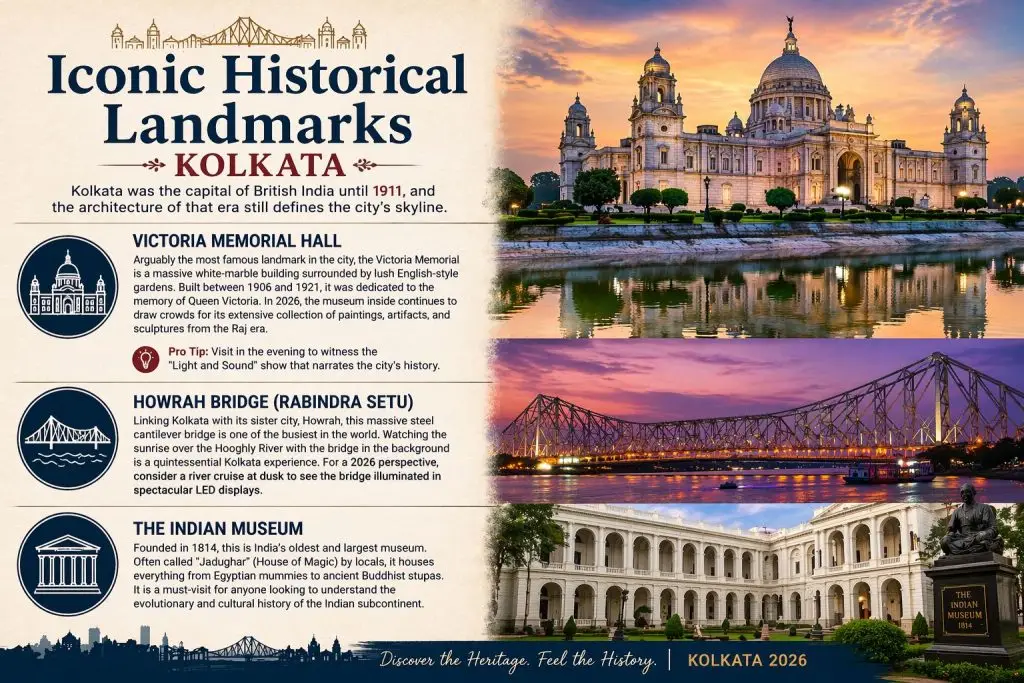
Kolkata, often described as the “City of Joy,” is a living museum where history breathes through every crack in its colonial architecture and every ripple in the Hooghly River. To understand the heart of this metropolis in 2026, one must look toward the three pillars of its heritage: the Victoria Memorial, the Howrah Bridge, and the Indian Museum. Together, they form a narrative of imperial grandeur, architectural triumph, and ancient wisdom.
The Marble Majesty: Victoria Memorial Hall
Standing as the definitive silhouette of the Kolkata skyline, the Victoria Memorial Hall is a masterclass in Indo-Saracenic revival architecture. Constructed between 1906 and 1921 using the same Makrana marble as the Taj Mahal, it serves as a poignant reminder of the British Raj.
The building is not merely a monument but a vibrant cultural hub. Surrounded by 64 acres of meticulously manicured English-style gardens, it offers a serene escape from the city’s frantic pace. Inside, the museum houses a staggering collection:
- Royal Portraits: Rare oil paintings of the British monarchy.
- The Calcutta Gallery: A visual history of the city’s evolution.
- Sculptures: Exquisite marble figures that capture the artistry of a bygone era.
Pro Tip: In 2026, the evening “Light and Sound” show has been upgraded with immersive projection mapping, offering a high-tech narration of Kolkata’s storied past.
The Engineering Marvel: Howrah Bridge (Rabindra Setu)
Linking Kolkata to its industrial twin, Howrah, the Howrah Bridge is more than just infrastructure; it is the city’s pulse. As one of the busiest cantilever bridges in the world, it carries over 100,000 vehicles and countless pedestrians daily.
The bridge is a marvel of 20th-century engineering, famously built without a single nut or bolt, held together entirely by rivets. While watching the sunrise over the Hooghly remains a spiritual experience for many, the 2026 perspective offers something more modern. River cruises at dusk now showcase the bridge’s sophisticated LED illumination, turning the steel giant into a shimmering rainbow reflected in the dark waters.
The House of Magic: The Indian Museum
Founded in 1814, the Indian Museum is the oldest and largest institution of its kind in the Asia-Pacific region. Locally known as Jadughar (the House of Magic), it is a labyrinth of human achievement and natural history.
For the modern traveler, the museum provides an essential context for the Indian subcontinent. Its galleries are home to:
- The Egyptian Gallery: Featuring a 4,000-year-old mummy.
- The Bharhut Gallery: Housing 2nd-century BC Buddhist stupas.
- The Zoological Section: Displaying rare fossils and skeletal remains.
Whether you are marveling at the white marble of the Memorial, the steel strength of the Bridge, or the ancient relics of the Museum, Kolkata remains a city that honors its past while sprinting toward the future.
2. The Divine Tapestry: Exploring Kolkata’s Spiritual and Religious Heritage
Kolkata is a city where the sacred is woven into the fabric of daily life. It is a place where the ringing of temple bells, the evening azaan, and the chime of church clocks create a unique spiritual symphony. In 2026, the city’s religious landmarks remain not just centers of worship, but architectural triumphs that celebrate a legacy of pluralism and deep-seated faith.
The Divine Abode: Dakshineswar Kali Temple
Perched on the eastern bank of the Hooghly River, the Dakshineswar Kali Temple is an essential pilgrimage site. Built in 1855 by Rani Rashmoni, the temple is dedicated to Goddess Bhavatarini, an aspect of Kali who liberates her devotees from the ocean of existence.
The temple is world-renowned for its connection to Sri Ramakrishna Paramahansa, the 19th-century mystic who served as its priest and attained spiritual enlightenment here. The complex is a masterpiece of the Nava-ratna (nine-spired) style of Bengal architecture, flanked by twelve identical shrines dedicated to Lord Shiva.
- Modern Access: Reaching this sacred site has never been easier. In 2026, the Metro Blue Line extension provides a seamless, air-conditioned transition from the chaos of Central Kolkata to the serene temple gates in under 30 minutes.
The Symbol of Unity: Belur Math
A short, scenic ferry ride across the river from Dakshineswar brings you to Belur Math, the global headquarters of the Ramakrishna Math and Mission. Founded by Swami Vivekananda, the architecture of the main temple is a profound philosophical statement.
Upon close inspection, one notices a deliberate fusion of styles:
- Hindu Motifs: Traditional temple spires and floor plans.
- Islamic Influence: Domes and arches reminiscent of Mughal architecture.
- Western & Buddhist Elements: Layouts mimicking a Christian cross and motifs from ancient stupas.
This “Universal Temple” serves as a physical manifestation of the belief that all religions lead to the same truth. The sprawling, lush campus offers a rare pocket of silence in a city of millions, making it a premier destination for meditation and introspection.
Colonial Grandeur: St. Paul’s Cathedral
Moving into the heart of the city near the Victoria Memorial, St. Paul’s Cathedral stands as a towering example of Indo-Gothic architecture. Completed in 1847, it holds the distinction of being the first Anglican cathedral built in the overseas territories of the British Empire.
The structure is a visual feast, designed to withstand the tropical climate while maintaining European elegance. Its most striking features include:
- Stained-Glass Windows: Massive panels that bathe the altar in ethereal light.
- The West Window: Designed by Sir Edward Burne-Jones, a masterpiece of Pre-Raphaelite art.
- Intricate Frescoes: Walls adorned with plastic art and memorial tablets that chronicle the city’s colonial history.
From the mystical ghats of the Hooghly to the quiet pews of the cathedral, Kolkata’s spiritual landscape remains a testament to the city’s enduring soul—a place where every faith finds a home.

3. The Intellectual Heart: Kolkata’s Cultural Landmarks
Kolkata is often celebrated as the “City of Intellect,” a title earned through its legacy of Nobel laureates, poets, and revolutionary thinkers. To experience the city’s mental and artistic pulse in 2026, one must wander through its storied streets where literature and craftsmanship collide.
College Street: The Boi Para (Book Colony)
College Street is a bibliophile’s paradise and the world’s largest market for second-hand books. This half-mile stretch is lined with hundreds of makeshift stalls overflowing with rare first editions, academic texts, and modern bestsellers.
The centerpiece of this intellectual hub is the Indian Coffee House. Stepping inside is like traveling back in time. It remains the headquarters of Adda—the quintessential Bengali tradition of long, passionate, and informal intellectual conversations. In 2026, you will still find students and scholars debating politics and philosophy over a cup of their signature “Infusion.”
Jorasanko Thakur Bari: The Tagore Ancestral Home
For lovers of literature, a visit to Jorasanko Thakur Bari is a pilgrimage. This is the ancestral home of Rabindranath Tagore, the first non-European to win the Nobel Prize in Literature. Today, it serves as the Rabindra Bharati Museum, offering a deep dive into the life of the man who reshaped Bengali music and literature. The red-brick courtyard and sprawling galleries house his personal belongings, paintings, and the history of the Bengal Renaissance.
Kumartuli: The Artisans’ Quarter
In the narrow lanes of North Kolkata lies Kumartuli, the traditional potters’ quarter. This is the artistic soul of the city, where generations of artisans use Hooghly river clay to sculpt magnificent idols for festivals like Durga Puja. Walking through these workshops in 2026 provides a raw look at the creative process—from the straw frameworks to the final, intricate painting of the Goddess’s eyes. It is a testament to the city’s enduring hand-crafted heritage.
4. The Green Lungs and Modern Marvels of Kolkata
While Kolkata is steeped in history, its modern identity is defined by expansive green spaces and cutting-edge educational hubs. In 2026, these areas offer a vital breath of fresh air and a glimpse into the city’s future-forward development.
The Maidan: The Soul of the City
The Maidan is more than just a park; it is the “Lungs of Kolkata.” This sprawling urban greenery is the largest of its kind in the city, serving as a massive open space where the pulse of local life is most visible. On any given day, you can witness the quintessential Kolkata experience: amateur cricket matches, horses grazing near the polo grounds, and vendors serving spicy jhalmuri to families. Surrounded by the Victoria Memorial and the historic Eden Gardens, the Maidan is where the city’s colonial past meets its vibrant present.
Science City: A Hub of Discovery
For those traveling with family, Science City remains an unmissable destination. As the largest science center in the Indian subcontinent, it bridges the gap between entertainment and education. In 2026, its popular attractions like the Space Odyssey and the Science Exploration Hall continue to fascinate visitors with immersive 3D shows and interactive exhibits. It is a testament to Kolkata’s long-standing dedication to scientific inquiry and intellectual growth.
Eco Park: The Future of Leisure
Located in the tech-centric New Town area, Eco Park represents the modern face of Kolkata. This 480-acre massive urban park is centered around a stunning 104-acre water body. It is famous for its “Seven Wonders of the World” replicas, allowing visitors to see the Great Wall of China and the Pyramids in a single afternoon. With themed gardens and sustainable water sports, it offers a sophisticated, peaceful escape from the bustling city center.
5. Food: The Soul of Kolkata
You haven’t truly experienced the “City of Joy” until you have explored its vast and legendary culinary landscape. In 2026, Kolkata continues to be a paradise for food lovers, offering everything from century-old heritage eateries to innovative fusion cafes.
- Park Street: Known as the city’s premier dining thoroughfare, this street is a mix of nostalgia and glamour. You can indulge in English breakfast traditions at Flurys, savor the iconic Chelo Kebab at Peter Cat, or enjoy the vintage continental charm of Mocambo. For a quicker bite, the famous Kusum Rolls offers some of the best wraps in town.
- Street Food: Kolkata’s street side is a festival of flavors. Don’t leave without trying the spicy, tangy Phuchka (the local take on panipuri), the crunchy Jhalmuri, or a succulent Kathi Roll. For a deep-seated local favorite, head to the bustling stalls of Deckers Lane or Zakaria Street for authentic kebabs and chops.
- Sweets: Bengal’s “Mishti” culture is world-renowned. While Balaram Mullick & Radharaman Mullick is a pioneer in modern delights like Baked Rosogolla, traditionalists shouldn’t miss the historical K.C. Das for original Rosogollas or Bhim Chandra Nag for exquisite Sandesh.
From savory to sweet, every bite in Kolkata tells a story of tradition and passion.
6. Planning Your 2026 Trip: Essential Tips for the City of Joy
Navigating Kolkata in 2026 is a blend of embracing timeless traditions and utilizing a rapidly modernizing infrastructure. Whether you are visiting for the grandeur of the festivals or the quiet charm of the heritage lanes, these essential tips will ensure a smooth journey.
Best Time to Visit: The Festival Peak
The window from October to March remains the gold standard for weather, offering cool, dry days perfect for walking tours.
- Durga Puja 2026: If you plan to witness the city’s transformation into a massive art gallery, mark October 7–21, 2026, on your calendar. The main festivities culminate between October 17 and October 21. While the crowds are intense, the energy and creative “pandal” displays are unparalleled.
- The Winter Season: November through February is ideal for exploring the Maidan and outdoor monuments without the tropical humidity.
Getting Around: From Heritage to High-Speed
Kolkata’s transport system is one of the most diverse in Asia, offering everything from century-old charms to futuristic speed.
- The Metro (Blue & Orange Lines): The fastest way to navigate. By late 2026, the Orange Line is expected to fully connect the airport to New Garia (Kavi Subhash), making airport transfers significantly easier.
- Heritage Trams: While the network has shrunk, the iconic wooden trams still operate on key routes like Gariahat–Esplanade and Esplanade–Shyambazar. A ride at dawn is a must for any nostalgic traveler.
- Yellow Taxis & App-Based Rides: The classic Yellow Ambassador taxis continue to be a quintessential symbol of the city’s streets, although their presence is gradually decreasing as the fleet shrinks. For transparent pricing and air-conditioned comfort, Uber and Ola are highly reliable and widely used across the city.
Safety and Etiquette
Kolkata is frequently cited as one of India’s safest cities for solo and female travelers, but mindfulness is key in any metropolis.
- Temple Protocol: When visiting sites like Dakshineswar or Belur Math, dress conservatively. Both men and women should ensure shoulders and knees are covered, and shoes must always be removed before entering a shrine.
- Crowd Awareness: In bustling areas like New Market or during Puja celebrations, keep valuables in zipped front pockets to guard against occasional pickpocketing.
- Health: Always stick to sealed bottled water and be adventurous but cautious with street food—look for stalls with high turnover to ensure freshness.
Kolkata is a city that rewards the patient traveler. Move slowly, talk to the locals, and let the “City of Joy” reveal itself to you.
Conclusion
Kolkata in 2026 remains a mesmerizing tapestry of historical grandeur and contemporary energy. As you navigate from the majestic white marble of the Victoria Memorial to the intellectual hum of College Street’s bookstores, you aren’t just a tourist; you are a witness to a living history. The city’s unique ability to respect its colonial past while embracing a high-tech future makes it a standout destination for the modern traveler.
Whether you are capturing the sunrise over the architectural marvel of the Howrah Bridge, finding spiritual solace at the serene Belur Math, or watching artisans bring clay to life in the narrow lanes of Kumartuli, every corner offers a narrative. The “City of Joy” invites you to become an active part of its story through its legendary “Adda” culture and world-renowned culinary scene. From the iconic yellow taxis to the expanding high-speed Metro, the best places to visit in Kolkata offer a seamless journey through time.
Kolkata is a destination that demands to be felt rather than just seen. It challenges your senses and rewards your curiosity with unparalleled warmth and vibrancy. So, pack your bags with wonder, bring an appetite for legendary street food, and get ready to fall in love with the soulful heart of India!