
Latest updates on International Politics 2026, featuring breaking diplomacy news and important global decisions affecting international relations.
Introduction: International Politics 2026
International Politics in 2026 is changing at a fast pace as countries respond to growing diplomatic pressures, economic rivalry, security risks, and the need for stronger global cooperation. From high-level peace negotiations to new trade agreements and rising geopolitical tensions, recent developments continue to reshape international relations. Nations are carefully balancing national interests with global responsibilities in an increasingly interconnected world.
The field of International Politics remains central to global stability, influencing economic expansion, defense partnerships, and foreign policy strategies. Governments, international institutions, and world leaders are holding strategic discussions to resolve conflicts and manage emerging global challenges. Diplomatic engagement has become more important than ever in maintaining peace and encouraging collaboration.
This article highlights the most important breaking diplomacy updates, major global trends, and key political developments that are shaping International Politics in 2026 and redefining the future of international cooperation.
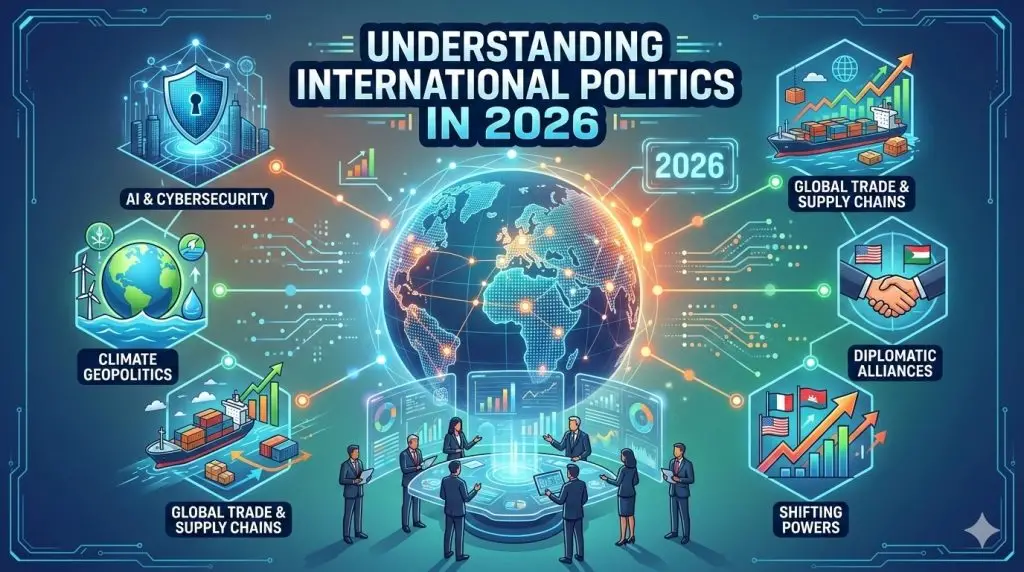
Understanding International Politics in 2026
International Politics involves interactions among countries, international organizations, and global actors that shape political decisions, economic cooperation, and security systems worldwide. It influences diplomatic relations, global stability, trade agreements, and collective efforts to address international challenges and conflicts.
In 2026, International Politics is primarily focused on:
- Conflict resolution and peace diplomacy – Efforts by nations to reduce tensions and settle disputes through dialogue, mediation, and negotiated agreements instead of armed confrontation.
- Trade negotiations and economic alliances – Strategic discussions between countries to create trade deals and partnerships that promote economic growth and market access.
- Military cooperation and security agreements – Collaborative defense arrangements designed to strengthen national security and respond to regional or global threats.
- Climate diplomacy and sustainability policies – International cooperation focused on reducing environmental risks, lowering emissions, and promoting long-term ecological balance.
- Technology regulation and digital governance – Policy frameworks that manage emerging technologies, cybersecurity, and digital systems to ensure safe and responsible global use.
Global power dynamics are shifting as emerging economies gain influence while established powers adjust their foreign policy strategies.
Breaking Diplomacy Updates in Global Affairs
1. Ongoing Peace Negotiations
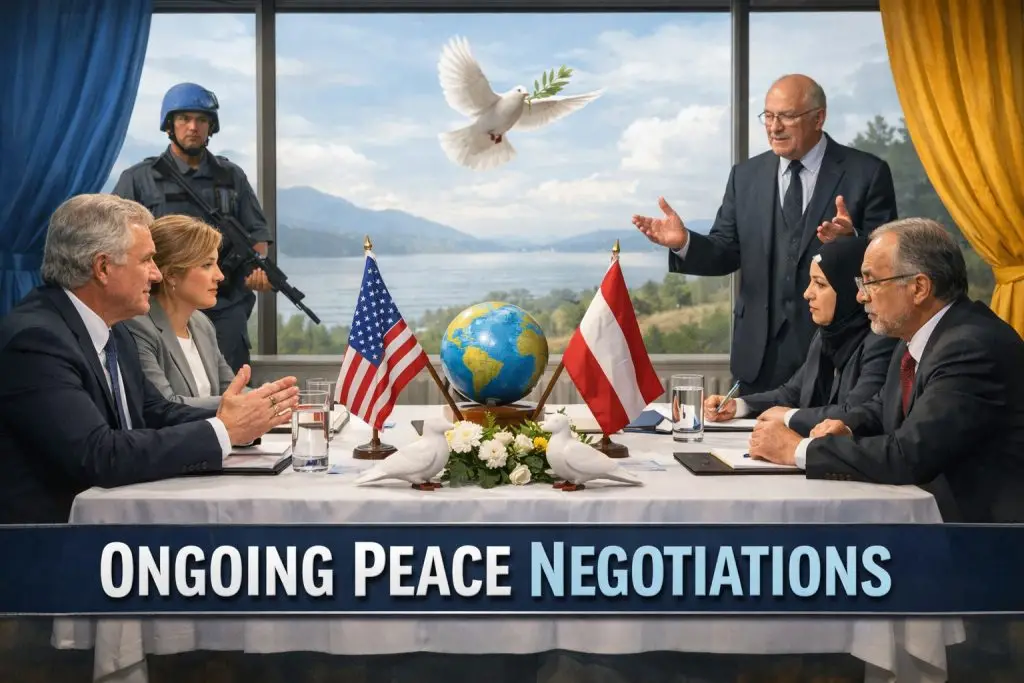
Several regions facing political instability are actively participating in diplomatic discussions to ease tensions and prevent further escalation. International mediators, regional organizations, and global institutions are facilitating dialogue between conflicting parties to promote peaceful solutions. These negotiations aim to rebuild trust, encourage compromise, and create frameworks for long-term stability in affected areas.
Peace diplomacy remains a central pillar of International Politics in 2026. Governments are increasingly choosing negotiation and strategic communication over military confrontation to safeguard regional and global stability. By prioritizing diplomatic engagement, nations seek to minimize humanitarian risks, protect economic interests, and strengthen international cooperation in an interconnected world.
2. Strengthening International Alliances
Global alliances are increasingly strategic and guided by clear policies, as nations seek to strengthen cooperation in key areas. Countries are building robust partnerships that focus on shared economic goals, mutual security interests, and coordinated responses to regional and global challenges, ensuring stability and long-term diplomatic collaboration.
Key developments include:
- Expansion of regional cooperation agreements – Countries are strengthening partnerships within their regions to boost economic integration, political coordination, and shared development goals.
- Defense collaboration between allied nations – Friendly nations are enhancing military cooperation through joint training, intelligence sharing, and coordinated security strategies.
- Trade partnership renewals – Governments are updating and extending trade agreements to improve market access and maintain stable economic relationships.
- Joint infrastructure development initiatives – Multiple countries are investing together in major projects like transport, energy, and digital networks to support long-term growth.
These alliances significantly influence modern International Politics.

3. Trade Agreements and Economic Diplomacy
Economic diplomacy plays a key role in shaping International Politics as nations use trade and financial cooperation to strengthen global relations. Governments are negotiating new trade agreements to expand market access, improve investment opportunities, and secure stable supply chains, supporting economic growth and international partnership development.
Important trends include:
- Digital trade agreements – International deals that regulate online commerce, data flow, and digital services to support secure and efficient global e-trade.
- Cross-border investment treaties – Agreements that protect and encourage foreign investments by setting clear legal and financial standards between countries.
- Tariff adjustments – Changes in import and export taxes designed to balance trade, protect domestic industries, or strengthen economic partnerships.
- Export-import regulatory reforms – Policy updates that simplify customs procedures and improve trade efficiency while ensuring compliance with international standards.
Global economic stability heavily depends on successful international cooperation in trade policy.
Geopolitical Tensions and Security Challenges
1. Regional Conflicts and Global Impact
Regional disputes continue to affect global stability. International organizations are actively involved in monitoring security developments and facilitating peace talks.
These tensions influence:
- Energy supply chains – Networks that manage the production, transportation, and distribution of energy resources to ensure stable global access.
- Global markets – International trading systems where goods, services, and financial assets are exchanged across borders.
- Military alliances – Strategic defense partnerships formed between countries to enhance collective security and mutual protection.
- International policy decisions – Official actions and agreements made by governments that influence global governance and diplomatic relations.
Breaking developments in conflict zones often create sudden shifts in International Politics.
2. Military Alliances & Defense Policies
Military Alliances & Defense Policies are becoming increasingly significant as countries strengthen cooperation to address emerging security challenges. Governments are expanding joint military exercises, intelligence sharing, and strategic defense planning to respond effectively to evolving risks. Modern partnerships now focus not only on traditional warfare but also on cybersecurity protection, border security management, and advanced technological defense systems.
Defense discussions have become a central pillar of International Politics in 2026 as nations prepare for potential global uncertainties. Policymakers are prioritizing deterrence strategies and coordinated security frameworks to maintain regional stability. By reinforcing alliances and updating defense policies, countries aim to safeguard national interests while promoting collective security in an interconnected and rapidly changing geopolitical environment.
3. Cybersecurity & Digital Warfare
Technology has become a key factor in modern diplomacy. Cybersecurity threats, misinformation campaigns, and digital espionage are influencing international decision-making.
Governments are:
- Creating cyber defense frameworks – Governments are developing structured security systems to protect national networks and data from cyber threats and digital attacks.
- Regulating artificial intelligence policies – Authorities are establishing guidelines to ensure responsible development and ethical use of AI technologies.
- Strengthening digital infrastructure security – Countries are upgrading protections for critical digital systems to prevent disruptions and safeguard essential services.
Digital governance is now an essential part of International Politics.
Global Economic Trends Affecting International Politics
Inflation & Financial Stability
Inflation and financial stability remain key concerns in the global economy as rising prices and financial market fluctuations affect trade, investment, and diplomatic relations. Economic uncertainty often influences how countries shape their foreign policy and negotiate international agreements. Governments must carefully manage monetary policies and fiscal strategies to reduce economic risks and maintain sustainable growth.
To address these challenges, countries are collaborating through international financial institutions to strengthen economic stability and improve coordination. Joint efforts focus on supporting developing economies, stabilizing currency systems, and managing debt pressures. Through cooperation and policy alignment, nations aim to create a more resilient global financial system that supports long-term development and international trade.
Energy Security & Resource Diplomacy
Energy resources remain a strategic factor in International Politics. Nations are competing and cooperating to secure stable energy supply chains.
Key priorities include:
- Renewable energy investment – Governments and businesses are funding clean energy projects to reduce carbon emissions and promote sustainable power generation.
- Oil & gas trade agreements – Countries are negotiating contracts to secure stable supply and fair pricing of traditional energy resources.
- Energy infrastructure development – Nations are building and upgrading facilities like power plants, pipelines, and grids to improve energy distribution.
- Cross-border power cooperation – Countries are collaborating to share electricity resources and strengthen regional energy security through interconnected systems.
Energy diplomacy continues to shape global political discussions.
Climate Diplomacy & Environmental Cooperation
Climate change discussions play a significant role in International Politics 2026. Global leaders are negotiating environmental commitments and sustainability targets.
Important focus areas:
- Carbon emission reduction – Countries implement policies and clean energy solutions to lower greenhouse gas emissions and combat climate change.
- Climate finance support – Developed nations and financial institutions provide funding to help vulnerable countries adapt to and mitigate climate impacts.
- Renewable technology sharing – Nations exchange knowledge and advanced technologies to promote the use of sustainable and clean energy systems.
- Environmental protection agreements – Governments sign international commitments to preserve natural resources and reduce environmental damage through cooperative action.
International cooperation is essential to address climate challenges effectively.
Role of International Organizations
International organizations play a vital role in maintaining global stability and promoting cooperation among nations. Institutions such as the United Nations and various regional alliances facilitate diplomatic dialogue, mediate conflicts, and support humanitarian efforts. They help coordinate international policies, encourage peaceful dispute resolution, and strengthen collective action on global challenges like security, climate change, economic development, and human rights protection across the world.
Their responsibilities include:
- Conflict mediation – Neutral parties help opposing sides resolve disputes through dialogue and negotiation to achieve peaceful solutions.
- Humanitarian assistance – Organizations and governments provide emergency aid such as food, shelter, and medical support to people affected by crises.
- Peacekeeping missions – International forces are deployed to maintain stability, protect civilians, and support peace agreements in conflict areas.
- Policy coordination – Countries and institutions align their strategies and regulations to improve cooperation and address shared global challenges.
These institutions influence decision-making in International Politics by promoting dialogue and cooperation.
Impact of Leadership Changes on International Politics
Political leadership transitions often reshape foreign policy strategies. New governments may introduce reforms affecting international agreements and diplomatic relations.
Leadership changes can lead to:
- Policy revisions – Governments update existing rules and regulations to adapt to changing political, economic, and security conditions.
- Treaty renegotiations – Countries review and modify international agreements to reflect new priorities and mutual interests.
- Strategic realignment – Nations adjust their foreign policy and alliances to respond to shifting global power dynamics.
- Economic partnership adjustments – Governments modify trade and investment agreements to improve cooperation and address emerging market challenges.
Such transitions create important developments in global diplomacy.
Future Outlook of International Politics
The future of International Politics in 2026 and beyond will depend on:
- Diplomatic engagement instead of confrontation – Nations prioritize dialogue and negotiation over conflict to resolve disputes peacefully.
- Economic collaboration – Countries work together on trade, investment, and financial initiatives to promote mutual growth and stability.
- Technological governance cooperation – Governments coordinate policies to manage emerging technologies, cybersecurity, and digital innovation responsibly.
- Sustainable development policies – Nations implement strategies that balance economic growth with environmental protection and long-term social well-being.
Global interdependence is growing, requiring stronger international cooperation to address shared challenges. Although global issues persist, ongoing dialogue and collaboration between nations play a vital role in promoting stability, resolving conflicts, and ensuring lasting peace worldwide.
Conclusion
International Politics in 2026 is shaped by fast-moving diplomacy updates, shifting alliances, complex economic negotiations, and ongoing geopolitical changes. Countries are actively engaging in dialogue to preserve global stability, strengthen trade partnerships, and respond to emerging international challenges. Strategic cooperation and careful policy decisions are becoming essential in managing global uncertainty.
From high-level peace negotiations to growing concerns over cybersecurity and climate cooperation, International Politics continues to influence the direction of global governance. Governments and international institutions are working together to balance national interests with broader global responsibilities.
Remaining informed about breaking diplomatic developments is crucial for understanding how major decisions impact global power structures, economic systems, and international relations. As nations adapt to new realities, diplomacy remains the key tool for promoting cooperation, preventing conflict, and shaping a more stable and interconnected world in 2026 and beyond.