
Discover Kaptai Lake in 2026 with this complete travel guide. Explore its history, natural beauty, boating spots, nearby attractions, and travel tips.
Introduction to Kaptai Lake
Kaptai Lake is one of the most breathtaking and historically significant destinations in Bangladesh.
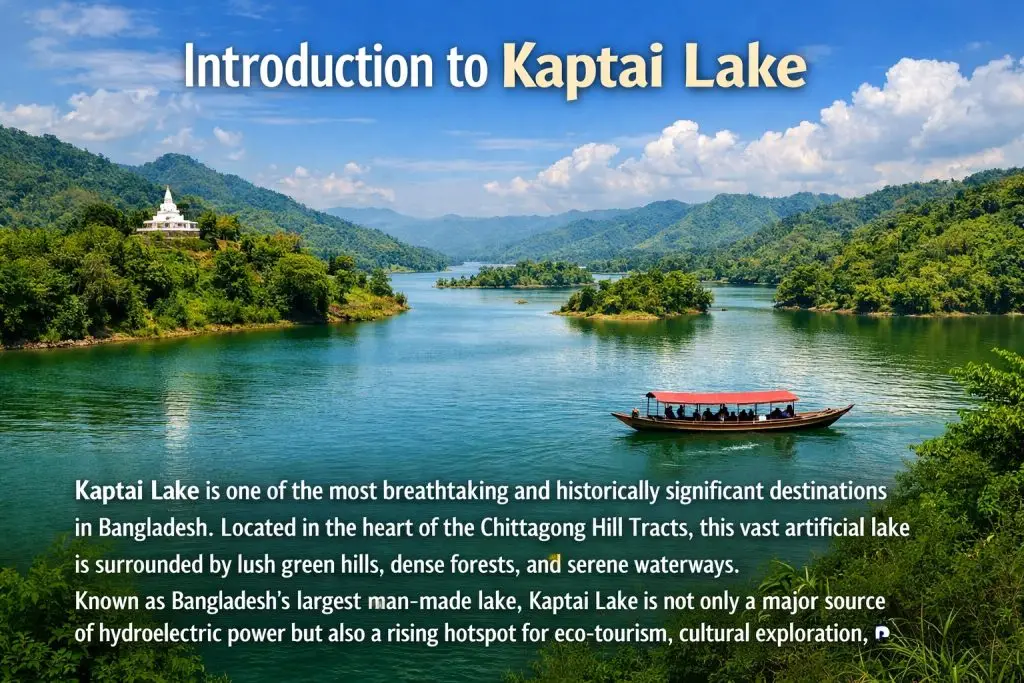
Located in the heart of the Chittagong Hill Tracts, this vast artificial lake is surrounded by lush green hills, dense forests, and serene waterways that create a peaceful escape from urban life. Known as Bangladesh’s largest man-made lake, Kaptai Lake is not only a major source of hydroelectric power but also a rising hotspot for eco-tourism, cultural exploration, and scenic travel.
For travelers searching for natural beauty, calm boat rides, tribal culture, and historical depth,the Kaptai reservoir offers a unique experience unlike anywhere else in the country. This article explores the complete history of the man-made lake , its cultural impact, environmental significance, and everything a traveler needs to know before visiting.
📜 History of Kaptai Lake
Origins Before the Lake Existed
Before Kaptai reservoir was created, the area consisted of fertile valleys, rivers, and indigenous settlements primarily inhabited by the Chakma, Marma, Tanchangya, and other ethnic communities.
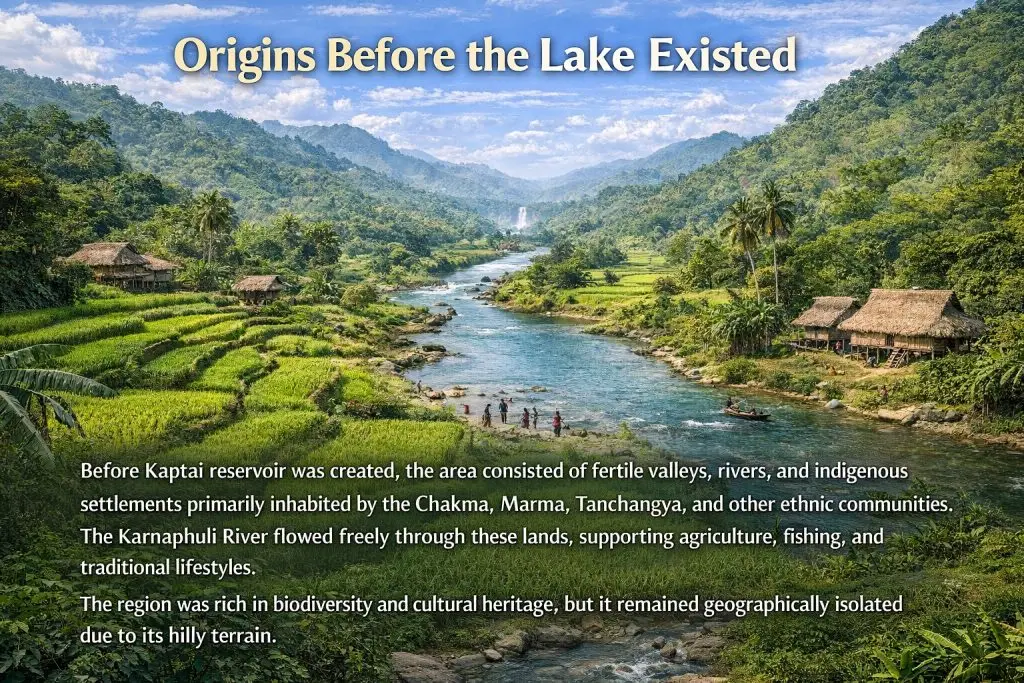
The Karnaphuli River flowed freely through these lands, supporting agriculture, fishing, and traditional lifestyles.
The region was rich in biodiversity and cultural heritage, but it remained geographically isolated due to its hilly terrain.
the man-made lake in the Chittagong Hill Tracts (1957–1962)
Kaptai Lake was formed as a result of the Kaptai Dam project, initiated during the Pakistan era. Construction began in 1957 and was completed in 1962 with the goal of producing hydroelectric power to support industrial growth in East Pakistan (now Bangladesh).
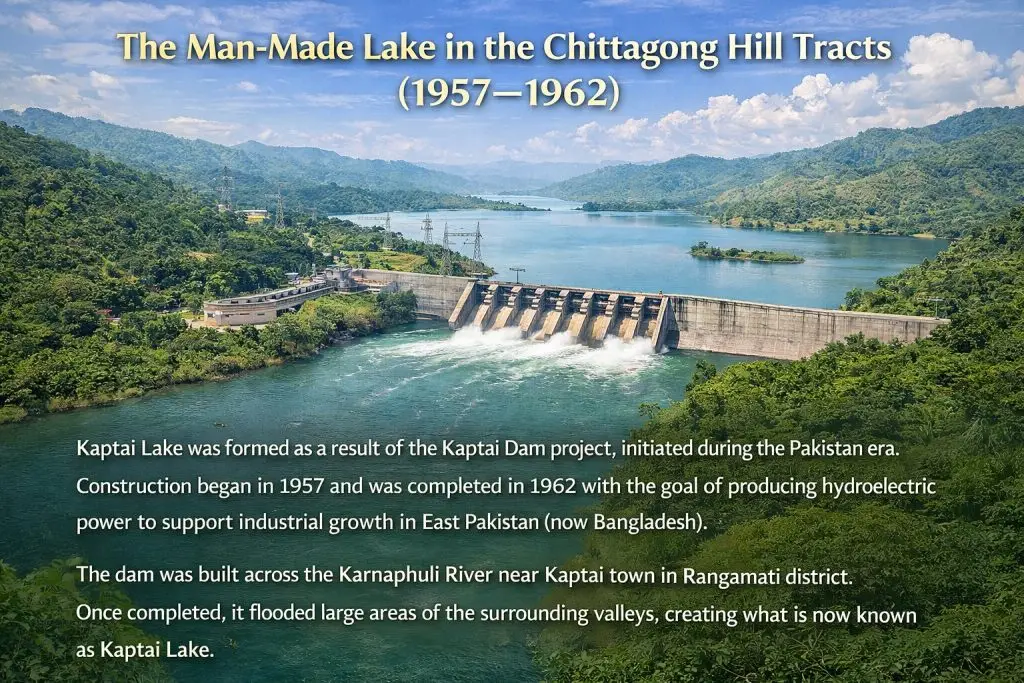
The dam was built across the Karnaphuli River near Kaptai town in Rangamati district. Once completed, it flooded large areas of the surrounding valleys, creating what is now known as Kaptai Lake.
Key Facts:
- Year completed: 1962
- Purpose: Hydroelectric power generation
- Water source: Karnaphuli River
- Surface area: Over 1,100 square kilometers (seasonal variation)
Impact on Indigenous Communities
The creation of Kaptai Lake came with a heavy human cost. Thousands of indigenous families were displaced as their villages, farmlands, and sacred sites were submerged under water. Many people were forced to migrate to neighboring regions and even across borders.

This displacement remains one of the most significant social consequences of the project and plays an important role in the history of the Chittagong Hill Tracts.
Despite the hardships, local communities gradually adapted by turning to fishing, boat transport, and tourism-related livelihoods.
⚡ Hydroelectric Importance of Kaptai Lake
Kaptai Lake powers the Kaptai Hydroelectric Power Station, the only hydroelectric plant in Bangladesh.
Why It Matters:
- Supplies electricity to large parts of the country
- Reduces dependence on fossil fuels
- Plays a role in national energy security
Even today, the lake remains a critical asset for Bangladesh’s power infrastructure while also supporting fisheries and irrigation.
🌿 Natural Beauty and Environment
Scenic Landscape
Kaptai Lake is famous for its emerald green waters, mist-covered hills, and endless forested shorelines. The landscape changes dramatically with the seasons:
- Monsoon: Full lake, dramatic waterfalls, deep green hills
- Winter: Calm waters, golden sunlight, clear skies
- Summer: Lower water levels, exposed islands, warm weather
Floating clouds, silent waters, and distant hills make it one of the most photogenic locations in Bangladesh.
Biodiversity Around Kaptai Lake
The lake and surrounding forests support a wide range of wildlife:
- Freshwater fish species
- Migratory birds
- Deer, monkeys, and reptiles
- Rich plant life and bamboo forests
This makes Kaptai Lake an important ecological zone and a growing destination for nature lovers and photographers.
🚤 Tourism at Kaptai Lake
Why Kaptai Lake Is a Top Travel Destination
Tourism around Kaptai Lake has grown steadily over the past decade. Travelers are drawn to its peaceful environment, cool climate, and scenic boat journeys.
Popular activities include:
- Boat cruising
- Hill trekking
- Sunset photography
- Cultural exploration
- Lakeside picnics
Best Tourist Spots Around Kaptai Lake
1. Shuvolong Waterfall
One of the most famous attractions near Kaptai Lake, especially during the monsoon season. Accessible by boat, the waterfall cascades directly into the lake.
2. Polwel Park
A lakeside recreation area ideal for families and short visits.
3. Hanging Bridge (Rangamati)
A notable tourist spot offering expansive views of Kaptai Lake and its scenic hill-covered surroundings.
4. Subholong Bazaar
A floating local market showcasing indigenous life and culture.
🏞️ Cultural Significance
Indigenous Tribes and Traditions
The lake region is home to several indigenous groups, each with unique languages, traditions, and lifestyles. Visitors often encounter:
- Traditional bamboo houses
- Colorful tribal clothing
- Handmade crafts
- Indigenous cuisine
Respectful tourism helps preserve these cultures while supporting local livelihoods.
🍽️ Local Food Experience
Travelers visiting Kaptai Lake can enjoy unique local dishes such as:
- Fresh river fish
- Bamboo shoot curry
- Indigenous rice cakes
- Hill-grown fruits
Seafood and traditional Bengali dishes are also widely available in Rangamati.
🛶 Best Time to Visit Kaptai Lake
Ideal Seasons
- October to March: Best time for travel, clear weather, calm water
- June to September: Monsoon beauty, waterfalls active (boat travel may be limited)
For photography and comfortable travel, winter is highly recommended.
🚗 How to Reach Kaptai Lake
From Dhaka:
- Bus: Dhaka → Chattogram → Rangamati
- Private car: Scenic but long journey
From Chattogram:
- 3–4 hours by road to Rangamati
- Local transport to Kaptai Lake area
Boat transport is commonly used to explore different parts of the lake.
🏨 Top 10 Hotels & Resorts (Near Kaptai Lake / Rangamati)
- Rangadip Resort
📞 +8801327475252
🌟 Great for lake views and comfort. - Aronnak Holiday Resort
📞 +8801769312021
🌿 Lakeside resort with peaceful surroundings. - Lakeshore Resort
📞 +8801550322448
🏝️ Popular lakeside stay ideal for sunset views. - Parjatan Holiday Complex
📞 +8801863231185
🏨 Government-run hotel with lake surroundings. - Nilanjana Boat Club & Resort
📞 +8801810044320
🚤 Resort with boating and activity options. - Hotel Nadisa International
📞 +8801737453545
🛏️ Comfort-focused hotel near town center. - Hotel Hill Ambassador
📞 +8801875117070
💰 Budget-friendly with good reviews. - Hotel Jum Palace, Rangamati
📞 +8801625100000
🏙️ Popular hotel in town with easy access. - The Grand Hill Taj
📞 +8801600343694
🌄 Comfortable mid-range option. - Divine Lake Island
📞 +8801958054408
🏡 Lakeside resort with scenic views.
(Bonus budget stays in the area include Hotel Square Park, Hotel Sonar Bangla, and Hotel Ifsha.)
🍽️ Best Restaurants Around Kaptai Lake & Rangamati
- Berannye Lake Shore Cafe
📞 +8801732332819
🍲 Great lakeside restaurant with local and fusion dishes. - Panorama Jum Restaurant
📞 +8801811460460
🌅 Spot for scenic meals on Kaptai Road. - Cosmos rooftop restaurant
📞 +8801576986666
🍽️ Rooftop dining with city views. - Miami Restaurant
📞 +8801678377544
🍛 Highly rated Bangladeshi cuisine. - Pajon Restaurant
📞 +8801912792656
🍴 Popular local favorite. - River view Restaurant, Rangamati
📞 (no public phone listed)
🌊 Riverfront dining experience. - The Royal Dine Restaurant
📞 +8801832757555
🍽️ Stylish dine-in choice near Reserve Bazaar. - Amader Restora Rangamati
📞 +8801883670600
🍛 Local comfort food spot. - Rhong Raang Restaurant
📞 +8801309740742
🍴 Good mix of local meals. - Gang Sabarang
📞 +8801550050641
🍛 Well-liked casual restaurant.
💡 Travel Tip
Most of these hotels and restaurants are in Rangamati town (a short distance from Kaptai Lake) — Rangamati is the main travel hub for lake visits.
🏨 Accommodation Near Kaptai Lake
Travelers visiting Kaptai Lake will find several comfortable accommodation options that suit different budgets and travel styles. The area around the lake and nearby Rangamati offers a variety of places to stay, allowing visitors to enjoy the scenic beauty of the hills and water while remaining close to major attractions.
Government rest houses are among the most popular options for travelers seeking peaceful surroundings and affordable lodging. These facilities often provide basic but comfortable rooms with beautiful views of the lake and surrounding hills. They are ideal for tourists who prefer a quiet environment and a simple stay close to nature.
Budget hotels are also available around Rangamati town, offering clean rooms and essential amenities at reasonable prices. These accommodations are suitable for backpackers, solo travelers, and families looking for economical lodging during their trip.
For visitors who prefer more comfort, several mid-range resorts near the lake provide modern facilities such as air-conditioned rooms, lake-view balconies, restaurants, and recreational spaces. Some eco-lodges in the region focus on sustainable tourism, allowing guests to experience nature while minimizing environmental impact.
Staying near Rangamati town ensures convenient access to Kaptai Lake, local markets, cultural sites, and boat tours, making it an excellent base for exploring this beautiful destination.
🌍 Responsible Tourism Tips
When visiting beautiful destinations like Kaptai Lake, practicing responsible tourism helps protect nature and support local communities. Travelers should respect local customs, traditions, and cultural values, especially when visiting indigenous villages around Rangamati. Dressing modestly and being polite to residents creates a positive travel experience for everyone.
Reducing plastic waste is also very important. Visitors should carry reusable water bottles and avoid leaving litter in natural areas. Supporting local businesses—such as small restaurants, handicraft shops, and boat services—helps strengthen the local economy.
Tourists should avoid disturbing wildlife and natural habitats, particularly around forest and lake areas. Following boat safety rules and listening to local guides ensures a safe and enjoyable journey while preserving the beauty of this remarkable region.
Responsible travel helps preserve the lake for future generations.
✨ Conclusion
Kaptai Lake is more than just a body of water—it is a symbol of Bangladesh’s development, cultural resilience, and natural beauty. From its complex history and hydroelectric importance to its stunning landscapes and growing tourism appeal, Kaptai Lake offers a complete travel experience.
Whether you are a history enthusiast, nature lover, photographer, or peaceful traveler, Kaptai Lake deserves a place on your Bangladesh travel bucket list.