
Explore Lalbagh Fort Dhaka with full history, 2026 ticket price, visiting hours, off day info, and travel tips for the best Old Dhaka tour.
Introduction

Lalbagh Fort is one of the most famous historical landmarks in Bangladesh and a top attraction in Old Dhaka. Built in the 17th century during the Mughal period, this incomplete yet magnificent fortress stands near the Buriganga River, representing the rich political, cultural, and architectural heritage of Bengal. Tourists searching for “Lalbagh Fort history,” “Lalbagh Fort ticket price 2026,” or “best places to visit in Dhaka” will find this site at the top of their list.
The fort attracts history lovers, students, photographers, and international travelers who want to explore Mughal architecture in Bangladesh. Its peaceful gardens, historic buildings, and tragic backstory make it one of the most meaningful heritage tourism destinations in the country.
This guide covers the complete history, architectural highlights, ticket prices, opening hours, off days, and essential travel tips for visiting Lalbagh Fort.
🏰History of Lalbagh Fort – The Untold Story
Lalbagh Fort, originally named Fort Aurangabad, began construction in 1678 AD during the reign of Mughal Emperor Aurangzeb. The project was initiated by his son, Muhammad Azam Shah, when he served as the governor of Bengal.
📜 Origins – A Mughal Vision
The story of Lalbagh Fort begins in the 17th century, during the height of the Mughal Empire’s influence in Bengal. In 1678, Prince Muhammad Azam Shah, the son of Emperor Aurangzeb, initiated the construction of this grand fortress in Dhaka.

At that time, Dhaka was a prosperous provincial capital known for trade, culture, and administration. Azam Shah envisioned Lalbagh Fort as an impressive administrative headquarters and residential complex that would reflect Mughal authority and architectural excellence in eastern India.
The original plan was ambitious and carefully organized. The complex was designed to include a royal palace, a mosque, a tomb, landscaped gardens, water features, and strong defensive walls. Inspired by classic Mughal planning principles, the layout combined beauty with functionality. The fort was intended to serve as the official residence of the Subahdar (governor) of Bengal, Bihar, and Orissa, symbolizing political power and refined taste.
However, before the project could be completed, Prince Azam Shah was summoned back to Delhi by his father. After his departure, responsibility for continuing the construction passed to Shaista Khan, one of the most powerful and experienced governors of Bengal.
🕊️ The Tragedy of Pari Bibi
While Shaista Khan resumed work on the fort, a heartbreaking event changed its destiny. His beloved daughter, Pari Bibi, died suddenly during the construction period. Her death deeply affected Shaista Khan and the entire Mughal court in Dhaka. She was laid to rest within the fort complex, and her elegant tomb still stands today as one of its most remarkable features.
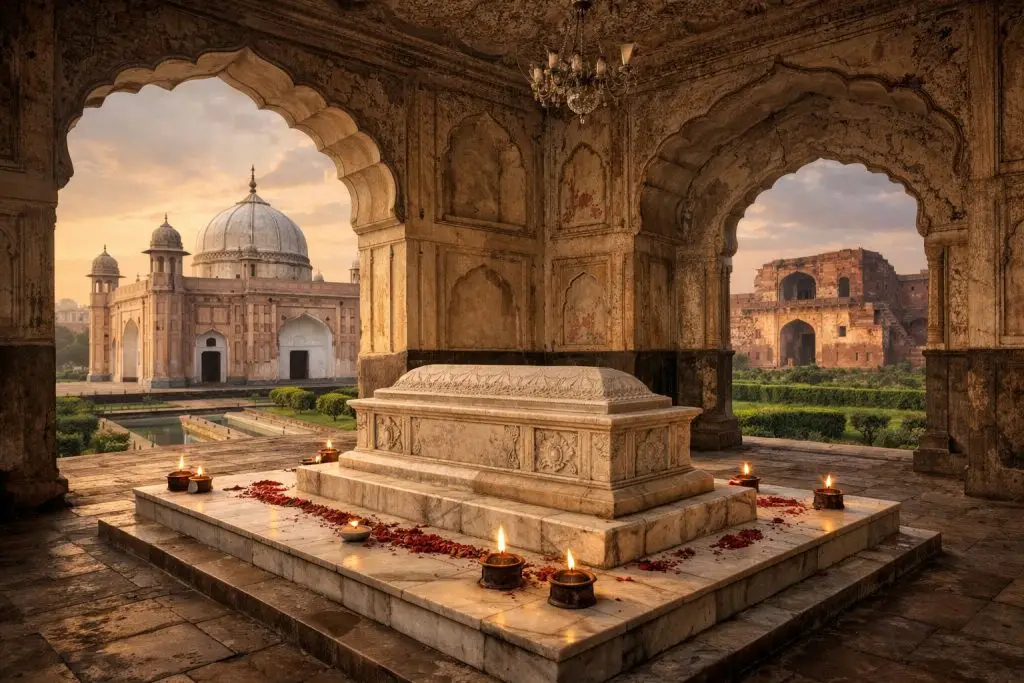
Many people at the time believed that her untimely death was a sign of misfortune connected to the site. Overcome with grief and influenced by these beliefs, Shaista Khan decided to abandon further development of the fort. As a result, construction was permanently halted, leaving Lalbagh Fort incomplete. This unfinished state has added a sense of mystery and emotional depth to its history, making it one of the most intriguing Mughal monuments in Bangladesh.
⚔️ Mughal Dominion and Decline
During its active years, Lalbagh Fort formed part of a lively Mughal city in Dhaka. The complex included thick defensive walls and artillery arrangements to protect against potential attacks. It served not only as a residence but also as a center of administration and military coordination.

However, when the Mughal capital of Bengal was later shifted from Dhaka to Murshidabad, the fort gradually lost its political importance. Over the centuries, neglect, natural disasters, and urban development caused damage to parts of the structure.
In the 20th century, restoration efforts were undertaken by the Department of Archaeology Bangladesh, which preserved the remaining structures and protected the site as a national heritage monument. Today, Lalbagh Fort stands as a powerful reminder of Mughal ambition, architectural brilliance, and a story marked by both grandeur and tragedy.
🏛️ Architectural Highlights
Lalbagh Fort stands as one of the finest surviving examples of Mughal-era architecture in Bangladesh. Built in the 17th century, the complex beautifully blends artistic elegance with practical military design. Every structure inside the fort reflects careful planning, symmetry, and attention to detail—key characteristics of Mughal construction. Although the fort was never fully completed, its existing buildings still showcase the sophistication and cultural richness of the Mughal period in Dhaka.
🕌 Pari Bibi’s Mausoleum
At the heart of the complex lies the graceful tomb of Pari Bibi, which is considered the most iconic feature of the fort. The mausoleum is constructed primarily of marble and stone, giving it a refined and luminous appearance. The design combines Persian artistic traditions with classic Mughal elements, such as balanced proportions and decorative detailing.
The structure is perfectly symmetrical, with a central dome rising above the square base. Inside, the interior chamber is calm and dignified, reflecting the respect and affection associated with Pari Bibi’s memory. The surrounding gardens enhance the beauty of the tomb, creating a peaceful setting that attracts visitors and photographers alike. Its architectural harmony and emotional history make it the centerpiece of Lalbagh Fort.
🏠 Diwan-i-Aam & Residential Structures
Another important building within the fort complex is the Diwan-i-Aam, or Hall of Public Audience. During the Mughal era, this space was used for official meetings, administrative discussions, and public gatherings. It also served as part of the residential quarters for the provincial governor.
The structure features arched entrances, spacious halls, and elevated platforms typical of Mughal administrative buildings. Today, a portion of the Diwan-i-Aam has been converted into a small museum. The museum displays a collection of Mughal-era artifacts, including ancient weapons, coins, ceramics, manuscripts, and objects discovered during archaeological excavations. These exhibits offer visitors a deeper understanding of daily life and governance during the Mughal period in Bengal.
🌿 Gardens & Water Features
The gardens inside Lalbagh Fort follow the traditional Charbagh layout, a classic Mughal garden style divided into symmetrical sections. Straight pathways intersect at right angles, and water channels run through the landscape, symbolizing paradise in Islamic garden design.
Lush green lawns, seasonal flowers, and fountains create a refreshing atmosphere within the historic walls. Even today, the gardens provide a tranquil escape from the busy surroundings of Old Dhaka, highlighting the Mughal emphasis on harmony between architecture and nature.
🛡️ Fortification Walls & Bastions
The fort’s thick boundary walls and corner bastions were carefully planned for defense. These strong structures demonstrate advanced military strategy, with elevated positions for surveillance and protection.
Though incomplete, the overall layout clearly reveals the Mughal approach to combining security with architectural beauty.
📍Location of Lalbagh Fort
Address: Lalbagh, Old Dhaka, Dhaka-1211, Bangladesh.
The fort is located on the southwest bank of the Buriganga River in the historic area of Old Dhaka. Its central location makes it easily accessible from major parts of the city.
🎟️ Ticket Price (2026 Updated)
The entry fee for Lalbagh Fort is affordable, making it a budget-friendly tourist destination.
- Bangladeshi Adult: ৳20
- Bangladeshi Student: ৳10
- SAARC Citizens: ৳100
- Other Foreign Visitors: ৳200
- Children under 5 years: Free
Tickets are available at the main entrance counter. Visitors should carry small cash for convenience.
🕙 Opening Hours & Off Days
📅 Weekly Off Day
- Sunday: Closed
The fort may also remain closed during major government holidays and special events.
🕰️ Opening Hours
Summer (April – September)
- Tuesday–Saturday: 10:00 AM – 1:00 PM & 1:30 PM – 6:00 PM
- Friday: 10:00 AM – 12:30 PM & 2:30 PM – 6:00 PM
- Monday: 2:30 PM – 6:00 PM
Winter (October – March)
- Tuesday–Saturday: 9:00 AM – 1:00 PM & 1:30 PM – 5:00 PM
- Friday: Open from 9:00 AM to 12:30 PM, then again from 2:00 PM to 5:00 PM
- Monday: 1:30 PM – 5:00 PM
🕌 Note: There is a short break during Friday Jummah prayers.
🚗 How to Reach Lalbagh Fort (Travel Guide)
Lalbagh Fort is located in the historic heart of Dhaka, making it accessible from almost every part of the city. However, because Old Dhaka is known for heavy traffic and narrow streets, planning your journey in advance can save time and make your trip more comfortable.
🚌 By Bus
Traveling by local bus is one of the most budget-friendly ways to reach Lalbagh Fort. You can take a city bus heading toward Azimpur, Gulistan, or Sadarghat. From Azimpur or Sadarghat bus stops, the fort is just a short rickshaw ride away. Bus fares are affordable, but traffic congestion during peak hours (9 AM–11 AM and 4 PM–7 PM) can cause delays. If possible, travel during mid-morning for a smoother ride.
🚕 By Rickshaw or CNG
Rickshaw and CNG auto-rickshaw are the most convenient transport options, especially for tourists. From major areas like Gulistan, Shahbagh, Dhanmondi, or New Market, you can hire a CNG directly to Lalbagh Fort . Agree on the cost in advance whenever the taxi meter is not being used. Ride-sharing services are also available in Dhaka and can drop you near the entrance gate.
🚶 On Foot
If you are staying in Old Dhaka, walking is a wonderful way to reach Lalbagh Fort. The historic streets, local markets, and traditional buildings create a unique cultural experience. Many visitors enjoy exploring the surrounding neighborhood before entering the fort.
📸 Best Spots Inside Lalbagh Fort
Once inside Lalbagh Fort, several architectural highlights deserve special attention.
✨ Pari Bibi’s Tomb – The marble mausoleum of Pari Bibi is the centerpiece of the fort. Its elegant dome and symmetrical structure make it one of the most photographed landmarks in the complex.
🌿 Mughal Gardens & Fountains – Inspired by the historic Mughal Charbagh design, these gardens include vibrant lawns, elegant walkways, and beautifully arranged watercourses.
🏛️ Diwan-i-Aam Hall – This historic audience hall once hosted administrative meetings. Today, it houses a small museum displaying Mughal-era weapons, coins, ceramics, and artifacts.
🖼️ Fort Walls & Bastions – Stroll beside the towering ramparts to admire the fortress’s strategic design and take in panoramic views of the nearby landscape.
🧭 Travel Tips for Visitors (Local & Foreign)
To make your visit comfortable and enjoyable, keep these practical tips in mind:
✅ Best Time to Visit: Early morning (9–10 AM) or late afternoon offers cooler weather and soft lighting for photography.
✅ Avoid Sunday: The fort remains closed on Sundays.
✅ Stay Hydrated: Dhaka can be hot and humid, especially in summer.
✅ Respect Prayer Breaks: On Fridays, there is a short midday closure for Jummah prayers.
✅ Photography: Personal photography is generally allowed, making it a great destination for history and travel bloggers.
🌆 Nearby Attractions to Continue Your Tour
Because Lalbagh Fort is located in Old Dhaka, you can easily explore nearby historical landmarks such as:
- Ahsan Manzil – The iconic Pink Palace.
- Star Mosque – Famous for its beautiful mosaic decorations.
- Armenian Church – A reminder of colonial trade history.
- Sadarghat – The vibrant river port on the Buriganga.
📌 Final Thoughts
Lalbagh Fort stands as a proud symbol of Mughal heritage in Bangladesh and remains one of the most treasured historical landmarks in Dhaka. Its unfinished walls tell a story of ambition, tragedy, and imperial power, while its peaceful gardens and elegant structures reflect the refined beauty of Mughal architecture. Every corner of the fort — from Pari Bibi’s tomb to the Diwan-i-Aam — offers a glimpse into a fascinating chapter of Bengal’s past.
Visiting Lalbagh Fort is more than just sightseeing; it is an opportunity to connect with centuries of history in the heart of Old Dhaka. Whether you are a history enthusiast, a student, a photographer, or a curious traveler, the fort provides a meaningful and educational experience.
To make the most of your visit, plan ahead, check opening hours, and arrive early to avoid crowds and heat. Take your time exploring the complex, appreciating its details, and capturing memorable photos of this timeless historic treasure.