
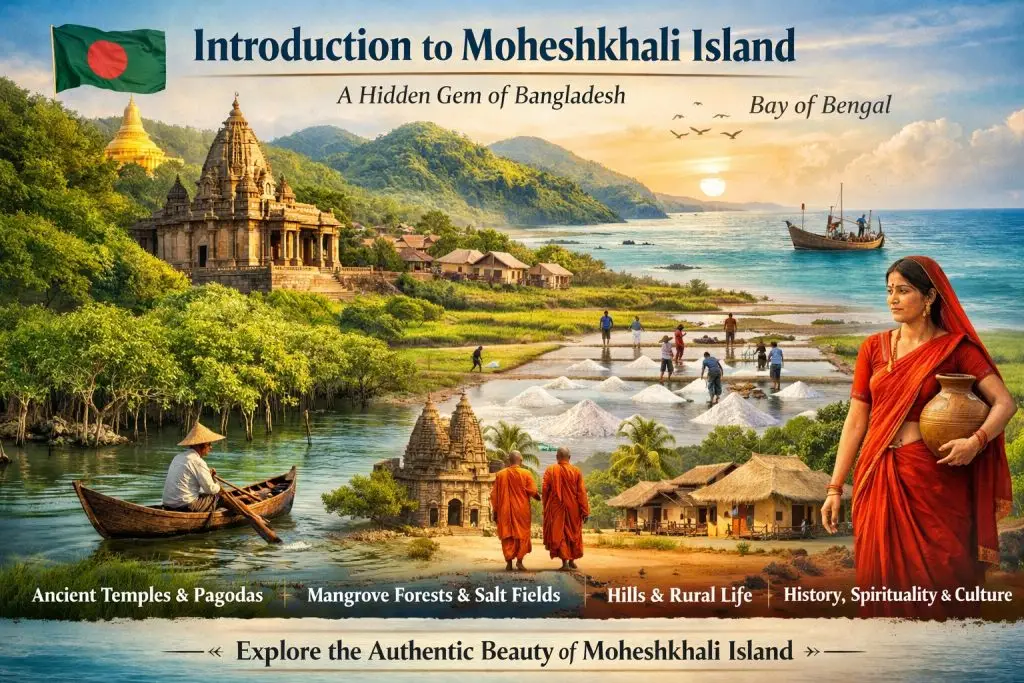
Discover Moheshkhali Island in Cox’s Bazar—its history, Adinath Temple, culture, and top attractions. Complete Moheshkhali Island travel guide for 2026.
Introduction: Moheshkhali Island Travel Guide
Uncover the charm of Moheshkhali Island in Cox’s Bazar—a destination rich in heritage, home to the historic Adinath Temple, vibrant local traditions, and captivating landmarks.
Situated within the Bay of Bengal just off the coast of Cox’s Bazar, Moheshkhali sets itself apart from standard beach getaways. Its unique charm comes from its historic roots, hill-lined coastlines, sacred temples, thriving mangroves, local salt cultivation, and a peaceful, slow-paced island rhythm.
Unlike Saint Martin’s Island, which focuses heavily on sandy shores, Moheshkhali provides a multi-faceted journey where cultural roots, spiritual essence, natural beauty, and rural traditions seamlessly intertwine. As travelers in 2026 increasingly look for tranquil, uncrowded alternatives near Cox’s Bazar, alongside meaningful eco-tourism and genuine cultural experiences in Bangladesh, Moheshkhali Island has emerged as a top choice for curious explorers.
Whether you want to climb the steps of ancient hilltop shrines, witness the unique process of traditional salt farming, or cruise past quiet mangroves, this island offers a refreshing change of pace. It is the perfect day trip or weekend escape for anyone looking to experience the authentic coastal heritage and untouched natural beauty of Bangladesh.
Geographical Location of Moheshkhali Island
Moheshkhali Island is one of the most geographically unique islands in Bangladesh, located in the Cox’s Bazar District under the Chattogram Division 🇧🇩. The island lies just north-west of Cox’s Bazar town and is separated from the mainland by the Moheshkhali Channel, a calm tidal waterway that connects rivers with the Bay of Bengal 🌊. Because of this position, Moheshkhali Island sits between land and sea, giving it a special coastal character that is different from other islands in the country.
With an area of about 268 square kilometers, Moheshkhali Island holds a very rare distinction—it is the only hilly island in Bangladesh ⛰️. While most coastal islands are flat, Moheshkhali features gentle green hills that rise above the surrounding plains. These hills shape the island’s scenery and create cooler, breezy viewpoints where visitors can see rivers, villages, salt fields, and the open sea. The hills also play an important role in protecting settlements from tidal flooding.
The island is surrounded by a network of rivers, canals, and tidal creeks, which are essential to local life. These waterways support fishing, small-boat transport, and daily trade 🚤. Along the coastline, wide mudflats and coastal zones appear during low tide, creating natural habitats for birds and marine species. Moving inland, the landscape changes into fertile paddy fields 🌾, where rice is cultivated using seasonal rain and tidal water.
Another important feature of Moheshkhali Island is its mangrove forests 🌿, which help protect the coast from storms and erosion while supporting rich biodiversity. Large areas of the island are also covered with traditional salt beds, where salt is produced using age-old methods under the coastal sun ☀️. These salt fields are a defining visual and economic feature of the island.
Thanks to boat services and bridge connections, Moheshkhali Island is easily accessible from Cox’s Bazar, making it suitable for day trips as well as longer stays. The combination of hills, waterways, farmland, mangroves, and coastal landscapes makes Moheshkhali Island one of the most naturally diverse and ecologically special islands in Bangladesh, offering a peaceful and balanced environment shaped by both nature and human life.

Full History of Moheshkhali Island
Ancient Origins
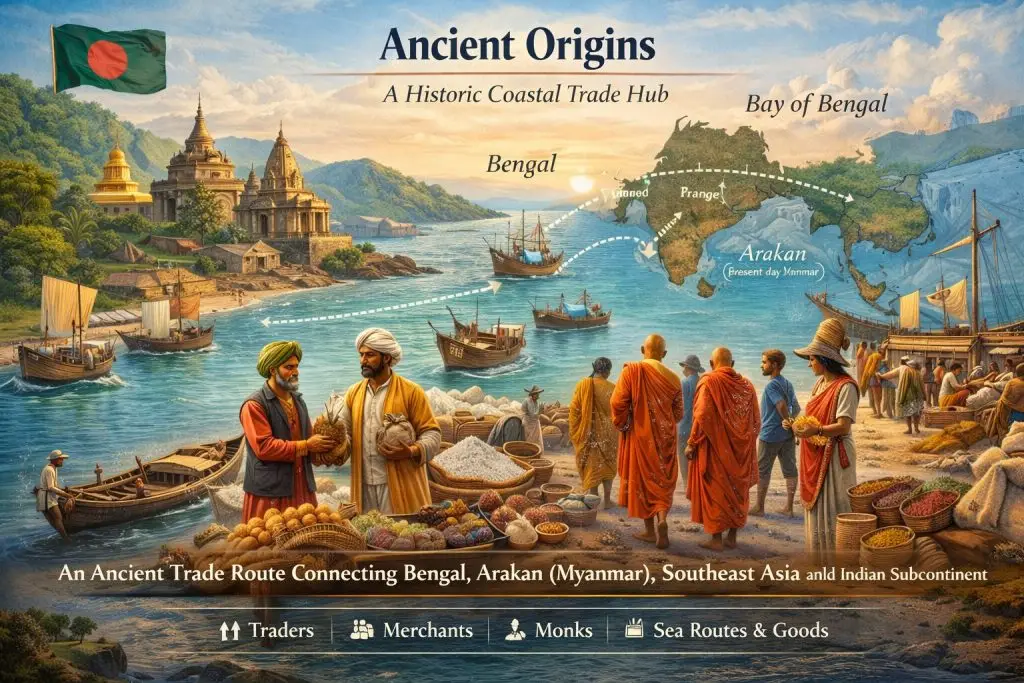
The ancient origins of Moheshkhali Island date back over one thousand years, highlighting its importance in the early history of coastal Bangladesh 🇧🇩. Located near the Bay of Bengal, the island was part of an ancient coastal trade route that connected Bengal with Arakan (present-day Myanmar), Southeast Asia, and the Indian subcontinent. This route allowed traders and travelers to exchange goods, culture, and religious ideas across the region.
Because of its strategic maritime location, Moheshkhali Island served as a safe resting and trading point for sailors, monks, and merchants ⚓. Ships often stopped here to take shelter from strong sea currents, rest, and resupply essentials. Traders exchanged salt, rice, spices, and marine products with local communities. The island’s fertile land, freshwater sources, and gentle hills supported early settlements, shaping Moheshkhali’s long-standing cultural and historical identity that continues to influence the island today.
Buddhist Heritage and Early Settlements
The Buddhist heritage of Moheshkhali Island represents one of the oldest and most influential chapters in the island’s history. Long before modern settlements, ancient Buddhist communities lived on the island, attracted by its peaceful environment and strategic coastal location in coastal Bengal. Archaeological evidence, including ancient pagodas, stone statues, and religious ruins, suggests that Moheshkhali Island once played an important role in early Buddhist civilization. These sacred structures were not only places of worship but also centers of learning where monks practiced meditation, education, and spiritual guidance.
Because Moheshkhali Island was connected to regional sea routes, Buddhist monks and travelers from neighboring regions are believed to have visited and stayed here during long journeys. This made the island a respected center of Buddhist learning and worship in the coastal region. Today, the remnants of this Buddhist past highlight Moheshkhali Island’s deep spiritual roots and its contribution to the religious and cultural history of Bangladesh.

Hindu Influence & the Legend of Adinath Temple
The Hindu influence on Moheshkhali Island is deeply connected to the legendary Adinath Temple, one of the most important Hindu pilgrimage sites in Bangladesh 🇧🇩. According to historical belief, the temple was originally built by King Dharmapala in the 9th century and is dedicated to Lord Shiva, making it a sacred destination for Shaivite devotees. The temple stands on the highest hill of Moheshkhali Island ⛰️, offering both spiritual significance and breathtaking panoramic views of the surrounding land and sea.
Over the centuries, Adinath Temple Moheshkhali has been damaged and rebuilt several times due to natural disasters, yet its spiritual importance has never faded. Each year during Shivratri, thousands of pilgrims visit the temple to offer prayers, creating one of the largest religious gatherings in the coastal region. Today, the temple remains a powerful symbol of faith, resilience, and Hindu heritage on Moheshkhali Island.
Islamic Period & Cultural Harmony
The introduction of Islam represented a defining era for Moheshkhali. Between the 13th and 16th centuries, Muslim merchants and seafaring settlers arrived via Bay of Bengal trade routes. Rather than displacing established faiths, Islamic traditions integrated smoothly with existing Hindu and Buddhist practices, fostering a legacy of peaceful coexistence.
As mosques and educational hubs emerged, they became vital spaces for learning and community unity. Today, this enduring mutual respect makes the island a brilliant example of religious tolerance and social harmony in coastal Bangladesh.
The Colonial Era
During British administration, the island grew in strategic value due to specific economic and administrative priorities:
- Salt Production: The coastlines were systematically utilized for large-scale salt harvesting.
- Maritime Trade Control: Its geographical position allowed authorities to monitor regional shipping routes.
- Local Administration: Small-scale governance structures were established to manage the island’s population.
Because infrastructural changes remained minimal, the island successfully preserved its traditional lifestyle and rustic charm.
Post-Independence Growth
Following Bangladesh’s liberation in 1971, Moheshkhali gradually modernized by building upon its foundational economic pillars:
- Agricultural Expansion: Developing local farming practices tailored to the island’s unique terrain.
- Generational Fishing: Scaling up artisanal marine fishing to supply mainland markets.
- Salt Refining: Enhancing traditional salt-pan farming methods for higher yields.
- Commercial Trade: Boosting local marketplaces and cross-channel connectivity.
Modern transport links and rising environmental awareness are now transforming Moheshkhali into a premier heritage and eco-tourism destination.
Cultural Life & Local Communities
The social fabric of Moheshkhali Island is incredibly vibrant, characterized by a harmonious blend of various backgrounds living side by side.
Diverse Demographics
The island is home to a unique mix of populations, including:
- Bengali Muslims: Forming the majority, they drive the island’s daily commerce, agricultural activities, and local governance.
- Hindu Communities: Longtime residents who maintain deep spiritual roots, centered around ancient island shrines and hereditary traditions.
- Buddhist Minorities: A quiet, historic community that preserves its unique architecture, monasteries, and peaceful ways of life.
- Indigenous Fishing Families: Generational coastal communities whose entire livelihood depends on the rhythms of the sea.
Cultural Highlights
- Strong Community Bonds: Neighbors from different faiths share a close-knit, supportive relationship rooted in mutual respect.
- Traditional Fishing Techniques: Coastal workers rely on ancestral methods, utilizing handmade wooden boats and artisanal tools.
- Folk Songs and Local Festivals: The island’s heritage comes alive through seasonal celebrations, traditional music, and colorful religious events.
- Deep Respect for Religious Diversity: A long history of tolerance ensures that distinct faiths celebrate their customs openly and harmoniously.
Life on Moheshkhali remains wonderfully simple, peaceful, and closely connected to the surrounding natural environment.
Adinath Temple: Spiritual Heart of Moheshkhali
The historic Adinath Temple stands as the most defining and iconic landmark on Moheshkhali Island, drawing both devout pilgrims and curious travelers.
Key Highlights
- Hilltop Location with Panoramic Sea Views: Perched majestically atop Mainak Hill, this sacred sanctuary overlooks the vast waters, offering sweeping, unobstructed vistas of the coastline below.
- Ancient Stone Architecture: The temple complex displays beautiful, historic masonry and classic design elements that reflect centuries of religious artistry and regional heritage.
- Calm and Spiritual Atmosphere: Separated from the noise of mainstream tourism, the grounds provide a deeply peaceful environment where visitors can find quiet reflection.
- Ideal for Photography and Meditation: The stunning combination of sacred structures and natural elements makes it a perfect spot for capturing memories or practicing mindfulness.
The journey up the hill to reach the shrine is an experience in itself. As you ascend the stone steps, the trail unfolds to reveal breathtaking views of lush green forests, traditional island villages, and the shimmering Bay of Bengal. It is a place where spirituality perfectly aligns with natural beauty, making it an unmissable stop for anyone exploring the island.
Natural Beauty & Biodiversity
Moheshkhali Island is a magnificent sanctuary overflowing with pristine ecological landscapes and rich coastal wildlife, making it a dream destination for environmental enthusiasts.
Key Natural Attractions
- Mangrove Forests: Tidal woodland ecosystems line the coastlines, with stilt roots trapping sediment, safeguarding the shoreline, and providing vital breeding grounds for diverse marine species.
- Shimmering Salt Fields: Expansive, sun-drenched coastal flats transform into glistening white mirrors during the dry season, showcasing a fascinating, generation-spanning traditional harvesting industry.
- Green Hills: Rising sharply against the coastal horizon, these rare undulating landforms offer panoramic views, a refreshing microclimate, and a lush canopy of native trees.
- Tidal Rivers and Canals: Winding networks of brackish waterways cut through the interior, serving as peaceful aquatic highways for traditional wooden country boats.
- Coastal Bird Habitats: Sheltered mudflats and pristine estuaries attract a spectacular array of resident and migratory waterfowl, making it a haven for birdwatchers.
This incredible environmental variety makes the island an ideal destination for sustainable eco-tourism, authentic nature photography, and slow travel. It allows visitors to step away from crowded resorts and connect deeply with the untouched, raw wilderness of coastal Bangladesh.
Best Time to Visit Moheshkhali Island (2026)
✔️ November to March is the best time to visit Moheshkhali Island.
Seasonal Guide:
- ❄️ Winter (Nov–Feb): Best weather for sightseeing
- 🌸 Early Spring (March): Warm and pleasant
- 🌧️ Monsoon (Apr–Oct): Heavy rain, travel not advised
How to Reach Moheshkhali Island
Travel Route:
- Reach Cox’s Bazar by bus, train, or flight
- Go to Gorakghata or Teknaf Ghat
- Take a boat or ferry to Moheshkhali Island
⏱️ Boat ride: 20–30 minutes
🌉 Improved bridges now allow easy day trips.
Local Food & Cuisine
Moheshkhali Island offers delicious local Bangladeshi food.
Popular Dishes:
- Fresh fish curry
- Shutki (dried fish)
- Rice and lentils 🍚
- Seasonal vegetables
- Coconut-based dishes 🥥
Things to Do in Moheshkhali Island
1️⃣ Visit Adinath Temple
2️⃣ Explore traditional salt fields
3️⃣ Walk through rural villages
4️⃣ Nature & landscape photography
5️⃣ Boat rides through canals 🚣
Responsible Travel & Eco-Tourism
Travel responsibly by:
- Respecting religious sites 🙏
- Avoiding plastic waste
- Supporting local businesses
- Protecting natural habitats
Travel Tips for 2026
✔️ Carry cash
✔️ Dress modestly
✔️ Hire local guides
✔️ Visit mornings or evenings
✔️ Respect local traditions
Why Moheshkhali Island Is Unique
Moheshkhali Island stands out as one of Bangladesh’s most distinctive coastal treasures due to several remarkable features:
- The Nation’s Only Hilly Island: Unlike the flat terrains typical of the coastline, Moheshkhali features unique, rolling topography that offers stunning elevated views of the surrounding Bay of Bengal.
- Ancient Spiritual Heritage: It serves as a sacred destination, home to centuries-old shrines like the revered hilltop Adinath Temple, attracting pilgrims and history enthusiasts alike.
- Peaceful Rural Life: The island remains untouched by commercial commercialism, allowing visitors to experience a slow-paced, tranquil lifestyle where traditional island customs still thrive.
- Traditional Salt Farming: Expansive coastal salt pans showcase a fascinating local industry, where workers harvest raw salt crystals using time-tested, generation-spanning techniques.
- Rich Cultural Diversity: The local identity is shaped by a harmonious blend of Hindu, Buddhist, and Islamic traditions, creating a vibrant, multicultural community fabric.
This rare combination makes Moheshkhali Island the perfect destination for slow travel, heritage tourism, and eco-friendly trips. It offers conscious travelers a meaningful alternative near Cox’s Bazar, focusing on environmental respect, cultural immersion, and deep historical discovery rather than crowded beach attractions.
Future of Tourism in Moheshkhali Island
The future of tourism in Moheshkhali Island looks very promising as the island is gradually emerging as a sustainable travel destination in Bangladesh 🌴🇧🇩. By 2026, tourism authorities and local communities are focusing on promoting Moheshkhali as an ideal spot for eco-tourism, cultural exploration, and heritage travel, attracting visitors who are interested in authentic experiences rather than crowded beaches. Unlike Saint Martin’s Island, Moheshkhali offers a combination of hilly landscapes, mangrove forests, salt fields, and religious sites, making it a unique destination for travelers seeking both nature and culture.
The government of Bangladesh, along with local organizations, is taking steps to ensure that tourism growth does not harm the island’s fragile ecosystems. Efforts include building eco-friendly accommodations, improving transportation and access, and implementing programs to preserve mangrove forests, wildlife habitats, and traditional salt farms 🌿. Sustainable tourism initiatives also focus on empowering local communities by encouraging home-stays, local guided tours, and handicraft markets, which provide income while keeping the culture alive.
With these measures, Moheshkhali Island is expected to attract more heritage travelers, photographers, nature enthusiasts, and spiritual tourists in the coming years. The focus on responsible and eco-friendly tourism will help maintain the island’s natural beauty and cultural heritage, ensuring that visitors in 2026 and beyond can enjoy an authentic and peaceful experience. 🌊✨
Conclusion
Moheshkhali Island represents far more than a scenic getaway—it is a vibrant tapestry woven from history, local traditions, and pristine landscapes. This destination beautifully merges sacred heritage, pastoral charm, and ecological variety, offering an escape that feels both serene and profoundly insightful. From the revered Adinath Temple overlooking the sea to the glistening salt pans, thick mangrove thickets, and sweeping emerald hills, every part of the island showcases its distinctive personality. Its rich cultural fabric, molded over generations by Hindu, Buddhist, and Islamic heritages, provides incredible depth for history enthusiasts and curious wanderers alike.
For adventurers looking to discover hidden treasures around Cox’s Bazar, Moheshkhali offers a rewarding alternative to traditional coastal tourism. Travelers can immerse themselves in sustainable eco-tourism, historical discovery, and genuine village routines, directly contributing to community growth and environmental conservation. As we move through 2026, the island is fast becoming a premier choice for those craving meaningful journeys, combining peaceful vistas, breathtaking scenery, and rich folklore into a single unforgettable trip. Moheshkhali Island stands out as an essential destination for anyone wanting to truly connect with the authentic coastal identity of Bangladesh.