
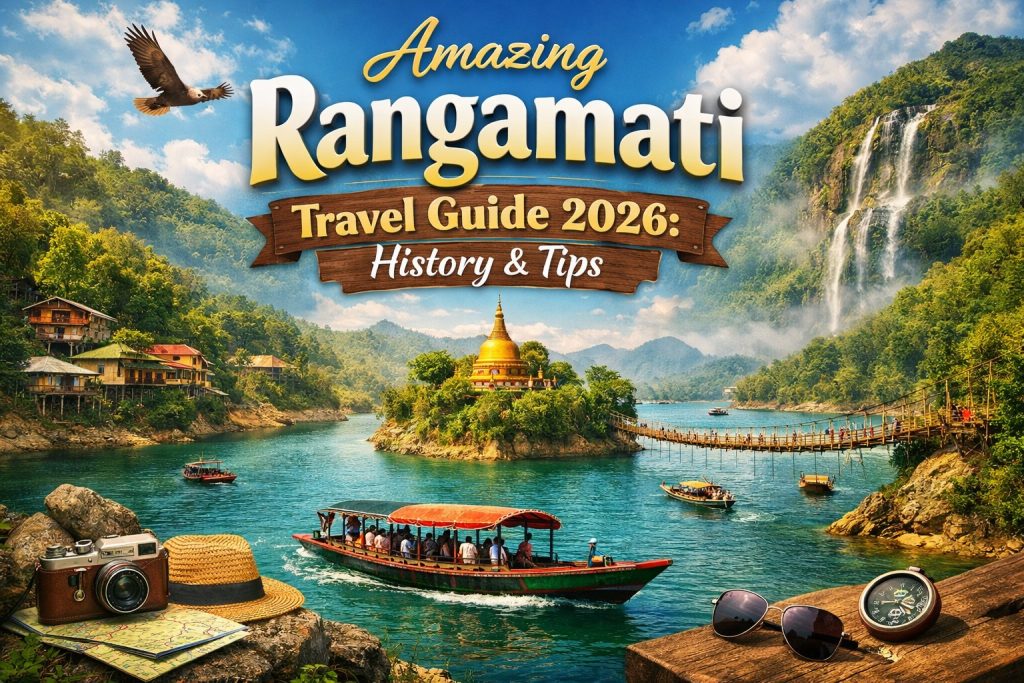
Discover Rangamati, Bangladesh – full history, tribal culture, Kaptai Lake, best time to visit, travel tips & complete Rangamati travel guide 2026.
Introduction: Rangamati
The most beautiful and culturally rich travel destinations in Bangladesh 🇧🇩. Located in the heart of the Chittagong Hill Tracts, Rangamati is famous for its green hills, Kaptai Lake, tribal culture, waterfalls, and peaceful environment.
Unlike the crowded tourist spots of the plains, Rangamati offers a calm and refreshing experience. Whether you love nature travel, cultural exploration, or adventure tourism, Rangamati has something special for everyone.

Geography & Location
this scenic hill district is situated in southeastern Bangladesh and is the largest district in the country by area. It is surrounded by hills, forests, lakes, and rivers, creating a unique landscape.
Borders of Rangamati:
- North: India (Tripura)
- East: India (Mizoram) & Myanmar
- South: Bandarban
- West: Khagrachari & Chattogram
The hilly terrain and dense forests make Rangamati a top destination for eco-tourism in Bangladesh.

How to Reach Rangamati
Traveling from Dhaka
Rangamati can be reached easily from Dhaka by direct bus services, with an average travel time of around 7 to 8 hours. Several well-known bus operators, including Shyamoli, S Alam, and Saintmartin, provide comfortable and reliable journeys throughout the week. Overnight buses are a popular choice for travelers who want to save time and arrive early in the morning.
By Air Route
Travelers can also fly from Dhaka to Chattogram Airport. From Chattogram, Rangamati is approximately a 3 to 4-hour drive by bus or private car. This route is especially scenic, offering beautiful views of hills, forests, and winding roads as you enter the hill tracts.
No matter which route you choose, the journey to Rangamati is part of the adventure, gradually introducing visitors to the region’s breathtaking natural beauty.
Full History
Ancient & Indigenous History
Rangamati has a long and fascinating history shaped by its indigenous communities, who have lived in the hill tracts for centuries. The major ethnic groups of the region include the Chakma, Marma, Tripura, Tanchangya, Bawm, Chak, and Khumi, each with its own language, dress, festivals, and social traditions.
These communities traditionally depended on Jhum (shifting) cultivation, fishing in rivers and Kaptai Lake, and forest-based livelihoods such as hunting and gathering. Their deep connection with nature influenced their sustainable way of life and respect for the environment.
Indigenous customs, oral history, music, and rituals continue to shape Rangamati’s cultural identity today, making it one of the most culturally diverse and historically rich regions in Bangladesh.es, and customs form the cultural backbone of Rangamati.

British Colonial Period
During the British colonial era, Rangamati gained significant administrative importance in the Chittagong Hill Tracts.
In 1860, the British government officially declared the Chittagong Hill Tracts (CHT) a separate administrative region, recognizing its unique geography, tribal population, and social structure. Rangamati was later developed as a key administrative headquarters, with colonial offices, courts, and infrastructure established. One of the most important developments of this period was the CHT Regulation Act of 1900, which aimed to protect indigenous land ownership, traditional leadership systems, and cultural practices.
This law restricted land transfers to non-tribal settlers, making it a rare example of colonial policies that acknowledged and preserved indigenous rights. Its impact is still felt in the region today.
Pakistan Era & Kaptai Dam
During the Pakistan era in the 1960s, the construction of the Kaptai Hydroelectric Dam on the Karnaphuli River marked a major historical turning point for Rangamati.
The project led to the creation of Kaptai Lake, which became the largest man-made lake in Bangladesh 🌊 and a vital source of hydroelectric power for the country. While the dam significantly contributed to electricity generation, irrigation, and economic development, it had serious social consequences.
Vast areas of fertile land and villages were submerged, forcing thousands of indigenous families to leave their ancestral homes. Many were displaced without proper rehabilitation, leading to long-term social and cultural challenges. This event deeply reshaped Rangamati’s landscape, population, and history.
After Independence
After the independence of Bangladesh in 1971, Rangamati officially became part of the new nation and gradually entered a new phase of development.
The government began improving infrastructure, road connectivity, education, and administrative services in the hill district. Over time, Rangamati emerged as one of the country’s most popular tourist destinations, attracting visitors with its scenic hills, Kaptai Lake, hanging bridges, waterfalls, and rich tribal culture. Despite modernization and growing tourism, efforts have been made to preserve indigenous traditions, languages, and lifestyles.
Cultural festivals, handicrafts, and traditional markets continue to reflect the area’s ethnic identity. Today, Rangamati balances development with heritage conservation and environmental protection.
People, Culture & Lifestyle
Rangamati is truly a cultural mosaic, shaped by the harmonious coexistence of indigenous communities and Bengali settlers.
The region is home to diverse ethnic groups such as the Chakma, Marma, Tripura, and others, each preserving its own language, rituals, and social customs. Traditional clothing, often handmade through handloom weaving, reflects vibrant colors and intricate patterns unique to each community. Bamboo and wooden crafts are widely practiced and used in daily life, from household items to decorative art.
Folk music and traditional dances are central to festivals, religious ceremonies, and community gatherings. Life in Rangamati is deeply community-based, with strong family ties, shared responsibilities, and a close relationship with nature guiding everyday lifestyles.
Festivals & Traditions
Baisabi Festival
The most important tribal festival, celebrating the New Year with:
- Cultural dances
- Traditional food
- Colorful processions
Buddhist Festivals
Rangamati has strong Buddhist roots, especially among the Chakma and Marma communities. Monasteries like Rajban Vihara host peaceful ceremonies.
Weather & Best Time to Visit
| Season | Experience |
|---|---|
| ☀️ Summer (Mar–May) | Hot but good for lake activities |
| 🌧️ Monsoon (Jun–Sep) | Green hills & waterfalls |
| ❄️ Winter (Oct–Feb) | Best time to visit ⭐ |
Best Time: October to February for comfortable weather and sightseeing.
Top Tourist Attractions Of Rangamati
1. Kaptai Lake
Kaptai Lake is the largest man-made lake in Bangladesh and a must-visit destination in Rangamati. Surrounded by rolling hills and lush greenery, the lake offers breathtaking views and a serene atmosphere for travelers. Boating, fishing, and lakeside picnics are popular activities, making it a perfect spot for relaxation and photography. Floating restaurants on the lake serve fresh local fish, providing a unique dining experience. Visiting Kaptai Lake allows tourists to enjoy the natural beauty, peaceful environment, and vibrant local culture of Rangamati. It is truly the centerpiece of Rangamati travel experiences.
2. Hanging Bridge (Jhulonto Bridge)
The Hanging Bridge, locally known as Jhulonto Bridge, is one of Rangamati’s most iconic attractions. This suspension bridge stretches over scenic landscapes, offering visitors stunning views of hills, rivers, and lush greenery. Walking across the bridge provides a thrilling experience and excellent photo opportunities, especially during sunrise or sunset. It is also a gateway to exploring nearby tribal villages and local markets. The Jhulonto Bridge reflects the region’s unique engineering and cultural charm, making it a must-visit destination for travelers seeking adventure, nature, and authentic Rangamati travel experiences.
3. Tribal Cultural Museum
The Tribal Cultural Museum in Rangamati showcases the rich heritage of indigenous communities. Visitors can explore traditional handicrafts, tools, clothing, and artworks, gaining insight into the lifestyle and culture of the region. It’s a must-visit for travelers seeking an authentic Rangamati cultural experience, offering education, history, and a glimpse into Bangladesh’s diverse tribal traditions.
4. Shuvolong Waterfall
Shuvolong Waterfall in Rangamati is a breathtaking natural attraction surrounded by lush hills and forests. Its cascading waters create a serene and refreshing environment, perfect for nature lovers and photographers. Accessible via short treks, the waterfall offers a peaceful escape and an authentic Rangamati travel experience, showcasing the region’s stunning natural beauty.
5. Rajban Vihara
Rajban Vihara is a serene Buddhist monastery in Rangamati, known for its peaceful environment and traditional architecture. Visitors can explore the monastery, observe rituals, and enjoy the tranquil surroundings. A must-visit for travelers seeking culture and spirituality, Rajban Vihara offers a unique glimpse into the Buddhist heritage of the region, making it an essential part of Rangamati travel experiences.
6. Kaptai National Park
Kaptai National Park in Rangamati is a lush sanctuary filled with diverse flora and fauna. Ideal for hiking, wildlife spotting, and nature photography, the park offers a peaceful escape from city life. Visitors can explore its scenic trails and enjoy the fresh air, making it a key destination for authentic Rangamati travel experiences.
Local Food & Cuisine
Must-try foods:
- Grilled tilapia fish
- Bamboo chicken
- Sticky rice
- Hill vegetables with local spices
Floating restaurants on Kaptai Lake offer unforgettable dining experiences.
Additional Tips:
- Try meals prepared by tribal communities for authentic flavors and traditional recipes.
- Don’t miss seasonal fruits and local snacks available in markets and lakeside stalls.
- Enjoy dining with a view of the lake at sunset for a truly memorable experience.
Rangamati’s cuisine reflects the region’s natural resources and tribal heritage, offering a unique combination of flavors that travelers will remember long after their visit.
Top 15 Hotels & Resorts with Phone Numbers
- Aronnak Holiday Resort
📍 Located next to Kaptai Lake — A beautiful resort offering boat rides and stunning water views.
📞 +8801769-312021 - Rangadip Resort
📍 Rangamati — Comfortable stay with good service
📞 +8801327-475252 - Nilanjana Boat Club & Resort
📍 Parjatan Complex — Lakeside resort with boat club access
📞 +8801810-044320 - Parjatan Holiday Complex
📍 Hanging Bridge Rd — Classic tourist hotel in Rangamati
📞 +8801863-231185 - Lakeshore Resort
📍 Kaptai — Popular resort near the lake
📞 +8801550-322448 - Hotel Nadisa International, Rangamati
📍 Reserve Bazaar — Well-known hotel near bus station
📞 +8801737-453545 - Wildwood Island Resort
📍 Rangamati — Island resort with nature vibe
📞 +8801833-334309 - Hotel Jum Palace, Rangamati
📍 T&T Area — Budget-friendly hotel
📞 +8801625-100000 - The Grand Hill Taj
📍 Rangamati — Classic hillside hotel experience
📞 +8801600-343694 - Divine Lake Island
📍 Situated on Kaptai Road — Offers peaceful lakefront lodging with an island-inspired setting.
📞 +8801958-054408 - Hotel Sonar Bangla
📍 Rangamati — Comfortable hotel stay option
📞 +8801618-791111 - Hotel Square Park
📍 Old Bus Stand — Affordable hotel with basic amenities
📞 +8801716-933833 - Rainya Tugun Eco Resort
📍 Kamilachari — Eco-friendly resort in scenic location
📞 +8801551-708244 - Hotel Hill Ambassador
📍 Fishery Ghat — Good mid-range hotel
📞 +8801875-117070 - Hotel Crown Plaza
📍 Omda Miah Hill & Parjatan Rd — Classic hotel (📞 0351-61638 | 01824-637393 | 01877-110011)
Local Tip
Phone numbers and availability sometimes change — always call ahead to confirm rooms & rates before traveling.
Top 10 Best Restaurants
1️⃣ Peda Ting Ting Restaurant (Floating Restaurant)
📍 Kaptai Lake
⭐ Popular for its unique floating restaurant concept, scenic water views, and delicious fish sourced from the lake.
🍛 Best for: Grilled fish, Bangladeshi dishes
2️⃣ Tabassum Restaurant
📍 Rangamati Town
⭐ One of the oldest & most trusted restaurants
🍗 Best for: Bengali meals, chicken curry, rice
3️⃣ Green Castle Restaurant
📍 Near Hanging Bridge Road
⭐ Clean environment & family-friendly
🍝 Best for: Chinese & Bangladeshi food
4️⃣ Nilanjana Restaurant
📍 Nilanjana Resort Area
⭐ Beautiful lake-side dining experience
🐟 Best for: Fish curry, BBQ, local cuisine
5️⃣ Hotel Nadisa Restaurant
📍 Reserve Bazar
⭐ Popular among travelers & tour groups
🍛A great spot for fixed meal options featuring both local Bangla flavors and popular Chinese cuisine.
6️⃣ Aronnak Resort Restaurant
📍 Kaptai Lake Area
⭐ Peaceful nature view with quality food
🍗 Best for: BBQ, traditional Bangladeshi items
7️⃣ Lake View Restaurant
📍 Fishery Ghat
⭐ Budget-friendly with scenic lake view
🍚 Best for: Rice, fish fry, local dishes
8️⃣ Hilltop Restaurant
📍 Hill area of Rangamati
⭐ Calm atmosphere & good sunset view
🍝 Best for: Chinese, fast food, snacks
9️⃣ Parjatan Restaurant (Tourism Corporation)
📍 Parjatan Holiday Complex
⭐ Reliable quality & hygienic food
🍛 Best for: Bengali & continental dishes
🔟 Rangamati Food Corner
📍 Main Town Area
⭐ Quick bites & street-style food
🍟 Best for: Burgers, noodles, fried rice
Food Tips
✔️ Try fresh lake fish (Tilapia & Koi)
✔️ Ask for less spicy if you’re not used to hill-style cooking
✔️ Having your meal near the lake after sunset offers a calm and memorable dining experience
✔️ Sample traditional tribal dishes for an authentic taste of local culture
✔️ Wash hands or use hand sanitizer before eating, as street food is commonly served by hand
✔️ Carry small cash for local food stalls that may not accept cards
✔️ Don’t miss sweet treats like bamboo sticky rice desserts when available
Following these tips ensures you enjoy Rangamati’s culinary offerings safely and authentically, while experiencing the rich flavors and cultural diversity that make this hill district a must-visit food destination.
Shopping
Buy authentic local products:
- Handwoven tribal fabrics
- Bamboo baskets
- Beaded jewelry
- Wooden crafts
Best shopping areas: Rangamati Bazaar & Lake Ghat markets
Additional Tips:
- Explore local handicraft shops to discover unique souvenirs reflecting tribal culture.
- Don’t forget to bargain politely to get the best deals.
- Pick seasonal products like fruits or traditional snacks for a more local experience.
- Supporting local artisans helps preserve Rangamati’s rich cultural heritage.
Shopping in Rangamati is not just about souvenirs; it’s a way to experience the creativity, craftsmanship, and traditions of the indigenous communities while taking home a piece of this beautiful hill district.
Best Places to Stay
- Parjatan Holiday Complex
- Lake-view resorts
- Eco-lodges & homestays
- Budget guesthouses
Book early during winter season
Additional Tips:
- Choose accommodations near Kaptai Lake for scenic views and easy access to water activities.
- Eco-lodges and homestays offer a chance to experience local tribal culture firsthand.
- Check online reviews and amenities to match your comfort and budget preferences.
- Booking in advance ensures availability during peak tourist seasons and festival periods.
Whether you prefer luxury resorts, cozy homestays, or budget-friendly guesthouses, Rangamati offers a wide range of accommodations that cater to every traveler, making your stay comfortable while allowing you to explore the beauty and culture of this hill district.
Travel Tips & Safety
✔️ Respect tribal customs
✔️ Always wear life jackets on boats
✔️ Carry cash
✔️ Avoid night travel in remote areas
✔️ Hire local guides for hill trekking
Additional Tips:
✔️ Keep your belongings secure while exploring markets and crowded areas
✔️ Dress comfortably and modestly, especially when visiting villages or religious sites
✔️ Stay hydrated and carry snacks during long trips or hikes
✔️ Check weather updates before planning outdoor activities to ensure safety
Following these tips ensures a safe and enjoyable experience while exploring Rangamati, helping you make the most of its scenic beauty, cultural richness, and unique attractions.
Why Rangamati Should Be on Your Travel List
Rangamati is more than a place to visit—it’s a feeling to be lived. Surrounded by fog-kissed hills, shimmering lake waters, timeless traditions, and serene Buddhist monasteries, this hill town creates a travel experience that stays in your heart long after the journey ends.
If you are searching for:
- Best hill station in Bangladesh
- Rangamati travel guide
- Nature tourism in Bangladesh
- Kaptai Lake tour
Conclusion
Rangamati is one of Bangladesh’s most enchanting destinations, offering a perfect blend of natural beauty, rich history, and vibrant tribal culture. From the serene waters of Kaptai Lake to scenic viewpoints, historic landmarks, and colorful tribal villages, Rangamati provides a unique and unforgettable travel experience. Travelers can enjoy boat rides, explore local markets, and immerse themselves in the traditions and lifestyle of indigenous communities. Following practical travel tips—like planning your route, respecting local customs, and choosing the best times to visit—ensures a smooth and memorable journey.
Whether you are seeking adventure, photography opportunities, cultural immersion, or peaceful relaxation, Rangamati has something for everyone. By exploring its landscapes, heritage sites, and local flavors, visitors can experience the true essence of this hill district. Rangamati is more than a scenic destination; it is a place where nature, history, and culture converge, making your 2026 visit genuinely remarkable.