
Discover rose garden history, design ideas, and expert growing tips. Learn how to create a vibrant, fragrant rose garden for any space in 2026.
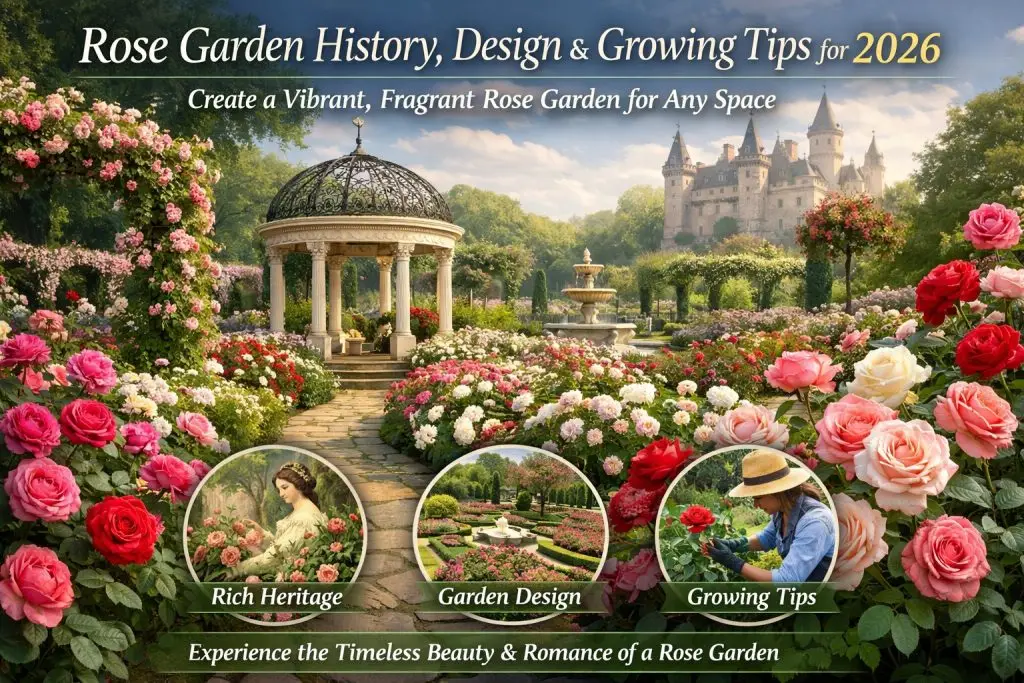
A rose garden is far more than a simple arrangement of flowering plants — it is a timeless blend of beauty, fragrance, heritage, and artistic landscape design. For centuries, roses have represented love, elegance, and emotional expression across cultures. Whether in royal estates, botanical parks, or home backyards, rose gardens continue to captivate gardeners and visitors alike.
🌍 The Ancient Origins of Rose Gardens
The cultivation of roses dates back thousands of years, making them one of the oldest ornamental plants known to humanity. Early civilizations quickly recognized the rose not only for its beauty but also for its fragrance and symbolic meaning.
🏛️ Persian Beginnings
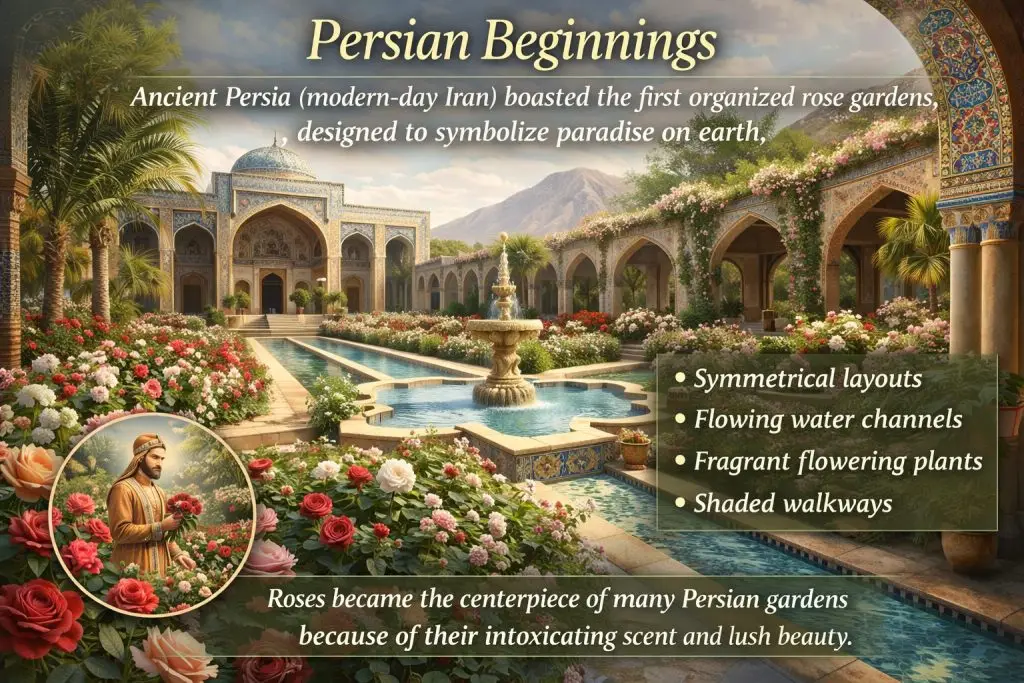
Many historians believe that the first organized rose gardens appeared in ancient Persia (modern-day Iran). Persian garden design was deeply philosophical — gardens were meant to represent paradise on earth. These landscapes typically featured:
- Symmetrical layouts
- Flowing water channels
- Fragrant flowering plants
- Shaded walkways
Roses became the centerpiece of many Persian gardens because of their intoxicating scent and luxurious appearance. Over time, Persian garden traditions spread throughout the Middle East, Central Asia, and the Indian subcontinent, heavily influencing Mughal and Islamic garden design.
🏺 Greek and Roman Love for Roses
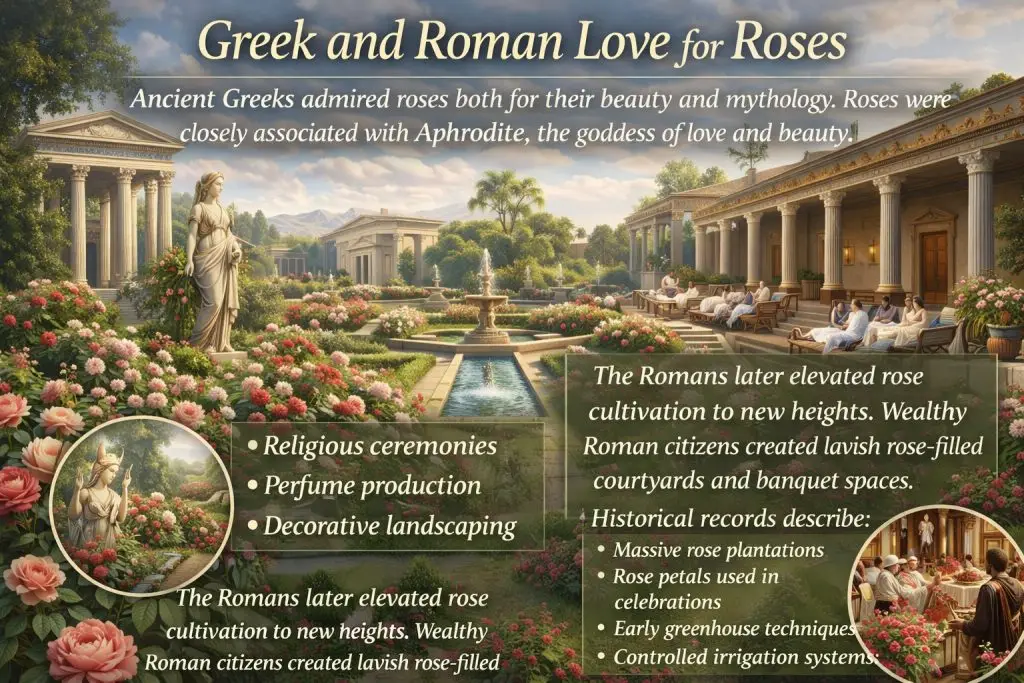
Ancient Greeks admired roses both for their beauty and mythology. Roses were closely associated with Aphrodite, the goddess of love and beauty. Greek gardens often included roses for:
- Religious ceremonies
- Perfume production
- Decorative landscaping
The Romans later elevated rose cultivation to new heights. Wealthy Roman citizens created lavish rose-filled courtyards and banquet spaces. Historical records describe:
- Massive rose plantations
- Rose petals used in celebrations
- Early greenhouse techniques
- Controlled irrigation systems
In many ways, Roman gardens were early prototypes of the structured rose gardens we see today.
👑 Medieval and Renaissance Rose Gardens
✝️ Monastic Gardens

During the Middle Ages, rose gardens took on spiritual and medicinal importance. European monasteries cultivated roses primarily for practical purposes such as:
- Herbal medicine
- Rose oil production
- Religious symbolism
- Healing remedies
The rose became strongly associated with purity and divine beauty, especially in Christian symbolism. Monastic gardens were typically simple but highly functional.
🎨 Renaissance Revival
The Renaissance period marked a dramatic transformation in garden aesthetics. Wealthy aristocrats began commissioning elaborate formal gardens that emphasized artistic precision.
Key features of Renaissance rose gardens included:
- Geometric bed layouts
- Decorative hedges
- Sculptural elements
- Grand walkways
During this era, rose gardens became powerful status symbols representing wealth, refinement, and cultural sophistication.
🌹 Symbolism and Cultural Meaning of Roses
One reason rose gardens remain so beloved is the deep emotional meaning attached to roses. Across cultures, roses communicate feelings without words.
Common Symbolic Meanings
- Love & Romance ❤️
- Purity & Innocence 🤍
- Passion & Desire 🔥
- Elegance & Luxury ✨
- Friendship & Joy 😊
Meaning by Rose Color
Different rose colors carry unique messages:
- Red Roses – Deep love and passion
- White Roses – Peace, purity, remembrance
- Yellow Roses – Friendship and happiness
- Pink Roses – Grace, admiration, gratitude
- Orange Roses – Enthusiasm and energy
Because of this emotional richness, a well-designed rose garden often feels deeply personal and meaningful.
🏡 What Defines a Rose Garden?
A rose garden is a dedicated planting space designed primarily around rose varieties, often enhanced with complementary plants and decorative features.
Key Characteristics
A classic rose garden usually includes:
- ✔ Multiple rose cultivars
- ✔ Planned color schemes
- ✔ Fragrance-focused layout
- ✔ Trellises or arches
- ✔ Defined pathways
- ✔ Seating or relaxation areas
Rose gardens can be formal or informal, large or small, traditional or modern — the design possibilities are nearly endless.
🎯 Benefits of Creating a Rose Garden
Planting a rose garden is not just about beauty. It offers numerous physical, emotional, and ecological advantages.
🌸 Exceptional Visual Appeal
Roses provide one of the widest color ranges in the plant world. Their layered petals and elegant blooms instantly elevate any landscape, making them a favorite among landscape designers.
🌿 Fragrance and Sensory Pleasure
Few garden experiences compare to walking through a fragrant rose garden. Many varieties release strong, sweet scents that create a calming and luxurious atmosphere.
A well-planned rose garden engages multiple senses:
- Sight
- Smell
- Touch
- Even sound (through visiting pollinators)
🧘 Mental Health and Wellbeing
Research consistently shows that gardening reduces stress, anxiety, and mental fatigue. Rose gardening in particular offers:
- Mindful outdoor activity
- Emotional relaxation
- Creative satisfaction
- Improved mood
For many people, tending roses becomes a deeply therapeutic hobby.
🐝 Ecological and Biodiversity Benefits
Roses play an important role in supporting garden ecosystems. They attract beneficial wildlife such as:
- Bees
- Butterflies
- Hoverflies
- Beneficial predatory insects
By planting a rose garden, you contribute to local pollinator health and biodiversity.
🧱 Popular Roses Design Styles
Choosing the right design style greatly affects the beauty and functionality of your rose garden.
🏛️ Formal Rose Garden
Characteristics:
- Perfect symmetry
- Geometric planting beds
- Brick or stone pathways
- Structured elegance
- Often includes fountains or statues
Best for: Large properties, heritage homes, botanical displays.
🌼 Informal
Characteristics:
- Natural flowing layout
- Mixed companion plants
- Cottage-garden charm
- Relaxed appearance
Best for: Residential gardens and beginners.
🏙️ Modern Minimalist
Characteristics:
- Clean architectural lines
- Limited color palette
- Structured planting
- Contemporary materials
Best for: Urban homes and modern landscapes.
🌳 Mixed Border
Characteristics:
- Roses combined with perennials
- Extended seasonal interest
- Rich textures and layers
- Wildlife-friendly
Best for: Gardeners wanting year-round color.
🌞 Choosing the Right Location
Location is one of the most critical factors in rose gardening success.
Essential Requirements
- ✔ At least 6 hours of direct sunlight daily
- ✔ Good air circulation
- ✔ Well-drained soil
- ✔ Protection from strong winds
- ✔ Easy access to water
Roses planted in shady or poorly ventilated areas often suffer from disease and weak flowering.
🌱 Best Soil Conditions for Roses
Healthy soil leads to healthy roses. Roses prefer fertile, well-structured soil that allows roots to breathe.
Ideal Soil Profile
- pH: 6.0–6.5 (slightly acidic)
- Texture: Loamy and well-drained
- Organic matter: High
- Moisture retention: Moderate
Soil Improvement Tips
- Mix compost before planting
- Add aged manure
- Use mulch to retain moisture
- Avoid heavy clay without amendment
Good soil preparation dramatically improves bloom quality.
💧 Watering Guidelines for Healthy Roses
Roses prefer deep, consistent watering rather than frequent shallow watering.
Best Practices
- ✔ Water deeply 2–3 times per week
- ✔ Water at the base of the plant
- ✔ Avoid wetting leaves
- ✔ Water early in the morning
- ✔ Adjust for rainfall and climate
Overwatering can cause root rot, while underwatering leads to poor blooms.
✂️ Pruning and Maintenance
Pruning is essential for maintaining a vigorous and attractive rose garden.
Why Pruning Matters
Proper pruning helps to:
- Remove dead or diseased wood
- Improve air circulation
- Encourage strong new shoots
- Increase flower size and quality
- Maintain plant shape
Basic Pruning Tips
- Prune during the dormant season
- Use sharp, clean tools
- Cut at a 45-degree angle
- Remove inward-growing branches
- Deadhead spent flowers regularly
Consistent maintenance keeps your rose garden thriving year after year.
🐛 Common Rose Garden Problems & Solutions
Even well-cared-for roses can face pests and diseases. Early detection is key.
Aphids
Symptoms: Sticky leaves, curled growth
Solution: Spray with insecticidal soap or neem oil
Black Spot
Symptoms: Black spots on leaves, leaf drop
Prevention:
- Improve airflow
- Avoid overhead watering
- Remove infected leaves
- Apply preventive fungicide if needed
Powdery Mildew
Symptoms: White powdery coating on leaves
Fix:
- Reduce humidity
- Increase sun exposure
- Space plants properly
Poor Blooming
Common causes:
- Insufficient sunlight
- Over-fertilization with nitrogen
- Improper pruning
- Immature plants
Always diagnose the root cause before treating.
🌍 Rose Gardens Around the World
Rose gardens have long captured the imagination of gardeners, landscape architects, and travelers. Across continents, many countries showcase breathtaking rose collections that reflect local culture, climate, and artistic tradition. These gardens not only highlight the beauty of roses but also demonstrate how design philosophies vary around the globe.
🏰 Historic European Palace Gardens
Europe is home to some of the world’s most iconic rose gardens. Historic palace estates in countries such as France, England, and Germany often feature highly formal layouts with geometric beds, stone pathways, and sculptural elements. These gardens emphasize symmetry, order, and visual drama. Many were originally created for royalty and aristocrats, making them symbols of prestige and refined taste. Today, they continue to inspire modern formal rose garden designs worldwide.
🌿 Asian Botanical Landscapes
In many Asian countries, rose gardens blend structured planting with natural scenery. Botanical gardens often integrate roses with water features, curved walkways, and seasonal flowering plants. The focus is typically on harmony with nature rather than strict symmetry. These landscapes demonstrate how roses can complement broader garden ecosystems while maintaining strong visual appeal.
🌳 Urban Public Rose Parks
Modern cities around the world have embraced public rose parks as green recreational spaces. These gardens provide residents with peaceful walking areas, photo spots, and educational horticultural displays. Urban rose gardens are often designed for accessibility and long blooming seasons, making them popular weekend destinations. Their growing popularity shows how roses remain relevant even in dense metropolitan environments.
🕌 Heritage Mughal-Style Gardens
In South Asia, Mughal-inspired gardens represent a unique fusion of Persian and local design traditions. These gardens typically follow the classic charbagh layout, divided into four sections by water channels. Roses often play a central ornamental role alongside fountains and shaded walkways. Mughal-style rose gardens are admired for their spiritual symbolism and balanced geometry.
Together, these global examples demonstrate how regional aesthetics and horticultural traditions shape the character of rose gardens around the world.
🏡 Rose Garden Ideas for Small Spaces
Limited space should never discourage rose gardening. With thoughtful planning, even balconies and compact yards can host stunning rose displays. Urban gardening trends have made small-space rose cultivation more popular than ever.
Smart Space-Saving Solutions
- ✔ Vertical rose trellises: Train climbing roses upward to save ground space.
- ✔ Container rose gardening: Ideal for patios, rooftops, and balconies.
- ✔ Miniature rose varieties: Perfect for tight areas and decorative pots.
- ✔ Balcony rose displays: Combine containers with railing planters for layered beauty.
Compact rose gardens can be just as charming as large landscapes when designed creatively.
🌺 Companion Plants for roses
Companion planting enhances both the visual richness and ecological balance of a rose garden. Carefully selected neighboring plants can improve pest resistance, extend seasonal interest, and create attractive texture contrasts.
Popular Companion Plants
- Lavender 🌿 – Repels pests and adds fragrance
- Salvia – Provides vertical color spikes
- Catmint – Softens bed edges and attracts pollinators
- Boxwood borders – Adds structure and formality
- Ornamental grasses – Introduce movement and texture
When combined thoughtfully, companion plants make rose beds look fuller and more dynamic while supporting beneficial insects.
🌞 Climate Considerations
Choosing the right rose varieties for your climate is one of the most important decisions a gardener can make. Roses are adaptable, but not all types thrive in every environment.
Key Climate Factors
- Temperature extremes: Some roses tolerate heat better than others.
- Rainfall patterns: Excess moisture can increase fungal diseases.
- Humidity levels: High humidity may require disease-resistant varieties.
- Seasonal variation: Cold climates need winter-hardy roses.
Gardeners in tropical regions should prioritize heat-tolerant and disease-resistant cultivars, while cooler regions benefit from hardy hybrid roses. Matching the plant to the environment ensures stronger growth and more reliable blooms.
🌹 Why RosesRemain Timeless
Rose gardens have endured for centuries because they uniquely combine emotional meaning with horticultural beauty. Few garden features offer such versatility across cultures and property types.
Enduring Qualities
- ✔ Striking visual drama
- ✔ Deep emotional symbolism
- ✔ Rich sensory experience
- ✔ Flexible design potential
- ✔ Suitable for both large and small spaces
From royal palace grounds to modest city balconies, rose gardens continue to evolve while maintaining their classic charm.
✅ Final Thoughts
A rose garden is far more than a decorative landscape feature — it is a living celebration of nature, heritage, and human creativity. Whether you are inspired by grand international rose parks or planning a compact urban display, roses offer unmatched elegance and adaptability.
With proper planning, suitable varieties, healthy soil, and consistent care, anyone can cultivate a thriving rose garden. Start with a design that fits your space and climate, add thoughtful companion plants, and maintain regular care routines. Over time, your garden will reward you with seasons of vibrant color, delightful fragrance, and timeless beauty. 🌹✨