

Plan your dream Sikkim trip on a budget! Get the ultimate Sikkim Tour Plan Under 16k for 2026. Explore Gangtok, North Sikkim & more with this easy guide.
Introduction: Perfect Sikkim Tour Plan Under 16k 2026
Exploring the mystical hills of Sikkim doesn’t have to break the bank or remain a distant dream for those on a tight budget. Renowned for its jagged, snow-capped peaks, serene ancient monasteries, and a vibrant culture that blends tradition with modern warmth, Sikkim stands as a crown jewel of the Himalayas. While many perceive the Northeast as an expensive luxury circuit, it remains a remarkably accessible sanctuary that can be surprisingly affordable if planned with precision and local insight.
Whether you are a student seeking an adventurous break, a dedicated backpacker chasing mountain sunrises, or a solo traveler looking for spiritual solace, this comprehensive Sikkim Tour Plan Under 16k is meticulously designed to provide the ultimate high-altitude experience on a shoestring budget.
In 2026, the rise of community-led homestays and organized shared transport networks has made it possible to traverse from the bustling streets of Gangtok to the frozen landscapes of North Sikkim without compromising on the quality of your journey. This guide focuses on maximizing value—prioritizing authentic local interactions, identifying the most cost-effective travel seasons, and utilizing budget-friendly logistics—to ensure your Himalayan odyssey is both rich in memories and light on your wallet. Prepare to witness nature’s grandeur without the luxury price tag.
Why Choose Sikkim for Your 2026 Adventure?
Sikkim continues to lead the way as a premier sustainable destination, maintaining its status as India’s first fully organic state. This commitment ensures that travelers experience unparalleled air quality and some of the most untouched, pristine landscapes in the world. As we move through 2026, the region has significantly enhanced its infrastructure for the budget-conscious explorer. The expansion of reliable shared transportation networks and a surge in affordable, eco-friendly homestays mean you can now traverse the rugged Himalayan terrain with ease, eliminating the need for expensive private vehicle rentals.
Core Highlights of This 2026 Budget Strategy:
- Optimal Duration: A perfectly paced 5 Nights and 6 Days journey that balances adventure with relaxation.
- Economical Pricing: A total estimated cost ranging between ₹15,500 and ₹16,000 per person, beginning from the transit hubs of NJP or Siliguri.
- Geographic Reach: Comprehensive coverage of East Sikkim, including the vibrant capital of Gangtok, alongside the breathtaking high-altitude landscapes of North Sikkim (Lachen and Lachung).
- Sustainable Logistics: Heavy reliance on community-based tourism and shared transit to keep costs low while supporting the local economy.
By choosing this path, you don’t just see the mountains; you experience them authentically without a luxury price tag.

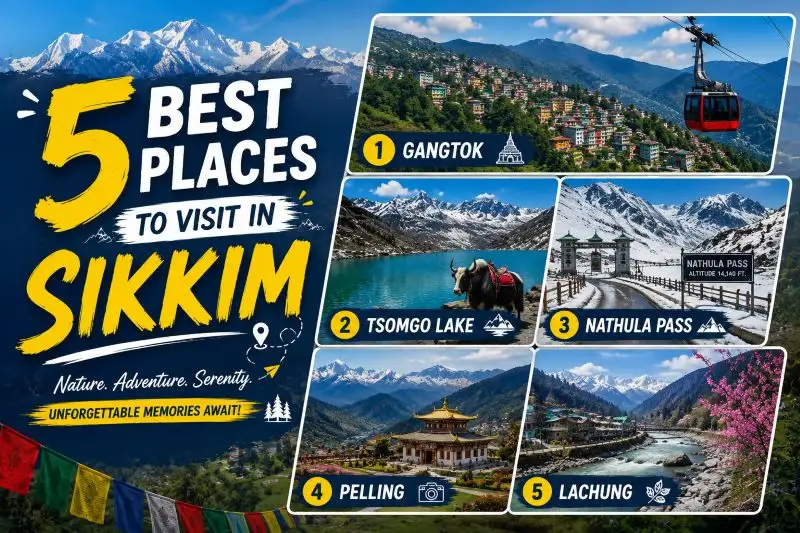
5 Best Places To Visit In Sikkim
- Gangtok: Gangtok, the capital city of Sikkim, is one of the most beautiful hill stations in Northeast India. Surrounded by green mountains and stunning Himalayan views, the city offers a perfect mix of nature, culture, and modern attractions. Travelers can explore MG Marg, Rumtek Monastery, Tashi View Point, and the famous ropeway ride. Gangtok is also the main gateway for visiting Tsomgo Lake and Nathula Pass. The peaceful atmosphere, clean streets, and delicious local food make it a favorite destination for tourists in 2026.
- Tsomgo Lake: Located at an altitude of around 12,000 feet, Tsomgo Lake is a breathtaking glacial lake surrounded by snow-covered mountains. The lake changes color with the seasons and looks magical during winter when it freezes completely. Visitors can enjoy yak rides, snowfall, and panoramic mountain scenery. It is one of the most photographed places in Sikkim and a must-visit destination for nature lovers and adventure seekers.
- Nathula Pass: Nathula Pass is a historic mountain pass situated on the Indo-China border. Famous for its thrilling roads and snowy landscapes, it offers travelers a unique high-altitude experience. The pass was once part of the ancient Silk Route and remains one of Sikkim’s top tourist attractions. Visitors can witness army camps, breathtaking Himalayan views, and icy weather almost throughout the year.
- Pelling: Pelling is known for its incredible views of the Kanchenjunga mountain range. This peaceful town is perfect for travelers who love nature and relaxation. Popular attractions include the Sky Walk, Pemayangtse Monastery, Rabdentse Ruins, and beautiful waterfalls. The calm environment and scenic beauty make Pelling an ideal escape from busy city life.
- Lachung: Lachung is a charming mountain village famous for its natural beauty and snowy landscapes. It serves as the gateway to Yumthang Valley, also known as the “Valley of Flowers.” Travelers visit Lachung for its rivers, waterfalls, apple orchards, and peaceful surroundings. During winter, the area becomes a snowy paradise, attracting thousands of tourists every year.
Strategic Budget Breakdown
To successfully execute a Sikkim Tour Plan Under 16k, a precise understanding of your financial allocation is essential. In 2026, while the cost of travel has generally increased, Sikkim remains a budget-friendly haven for those who prioritize shared infrastructure over private luxury. Managing a trip within this limit requires a disciplined approach to the four major pillars of travel expense: transport, lodging, food, and specialized tour packages.
The most significant savings are found in the transition from private to communal travel. Private vehicle rentals in the Himalayas can easily exceed ₹4,000 per day; however, by utilizing the state’s robust shared jeep network, you can slash that cost by nearly 70%. Similarly, choosing the thriving hostel culture in Gangtok over traditional hotels allows you to reallocate funds toward experiences like visiting high-altitude lakes or remote monasteries.
Below is a detailed expenditure breakdown tailored for a 6-day journey:
Sikkim Tour Budget Breakdown
| Category | Estimated Cost (INR) | Expenditure Strategy |
| Transport (Shared Cabs) | ₹4,500 | Covers NJP to Gangtok, local transit, and return. |
| Accommodation | ₹4,000 | Focus on budget hostels or SNT guesthouses. |
| Meals (Local Eateries) | ₹3,500 | Savoring local Dal-Bhat, Thukpa, and Momos. |
| North Sikkim Package | ₹3,500 | Shared 2N/3D inclusive of stay and meals. |
| Permits & Misc. | ₹500 | Entry fees for viewpoints and permit processing. |
| Total | ₹16,000 | Comprehensive Himalayan Experience |

Comprehensive 6-Day Budget Itinerary
A comprehensive 6-day budget itinerary helps you explore your destination efficiently without overspending. Start with arrival and local sightseeing, focusing on nearby attractions to save transport costs. Dedicate the next few days to popular landmarks, nature spots, and cultural experiences while using affordable public transport. Include one day for adventure or relaxation, depending on your preference. Reserve time for local markets and food exploration to experience authentic culture on a budget. On the final day, plan light activities and departure. Smart planning, budget stays, and local dining ensure a memorable yet cost-effective travel experience.
Day 1: Arrival at NJP/Bagdogra & Transfer to Gangtok
Your journey begins at New Jalpaiguri (NJP) Railway Station or Bagdogra Airport.
- Budget Tip: Avoid private taxis which cost ₹3,500+. Instead, walk to the Siliguri SNT (Sikkim Nationalised Transport) stand or find shared jeeps.
- Cost: Shared taxi to Gangtok costs around ₹400 – ₹500 per seat.
- Evening: Reach Gangtok, check into a budget hostel or homestay near MG Marg. Enjoy a walk on MG Marg, which is free and offers a great atmosphere.
Day 2: Gangtok Local Sightseeing
Instead of hiring a full-day cab, opt for the “10-point” or “7-point” shared sightseeing tours.
- Points Covered: Tashi Viewpoint, Ganesh Tok, Hanuman Tok, Bakthang Falls, and Enchey Monastery.
- Budget Tip: Use the local ropeway for views rather than expensive private viewpoints.
- Meal Idea: Try local “Thukpa” or “Momos” at small stalls; they are delicious and cost under ₹150.
Day 3: Gangtok to Lachen (Start of North Sikkim Package)
North Sikkim is restricted; you cannot go alone. You must join a group package.
- The Plan: A 2-night/3-day package is the most cost-effective way to see North Sikkim. This usually includes transport, basic stay, and meals.
- Cost: In 2026, a shared 2N/3D package costs roughly ₹3,500 – ₹4,500 depending on the season.
- Travel: Drive to Lachen, stopping at Seven Sister Waterfalls and Singhik Viewpoint.
Day 4: Gurudongmar Lake & Transfer to Lachung
- Morning: Early morning drive (4:00 AM) to the stunning Gurudongmar Lake, located at 17,800 ft.
- Afternoon: Return to Lachen for lunch and then transfer to Lachung.
- Note: Keep your permits ready (handled by the tour operator).
Day 5: Yumthang Valley & Return to Gangtok
- Morning: Visit Yumthang Valley, the “Valley of Flowers.” If your budget allows an extra ₹500, visit Zero Point (Yumesamdong), though it’s often excluded from basic packages.
- Evening: Drive back to Gangtok. Stay overnight at a budget hostel.
Day 6: Departure with Memories
Take a shared taxi back to NJP or Bagdogra.
- Budget Tip: Book your return seat a day in advance through your hostel or at the taxi stand to ensure you get the morning slot.
Where to Stay: Affordable Lodging in Sikkim
Securing the right accommodation is the cornerstone of any Sikkim Tour Plan Under 16k. In 2026, the hospitality landscape in Gangtok and its surrounding districts has evolved to cater heavily to the “flashpacker” and budget traveler. To keep your daily lodging expenses between ₹600 and ₹900, you must look beyond conventional hotels and embrace the burgeoning network of hostels and government-run guesthouses.
- The Rise of Backpacker Hostels: Gangtok is now home to several highly-rated hostel chains like Zostel, Tagalong, and OurGuest. These properties offer clean, secure dormitory beds that facilitate social interaction with global travelers. Staying in a hostel not only saves you nearly 60% compared to a private room but also provides access to shared kitchens and community leads on the cheapest local transport.
- SNT Guesthouses and Government Stays: The Sikkim Nationalised Transport (SNT) guesthouses remain the “hidden gems” for budget seekers. Often located near the main bus stands, these rooms are basic but functional and significantly cheaper than private lodges. They are ideal for those arriving late or departing early.
- Community-Driven Homestays: If you want an authentic experience, head slightly away from the bustle of MG Marg to areas like Upper Burtuk or Penlong. Here, local families offer rooms that include traditional Sikkimese hospitality. These homestays often provide home-cooked organic meals, which further helps in reducing your overall food expenditure while offering a deeper look into the local way of life. Always book these in advance during the 2026 season to lock in the best rates.
Expert Strategies for Saving Money in Sikkim
Navigating the majestic heights of the Himalayas doesn’t require a massive fortune. If you are aiming for a Sikkim Tour Plan Under 16k, implementing these four strategic pillars will ensure your finances remain intact while your experience remains rich.
- Prioritize “Shoulder Season” Travel: Timing is everything. To avoid the inflated prices of the peak summer (May) and autumn (October) rushes, schedule your visit during the “shoulder” months of March to April or late October to November. During these windows, you’ll enjoy crisp mountain air and clear views, but with significantly reduced accommodation rates.
- Utilize the Shared Transport Network: Private SUVs are the biggest budget killer in the Northeast. Instead, rely on shared jeeps—the true lifeblood of Sikkimese transit. These run frequently between all major hubs like Gangtok, Namchi, and Mangan, costing only a fraction of a private rental.
- Dine at Local Eateries: Skip the fancy tourist cafes on MG Marg and head to local “Bhojanalyas.” A traditional meal of Dal-Bhat (lentils and rice) or a steaming bowl of Thukpa is nutritious, filling, and typically costs under ₹200.
- Choose Hostels and Government Stays: Gangtok’s vibrant backpacker culture offers excellent hostels with dorm beds for ₹500–₹800. Alternatively, SNT (Sikkim Nationalised Transport) guesthouses provide clean, central, and incredibly affordable lodging compared to standard hotels.
Critical Permit Guidelines for Sikkim Travel
Navigating the administrative requirements is a vital part of any Sikkim Tour Plan Under 16k. Because Sikkim shares sensitive international borders with China, several high-altitude regions are classified as restricted or protected areas. Obtaining the correct paperwork is not just a formality—it is a mandatory requirement for entry into the most scenic parts of the state, including the ethereal Tsomgo Lake and the rugged terrains of North Sikkim.
Detailed Requirements and Documentation:
- Mandatory Identification: You must carry a valid government-issued photo ID. While many travelers rely on Aadhaar, it is frequently rejected at high-security military check-posts near border zones. It is highly recommended to use a Voter ID card or a valid Passport to ensure a smooth approval process.
- Physical Documentation: In 2026, despite digitalization, physical copies remain essential. Always carry at least four recent passport-sized photographs and four clear photocopies of your identification. These are often collected at different transit points like Mangan or the police check-posts.
- Strategic Budget Advice: To keep your expenses low, avoid attempting to process permits individually through private agents. The most cost-effective method is to secure your permits through a shared agency package. Most budget operators in Gangtok include the permit processing fee within the total cost of the North Sikkim tour, saving you both significant time and individual service charges.
- Restricted Zone Awareness: Permits for Baba Mandir, Nathula Pass, and Gurudongmar Lake are issued on a daily basis and are subject to weather conditions. Being part of a group sharing a vehicle ensures that the permit logistics are handled by the driver or coordinator, allowing you to focus on the journey rather than the bureaucracy.
Conclusion
Ultimately, achieving a Sikkim Tour Plan Under 16k is far more than just a hopeful concept; it is a fully accessible and practical reality for travelers in 2026. The secret to conquering the majestic heights of the Himalayas without a massive financial burden lies in smart, intentional choices. by prioritizing shared transportation networks over private rentals, embracing the authentic flavors of local roadside eateries, and selecting community-driven budget homestays, you unlock a side of the Northeast that many tourists overlook.
This approach doesn’t just save money—it enriches your travel experience, allowing for deeper cultural immersion and genuine connections with the local Sikkimese people. As the tourism infrastructure in 2026 continues to favor sustainable and affordable transit, there has never been a better time to explore the winding roads of Gangtok or the rugged terrains of the North.
You don’t need a luxury budget to witness the sunrise over the Kanchenjunga or to find peace within the walls of ancient monasteries. All that is required is a bit of strategic planning and an adventurous spirit. So, stop waiting for a “better time” to travel. Pack your bags, ensure your camera is charged, and prepare to embark on an unforgettable Himalayan odyssey that respects your bank account.
Frequently Asked Questions: Sikkim Tour Plan Under 16k (2026 Edition)
Planning a budget trip to the Himalayas requires the right information at the right time. Here are the most frequently asked questions regarding a Sikkim Tour Plan Under 16k for 2026.
1. Is it actually possible to cover Sikkim under ₹16,000 in 2026?
Yes. While inflation has affected luxury travel, the budget circuit remains accessible. By using shared jeeps (₹500–₹800 per seat), staying in hostels or SNT guesthouses (₹600–₹900/night), and opting for North Sikkim sharing packages (starting at ₹3,000–₹4,500), a 5-6 day trip is very feasible under ₹16,000 per person starting from Siliguri/NJP.
2. What is the best month for a budget trip in 2026?
To save the most, travel during the “Shoulder Seasons”:
- Late February to March: You get snow in North Sikkim but lower hotel rates than May.
- September to early October: Lush greenery post-monsoon before the peak Durga Puja rush.
- Avoid: May, June, and late October, as “Peak Season” surcharges can double transport and room costs.
3. How do I get permits for North Sikkim and Nathula Pass?
In 2026, the permit process has become more digital, but for North Sikkim (Lachen/Lachung), you still need a local agent.
- Requirements: 4 passport-size photos and a valid ID (Voter ID or Passport).
- Important: Aadhaar Cards are often not accepted for high-security border zones like Nathula Pass or Gurudongmar Lake.
- Budget Tip: Permits for North Sikkim are usually included in the cost of your sharing package.
4. Can I travel to North Sikkim without a package?
No. North Sikkim is a restricted area. Independent travel is not permitted; you must book through a registered travel agent. To stay under 16k, look for “Sharing Packages” at the Vajra Taxi Stand in Gangtok, where you share a vehicle and accommodation with other travelers.
5. What are the best budget stay options in Gangtok?
For 2026, the best value-for-money stays are:
- Zostel Gangtok or Tagalong Backpackers: Great for solo travelers (₹700–₹900 for a dorm bed).
- SNT (Sikkim Nationalised Transport) Guesthouse: Centrally located and very affordable.
- Upper Burtuk/Development Area: Slightly away from the MG Marg crowd, these areas offer cheaper homestays.
6. How much extra should I carry for “Zero Point”?
Most North Sikkim packages only go as far as Yumthang Valley. If you want to visit Zero Point (Yumesamdong) to see snow, the driver will ask for an additional ₹3,000–₹4,000 per vehicle. On a sharing basis, this comes to about ₹400–₹500 per person.
7. Is there a way to avoid expensive private taxis from NJP?
Absolutely. Instead of booking a private cab at NJP Station (₹3,500+), take a rickshaw to the Siliguri SNT Stand. From there, you can board a government bus for around ₹200 or a shared service jeep for ₹500 directly to Gangtok.