

Explore the beauty of Tanguar Haor in 2026! Discover its rich history, diverse wildlife, and stunning natural landscapes for an unforgettable rural adventure.
Introduction: Tanguar Haor Trip 2026
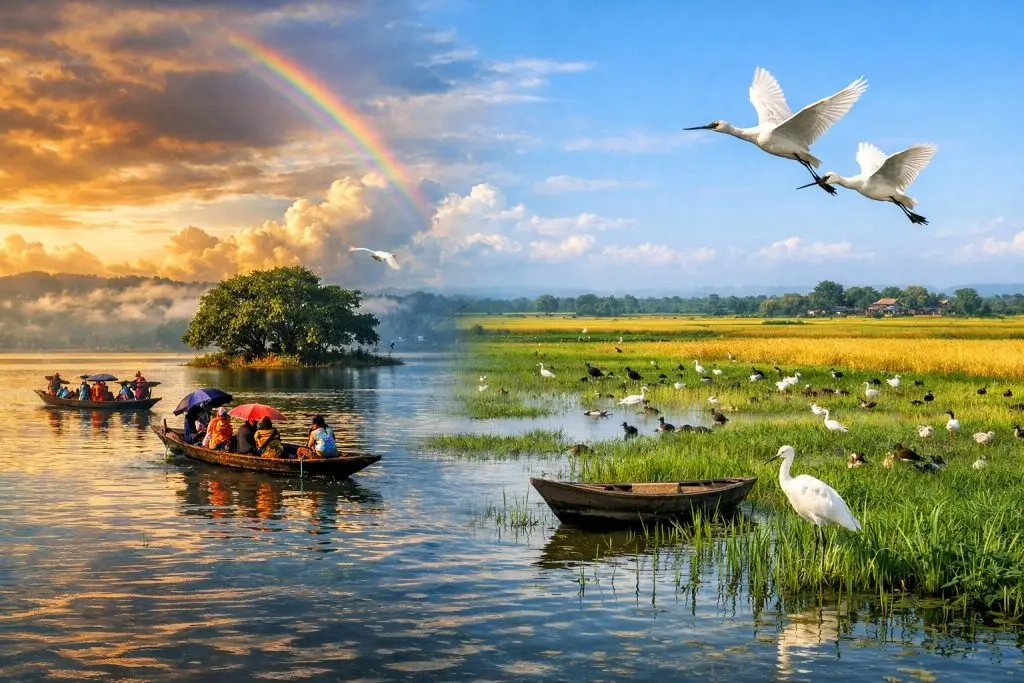
Tanguar Haor is one of the most magical natural destinations in Bangladesh, located in Sunamganj, Sylhet Division. It is a vast freshwater wetland where sky meets water, boats replace roads, and nature lives freely.
Spread across nearly 100 square kilometers, Tanguar Haor changes its beauty with every season. During monsoon, it becomes a giant water kingdom, and in winter, it turns into green fields filled with birds and life.
Because of its global importance, Tanguar Haor was declared a Ramsar Site in 2000, making it one of the most important wetlands in the world.
If you love nature travel, eco-tourism, boat journeys, birdwatching, and peaceful places, Tanguar Haor should be on your travel list for 2026.
Where Is Tanguar Haor Located?
Tanguar Haor is located in:
🗺️ District: Sunamganj
🌄 Division: Sylhet
🚤 Upazila: Tahirpur & Dharmapasha
🚗 Distance from Sylhet City: About 90 km
The wetland is part of Bangladesh’s largest haor ecosystem, known for its seasonal floods, rich biodiversity, and scenic beauty. Easily accessible by road and local transport, it offers travelers a peaceful retreat surrounded by rivers, wetlands, and traditional villages. Tanguar Haor’s location makes it an ideal destination for birdwatching, eco-tourism, and cultural exploration while experiencing authentic rural life.
History Of Tanguar Haor
1. Natural Formation
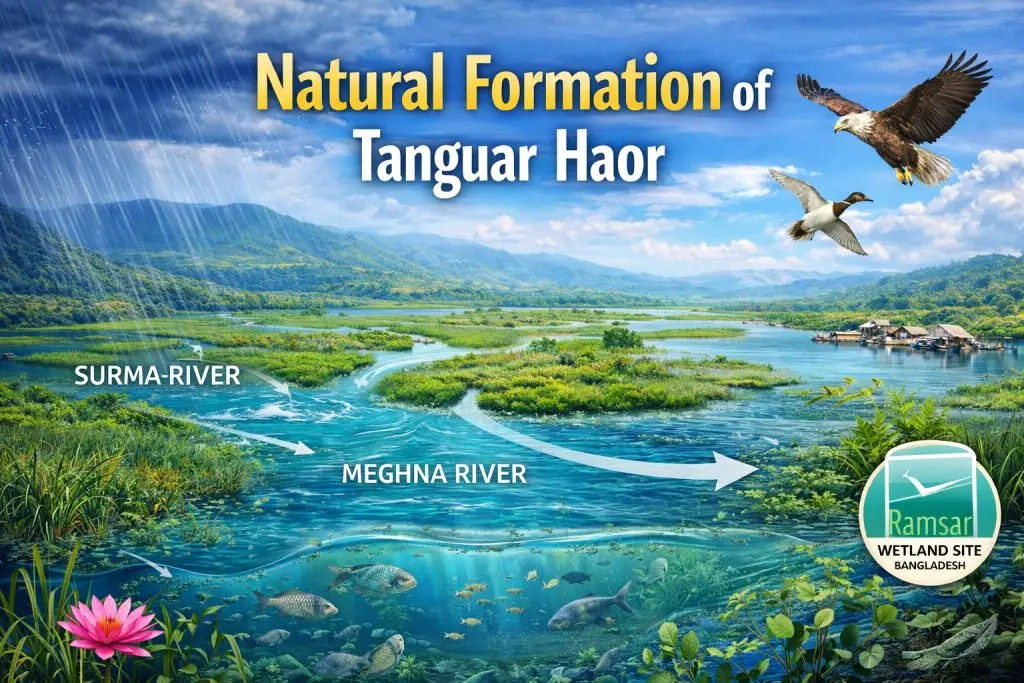
Tanguar Haor was naturally formed thousands of years ago through complex geological and hydrological processes within the Surma–Meghna river basin, one of the most important river systems in northeastern Bangladesh.
Over time, powerful monsoon rains, seasonal flooding, and continuous river sediment deposition shaped this vast freshwater wetland. During the rainy season, water from surrounding rivers and hill streams spreads across the low-lying plains, gradually expanding the haor into a massive inland water body.
As floodwaters recede in winter, fertile silt settles on the land, creating rich soil that supports aquatic plants, grasses, and seasonal crops. This natural cycle of flooding and drying plays a vital role in maintaining the wetland ecosystem of Tanguar Haor, making it a perfect habitat for fish, birds, and other wildlife.
For centuries, Plan your Tanguar Haor trip Complete travel guide with history, biodiversity, best time to visit, houseboats & eco-tourism tips. remained largely untouched by modern development, allowing its biodiversity to evolve naturally. The absence of industrial activity helped preserve clean water, native vegetation, and ecological balance. Today, this unique natural formation is recognized globally as a Ramsar wetland site in Bangladesh, highlighting its importance for wetland conservation, eco-tourism, and climate resilience.
2. British & Colonial Period
During the British colonial period, Tanguar Haor in Sunamganj was primarily managed for economic purposes rather than environmental protection. The British administration introduced a leasing system for fishing, allowing private contractors to control large areas of the wetland.
Seasonal farming was also common, as fertile land appeared after monsoon floods. Additionally, rivers connected to Tanguar Haor were used as important inland trade routes, linking Sylhet with nearby regions.
However, uncontrolled fishing, lack of conservation policies, and profit-driven management caused serious damage to the Tanguar Haor ecosystem, leading to declining fish populations and biodiversity loss over time.

3. Modern Era & Ramsar Status
After Bangladesh gained independence in 1971, awareness grew about protecting natural wetlands.
As a result, Tanguar Haor in Sunamganj was officially declared a Ramsar Wetland Site in 2000, recognizing its global ecological importance. This international status highlighted Tanguar Haor as one of the most valuable freshwater wetlands in Bangladesh, especially for migratory birds and fish biodiversity.
In recent years, the government and NGOs have introduced community-based conservation programs, allowing local residents to manage resources responsibly. These initiatives support sustainable eco-tourism, improve livelihoods, and help preserve the Tanguar Haor ecosystem for future generations.
Ecologically Important
Tanguar Haor is one of the richest freshwater ecosystems in South Asia, playing a vital role in Bangladesh’s environmental sustainability and rural economy. This vast wetland supports both biodiversity conservation and human livelihoods, making it nationally and globally significant.
Key Environmental Importance
🐟 Natural breeding ground for fish – Supports inland fisheries and ensures food security.
🐦 Safe home for migratory birds – Attracts rare and seasonal birds from across Asia every winter.
🌱 Maintains ecological balance – Regulates water flow, controls flooding, and preserves wetlands.
👨👩👧👦 Supports thousands of families – Sustains fishing, farming, and eco-tourism-based livelihoods.
Beyond its natural value, Tanguar Haor is recognized as a Ramsar wetland, highlighting its importance for wetland conservation, climate resilience, and sustainable tourism. Protecting this ecosystem ensures its beauty and resources remain intact for future generations.
Biodiversity
1. Birds of Tanguar Haor
Winter turns Tanguar Haor into a true birdwatcher’s paradise, attracting thousands of migratory birds each year. As water levels rise, the wetlands become a safe haven for rare and seasonal bird species.
Common Migratory Birds
- Siberian Duck
- Northern Pintail
- Asian Openbill Stork
- Pallas’s Fish Eagle
These birds travel from Siberia, Central Asia, and China, escaping harsh winters in search of warmer climates and abundant food. The calm waters, rich fish population, and undisturbed environment make Tanguar Haor one of the best birdwatching destinations in Bangladesh. For nature lovers and photographers, the winter season offers breathtaking wildlife moments and unforgettable natural scenery.
2. Fish & Aquatic Life
Tanguar Haor is a major hotspot for freshwater fish diversity in Bangladesh, supporting more than 140 species of native fish and aquatic organisms. This vast wetland provides ideal natural breeding grounds, especially during the monsoon season when floodwaters spread across the haor.
Well-known fish species such as Rui, Katla, Boal, Shol, and Taki thrive here and play a crucial role in the local economy and traditional fishing culture. Besides fish, the haor is home to prawns, snails, and aquatic plants, which help maintain ecological balance. The rich aquatic life of Tanguar Haor strengthens inland fisheries, supports food security, and attracts eco-tourism lovers interested in wetland biodiversity and sustainable travel.
It plays a vital role in Bangladesh’s food supply.
3. Plants & Trees
The rich plant life of Tanguar Haor plays a crucial role in maintaining the health of this unique wetland ecosystem. Native vegetation not only enhances the natural beauty but also supports wildlife and local livelihoods.
- Hijol trees 🌳 – Common along wetland edges, helping prevent soil erosion.
- Koroch trees – Provide shade and nesting areas for birds.
- Water lilies 🌸 – Add scenic beauty while supporting aquatic life.
- Floating grasses – Serve as natural habitats for fish and insects.
These plants help filter water, reduce pollution, and maintain ecological balance. Together, they create a safe environment for birds, fish, and other wildlife, making Tanguar Haor one of Bangladesh’s most environmentally important wetlands.
Life of Local People Around Tanguar Haor
The communities surrounding Tanguar Haor Ramsar Site represent one of the most resilient and culturally rich rural populations in Bangladesh. Nearly 40,000 people live in villages around this vast wetland, and their daily lives are deeply intertwined with the rhythms of water, seasons, and nature. For generations, the haor has shaped their livelihoods, traditions, and identity, making it an essential part of both survival and culture.
1. Livelihoods Dependent on the Haor
Fishing is the primary occupation for most families, especially during the monsoon season when floodwaters bring abundant fish resources. The haor becomes a natural fishing ground, supporting thousands of households and contributing significantly to local food security.
Many residents are also skilled in traditional wooden boat making, crafting boats that are vital for transportation, fishing, and trade. Since roads are often submerged for much of the year, boats remain the main mode of transport, connecting villages, markets, and schools.
2. Duck Farming and Seasonal Agriculture
Duck farming is another major source of income, as ducks thrive in wetland environments and provide eggs and meat throughout the year. During the dry season, when water levels recede, villagers cultivate seasonal rice and crops on fertile land enriched by nutrient-rich flood silt. This seasonal farming cycle helps sustain families when fishing activity declines.
3. Housing and Adaptation to Floods
Homes in Tanguar Haor are typically built on raised earthen platforms called kandas, designed to protect families from annual flooding. This traditional adaptation reflects the community’s deep understanding of their environment and long-standing resilience against natural challenges.
4. Community Strength and Sustainable Future
Despite facing challenges such as floods, climate change, and limited access to modern services, the people of Tanguar Haor continue to show remarkable strength. Community-based conservation and eco-tourism initiatives are now creating new income opportunities while promoting environmental protection. These efforts help balance economic development with wetland conservation, ensuring a sustainable future for both people and nature.
Best Time to Visit Tanguar Haor Wetland
Monsoon Season (June – September)
Best for:
- Boat travel
- Scenic views
- Floating villages
The haor looks like a vast blue ocean during this time.
Winter Season (November – February)
Best for:
- Birdwatching
- Calm weather
- Nature walks
Top Attractions in Tanguar Haor
1. Niladri Lake (Shaheed Siraj Lake)
Crystal-clear water surrounded by hills — perfect for photography.
2. Watch Towers
Great spots for birdwatching without disturbing wildlife.
3. Floating Villages
Villages that appear to float during monsoon — truly magical!
4. Jadukata River
A beautiful river flowing from Meghalaya with turquoise water.
How to Go to Tanguar Haor
From Dhaka
- Dhaka → Sylhet (Bus / Train / Flight ✈️)
- Sylhet → Sunamganj (Bus 🚌)
- Sunamganj → Tahirpur
- Tahirpur → Tanguar Haor (Boat 🚤)
Accommodation Options
- 🚤 Houseboats
- 🌿 Eco-resorts
- 🏨 Guesthouses in Sunamganj
Best Places to Stay Near Tanguar Haor (with Details)
- Haor Bilash Guest House – Sunamganj (Popular local stay)
📍 Location: Sunamganj, Sylhet Division
📞 Book via online travel sites (e.g., Booking.com) - The Peace Palace Inn – Sunamganj
📍 Near main bus stops in Sunamganj
📞 Available on hotel booking sites - The Peace Palace Luxury Hotel – Sunamganj
📍 Central location, decent facilities
📞 Book via travel platforms - Hotel Nurani Sunamganj – Sunamganj
📍 Near downtown Sunamganj
📞 Rooms available on Booking.com and Agoda - Water Inn – Tanguar Haor House Boat – Tahirpur, Sunamganj
📞 +8801711336825 / +8801402288573 / +8801678076361-69
🌐 Booking: Call or visit local tour operators - Falcon Houseboat (Tanguar Haor) – On the haor
📞 Booking via local tour agencies mentioned on travel sites - Bojra Houseboat (Tanguar Haor) – Floating stay
📍 Direct book through TravelTangua tours (online) - Sultan Houseboat (Premium) – Tanguar Haor
🐦 Classic houseboat experience with guided tours & food - Galui – Truly Floating House – Sunamganj area (unique guesthouse)
📍 Listed on travel booking portals - Guest For Rest (Sunamganj) – Guesthouse option
📍 Central Sunamganj location; good for budget travelers
Tips for Booking
- Houseboats like Water Inn, Bojra and Sultan offer on-water stays with panoramic haor views — ideal during monsoon season (June–September) 🛶 🌧️.
- For land stays, Sunamganj town hotels are closeest practical base before heading to Tanguar Haor.
- Most places can be secured via online booking sites such as Booking.com, Agoda, or Trip.com, or call directly for houseboat reservations.
Travel Cost (Approx.)
- Boat tour: BDT 6,000 – 15,000
- Food & guide: BDT 2,000 – 4,000
- Accommodation: BDT 1,500 – 5,000
Rules & Responsible Travel
🎫 Entry Permit Required – Visitors must obtain a permit to enter the Haor, helping manage tourism and protect the environment.
🔇 No Loud Music – Maintain the peace of the wetlands to avoid disturbing wildlife and local communities.
🚯 No Plastic Waste – Carry reusable items and dispose of waste properly to keep the area clean.
❌ No Bird Hunting – Respect the rich biodiversity and migratory birds that make Tanguar Haor unique.
Additional guidelines include sticking to designated paths, avoiding overfishing, and supporting local eco-friendly businesses. Travelers are encouraged to participate in community conservation efforts and learn about the local culture. By following these rules, visitors help ensure that Tanguar Haor remains a sustainable and pristine destination for generations to come.
Future of Tanguar Haor Tourism (2026+)
Tanguar Haor, one of Bangladesh’s most pristine wetland ecosystems, is poised to become a leading eco-tourism destination in South Asia in 2026 and beyond. Known for its lush wetlands, migratory birds, and vibrant rural communities, the Haor has long been a favorite among nature lovers, photographers, and eco-conscious travelers. With recent developments in eco-friendly tourism, improved visitor facilities, and digital permit systems, access to this hidden gem is now more sustainable and organized than ever.
1. Eco-Friendly Tourism Initiatives
Local authorities and NGOs are promoting responsible tourism practices to protect Tanguar Haor’s delicate ecosystem. Measures include regulated boating, waste management programs, and community-led conservation efforts, ensuring that tourism supports both the environment and local livelihoods.
2. Improved Facilities for Travelers
New accommodations, eco-lodges, and visitor centers are being introduced to enhance the experience without compromising the natural charm of the region. Travelers can enjoy comfortable stays, guided tours, and safe wildlife observation, all while respecting the environment.
3. Digital Permits and Sustainable Travel
The introduction of digital permits has streamlined visitor management, reducing overcrowding and minimizing human impact on the wetlands. Sustainable tourism practices help maintain the ecological balance, preserve wildlife habitats, and protect water resources for future generations.
4. Preserving Heritage and Rural Life
Tourism in Tanguar Haor also supports local communities, allowing travelers to experience traditional fishing practices, village life, and seasonal festivals. By prioritizing eco-friendly tourism, the region can thrive economically while safeguarding its natural and cultural heritage.💚.
FAQ: Amazing Tanguar Haor Trip 2026
Q1: Where is Tanguar Haor located?
A: Tanguar Haor is situated in Sunamganj District, Sylhet Division, mainly in the Tahirpur and Dharmapasha Upazilas. It is approximately 90 km from Sylhet City, making it accessible for a day trip or overnight stay.
Q2: What is the best time to visit Haor?
A: The ideal time to visit is from November to March, when the haor is full of water, migratory birds are present, and the weather is pleasant for sightseeing and boat rides.
Q3: What wildlife can I see in Haor?
A: Tanguar Haor is home to over 200 species of birds, freshwater fish, and diverse flora, making it a top destination for birdwatching, nature photography, and eco-tourism.
Q4: Are there any entry rules or permits required?
A: Yes, all visitors need a digital entry permit. Responsible travel rules include no loud music, no plastic waste, and no bird hunting to preserve the haor’s ecosystem.
Q5: What activities can I do in Haor?
A: Popular activities include boat rides, birdwatching, exploring riverside villages, experiencing rural life, and photography. Seasonal festivals and local markets also offer cultural immersion.
Q6: How can I reach Tanguar Haor from Sylhet?
A: Visitors can travel by car, bus, or local transport. Roads from Sylhet City to Tanguar Haor are about 90 km, with options for guided eco-tours or self-drive trips.
Q7: Why is Tanguar Haor important for Bangladesh?
A: Tanguar Haor is a key wetland ecosystem supporting biodiversity, local livelihoods, and eco-tourism. It plays a critical role in flood control, freshwater supply, and cultural preservation in rural Bangladesh.
Final Thoughts: Why Tanguar Haor Should Be on Your 2026 Travel List
Tanguar Haor is more than just a destination — it’s a unique experience of rural Bangladesh’s natural beauty and cultural richness. This stunning wetland area offers tranquil landscapes, abundant wildlife, and breathtaking birdwatching opportunities, making it a haven for nature lovers and eco-travelers. Visitors can enjoy peaceful boat rides, scenic sunrises over the water, and immersive experiences of authentic village life.
Whether you seek relaxation, adventure, or cultural exploration, Tanguar Haor provides a perfect combination of all these elements. Its lush wetlands, vibrant ecosystems, and traditional fishing villages make it a must-visit spot for travelers in 2026. Experiencing Tanguar Haor allows you to connect with nature, witness rural traditions, and create unforgettable memories in one of Bangladesh’s most enchanting and serene destinations.
Plan your trip to Tanguar Haor in 2026 and discover why this hidden gem continues to captivate visitors from around the world.