
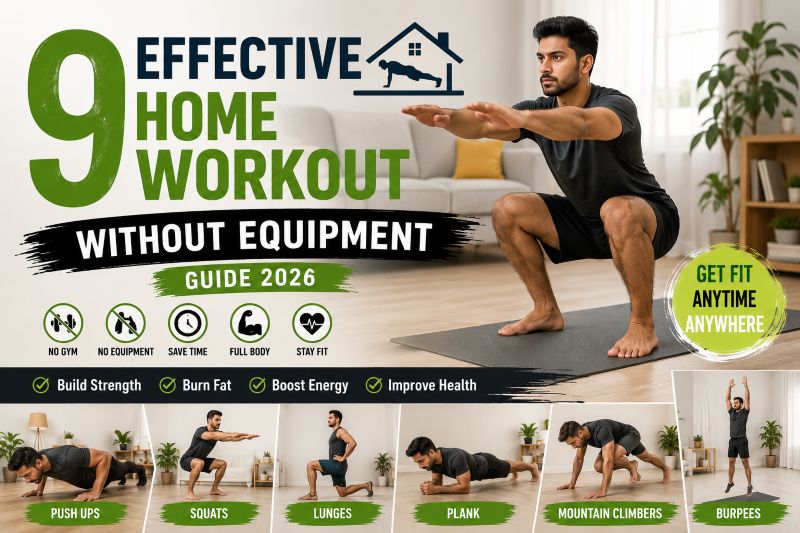
Learn the best Workout Without Equipment techniques in this 2026 guide. Build strength, burn calories, and stay fit at home with simple exercises.
Introduction: Home Workout Without Equipment 2026
Maintaining a healthy lifestyle doesn’t have to involve costly gym memberships or expensive fitness equipment. In 2026, many people are embracing a Workout Without Equipment as a simple, budget-friendly, and highly effective way to stay active. Using your own body weight, you can perform a variety of exercises that improve strength, increase endurance, burn calories, and enhance overall fitness—all from the comfort of your home.
Busy schedules often make it difficult to visit a gym regularly. Work commitments, family responsibilities, and daily routines can leave little time for travel and lengthy workout sessions. A Workout Without Equipment offers the flexibility to exercise whenever it fits your day, whether it’s early in the morning, during a lunch break, or in the evening. With only a small amount of space and consistent effort, you can create a sustainable fitness habit.
Bodyweight exercises such as squats, push-ups, lunges, planks, mountain climbers, and burpees target multiple muscle groups while improving balance, mobility, and cardiovascular health. These movements can easily be adapted for beginners or made more challenging as your fitness level improves. Beyond physical benefits, regular exercise also supports mental well-being by reducing stress, boosting energy, and improving mood. This guide will introduce nine effective bodyweight exercises and practical tips to help you build a stronger, healthier lifestyle without relying on gym equipment.
What Is a Workout Without Equipment?
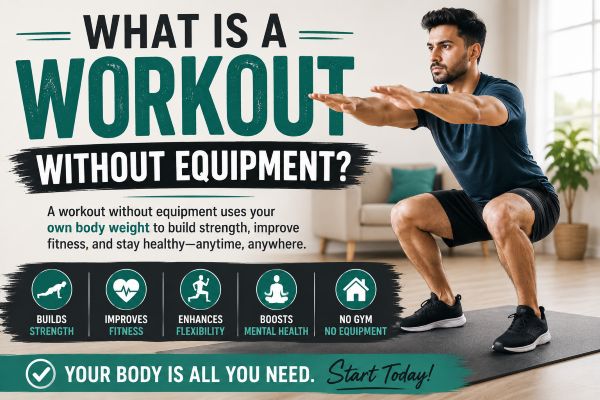
A Workout Without Equipment refers to any exercise routine that relies primarily on your own body weight instead of machines, dumbbells, barbells, resistance bands, or other gym equipment. These workouts use natural movements to strengthen muscles, improve balance, increase flexibility, and enhance cardiovascular endurance. Bodyweight exercises are suitable for people of all ages and fitness levels. Beginners can start with basic movements and gradually increase repetitions or intensity as they become stronger. More experienced individuals can make exercises more challenging by adjusting tempo, adding explosive movements, or increasing workout duration.
Some of the most popular equipment-free exercises include:
- Push-ups
- Squats
- Lunges
- Planks
- Mountain Climbers
- Burpees
- High Knees
- Glute Bridges
- Jumping Jacks
Bodyweight workouts train multiple muscles simultaneously, helping improve overall strength and endurance. Exercises such as push-ups and squats build functional fitness while requiring no equipment. Their flexibility allows you to exercise almost anywhere, and with regular practice plus healthy eating, they promote weight control, better posture, stronger muscles, and improved overall health.
Why Home Workouts Are More Popular in 2026
Home fitness has evolved significantly over the past few years, and in 2026 it has become one of the most preferred ways to stay active. Several factors have contributed to this growing trend.
- Flexible Schedules: People have increasingly busy lifestyles, making it difficult to commit to fixed gym hours. Home workouts provide complete flexibility, allowing individuals to exercise early in the morning, during lunch breaks, or late in the evening.
- Rising Gym Membership Costs: Gym memberships can be expensive, especially when considering registration fees, transportation costs, and recurring monthly payments. A Workout Without Equipment removes these expenses while still delivering excellent fitness results.
- Remote and Hybrid Work: Many professionals continue working remotely or in hybrid environments. This has encouraged people to integrate short workout sessions into their daily routines without leaving home.
- Increased Health Awarenes:People today understand the importance of maintaining a healthy lifestyle. Regular exercise helps reduce the risk of chronic diseases, supports heart health, improves immunity, and contributes to better mental health.
- Online Fitness Resources:Thousands of free workout videos, fitness apps, and expert guides make it easier than ever to follow structured exercise programs at home. Beginners can access professional instruction without paying for personal trainers.
- Minimal Space Required: Unlike traditional gyms, most bodyweight workouts require only a small area. A living room, bedroom, balcony, or backyard is usually enough for an effective workout session.
- Personalized Fitness: Home workouts allow individuals to progress at their own pace. Whether your goal is fat loss, muscle building, flexibility, or improved endurance, you can tailor a Workout Without Equipment to match your fitness level and personal objectives.
9 Effective Home Workout Without Equipment
The following exercises are suitable for beginners and intermediate fitness enthusiasts. They require no equipment and can be performed in almost any indoor or outdoor space.
Exercise #1 – Push-Ups
Push-ups are one of the most effective bodyweight exercises for building upper-body strength.
Muscles Worked
- Chest
- Shoulders
- Triceps
- Core
How to Perform
- Begin in a high plank position.
- Keep your body in a straight line.
- Lower your chest toward the floor.
- Push yourself back up.
- Repeat with controlled movement.
Recommended Repetitions
- Beginners: 8–10 reps × 3 sets
- Intermediate: 12–20 reps × 3–4 sets
Benefits
- Strengthens upper body
- Improves core stability
- Enhances posture
- Builds muscular endurance

Exercise #2 – Bodyweight Squats
Squats are essential for developing lower-body strength and improving mobility.
Muscles Worked
- Quadriceps
- Hamstrings
- Glutes
- Calves
- Core
How to Perform
- Stand with feet shoulder-width apart.
- Keep your chest lifted.
- Bend your knees and lower your hips.
- Drive through your heels to rise back to the starting position.
Recommended Repetitions
- Beginners: 12 reps × 3 sets
- Intermediate: 15–20 reps × 4 sets
Benefits
- Builds stronger legs
- Improves balance
- Increases mobility
- Supports healthy joints
Exercise #3 – Plank
The plank is one of the best exercises for strengthening your core without placing excessive stress on the joints.
Muscles Worked
- Core
- Lower back
- Shoulders
- Glutes
How to Perform
- Position yourself on your forearms.
- Keep your body straight.
- Tighten your abdominal muscles.
- Hold the position without allowing your hips to sag.
Recommended Duration
- Beginners: 20–30 seconds
- Intermediate: 45–60 seconds
Benefits
- Improves posture
- Strengthens the core
- Reduces lower back pain
- Enhances balance
Exercise #4 – Lunges
Lunges improve leg strength while also developing coordination and balance.
Muscles Worked
- Quadriceps
- Hamstrings
- Glutes
- Core
How to Perform
- Stand upright.
- Step one foot forward.
- Lower both knees to about 90 degrees.
- Push back to the starting position.
- Alternate legs.
Recommended Repetitions
- 10–12 reps per leg
- 3 sets
Benefits
- Builds leg strength
- Improves flexibility
- Corrects muscle imbalances
- Enhances athletic performance
Exercise #5 – Mountain Climbers
Mountain climbers combine cardio and strength training into one fast-paced exercise.
Muscles Worked
- Core
- Shoulders
- Chest
- Legs
How to Perform
- Begin in a high plank position.
- Bring one knee toward your chest.
- Quickly switch legs.
- Continue alternating at a steady pace.
Recommended Duration
- Beginners: 20 seconds × 3 rounds
- Intermediate: 40 seconds × 4 rounds
Benefits
- Burns calories quickly
- Strengthens the core
- Improves cardiovascular fitness
- Increases coordination
- Boosts endurance
Exercise #6 – Burpees
Burpees are one of the most effective full-body exercises you can include in a Workout Without Equipment. They combine strength training and cardiovascular exercise, making them ideal for improving endurance while burning calories.
Muscles Worked
- Chest
- Shoulders
- Arms
- Core
- Glutes
- Legs
How to Perform
- Stand with your feet shoulder-width apart.
- Squat down and place your hands on the floor.
- Jump your feet back into a high plank position.
- Perform a push-up (optional for beginners).
- Jump your feet back toward your hands.
- Explosively jump into the air with your arms overhead.
- Repeat with a steady rhythm.
Recommended Sets
- Beginners: 8–10 repetitions × 3 sets
- Intermediate: 12–15 repetitions × 4 sets
Benefits
- Burns a high number of calories
- Strengthens the entire body
- Improves cardiovascular fitness
- Enhances coordination and agility
- Increases muscular endurance
Exercise #7 – Glute Bridges
Glute bridges strengthen the lower body while improving hip mobility and core stability. They are particularly beneficial for people who spend long hours sitting.
Muscles Worked
- Glutes
- Hamstrings
- Core
- Lower back
How to Perform
- Lie flat on your back with your knees bent and your feet resting flat on the floor about hip-width apart.
- Engage your abdominal muscles to stabilize your body.
- Press through your heels and slowly raise your hips off the floor.
- Continue lifting until your shoulders, hips, and knees form a straight line.
- Hold the top position for 1–2 seconds while squeezing your glutes.
- Lower your hips back down in a controlled motion and repeat for the desired number of repetitions.
Recommended Sets
- Beginners: 15 repetitions × 3 sets
- Intermediate: 20 repetitions × 4 sets
Benefits
- Strengthens glutes and hamstrings
- Improves posture
- Reduces lower back discomfort
- Enhances hip flexibility
- Supports better athletic performance
Exercise #8 – High Knees
High knees are a simple but powerful cardio exercise that raises your heart rate while strengthening your legs and core.
Muscles Worked
- Quadriceps
- Hip flexors
- Calves
- Core
How to Perform
- Stand upright.
- Run in place while lifting your knees as high as possible.
- Pump your arms naturally.
- Maintain a steady pace and keep your core engaged.
Recommended Duration
- Beginners: 30 seconds × 3 rounds
- Intermediate: 45–60 seconds × 4 rounds
Benefits
- Improves cardiovascular endurance
- Burns calories efficiently
- Strengthens lower-body muscles
- Boosts coordination and balance
- Increases stamina
Exercise #9 – Jumping Jacks
Jumping jacks are a classic bodyweight exercise that serves as both an effective warm-up and a cardio workout.
Muscles Worked
- Shoulders
- Legs
- Core
- Calves
How to Perform
- Stand upright with your feet together and keep your arms relaxed by your sides.
- Jump while spreading your legs.
- Raise your arms overhead simultaneously.
- Jump back to the starting position.
- Continue at a comfortable pace.
Recommended Duration
- Beginners: 30 seconds × 3 rounds
- Intermediate: 60 seconds × 4 rounds
Benefits
- Improves heart health
- Increases stamina
- Burns calories
- Enhances coordination
- Warms up the entire body
Benefit #1 – Cut Fitness Costs Without Sacrificing Results
One of the biggest reasons people choose a Workout Without Equipment is affordability. Building a healthier lifestyle does not require expensive machines or premium gym memberships.
By exercising at home, you eliminate costs associated with:
- Monthly gym memberships
- Transportation
- Personal training sessions
- Fitness equipment
- Locker fees
Despite these savings, bodyweight workouts remain highly effective. Exercises like push-ups, squats, lunges, and planks use your body as resistance, helping build strength, improve muscle tone, and increase endurance without additional equipment. Over time, these savings can be invested in healthier food choices, quality running shoes, or fitness tracking devices that further support your wellness journey.
Benefit #2 – Convenient Anytime, Anywhere
Convenience is another major advantage of a Workout Without Equipment. Unlike traditional gym routines that depend on location and operating hours, bodyweight exercises can be performed almost anywhere.
Whether you are:
- At home
- Traveling
- Staying in a hotel
- Visiting family
- Enjoying a park
- Working remotely
You can continue your fitness routine with minimal interruption. This flexibility helps maintain consistency, which is one of the most important factors for achieving long-term fitness goals. Even a quick 20-minute workout can provide significant health benefits when performed regularly. Since there is no need to wait for machines or commute to a gym, many people find it easier to fit exercise into their daily schedules.
Benefit #3 – Improves Overall Fitness
A properly designed Workout Without Equipment trains multiple aspects of physical fitness at the same time.
Regular bodyweight training helps improve:
- Muscular strength
- Cardiovascular endurance
- Core stability
- Balance
- Coordination
- Flexibility
- Mobility
- Posture
Bodyweight exercises engage multiple muscle groups at the same time, helping improve strength, endurance, and heart health. Regular training boosts energy, supports healthy weight control, and makes daily activities easier. It also promotes better sleep, lowers stress levels, and builds confidence, contributing to both physical fitness and overall mental well-being.
Benefit #4 – Supports Healthy Weight Loss
A Workout Without Equipment is an effective way to support healthy and sustainable weight loss. Bodyweight exercises increase calorie burn, improve metabolism, and help maintain lean muscle, making it easier to reduce excess body fat. Unlike quick-fix diets, regular exercise encourages long-term fitness and healthier habits. Combining bodyweight training with nutritious meals can significantly improve your weight management journey.
Tips to Maximize Weight Loss
- Exercise 4–5 times per week for consistent progress.
- Include both strength training and cardio in your routine.
- Drink plenty of water before, during, and after workouts.
- Follow a nutritious eating plan that includes lean protein, colorful fruits, fresh vegetables, and whole-grain foods to support your fitness goals.
- Aim for 7–9 hours of uninterrupted sleep every night to promote muscle recovery, restore energy, and improve overall performance.
- Gradually increase workout intensity as your fitness improves.
- Stay consistent, even with short 20–30 minute sessions.
Remember, consistency matters more than perfection. Even a 20–30 minute Workout Without Equipment performed regularly can make a noticeable difference over time.
Benefit #5 – Builds Functional Strength
Functional strength refers to the ability to perform everyday activities with ease, efficiency, and reduced risk of injury. A Workout Without Equipment naturally develops this type of strength because it uses movements that closely resemble daily activities. Exercises such as squats, lunges, planks, and push-ups strengthen multiple muscle groups at once instead of isolating a single muscle. This improves your body’s ability to perform tasks like:
- Carrying groceries
- Climbing stairs
- Lifting heavy objects
- Playing sports
- Gardening
- Walking long distances
- Maintaining proper posture
Bodyweight exercises also strengthen stabilizing muscles that are often neglected during machine-based workouts. Strong stabilizer muscles improve balance, coordination, and joint health. Over time, functional strength reduces the likelihood of muscle strains, back pain, and common injuries caused by poor posture or weak core muscles. Whether you are a student, office worker, parent, or senior, developing functional strength through a Workout Without Equipment makes everyday life easier and more comfortable.
Benefit #6 – Improves Heart Health and Endurance
Your heart is a muscle, and like every other muscle, it becomes stronger with regular exercise. A well-planned Workout Without Equipment improves cardiovascular fitness while reducing the risk of heart-related diseases.
Exercises such as:
- Jumping Jacks
- Burpees
- Mountain Climbers
- High Knees
- Fast Bodyweight Circuits
Regular cardiovascular exercise offers numerous benefits, including:
- Lower blood pressure
- Improved oxygen delivery
- Better lung capacity
- Reduced cholesterol levels
- Improved stamina
- Higher daily energy levels
As your cardiovascular endurance improves, you’ll notice that activities such as climbing stairs, jogging, cycling, or even walking become much easier. Experts generally recommend at least 150 minutes of moderate-intensity exercise each week, and bodyweight workouts provide a practical way to achieve this goal without requiring expensive equipment.
Benefit #7 – Enhances Mental Health and Reduces Stress
Exercise is not only beneficial for your body—it also plays a vital role in maintaining good mental health. A regular Workout Without Equipment helps reduce stress, improve mood, and increase overall emotional well-being. During physical activity, your brain releases endorphins, often called “feel-good hormones.” These natural chemicals help reduce feelings of anxiety and stress while promoting relaxation and happiness.
Additional mental health benefits include:
- Better focus and concentration
- Improved memory
- Reduced symptoms of anxiety
- Better sleep quality
- Increased self-confidence
- Improved productivity
- Greater emotional resilience
Many people also find that home workouts provide a healthy break from screens and daily responsibilities. Even a short 20-minute session can refresh your mind and boost your energy for the rest of the day. Combining regular exercise with healthy eating, proper hydration, and sufficient sleep creates a strong foundation for both physical and mental wellness.
Weekly Workout Plan
Following a structured routine helps you stay consistent and allows your muscles enough time to recover. Here’s a simple weekly plan for beginners and intermediate fitness enthusiasts.
| Day | Workout |
|---|---|
| Monday | Push-Ups, Squats, Plank, Jumping Jacks |
| Tuesday | Lunges, Mountain Climbers, High Knees |
| Wednesday | Active Recovery (Walking, Stretching, Yoga) |
| Thursday | Burpees, Push-Ups, Glute Bridges |
| Friday | Squats, Plank, Jumping Jacks, High Knees |
| Saturday | Full-Body Circuit (Exercises 1–9) |
| Sunday | Rest and Light Stretching |
- Workout Duration: 30–45 minutes
- Warm-Up: 5–10 minutes
- Cool-Down: 5–10 minutes
Adjust the intensity based on your fitness level and gradually increase repetitions or workout time as your strength improves.
Common Mistakes to Avoid
Even the best Workout Without Equipment routine may not deliver results if common mistakes are overlooked. Avoid these habits to maximize your progress.
- Skipping Warm-Ups: Cold muscles are more prone to injury. Always warm up before exercising.
- Using Poor Form: Incorrect technique reduces effectiveness and increases the risk of injury. Focus on quality over quantity.
- Training Every Day Without Rest: Allow your muscles enough time to recover and rebuild by scheduling one or two rest days each week for better strength and performance.
- Ignoring Nutrition:Exercise alone cannot compensate for unhealthy eating habits. Fuel your body with nutritious foods.
- Inconsistent Workouts: Consistency is the key to lasting fitness results. Aim to follow your routine every week.
- Progressing Too Quickly: Increase repetitions, sets, or intensity gradually to avoid overtraining and injuries.
Safety Tips
Safety should always come first when performing any Workout Without Equipment routine.
- Warm up before every session.
- Cool down with light stretching afterward.
- Wear comfortable, supportive footwear if needed.
- Exercise on a stable, non-slip surface.
- Keep water nearby to stay hydrated.
- Maintain proper posture throughout every exercise.
- Listen to your body and avoid pushing beyond your limits.
- Consult a healthcare professional before starting a new exercise program if you have existing medical conditions or injuries.
These simple precautions can help you exercise confidently while minimizing the risk of injury.
Nutrition Tips
A balanced diet complements your Workout Without Equipment routine by supporting muscle recovery, energy levels, and overall health.
Eat Enough Protein
Good sources include:
- Eggs
- Fish
- Chicken
- Lean meat
- Greek yogurt
- Lentils
- Beans
- Tofu
Choose Healthy Carbohydrates
Complex carbohydrates provide long-lasting energy.
Examples include:
- Brown rice
- Oats
- Whole-grain bread
- Sweet potatoes
- Quinoa
Include Healthy Fats
Good options include:
- Avocados
- Nuts
- Seeds
- Olive oil
- Fatty fish
- Stay Hydrated:Stay well hydrated by drinking water before, throughout, and after your workout to replenish fluids lost through perspiration.
- Eat Plenty of Fruits and Vegetables: Colorful fruits and vegetables provide essential vitamins, minerals, antioxidants, and fiber to support recovery and immunity.
Frequently Asked Questions (FAQs)
1. Can I build muscle with a Workout Without Equipment?Yes. Progressive bodyweight exercises such as push-ups, squats, lunges, planks, and burpees can effectively build strength and lean muscle, especially when performed consistently with proper nutrition.
2. How long should a home workout last? Most people benefit from 30–45 minutes of exercise, including warm-up and cool-down. Beginners can start with 20-minute sessions and gradually increase the duration.
3. How many days per week should I exercise? Aim for at least four to five workout sessions per week, with one or two rest days for recovery.
4. Is a Workout Without Equipment suitable for beginners? Absolutely. Bodyweight exercises can be modified to match different fitness levels, making them ideal for beginners.
5. Can a Home Workout Routine Support Weight Loss? Yes. When combined with a calorie-controlled, nutritious diet, regular bodyweight workouts can support healthy and sustainable weight loss.
6. Do I need supplements? Most individuals can obtain the essential nutrients their bodies need by following a healthy, balanced diet rich in a variety of wholesome foods. Supplements should only be considered if recommended by a healthcare professional or registered dietitian.
Conclusion
A Workout Without Equipment is one of the most practical, affordable, and effective ways to improve your fitness in 2026. Whether your goal is to lose weight, build strength, boost endurance, or simply lead a healthier lifestyle, bodyweight exercises provide a flexible solution that fits almost any schedule.
The nine exercises covered in this guide—Push-Ups, Squats, Planks, Lunges, Mountain Climbers, Burpees, Glute Bridges, High Knees, and Jumping Jacks—target all major muscle groups and require little more than your own body and determination. Combined with a structured weekly workout plan, proper nutrition, adequate hydration, and sufficient rest, these movements can deliver impressive results over time.
The key to success is consistency. Start with exercises that match your current fitness level, focus on proper technique, and gradually increase the intensity as you become stronger. Remember that lasting progress comes from building healthy habits rather than chasing quick fixes. By making a Workout Without Equipment part of your daily routine, you’ll invest in stronger muscles, better heart health, improved mental well-being, and greater confidence. Stay committed, celebrate small milestones, and enjoy the journey toward a healthier, more active life.