
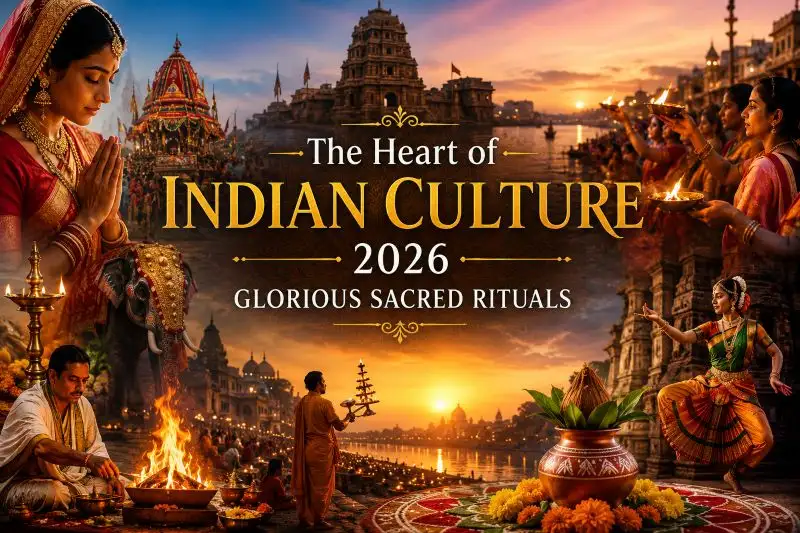
Glorious sacred rituals reveal the soul of Indian Culture in 2026—explore traditions, festivals, and spiritual heritage shaping India’s rich cultural identity.
Introduction: Glorious Sacred Rituals Indian Culture 2026
Indian Culture stands as a monumental pillar of global heritage, distinguished by its unparalleled longevity and kaleidoscopic diversity. As we navigate the complexities of 2026, this ancient civilization remains deeply anchored in a bedrock of spiritual wisdom and sacred rituals. These practices are far more than mere historical relics; they are the rhythmic heartbeat of a society that seamlessly blends antiquity with digital-age progression. In India, a ritual is a profound philosophical statement—a method of aligning the individual soul with the vast mechanics of the universe.
From the synchronized chants of ancient mantras to the vibrant, multisensory explosions of national festivals, these ceremonies act as a vital bridge between generations. They serve as the primary vessel for preserving a unique cultural identity amidst a rapidly globalizing world. Whether performed in the silent sanctity of a Himalayan temple, the bustling energy of a city square, or the quiet corner of a family home, these traditions foster an enduring sense of spiritual harmony.
This exploration delves into the multifaceted world of Indian Culture, examining how these glorious rituals continue to provide meaning, community, and peace. We will uncover the symbolic depth behind these customs and analyze their evolving relevance in the modern lives of millions today.
The Essence of Indian Culture
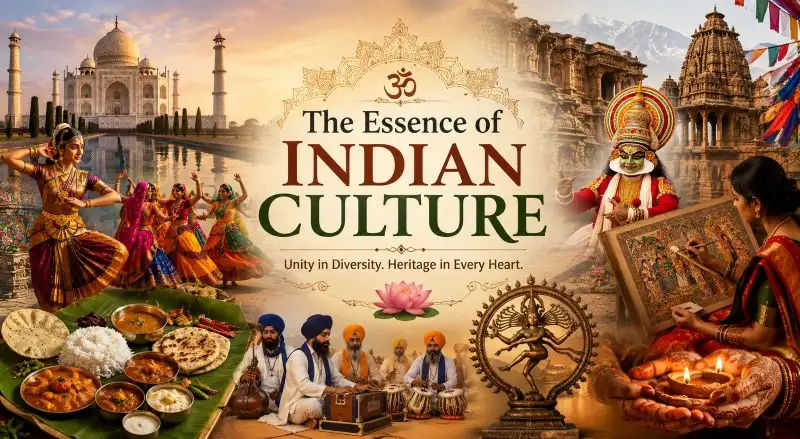
Indian Culture is not a singular identity but a magnificent tapestry woven from spirituality, profound philosophy, intricate art, and enduring tradition. This cultural landscape is a harmonious blend of diverse influences, shaped by the historical and moral teachings of Hinduism, Islam, Buddhism, Jainism, and Sikhism. While these faiths offer unique perspectives, they are unified by a singular, persistent thread: a complex system of sacred rituals that provide a rhythmic structure to human existence, guiding individuals through every major transition from birth to the final departure.
These sacred rituals are not arbitrary customs; they are meticulously rooted in the wisdom of ancient scriptures, including the Vedas, Upanishads, and Puranas. Such practices serve as a spiritual compass, designed to invoke divine blessings, cleanse the environment of negative energies, and uphold a delicate equilibrium between humanity and the natural world.
As we progress through 2026, the resilience of Indian Culture is more evident than ever. Despite the rapid pace of modernization and the ubiquity of technological advancements, these rituals have not faded into obscurity. Instead, they have evolved. While contemporary practitioners might utilize digital platforms for prayers or adopt modern efficiencies in ceremony, the underlying sanctity remains untouched. The methods of expression may adapt to the times, but the core essence—the soul of the tradition—continues to thrive, proving that ancient wisdom remains the ultimate anchor in a changing world.
Types of Sacred Rituals in Indian Culture
1. Daily Rituals (Nitya Karma)
Daily rituals are an essential part of Indian Culture. These include:
- Morning prayers (Pratah Smaran)
- Lighting a lamp (Diya)
- Offering food to deities (Bhog)
- Meditation and yoga
These practices bring discipline, peace, and positivity into daily life. Even in busy urban lifestyles, many families continue these rituals, showing their timeless importance.
2. Life-Cycle Rituals (Sanskar)
Indian Culture emphasizes rituals at every stage of life. These are known as Sanskar, which include:
- Namkaran (Naming Ceremony)
- Annaprashan (First Feeding)
- Mundan (First Haircut)
- Vivah (Marriage)
- Antyeshti (Funeral Rites)
Each ritual has spiritual meaning and social importance. They connect individuals with their family, community, and traditions.
3. Festival Rituals
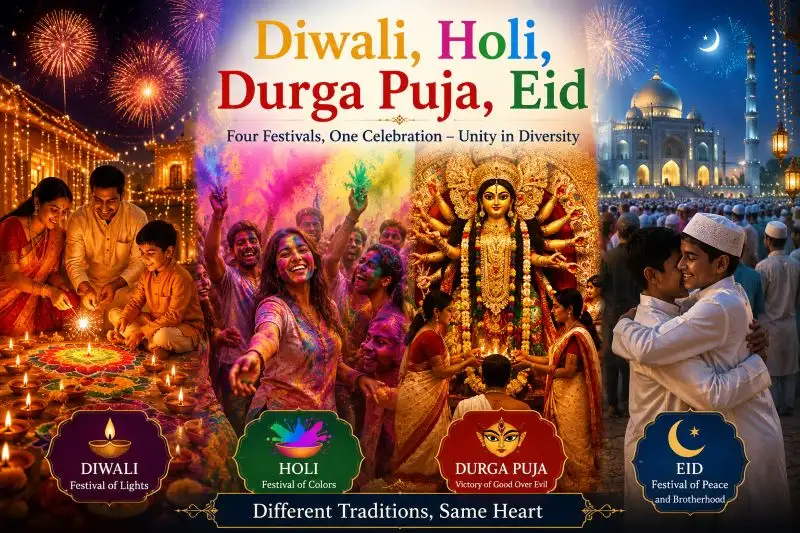
Festivals are the most vibrant expression of Indian Culture. Each festival is filled with rituals, stories, and symbolism.
Some major festivals include:
- Diwali – Festival of lights symbolizing victory of good over evil
- Holi – Festival of colors celebrating joy and unity
- Durga Puja – Worship of Goddess Durga
- Eid – Celebration of faith, charity, and community
In 2026, festivals are celebrated with both traditional and modern elements, blending cultural roots with contemporary lifestyles.
The Metaphysical Foundation: Spiritual Significance of Rituals
In the framework of Indian Culture, sacred rituals are far from hollow superstitions; they are sophisticated spiritual tools designed with profound symbolic intent. These practices serve as a bridge between the material world and the transcendental, offering a structured path toward self-realization.
- Establishing a Divine Connection: At their core, rituals act as a portal to the higher self or a supreme power. Through the rhythmic vibration of mantras (chanting), the focus of Dhyana (meditation), and the humility of Arpan (offerings), an individual cultivates a personal and intimate bond with the infinite. This connection provides a sense of belonging within the vastness of the cosmos.
- Alchemical Purification of the Self: The use of elemental forces—specifically water, fire, and incense—represents a process of spiritual alchemy. Fire, seen in the Aarti or Havan, symbolizes the burning away of ego and ignorance, while water represents the flow of purity. These elements are believed to neutralize stagnant or negative energies, effectively “resetting” the practitioner’s internal environment to a state of clarity.
- The Cultivation of Discipline and Mindfulness: The repetitive and precise nature of these customs fosters an essential sense of Sadhana (disciplined practice). In the chaotic, high-speed reality of 2026, the commitment to a daily ritual acts as a grounding force. It demands total presence of mind, training the practitioner to find stillness and intentionality amidst the distractions of modern life.
Ultimately, these rituals transform the mundane into the extraordinary, ensuring that every action is infused with spiritual purpose and harmony.
Regional Diversity of Rituals
India’s vast geography leads to diverse cultural practices. Rituals vary from region to region, adding richness to Indian Culture.
North India
- Ganga Aarti rituals
- Karva Chauth fasting traditions
South India
- Temple rituals with classical music
- Pongal harvest ceremonies
East India
- Durga Puja celebrations
- Traditional rice-based offerings
West India
- Ganesh Chaturthi rituals
- Navratri Garba dance traditions
This diversity shows how Indian Culture adapts to local traditions while maintaining a common spiritual core.

The Vital Influence: Women as Custodians of Indian Culture
In the intricate framework of Indian Culture, women are not merely participants; they are the primary architects of cultural preservation and the vital guardians of sacred rituals. Their contribution is monumental, spanning from the meticulous preparation of ritual offerings to the strategic organization of complex community ceremonies. Within the domestic sphere, women act as the living repositories of ancestral knowledge, ensuring that the nuances of tradition are passed down with precision and devotion to the next generation.
Central to this role are practices such as Vrat (ritual fasting) and daily Puja (worship), which are frequently spearheaded by the female members of the household. These acts are more than religious obligations; they are spiritual exercises that foster discipline, health, and family harmony. Whether it is the artistic creation of Rangoli at the doorstep or the rhythmic chanting of hymns, women infuse these traditions with life and emotional depth.
As we progress through 2026, the narrative of the Indian woman has expanded remarkably. Today, women are masterfully navigating high-pressure modern careers and global leadership roles while simultaneously upholding these ancient customs. This dual responsibility ensures a seamless cultural continuity, proving that tradition and progress can coexist. By balancing the demands of the contemporary world with the sanctity of the past, women remain the most powerful force in keeping the heart of Indian Culture beating strong.
Sacred Rituals and Nature
Indian Culture has a deep connection with nature. Many rituals are designed to respect and protect the environment.
- Worship of rivers like Ganga
- Tree पूजा (like Tulsi worship)
- Festivals based on harvest cycles
These practices promote ecological awareness and sustainable living—something highly relevant in today’s world.
The 2026 Evolution: The Modern Transformation of Sacred Traditions
As we navigate the mid-2020s, Indian Culture is undergoing a fascinating metamorphosis, blending ancient sanctity with the tools of a high-tech era. The adaptation of sacred rituals in 2026 demonstrates that tradition is not a static relic, but a living entity that grows alongside humanity.
- The Rise of Digital Sanctity: The integration of technology has birthed the era of “Digital Puja.” High-speed connectivity and virtual reality now allow the global diaspora to engage in real-time temple ceremonies. Through immersive live streaming and interactive online platforms, devotees can participate in sacred rites from thousands of miles away, ensuring that geographical distance is no longer a barrier to spiritual participation.
- Commitment to Environmental Stewardship: A significant shift toward ecological consciousness has redefined how festivals are celebrated. Modern practitioners are increasingly opting for sustainable alternatives to protect the planet. This includes the widespread adoption of biodegradable clay idols for immersions, the significant reduction of noise and air pollution through mindful celebrations, and the use of organic, plant-based materials in ceremonial offerings.
- Global Cultural Diffusion: The boundaries of Indian Culture have expanded far beyond the subcontinent. In 2026, rituals like Yoga, Holi, and Diwali are celebrated globally, fostering a cross-cultural exchange that promotes universal values of peace and unity. This international presence not only preserves the heritage but also invites the global community to experience the profound depth of Indian spirituality.
This modernization ensures that while the “how” of the ritual may change to fit a contemporary context, the “why”—the pursuit of harmony and divine connection—remains eternally intact.
Importance of Sacred Rituals in Daily Life
Even in 2026, sacred rituals continue to provide:
- Emotional stability
- Cultural identity
- Family bonding
- Spiritual growth
They act as a bridge between past and present, helping people stay connected to their roots.
Preserving the Sacred: Challenges to Traditional Rituals in 2026
While Indian Culture remains a resilient force, the practice of sacred rituals encounters significant obstacles in our rapidly evolving modern landscape. As we navigate 2026, several key factors threaten the depth and authenticity of these ancient customs:
- Rapid Urbanization and Spatial Constraints: As more families migrate to densely populated urban centers, the physical space required for elaborate traditional ceremonies—such as large outdoor Yagyas or community gatherings—is shrinking. Living in compact apartments often necessitates a condensed version of rituals, sometimes stripping away the communal and environmental elements that defined them for centuries.
- The Pressure of Modern Lifestyles: The relentless pace of contemporary life often leaves little room for time-intensive traditions. With demanding career schedules and long commutes, many individuals find it challenging to dedicate the necessary hours to complex liturgical rites, leading to a “shortcut” approach that can diminish the meditative benefits of the practice.
- The Digital Generation Gap: A significant challenge is the lack of awareness among younger generations. Without formal education or active mentorship, the symbolic meanings behind rituals can be lost, leaving the youth to view them as mere superstitions rather than profound philosophical tools.
- Commercialization and Materialism: The transformation of spiritual festivals into high-budget commercial events often shifts the focus from internal sanctity to external display. When rituals are marketed for tourism or social media clout, their true spiritual essence risks being overshadowed by consumerism.
Despite these hurdles, there is a growing movement to safeguard authenticity. Various initiatives, ranging from immersive heritage seminars and comprehensive electronic databases to targeted academic curricula, are currently being implemented to safeguard the core spirit of these customs for upcoming generations.
How Younger Generations Are Reviving Indian Culture
The youth of 2026 are playing a key role in preserving Indian Culture:
- Learning rituals through online platforms
- Promoting cultural content on social media
- Organizing traditional events in modern formats
This blend of tradition and innovation is ensuring that sacred rituals remain alive and relevant.
Global Recognition of Indian Culture
Indian Culture, with its rich rituals and traditions, is gaining global recognition.
- International yoga practices
- Global celebration of festivals like Diwali
- Cultural exchange programs
Sacred rituals are no longer limited to India—they are becoming part of global culture.
Tips to Experience Indian Culture Through Rituals
If you want to explore Indian Culture deeply, here are some tips:
- Participate in local festivals
- Visit temples and cultural sites
- Learn basic rituals and their meanings
- Respect traditions and customs
- Engage with local communities
Experiencing rituals firsthand provides a deeper understanding of Indian Culture.
Future of Sacred Rituals in Indian Culture
The future of Indian Culture looks promising. Sacred rituals are evolving but not disappearing.
In 2026 and beyond:
- Technology will enhance accessibility
- Awareness will increase among youth
- Sustainable practices will grow
The essence of rituals—spiritual connection and cultural identity—will remain unchanged.
Conclusion: Why Indian Culture Thrives in 2026
In summary, sacred rituals function as the vital lifeblood of Indian Culture, acting as the unbreakable link between ancient tradition, profound spirituality, and the nuances of modern daily life. These practices are far more than ceremonial gestures; they are a psychological and spiritual anchor for millions. Even as we navigate the high-tech landscape of 2026, these rituals offer a sense of stillness and a clear sense of purpose. They provide a unique cultural identity that remains unshaken by the winds of global change.
As we look at the current state of Indian heritage, it is clear that the culture stands remarkably strong—not by resisting change, but by gracefully adapting to it. Whether it is the quiet, meditative power of a morning prayer or the communal energy of a massive national festival, these sacred acts continue to serve as a unifying force. They bridge the gap between the elderly, who hold the wisdom of the past, and the youth, who carry the torch into the future.
Ultimately, understanding and respecting the depth of these rituals is essential for the preservation of global heritage. By engaging with these traditions, we do more than just honor history; we enrich our own lives with a deeper sense of harmony and cosmic meaning. The heart of India remains vibrant, proving that when a culture is rooted in such profound spiritual truth, its influence is truly timeless.
Frequently Asked Questions: Navigating Indian Culture and Sacred Rituals in 2026
As the global interest in spiritual wellness and heritage grows, many seek to understand the complexities of Indian Culture. Below are some of the most common questions regarding the sacred practices that define this ancient yet modern civilization.
1. What is the primary significance of sacred rituals in Indian Culture?
Sacred rituals, or Samskaras, serve as a spiritual roadmap for an individual’s life. They are designed to purify the mind and body, marks transitions (such as birth, marriage, or death), and align the human spirit with cosmic laws. In Indian Culture, these rituals are not just about religion; they are a medium to express gratitude toward nature, ancestors, and the divine.
2. How has modernization in 2026 affected these traditional practices?
Modernization has led to “adaptive preservation.” While the core mantras and intent remain identical to ancient times, the execution has evolved. Many practitioners now use eco-friendly materials, and digital platforms allow families scattered across the globe to participate in rituals via high-definition streaming. Technology hasn’t replaced the ritual; it has expanded its reach.
3. Are these rituals exclusive to one religion?
While many rituals originate from Vedic traditions, the beauty of Indian Culture lies in its syncretic nature. Concepts of hospitality, seasonal festivals, and honoring elders are universal across Hindu, Muslim, Sikh, Jain, and Buddhist communities in India. Each faith has its unique liturgical practices, but they all share the common goal of seeking peace and communal harmony.
4. Why is the year 2026 significant for cultural tourism in India?
2026 marks a period where India is heavily promoting “Vikas bhi, Virasat bhi” (Development along with Heritage). Significant investments in infrastructure around ancient temple towns and heritage sites have made it easier for the world to witness these sacred rituals firsthand in their most authentic settings.
5. Can outsiders participate in these cultural rituals?
Absolutely. Most Indian traditions emphasize Atithi Devo Bhava (The Guest is God). Visitors are generally welcomed to observe and participate in public rituals, provided they approach them with respect, dress modestly, and follow local customs regarding sanctity and photography.