
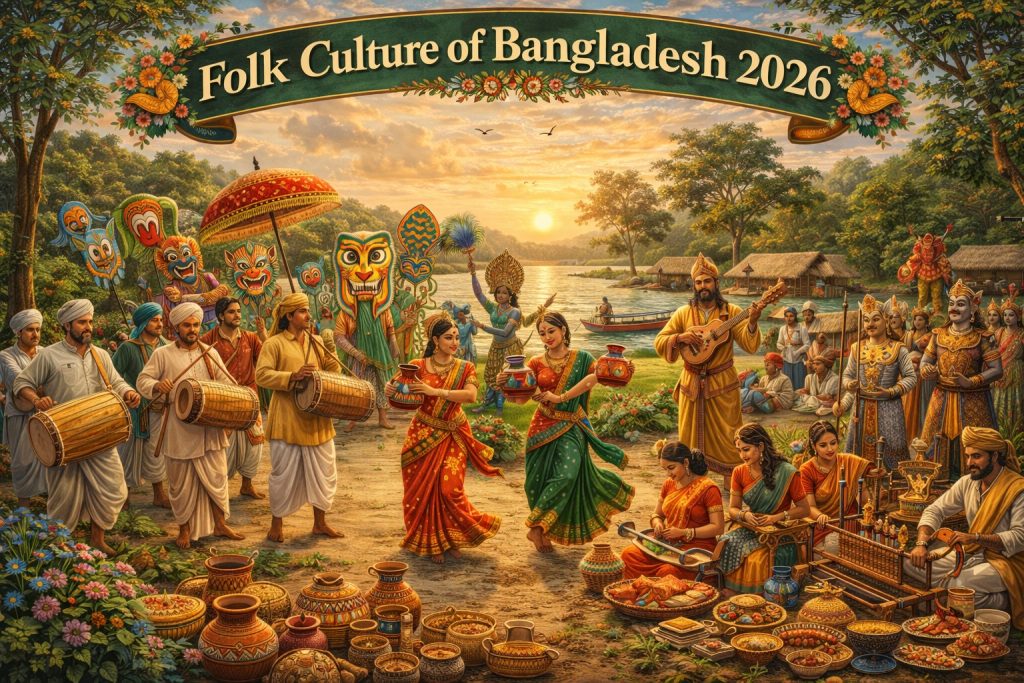
Explore the amazing folk culture of Bangladesh 2026, through traditional songs, dances, and rural life that reflect the nation’s heritage and traditions.
Introduction: Folk Culture of Bangladesh 2026
The Folk Culture of Bangladesh is a living expression of the country’s soul, shaped by rivers, rural life, seasonal cycles, and centuries of tradition. Rooted deeply in village communities, folk culture reflects the emotions, beliefs, struggles, and celebrations of ordinary people. Through folk songs, dances, rituals, crafts, and festivals, Bangladesh preserves a cultural heritage that continues to thrive even in the modern era.
In 2026, interest in authentic cultural travel and heritage tourism is growing rapidly. Exploring the Folk Culture of Bangladesh offers travelers, researchers, and culture lovers a rare opportunity to experience traditions that remain untouched by commercial influence. From mystical Baul songs to energetic rural dances, each cultural form tells a powerful story of identity and resilience.
This article highlights 10 amazing elements of Bangladeshi folk culture, focusing on traditional songs and dances that define rural life across the country.
History of Folk Culture of Bangladesh
The Folk Culture of Bangladesh has evolved over centuries, deeply rooted in rural life, agrarian traditions, and riverine landscapes. Shaped by the country’s rich history, diverse communities, and natural environment, folk culture reflects the daily experiences, beliefs, and emotions of ordinary people. From ancient times, villagers expressed their stories through songs, dances, rituals, and oral storytelling, passing knowledge and traditions from one generation to the next.
Bangladesh’s position at the crossroads of South and Southeast Asia allowed a unique blend of cultural influences—from Hindu, Buddhist, and Islamic traditions to indigenous tribal practices—giving rise to a multicultural folk heritage. Rural festivals, village fairs, and seasonal celebrations became key platforms for folk performances, including Baul music, Bhatiyali, Jari and Sari Gaan, and Lathi Khela.
Historically, folk culture served multiple purposes: entertainment, education, social cohesion, and moral guidance. Boatmen, farmers, artisans, and performers all contributed to preserving local songs, dances, and crafts. Over time, these traditions became symbols of regional identity, community pride, and spiritual expression.
Even in 2026, the Folk Culture of Bangladesh continues to thrive, adapting to modern platforms like digital media while maintaining its authentic rural essence, ensuring that history, artistry, and heritage remain alive for future generations.

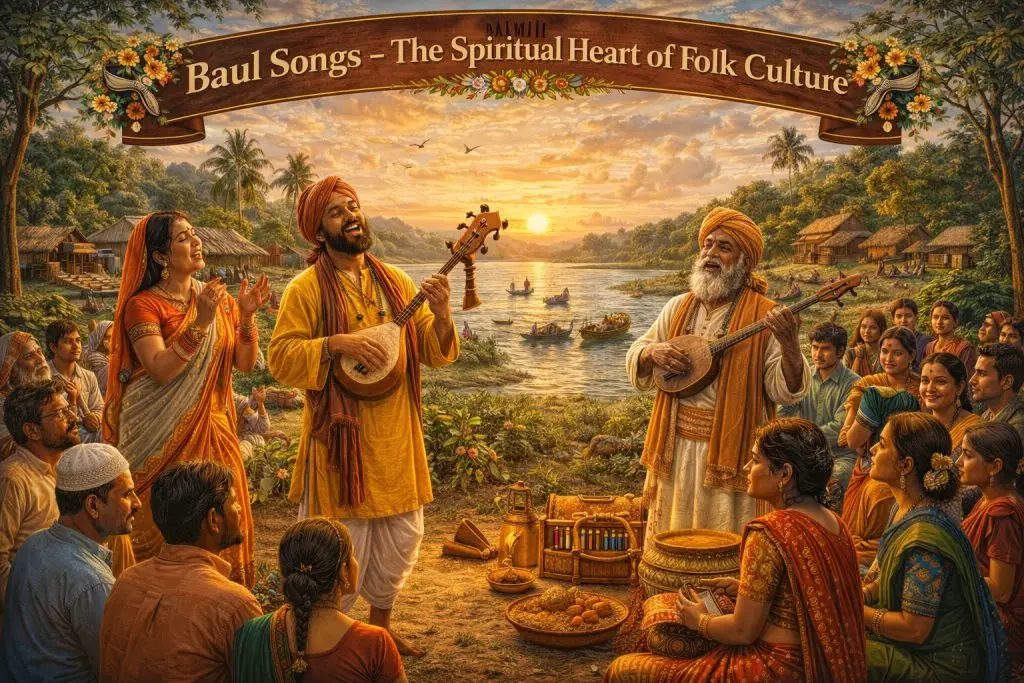
1. Baul Songs – The Spiritual Heart of Folk Culture
Baul songs are among the most iconic and spiritually rich elements of the Folk Culture of Bangladesh. Performed by wandering minstrels known as Bauls, these songs blend music, philosophy, and mysticism, offering both entertainment and profound insight into life.
Baul lyrics explore universal themes such as:
- Humanism and the pursuit of inner truth
- Love that transcends religion and societal norms
- The search for the divine within oneself
Performed with simple instruments like the ektara (single-stringed lute) and dotara, Baul music evokes deep emotion and reflection. Their songs often convey moral lessons, philosophical ideas, and personal experiences, making the tradition a living repository of rural wisdom.
The legendary Baul philosopher Lalon Shah remains the most celebrated figure in this tradition, inspiring generations of singers and listeners. Experiencing Baul songs provides travelers a unique spiritual and cultural immersion, revealing the essence of the Folk Culture of Bangladesh in its most heartfelt form.opher, played a crucial role in shaping this tradition, which remains popular in Kushtia and rural Bengal.
2. Bhatiyali – Songs of Rivers and Boatmen
Bangladesh is a river-based country, and Bhatiyali songs naturally reflect the life and rhythm of its waterways. Sung primarily by boatmen and fishermen, Bhatiyali conveys emotions of loneliness, longing, love, and reflection, often inspired by the flowing rivers and changing seasons.
These slow, melodic songs are traditionally performed while rowing along rivers like the Padma, Meghna, and Jamuna, turning daily labor into a soulful musical expression. Bhatiyali remains a powerful symbol of the Folk Culture of Bangladesh, highlighting the emotional connection between people and nature.
Additional Highlights:
- Accompanied by traditional instruments like ektara, dotara, and flute
- Often shared during river journeys or village gatherings
- Preserves oral history, folklore, and local stories of river life
- Inspires modern folk adaptations and cultural performances
Bhatiyali not only entertains but also strengthens community bonds, making it an enduring and iconic part of Bangladesh’s rich folk heritage.

3. Bhatiali & Bhawaiya Fusion in Northern Bengal
In northern districts like Rangpur and Kurigram, Bhawaiya songs are an integral part of rural life, often reflecting the emotions and struggles of villagers. These songs focus on themes like:
- Separation from loved ones
- Rural romance and longing
- Women’s emotional challenges
Bhawaiya is sometimes blended with Bhatiali, the traditional river folk songs of Bengal, creating a unique regional folk fusion. This combination produces haunting melodies accompanied by poetic lyrics that capture the essence of daily life, love, and hardship.
Additional Highlights:
- Sung traditionally by boatmen, farmers, and village singers
- Instruments like dotara and flute enhance the soulful sound
- Provides insight into northern Bengal’s cultural identity
- Remains a living tradition, performed at festivals, weddings, and community gatherings
This emotional and melodic tradition remains a cherished part of the Folk Culture of Bangladesh, showcasing the depth, diversity, and artistic richness of rural communities.reating a unique regional folk style. The haunting tunes and poetic lyrics make it one of the most emotionally rich traditions within the Folk Culture of Bangladesh.
4. Jari and Sari Gaan – Musical Storytelling
Jari and Sari Gaan are vibrant examples of the Folk Culture of Bangladesh, blending music, storytelling, and community spirit. These traditional folk songs are usually performed in groups during festivals, religious gatherings, and village events, creating an immersive cultural experience.
Jari Gaan is a devotional and historical folk song that narrates Islamic events, most notably the tragedy of Karbala. Through these songs, performers convey moral lessons, spiritual devotion, and cultural heritage, keeping historical narratives alive for future generations.
- Jari Gaan is a devotional and historical folk song that narrates Islamic events, most notably the tragedy of Karbala. Through these songs, performers convey moral lessons, spiritual devotion, and cultural heritage, keeping historical narratives alive for future generations.
- Sari Gaan, on the other hand, is performed rhythmically by boat rowers during river races, synchronizing rowing with song. These performances not only motivate teamwork but also turn daily labor into a musical and celebratory event.
Both Jari and Sari Gaan demonstrate how music is deeply intertwined with rural life, social traditions, and community participation in Bangladesh, making them a vital part of the Folk Culture of Bangladesh today.
5. Gambhira – Satire Through Song and Drama
Gambhira is a distinctive folk performance that blends song, dance, and dialogue to deliver humor, wisdom, and social commentary. It is mainly popular in the Chapainawabganj and Malda regions, reflecting the local culture and rural life.
Traditionally performed by two characters (often a grandfather and grandson), Gambhira addresses:
- Social problems affecting village life
- Political issues and local governance
- Moral lessons and ethical guidance
With its witty satire and engaging storytelling, Gambhira not only entertains but also educates communities about societal values. The performances often include live drumming, expressive facial gestures, and audience interaction, making it highly immersive. By highlighting both contemporary issues and timeless wisdom, Gambhira is a shining example of how the Folk Culture of Bangladesh preserves knowledge, nurtures social awareness, and keeps rural traditions alive for future generations.
6. Folk Dances of Rural Bangladesh
Folk dances are an essential part of rural celebrations and seasonal festivals in Bangladesh. They reflect the community’s joy, beliefs, and traditions while bringing people together through rhythm and movement.
- Jari Dance – performed during religious ceremonies and local rituals
- Santal and Garo Tribal Dances – showcasing the rich heritage of indigenous communities
- Harvest Dances – celebrating the seasonal agricultural cycle and expressing gratitude for crops
These dances are commonly seen at weddings, village fairs, and cultural festivals, allowing communities to pass traditions from one generation to the next. Folk dances in Bangladesh often involve colorful costumes, live folk music, and synchronized group movements, creating a visually stunning and immersive cultural experience. They are a vital expression of the Folk Culture of Bangladesh, preserving local identity, storytelling, and social cohesion across generations.
7. Lathi Khela – Traditional Stick Dance
Lathi Khela is a dynamic martial folk performance that blends dance, physical strength, and rhythmic movement. Using wooden sticks, this tradition originally developed as a form of self-defense training among rural communities, especially during times when villages needed to protect themselves.
Today, Lathi Khela is performed during:
- Cultural festivals and folk events
- National celebrations and public programs
- Rural fairs and village gatherings
Beyond its visual excitement, Lathi Khela symbolizes bravery, teamwork, discipline, and resilience. The synchronized movements and energetic displays highlight the collective spirit of rural life, making it a powerful expression of the Folk Culture of Bangladesh and a reminder of the country’s historic strength and unity.
8. Folk Music of Indigenous Communities
Bangladesh is home to many indigenous groups, including the Chakma, Marma, Garo, and Santal communities, each contributing distinct music and dance styles to the nation’s folk heritage. Their performances are deeply connected to nature, spirituality, and community life.
Indigenous folk culture features:
- Nature-inspired rhythms and melodies
- Colorful traditional costumes and ornaments
- Community-based performances during festivals and rituals
These traditions enrich the Folk Culture of Bangladesh by showcasing cultural diversity and multicultural harmony. Indigenous folk music often tells stories of forests, hills, rivers, and ancestral beliefs, offering valuable insight into ways of life that have remained preserved for centuries. Preserving these art forms is essential to protecting Bangladesh’s broader cultural identity.
9. Village Fairs and Folk Performances
Rural fairs, locally known as mela, are vibrant cultural hubs where folk songs, dances, and traditions come alive. Events such as Poush Mela, Nabanna, and various seasonal village fairs showcase continuous folk performances rooted in rural life.
At these fairs, visitors can experience:
- Live folk music performed by local artists
- Traditional dance shows reflecting regional heritage
- Rural crafts, handmade goods, and authentic village food
Beyond entertainment, village fairs strengthen community bonding and provide a platform for folk artists to pass traditions to younger generations. For travelers and culture enthusiasts, these melas offer a rare opportunity to engage directly with local people and witness the Folk Culture of Bangladesh in its most authentic, colorful, and heartfelt form.ngladesh in its most authentic form.
10. Preservation of Folk Culture in 2026
In 2026, efforts to preserve the Folk Culture of Bangladesh are stronger than ever. Cultural organizations, universities, and digital platforms are actively documenting folk songs, dances, and oral traditions to protect them from extinction and ensure long-term sustainability.
Key preservation efforts include:
- Folk music festivals celebrating rural artists
- Digital archiving of traditional songs and performances
- Cultural tourism initiatives supporting village communities
- School and university programs introducing folk heritage to younger generations
In addition, government-backed cultural projects and NGO initiatives are providing financial and training support to folk artists. Social media, YouTube, and streaming platforms are helping performers reach global audiences, allowing traditional art forms to evolve with modern technology without losing their original identity.
Community-based workshops and heritage villages are also playing a vital role by encouraging intergenerational knowledge transfer, ensuring that the Folk Culture of Bangladesh remains alive, relevant, and respected in the digital age.
Why Folk Culture of Bangladesh Still Matters
The Folk Culture of Bangladesh is more than entertainment—it is a living archive of history, emotion, and rural wisdom passed down through generations. It reflects how people live, love, celebrate, struggle, and survive, capturing the true spirit of Bangladeshi life.
In an era of rapid modernization and globalization, folk culture reminds us of:
- Simplicity in daily living
- Strong community values and social bonding
- Harmony with nature and seasonal rhythms
Beyond tradition, folk culture plays a vital role in education, cultural preservation, and sustainable tourism. For travelers, it offers deep cultural immersion beyond typical tourist attractions. For local communities, it safeguards identity, pride, and ancestral heritage, ensuring these timeless traditions continue to thrive in 2026 and beyond.
SEO FAQ: Folk Culture of Bangladesh
1. What is Folk Culture of Bangladesh?
Folk Culture of Bangladesh refers to the traditional lifestyle, music, dances, festivals, beliefs, and customs practiced mainly in rural areas. It reflects the emotions, history, and daily life of ordinary people passed down through generations.
2. Why is Folk Culture of Bangladesh important?
The Folk Culture of Bangladesh preserves national identity, rural traditions, and historical values. It connects modern generations with ancestral wisdom and plays a vital role in cultural education and heritage tourism.
3. What are the most popular folk songs in Bangladesh?
Some of the most famous folk songs include:
- Baul songs
- Bhatiyali
- Bhawaiya
- Jari and Sari Gaan
These songs are deeply rooted in river life, spirituality, and rural emotions.
4. Which folk dances are popular in Bangladesh?
Popular folk dances in the Folk Culture of Bangladesh include:
- Jari dance
- Harvest and village festival dances
- Indigenous tribal dances (Garo, Santal, Chakma)
- Lathi Khela (traditional stick dance)
5. Where can tourists experience authentic folk culture in Bangladesh?
Tourists can experience authentic Folk Culture of Bangladesh in rural villages, village fairs (mela), cultural festivals, Baul gatherings in Kushtia, and indigenous communities in the Chittagong Hill Tracts.
6. Is Folk Culture of Bangladesh still practiced today?
Yes, the Folk Culture of Bangladesh is still actively practiced, especially in rural areas. In 2026, digital platforms, folk festivals, and cultural tourism are helping preserve and promote these traditions worldwide.
7. What instruments are commonly used in Bangladeshi folk music?
Traditional instruments include:
- Ektara
- Dotara
- Dhol
- Flute
- Mandira
These simple instruments create the soulful sound of the Folk Culture of Bangladesh.
8. How is Folk Culture of Bangladesh being preserved in 2026?
Preservation efforts include:
- Folk music festivals
- Digital archiving
- Cultural research programs
- YouTube and social media promotion
- Government and NGO cultural initiatives
9. Why should travelers explore Folk Culture of Bangladesh?
Exploring the Folk Culture of Bangladesh allows travelers to experience authentic rural life, traditional music, colorful dances, and community festivals that offer deeper cultural immersion than typical tourist attractions.
10. What is the future of Folk Culture of Bangladesh?
With growing global interest in heritage tourism, the Folk Culture of Bangladesh has a promising future. Modern technology is helping preserve traditions while introducing them to international audiences.
Final Thoughts: Folk Culture of Bangladesh
The Folk Culture of Bangladesh represents one of the most authentic and enduring cultural heritages in South Asia. Rooted in rural life and shaped by rivers, seasons, and community values, it reflects the soul of the nation through traditional songs, expressive dances, storytelling, and collective celebrations. These folk traditions are not simply artistic expressions; they are living histories that preserve the emotions, beliefs, and wisdom of generations.
In 2026, as modernization and digital lifestyles continue to reshape society, the importance of the Folk Culture of Bangladesh has become even more significant. It serves as a bridge between the past and the present, reminding people of simplicity, unity, and harmony with nature. From the spiritual depth of Baul songs to the rhythmic energy of rural dances and village fairs, each tradition tells a powerful story of identity and resilience.
For travelers, exploring the Folk Culture of Bangladesh offers meaningful cultural immersion beyond mainstream tourism. For researchers and culture enthusiasts, it provides valuable insight into South Asia’s social and historical evolution. Most importantly, for local communities, folk culture safeguards the pride, identity, and heritage that define Bangladesh.
Preserving and celebrating these traditions ensures that the Folk Culture of Bangladesh will continue to inspire, educate, and connect people—both locally and globally—for generations to come.