
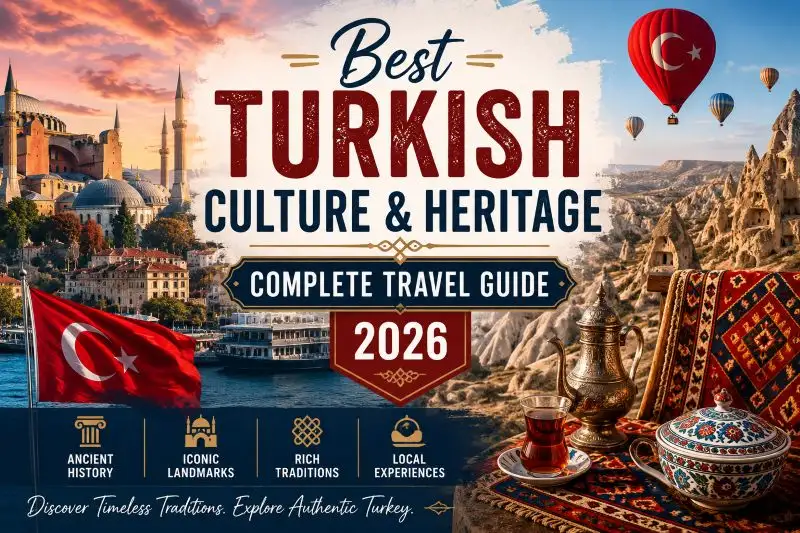
Discover the rich Turkish Culture & Heritage with our ultimate 2026 travel guide. Explore historic landmarks, vibrant traditions, and local secrets now!
Introduction: Turkish Culture & Heritage & Travel Guide 2026
Straddling two continents, where the rolling hills of Europe meet the ancient plains of Asia, Turkey is less of a geographical territory and more of a living, breathing historical epic. For millennia, this sun-drenched peninsula—historically known as Anatolia—has served as the grand stage for the rise and fall of world-shaping empires: the Hittites, Lycians, Romans, Byzantines, and Ottomans. Each civilization left its indelible mark, layering the landscape with a profound cultural wealth.
In 2026, exploring Turkish culture & heritage offers a rare journey through time. It is a land where ancient Greco-Roman coliseums look out over turquoise seas, where the chime of Byzantine church bells echoes in the history of grand mosques, and where centuries-old traditions seamlessly blend with a cutting-edge, modern art scene.
Whether you are navigating the labyrinthine corridors of Istanbul’s Grand Bazaar, watching the Whirling Dervishes spin in mystical ecstasy, or sharing a glass of tulip-shaped tea with locals in a remote Aegean village, Turkey promises an immersive sensory awakening. This comprehensive 2026 travel guide is designed to help you unlock the absolute best of Turkey’s historical depth, architectural marvels, culinary traditions, and timeless customs.
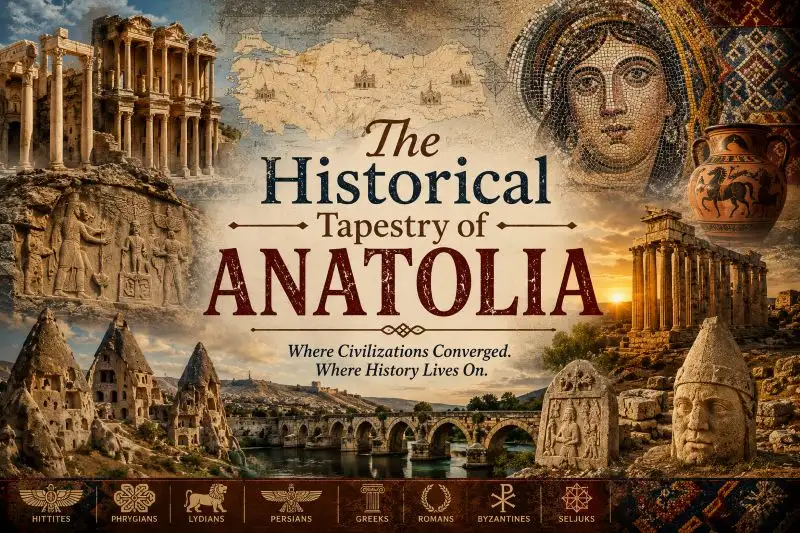
1. The Historical Tapestry of Anatolia
To truly appreciate Turkish culture & heritage, one must look to Anatolia—the ancient peninsula that has served as a crucible of human civilization for millennia. Today’s cultural landscape is a dazzling historical mosaic shaped by successive world empires, each building directly upon the legacy of its predecessors.
Classical Roots: From Hittites to Romans
Long before Central Asian Turks arrived, Anatolia thrived under ancient superpowers. The Bronze Age Hittites erected the monumental sanctuaries of Hattusa, while Greek settlers later founded legendary coastal capitals of philosophy and art like Troy and Ephesus. When Rome expanded East, the region became an imperial economic powerhouse. Walking through its exceptionally preserved classical theaters and aqueducts today feels like stepping directly into antiquity.
The Byzantine Millennium
Following Rome’s division, Constantinople (now Istanbul) emerged as the dazzling epicenter of the Byzantine Empire. For over a thousand years, this Eastern Orthodox superpower pioneered a unique aesthetic of soaring brick domes and radiant gold mosaics. This spiritual epoch still echoes across the land, from Istanbul’s monuments to the hidden cave chapels of Cappadocia.
The Ottoman Golden Age
The 1453 Ottoman conquest of Constantinople fundamentally reshaped global history. The Ottomans fused their nomadic Central Asian roots and Islamic faith with Persian, Byzantine, and Arab elements to forge a highly sophisticated imperial identity. They elevated calligraphy, textile weaving, and monumental architecture to unmatched heights, ruling a vast multi-ethnic empire whose cultural heart remains firmly rooted in modern Turkey.
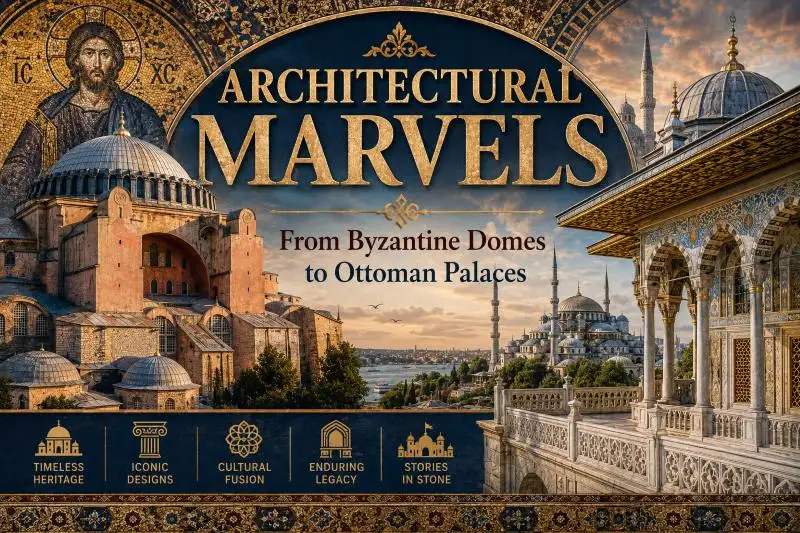
2. Architectural Marvels: From Byzantine Domes to Ottoman Palaces
Turkey’s architectural heritage is a physical manifestation of its historical transitions. The country’s skyline is an unforgettable silhouette of slender minarets, cascading domes, and ancient stone pillars.
Hagia Sophia (Ayasofya)
No building embodies the complex layer cake of Turkish culture & heritage quite like the Hagia Sophia. Originally constructed as a Christian cathedral by Byzantine Emperor Justinian I in 537 AD, it was the largest church in Christendom for nearly a thousand years. Its massive dome, which seemed to hang suspended from heaven by a golden chain, revolutionized architectural history.
Following the Ottoman conquest, Sultan Mehmed II converted the structure into an imperial mosque, adding minarets, buttresses, and exquisite Islamic calligraphy disks, while carefully preserving many of the Christian mosaics beneath plaster. Today, functioning as a working mosque and a monument of universal heritage, it stands as the ultimate symbol of interfaith history and architectural genius.
The Blue Mosque (Sultan Ahmed Mosque)
Sitting directly opposite the Hagia Sophia is the Sultan Ahmed Mosque, universally known as the Blue Mosque. Built between 1609 and 1616 during the rule of Ahmed I, it was designed to rival the grandeur of its Byzantine neighbor.
The interior is lined with more than 20,000 handmade ceramic tiles from Iznik, featuring traditional Ottoman designs of tulips, lilies, and carnations bathed in natural light from over 200 stained-glass windows. Its unique design featuring six minarets caused a global stir upon its completion, matching the count of the Holy Mosque in Mecca at the time.
Topkapi and Dolmabahçe Palaces: Changing Tastes of an Empire
A stroll through Istanbul’s palaces reveals the shifting cultural identity of the Ottoman court over the centuries.
- Topkapi Palace: The administrative heart and residential palace of the Ottoman Sultans from the 15th to the 19th centuries. Built around four lush courtyards, Topkapi features low-slung, pavilions, pavilions, and an infamous Harem. It reflects a traditional, deeply Islamic and Eastern architectural style.
- Dolmabahçe Palace: Built in the mid-19th century along the Bosphorus, Dolmabahçe represents an empire looking resolutely toward Europe. Moving away from traditional designs, it is a opulent blend of Baroque, Rococo, and Neoclassical styles, complete with a 4.5-ton Bohemian crystal chandelier—a gift from Queen Victoria.
| Monument | Primary Architectural Style | Historical Era | Key Feature to Look For |
| Hagia Sophia | Byzantine Imperial | 6th Century AD | The breathtaking 31-meter dome and Christian-Islamic co-existing art. |
| Blue Mosque | Classical Ottoman | 17th Century | 20,000+ hand-painted blue Iznik ceramic tiles. |
| Topkapi Palace | Traditional Ottoman / Islamic | 15th Century | The Sacred Relics room and the sprawling Harem quarters. |
| Dolmabahçe Palace | European Baroque / Neoclassical | 19th Century | The monumental crystal staircase and Bosphorus-facing gates. |
3. UNESCO World Heritage Sites You Must Visit in 2026
Turkey protects more than twenty UNESCO World Heritage sites, each safeguarding a vital era of human achievement. For any cultural itinerary in 2026, these four destinations are absolute essentials.
The Ancient Ruins of Ephesus
Situated near Selçuk on the Aegean coast, Ephesus ranks among the Mediterranean’s most intact classical cities. Strolling along the marble-paved Curetes Way brings the former metropolis of 250,000 citizens to life. Key highlights include the iconic 2nd-century Library of Celsus, the massive 25,000-seat Great Theater where Saint Paul once spoke, and the luxurious Terrace Houses, featuring remarkably detailed frescoes and floor mosaics from Roman high society.
Cappadocia’s Rock-Cut Legacy
Sculpted by volcanic activity and weather, Cappadocia features a surreal landscape where early Christians carved sanctuaries directly into the soft tuff rock to escape Roman persecution. At the Göreme Open Air Museum, visitors can step inside centuries-old cave churches to view remarkably preserved Byzantine biblical murals, ideally paired with a classic sunrise view of hot-air balloons drifting over the fairy chimneys.
Göbekli Tepe: Humanity’s Cradle
Located near Şanlıurfa, this archaeological marvel predates Stonehenge by seven millennia. Constructed by hunter-gatherers long before the dawn of farming, its massive, T-shaped limestone pillars feature intricate wildlife carvings. It stands as the planet’s oldest known temple, proving spiritual rituals actually preceded settled agriculture.
Hierapolis-Pamukkale
Pamukkale’s striking white travertine terraces are formed by mineral-rich thermal springs. Atop this “Cotton Castle” sits the ancient Greco-Roman spa town of Hierapolis, where travelers today can still swim above submerged Roman columns in the famous Cleopatra’s Pool.

4. Intangible Heritage: The Soul of Turkish Traditions
While grand monuments chronicle the legacy of ancient rulers, Turkey’s living heart resides in the customs preserved across generations. Experiencing these intangible traditions offers a genuine window into the country’s cultural identity.
The Spirit of Turkish Hospitality (Misafirperverlik)
In Turkish society, a visitor is warmly embraced as a “guest of God” (Tanrı misafiri). This foundational philosophy creates a culture of profound generosity. Travelers frequently find themselves invited into family homes for home-cooked meals or offered hot glasses of tea by shopkeepers. Gracefully accepting these gestures opens the door to authentic local connection.
The Mystical Journey of the Whirling Dervishes
Dating back to the 13th-century teachings of the Sufi mystic Rumi, the Mevlevi Order practices a mesmerizing spiritual ceremony called the Sema. Dressed in symbolic attire—tall felt hats representing the ego’s tombstone and white robes symbolizing its shroud—the Dervishes spin to the haunting music of the reed flute. With one palm turned upward to capture divine grace and the other facing the earth to distribute it, they spin to achieve universal harmony and spiritual awakening.
Hammam Culture: The Art of Purification
Fusing Roman bathing customs with Islamic purification rituals, the traditional Turkish bath (Hammam) remains a vital institution of physical and social cleansing. Stepping into historical architectural wonders, guests unwind on a heated central marble slab (göbek taşı). A professional attendant then provides a vigorous exfoliation using a silk mitt (kese), followed by a restorative, cloud-like olive oil soap massage.
5. The Culinary Heritage: A Symphony of Flavors
Far beyond simple street food, Turkish cuisine is a sophisticated art form heavily influenced by the imperial kitchens of Topkapi Palace, where royal chefs synthesized ingredients from across three continents to please the Sultan.
The Epic Turkish Breakfast (Serpme Kahvaltı)
In Turkey, morning dining is an elaborate social event. A traditional serpme kahvaltı blankets the table in an array of small, shared plates, including:
- Regional cheeses like beyaz peynir and kaşar.
- Coastal olives, crisp cucumbers, tomatoes, and fresh herbs.
- Rich clotted cream (kaymak) paired with wild honey.
- Freshly baked simit (sesame rings) and savory, layered börek pastries.
- Menemen—spiced, soft-scrambled eggs with tomatoes and green peppers.
This feast is enjoyed alongside endless small glasses of freshly brewed black tea (çay).
Geography of Taste: Olive Oil vs. Spice
The country’s diverse microclimates give rise to distinct regional gastronomy:
- The Aegean and Mediterranean: These regions focus on light, fresh seafood, gathered mountain herbs, and cold vegetable dishes simmered in rich olive oil (zeytinyağlılar).
- Southeastern Anatolia: Showcasing legendary food capitals like Gaziantep, this territory is celebrated for its fiery seasonings and masterful grilling traditions, most notably its rich Ali Nazik kebabs and crisp, pistachio-filled baklava.
Liquid Traditions
- Tea (Çay): Brewed in a stacked çaydanlık pot, this crimson drink fuels daily social and business life.
- Turkish Coffee (Türk Kahvesi): Simmered slowly in a copper cezve, this unfiltered, frothy brew is served with Turkish delight. It concludes with the fun tradition of reading fortunes from the dried grounds left inside the cup.
6. Living Crafts: Artistry Passed Down Through Generations
Turkey’s artistic heritage is preserved by master artisans who continue to practice centuries-old techniques, rejecting mass factory production in favor of patience, precision, and soul.
The Grand Bazaar: The Epicenter of Historic Commerce
Commissioned by Sultan Mehmed II shortly after the conquest in 1461, Istanbul’s Grand Bazaar (Kapalıçarşı) is one of the oldest and largest covered marketplaces in the world. Spanning over 60 vaulted streets and housing more than 4,000 shops, it is organized into historic guilds (bedestens) dedicated to specific crafts: gold jewelers, leather workers, antique dealers, and carpet merchants.
Knots of History: Hand-Woven Turkish Carpets
A authentic Turkish carpet or kilim (flat-weave) is a physical diary of the person who made it. Historically hand-woven by village women using local sheep’s wool dyed naturally with roots, plants, and insects, these rugs feature geometric patterns and motifs that carry specific meanings. A wolf’s track symbol protects against danger, a scorpion motif wards off evil spirits, and a stylized hand-on-hips signifies fertility and maternal pride. Unlike Persian rugs which use a single knot, Turkish carpets utilize a unique double-knot (Ghiordes) technique, making them exceptionally durable.
Iznik Ceramics and Ebru Paper Marbling
- Iznik Ceramics: Recognizable by their brilliant cobalt blues, emerald greens, and unique tomato-red underglazes, Iznik tiles clad the interiors of Turkey’s grandest historic mosques and palaces. The quartz-rich clay formula creates a luminous, glass-like finish that has kept its color vivid for over 500 years.
- Ebru (Paper Marbling): The hypnotic art of Ebru involves floating natural earth pigments mixed with ox-gall on a surface of water thickened with natural gum. The artisan uses delicate horsehair and rose-twig brushes to manipulate the floating paints into intricate floral, abstract, or calligraphic designs before transferring the floating pattern permanently onto paper.
7. Festivities and Contemporary Culture in 2026
While Turkey fiercely preserves its historical identity, it is simultaneously a dynamic, forward-looking cultural hub. Traveling in 2026 allows you to experience a thrilling bridge between ancient festivals and cutting-edge contemporary arts.
Islamic Holidays: Ramadan and Eid
If your 2026 travels coincide with Ramadan (Ramazan), you will experience a profound communal spiritual atmosphere. After sunset, historic town squares fill with festive energy for Iftar (the breaking of the fast), featuring free public concerts, traditional shadow puppet theater (Karagöz and Hacivat), and street vendors selling sweet Ramadan sherbet. It is followed by the vibrant Ramazan Bayramı (Eid al-Fitr), a three-day celebration centered around visiting elders and sharing sweets.
Traditional Oil Wrestling (Kırkpınar)
Held annually since the 14th century in Edirne, the Kırkpınar Oil Wrestling Festival is one of the world’s oldest continuously running sporting events. Heavily built wrestlers (pehlivan) douse themselves from head to toe in pure olive oil and battle it out on a grassy field under the scorching summer sun to win the coveted golden belt. It is a spectacle of strength, stamina, and deep sportsmanship rooted in ancient warrior traditions.
Modern Art Explosion: The Istanbul Biennial and Beyond
For a modern taste of Turkish culture & heritage, exploring cities like Istanbul and Izmir reveals a thriving contemporary art landscape. Museums like the newly renovated Istanbul Modern and the Pera Museum display cutting-edge digital media, sculpture, and paintings by Turkish artists wrestling with themes of identity, modernization, and globalization.
8. Practical Tips for the Culturally Respectful Traveler
Navigating Turkey’s rich heritage smoothly requires keeping a few essential cultural etiquette guidelines in mind for your 2026 itinerary:
- Religious Dress Code: When exploring active mosques, modest attire is mandatory for everyone. Shoulders, upper arms, and knees must be fully covered. Women must also cover their heads with a scarf. Major historic sites usually offer complimentary wraps at the door.
- Footwear Customs: Always take off your shoes before stepping inside a mosque or a local home. You can place them on the designated shelves or cubbies near the entrance.
- Bazaar Haggling: Negotiating prices is a traditional social custom when buying rugs, jewelry, or antiques. Treat haggling as a friendly interaction rather than a conflict. Countering with roughly half the original quote and compromising in the middle is standard practice.
- Photography Rules: While locals are generally welcoming, always request permission before taking portraits, particularly of women in rural areas or the elderly. Avoid photographing worshippers during prayer.
Summary: Embracing the Legacy of Turkey
Turkey is far more than a collection of picturesque vacation backdrops; it stands as a profound testament to human resilience, historical continuity, and artistic mastery. Immersing yourself in the deep roots of Turkish culture & heritage elevates your trip from a standard holiday into a deeply transformative journey of discovery.
As you watch the setting sun paint the iconic Istanbul skyline in gold, hear the haunting call to prayer echo across ancient valleys, or savor culinary recipes refined over generations, you quickly realize that Turkey does not simply exhibit its past—it invites you to live it.
Approaching your 2026 travels with an open mind and an adventurous heart ensures you will connect deeply with the local way of life. The timeless landscapes of Anatolia are ready to unfold their stories, leaving you with memories and insights that will linger long after you return home.