
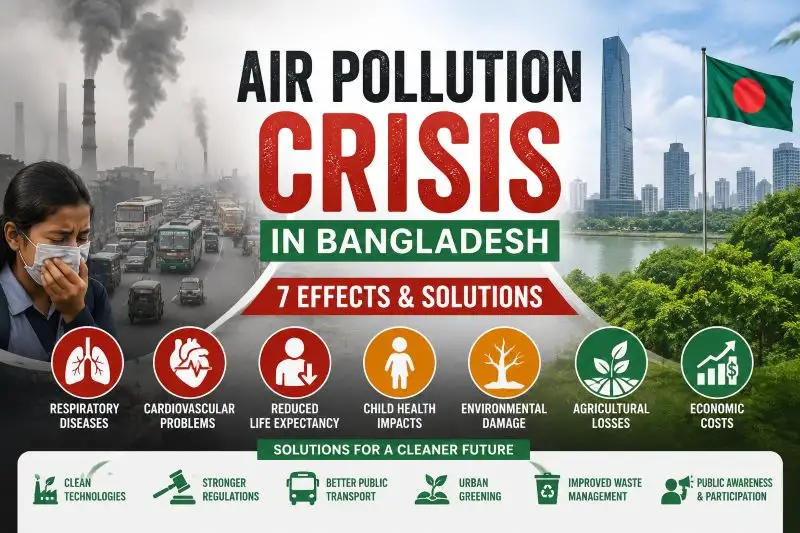
The air pollution crisis in Bangladesh is rising. Uncover 7 devastating effects on health and environment, plus the vital solutions needed now.
Introduction: Air Pollution Crisis in Bangladesh
Air pollution has emerged as one of the most critical environmental and health concerns in Bangladesh. As cities continue to expand and industries grow rapidly, the quality of air across the country has deteriorated significantly. Factors such as increasing numbers of vehicles, industrial emissions, brick kiln operations, and large-scale construction projects release harmful pollutants into the atmosphere every day. These pollutants create unhealthy living conditions for millions of people, particularly in major urban areas.
The capital city, Dhaka, often experiences severe air quality problems and is frequently listed among the most polluted cities globally. Prolonged exposure to contaminated air can lead to various health issues, including respiratory diseases, heart conditions, and other long-term complications. Children, older adults, and individuals with existing health problems are especially vulnerable to the effects of poor air quality.
Beyond its impact on human health, air pollution also harms the environment and economy. It can damage crops, reduce agricultural productivity, affect biodiversity, and increase healthcare costs. The growing pollution levels pose a serious challenge to sustainable development and public well-being.
Addressing this issue requires coordinated efforts from policymakers, industries, environmental organizations, and citizens. Understanding the causes and consequences of the Air Pollution Crisis in Bangladesh is an important step toward developing effective solutions and ensuring a cleaner, healthier future for generations to come.
What Is Air Pollution?
Atmospheric degradation occurs when hazardous foreign elements—including toxic gases, airborne dust, microscopic soot, and synthetic chemicals—disrupt the natural balance of our breathing air. While environmental phenomena like volcanic ash can cause temporary issues, human activity drives the vast majority of ecological damage today.
The most critical pollutants reshaping our atmosphere include:
- Fine Particulate Matter ($PM_{2.5}$ and $PM_{10}$): Inhalable microscopic dust and soot particles that bypass human respiratory defenses, penetrating deep into the lungs and bloodstream.
- Carbon Monoxide ($CO$): An odorless, invisible gas produced by incomplete combustion that severely reduces the blood’s capacity to transport oxygen.
- Sulfur Dioxide ($SO_2$): A pungent gas released primarily by burning fossil fuels in brick kilns and factories, causing severe respiratory irritation.
- Nitrogen Oxides ($NO_x$): Highly reactive gases from vehicle exhaust that contribute heavily to urban smog and acid rain formation.
- Heavy Metals and Lead: Toxic airborne residues from poorly managed industrial smelting and battery recycling that impact neurological health.
- Volatile Organic Compounds ($VOCs$): Chemical vapors from paints, solvents, and fuel evaporation that react with sunlight to create ground-level ozone.
Because these airborne toxins linger in the sky for extended periods, they present ongoing, severe threats to public health and delicate ecosystems.
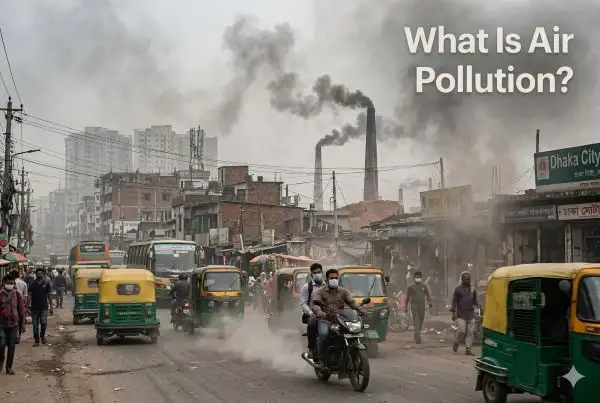
Understanding the Air Pollution Crisis in Bangladesh
Over recent decades, Bangladesh has undergone incredible economic acceleration. However, this impressive financial progress has come at a steep ecological cost, triggering a severe decline in ambient air quality across major metropolitan hubs.
The primary catalysts behind this environmental degradation include:
- Unchecked Industrial Expansion: The rapid proliferation of manufacturing zones releases massive volumes of untreated chemical vapors and toxic smoke directly into the atmosphere.
- Surging Traffic Density: An explosion of personal and commercial vehicles fills urban roadways, spewing heavy concentrations of dangerous fossil fuel exhaust.
- Traditional Brick Kiln Operations: Clusters of old-fashioned brick manufacturing facilities encircle major cities, burning low-grade coal and wood continuously.
- Widespread Construction Dust: Continuous infrastructure development and building projects generate massive amounts of loose, unmitigated airborne dust particles.
- Open-Air Refuse Incineration: Deficiencies in local municipal waste infrastructure lead to widespread garbage burning. This unchecked disposal method discharges hazardous plastic byproducts and potent environmental toxins into the atmosphere.
- Aggressive Population Crowdling: Intense urban migration concentrates high-demand resource consumption and localized emissions within fragile geographic spaces.
Consequently, atmospheric toxin levels routinely skyrocket past global safety benchmarks, particularly during stagnant winter months. This ongoing crisis is far more than an environmental dilemma—it is a critical public health emergency threatening millions.
Major Causes of Air Pollution in Bangladesh
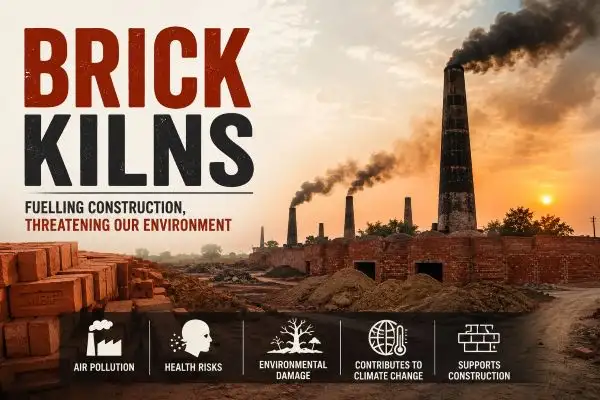
1. Brick Kilns
Brick manufacturing is one of the largest contributors to air pollution in Bangladesh.
Traditional brick kilns release:
- Black smoke
- Carbon dioxide
- Sulfur compounds
- Fine particulate matter
Thousands of kilns operate around major cities, significantly reducing air quality.
Impact
- Increased respiratory diseases
- Reduced visibility
- Environmental degradation
2. Vehicle Emissions
Every year, the tally of motorized vehicles operating across Bangladesh climbs higher. This unrelenting growth on the streets directly escalates the volume of dangerous tailpipe emissions, transforming busy roadways into major pollution hotspots that continuously threaten the respiratory health of millions of urban residents.
Many vehicles:
- Use low-quality fuel
- Lack proper maintenance
- Emit excessive smoke
Traffic congestion further worsens emissions because engines remain running for extended periods.

3. Industrial Activities
Massive production complexes and processing mills release a steady stream of toxic particulates and greenhouse gases into the open air. This ongoing industrial output severely compromises local ecosystems, transforming nearby residential communities into high-risk pollution zones and posing long-term respiratory dangers to millions.
Industries contributing to air pollution include:
- Textile mills
- Cement factories
- Steel production plants
- Chemical industries
Without effective pollution control measures, these industries significantly impact surrounding communities.
4. Construction Dust
Aggressive real estate development and civil engineering projects create a massive influx of fine atmospheric dust. This ongoing construction boom blankets surrounding communities in thick layers of concrete residue and grit, heavily compromising metropolitan air quality and creating a persistent health hazard for everyday commuters.
Sources include:
- Road construction
- Building demolition
- Sand transportation
- Infrastructure projects
Construction dust contains fine particles that can penetrate deep into human lungs.
5. Open Waste Burning
Relying on open-air trash combustion remains a common practice for disposing of daily household refuse across various localities. This uncontrolled burning of plastics, paper, and food waste emits highly hazardous chemical dioxins into the immediate atmosphere, severely threatening the long-term respiratory health of nearby families.
Burning waste releases:
- Toxic gases
- Smoke
- Harmful chemicals
Plastic waste burning is particularly dangerous due to the release of carcinogenic compounds.
6. Household Fuel Usage
Throughout the country’s interior villages, countless families depend on solid fuels to power their daily cooking setups. Lacking access to modern clean energy, they burn organic matter inside their homes, creating thick pockets of trapped smoke that worsen local air pollution and endanger the health of women and children.
- Firewood
- Crop residues
- Charcoal
Indoor air pollution from these fuels contributes to health problems, especially among women and children.
7. Seasonal Weather Conditions
Annual weather cycles heavily dictate how severely airborne contamination affects the population. During dry, windy months, lack of rainfall allows dust and industrial smoke to accumulate rapidly in the sky, whereas heavy seasonal rains act as a natural cleanser, temporarily flushing hazardous particles out of the breathing zone.
During winter and dry seasons:
- Wind speeds decrease
- Pollutants remain trapped near the ground
- Air quality deteriorates rapidly
This seasonal effect worsens the Air Pollution Crisis in Bangladesh each year.
7 Major Effects of the Air Pollution Crisis in Bangladesh
1. Respiratory Diseases
One of the most serious consequences of air pollution is respiratory illness.
Common conditions include:
- Asthma
- Bronchitis
- Chronic obstructive pulmonary disease (COPD)
- Lung infections
Children and elderly individuals are particularly vulnerable.
Long-Term Impact
Continuous exposure to polluted air can permanently damage lung function.
2. Cardiovascular Problems
Air pollution affects more than just the lungs.
Studies show that polluted air can increase:
- Heart disease risk
- High blood pressure
- Stroke likelihood
- Heart attack incidence
Fine particulate matter can enter the bloodstream and affect cardiovascular health.
3. Reduced Life Expectancy
Long-term exposure to polluted air can have a serious impact on human life expectancy. Harmful particles and toxic gases in the atmosphere increase the risk of chronic illnesses such as heart disease, lung disorders, stroke, and respiratory infections. Over time, continuous exposure weakens the body’s ability to fight disease, leading to a higher likelihood of premature death.
Poor air quality has become a growing public health concern around the world, with millions of people experiencing reduced lifespans due to pollution-related health problems. In Bangladesh, where air pollution levels frequently exceed safe limits, the risk is particularly alarming. Vulnerable groups such as children, older adults, and people with existing health conditions face the greatest danger. Addressing air pollution is essential not only for improving daily health but also for helping people live longer, healthier lives.
4. Impact on Children
Children breathe more rapidly than adults, making them more susceptible to pollutants.
Air pollution can contribute to:
- Developmental issues
- Reduced lung growth
- Learning difficulties
- Increased respiratory infections
Protecting children from pollution is critical for future generations.
5. Environmental Damage
Air pollution harms ecosystems and biodiversity.
Negative impacts include:
- Soil contamination
- Water pollution
- Forest degradation
- Wildlife habitat destruction
Healthy ecosystems are essential for sustainable development.
6. Agricultural Losses
The agricultural sector also suffers from poor air quality.
Pollutants can:
- Reduce crop productivity
- Damage plant tissues
- Lower food quality
- Affect farmer income
Agriculture remains a vital part of Bangladesh’s economy, making these impacts especially significant.
7. Economic Consequences
The Air Pollution Crisis in Bangladesh creates substantial economic losses.
Costs include:
- Healthcare expenses
- Reduced worker productivity
- Environmental restoration
- Agricultural damage
These financial burdens affect both individuals and the national economy.
Why Dhaka Faces Severe Air Pollution
Dhaka is among the most densely populated cities in the world, and this extreme population concentration places significant pressure on its environment. Limited urban space combined with rapid growth has led to multiple pollution sources that continuously degrade air quality.
- High Population Density: A large number of people live in a relatively small area, increasing overall urban activity. This leads to higher vehicle usage, more waste generation, and greater energy consumption, all of which contribute to air pollution.
- Traffic Congestion:Severe traffic jams are a daily occurrence in Dhaka. Vehicles stuck in long queues continue to release exhaust fumes, increasing the level of harmful pollutants in the air.
- Industrial Activities:Many factories are located near residential zones. These industries release smoke and chemical emissions that spread into nearby communities, worsening air quality.
- Construction Dust:Ongoing construction projects across the city produce large amounts of dust. Without proper control measures, this dust remains suspended in the air and contributes to pollution levels.
Together, these factors make Dhaka one of the most affected cities in the Air Pollution Crisis in Bangladesh.
Health Risks of PM2.5 Pollution
PM2.5 refers to microscopic particles smaller than 2.5 micrometers.
These particles are especially dangerous because they can:
- Reach deep lung tissue
- Enter the bloodstream
- Affect multiple organs
Symptoms of Exposure
- Coughing
- Breathing difficulties
- Eye irritation
- Fatigue
- Chest discomfort
Long-term exposure can contribute to severe chronic diseases.
Government Efforts to Reduce Air Pollution
To tackle growing air quality challenges, the government of Bangladesh has implemented several measures aimed at reducing pollution and protecting public health. These initiatives focus on controlling emissions from major pollution sources while promoting sustainable environmental practices.
1. Promoting Cleaner Brick Kiln Technologies
Traditional brick kilns contribute significantly to air pollution. To address this issue, authorities encourage kiln owners to adopt modern and environmentally friendly technologies.
Benefits include:
- Reduced smoke and harmful gas emissions
- Better energy efficiency and fuel savings
- Lower levels of particulate matter released into the air
2. Enforcing Vehicle Emission Standards
The transportation sector is another major source of pollution. Government agencies have introduced vehicle emission regulations to limit harmful exhaust gases.
Key actions include:
- Setting emission standards for vehicles
- Conducting regular inspections and fitness checks
- Identifying and removing highly polluting vehicles from roads
3. Expanding Urban Green Projects
Tree-planting and urban greening initiatives play an important role in improving air quality and creating healthier cities.
Advantages include:
- Absorption of carbon dioxide from the atmosphere
- Natural filtering of airborne pollutants
- Reduction of urban heat and improvement of living conditions
4. Monitoring Industrial Emissions
Environmental protection agencies maintain consistent oversight of industrial operations to verify their compliance with statutory pollution limits. Industries are encouraged to install modern filtration systems and adopt cleaner production methods, helping reduce harmful emissions and protect surrounding communities.
7 Solutions to the Air Pollution Crisis in Bangladesh
- Modernize Brick Kilns: Traditional brick kilns heavily drive up regional air pollution levels. Replacing outdated kilns with cleaner and more energy-efficient technologies can significantly reduce harmful emissions and improve air quality across the country.
- Improve Public Transportation: Developing reliable and affordable public transport systems can reduce dependence on private vehicles. Fewer vehicles on the road mean lower fuel consumption, reduced traffic congestion, and decreased air pollution.
- Promote Electric Vehicles: Electric vehicles operate with zero direct exhaust, keeping the immediate air clean as they drive. Encouraging the use of EVs through incentives and charging infrastructure can help create cleaner urban environments.
- Strengthen Industrial Regulations: Factories and industries should follow strict environmental standards. Installing pollution-control equipment and conducting regular inspections can minimize the release of harmful pollutants into the atmosphere.
- Increase Urban Greenery:Planting trees and expanding public parks creates a natural filtration system that purifies the air we breathe. Expanding parks, rooftop gardens, green corridors, and community tree-planting programs can enhance environmental quality in cities.
- Improve Waste Management: Efficient waste collection, recycling, and composting programs can reduce open waste burning. Proper waste management helps limit toxic emissions and supports a cleaner environment.
- Raise Public Awareness: Public education campaigns can encourage environmentally friendly habits. Individuals can contribute by using public transportation, conserving energy, avoiding waste burning, and actively supporting green initiatives in their communities.
What Individuals Can Do
While systemic changes are vital, everyday citizens hold immense power to combat environmental degradation. Micro-actions, when multiplied across millions of households, spark macro-level environmental recovery.
Every person can drive meaningful progress by adopting these five daily habits:
- Embrace Mass Transit and Carpooling: Choosing trains, buses, or shared rides over personal vehicles drastically minimizes individual carbon footprints. Fewer idling engines on the road directly translates to lower ambient exhaust levels.
- Expand Local Green Spaces: Planting native trees, shrubs, and urban rooftop gardens helps establish natural biological filters. Vegetation actively absorbs gaseous pollutants while releasing fresh oxygen back into our neighborhoods.
- Practice Strict Energy Conservation: Cutting back on household electricity usage reduces the heavy strain on coal and gas-fired power plants. Simple habits, like turning off unused appliances, curb macro-level industrial emissions.
- Eliminate Backyard Trash Burning: Disposing of household waste through formal recycling channels prevents toxic smoke. Open combustion releases dangerous dioxins, making responsible waste management a critical community safety measure.
- Advocate for Green Initiatives: Supporting local eco-policies and participating in community cleanup drives amplifies environmental awareness. Public demand forces both corporations and lawmakers to prioritize sustainable practices.
Future Outlook for Bangladesh
While the current environmental hurdles are steep, Bangladesh is well-positioned to revitalize its atmosphere through forward-thinking innovations and rigorous legislative overhauls.
Realizing a cleaner tomorrow depends on targeting these five pivotal pillars:
- Accelerating Renewable Energy: Shifting away from fossil fuels toward solar, wind, and tidal power will fundamentally shrink the nation’s carbon footprint and eliminate reliance on toxic energy sources.
- Implementing Smart Urban Planning: Designing eco-conscious cities with expansive green belts, localized zoning, and efficient public zones directly curbs localized smog accumulation.
- Revamping Transit Systems: Modernizing the transport sector by introducing electric mass transit, upgrading rail networks, and phasing out high-emission vehicles will drastically lower roadside exhaust.
- Adopting Green Industrial Tech: Equipping manufacturing plants and brick kilns with advanced filtration, cleaner combustion techniques, and sustainable machinery minimizes industrial waste gases.
- Enforcing Strict Environmental Laws: Holding polluters accountable through heavy fines, mandatory emissions monitoring, and unyielding regulatory oversight ensures long-term industrial compliance.
Ultimately, reversing the air pollution crisis in Bangladesh demands absolute synergy among state authorities, private corporations, and local communities. Success hinges on sustained financial investment, political resolve, and widespread civic education. Through unified action, breathing clean air can soon become a daily reality.
Conclusion
The Air Pollution Crisis in Bangladesh remains a significant challenge that affects nearly every aspect of daily life. Dirty air from brick kilns, factories, vehicles, construction sites, and unmanaged garbage is escalating rapidly, creating a massive crisis for both public health and nature. As urbanization and economic activities increase, the need for effective pollution control measures becomes more important than ever.
The consequences of poor air quality extend far beyond respiratory discomfort. Air pollution contributes to serious health conditions, including lung diseases, heart-related illnesses, and reduced life expectancy. It also impacts children’s development, damages ecosystems, lowers agricultural productivity, and creates substantial economic burdens through healthcare expenses and lost productivity. These widespread effects demonstrate why air pollution should be treated as a national priority.
Despite the seriousness of the problem, there is reason for optimism. Modern technologies, cleaner industrial practices, improved public transportation systems, stricter environmental regulations, expanded green spaces, and better waste management strategies can help reduce pollution levels across the country. Public participation and environmental awareness are equally important in supporting long-term improvements.
A cleaner future requires cooperation among government institutions, businesses, communities, and individuals. With consistent action and sustainable policies, Bangladesh can make meaningful progress in improving air quality, protecting public health, and building a safer and more environmentally responsible future for generations to come.