
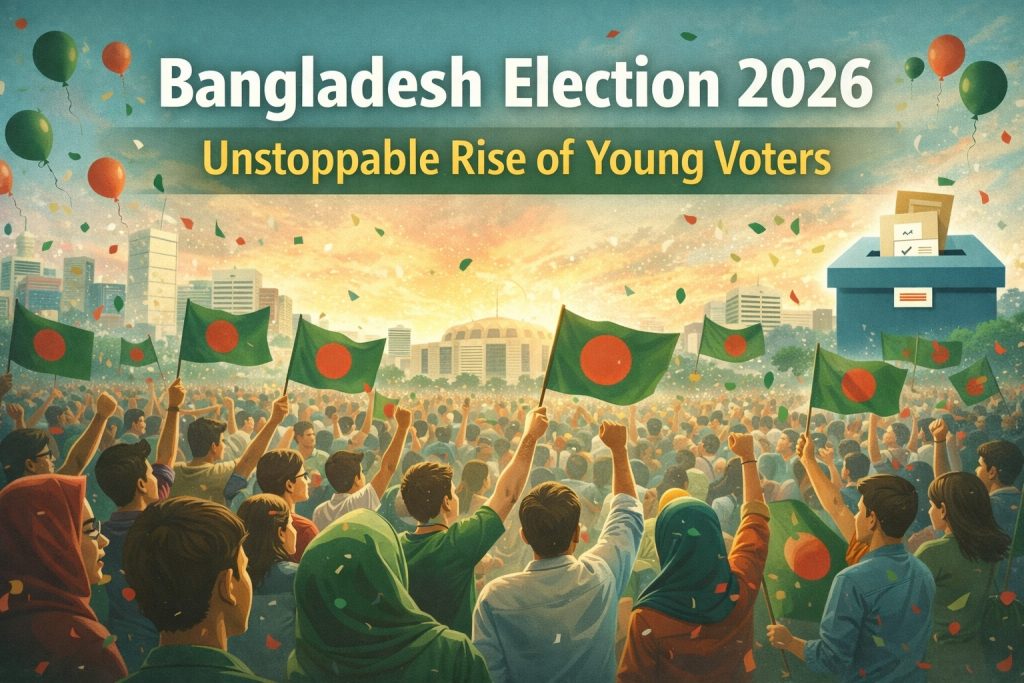
Bangladesh Election 2026 highlights the unstoppable rise of young voters, shaping results, influencing policies, and transforming the nation’s political future.
Introduction: A New Era in Bangladesh Election 2026
The Bangladesh Election 2026 is set to redefine the nation’s political landscape as young voters emerge as an unstoppable force shaping the country’s democratic future. With over 60% of the population under the age of 35, youth participation in politics is no longer marginal—it has become central to election outcomes, policymaking, and social transformation.
In the current political environment, young voters are responding to pressing national issues such as unemployment, rising living costs, education reform, digital governance, and climate vulnerability. Economic uncertainty and limited job opportunities have heightened political awareness among youth, motivating them to demand accountability, transparency, and performance-driven leadership. As a result, political parties are increasingly redesigning their campaign strategies to directly engage young voters through policy promises, youth manifestos, and digital outreach.
The rapid growth of social media and online political platforms has further amplified youth influence in Bangladesh Election 2026. Platforms like Facebook, YouTube, TikTok, and X (Twitter) are shaping public opinion, enabling youth-led movements, fact-checking political narratives, and mobilizing first-time voters across both urban and rural areas. University campuses, community forums, and youth organizations have also become active hubs of political discussion and grassroots mobilization.
In this article, we explore the role of young voters in Bangladesh Election 2026, district-wise participation trends, digital activism, case studies of youth-led political movements, and the potential implications for the country’s governance, policy direction, and democratic stability in the years ahead.

Bangladesh Election 2026: Voter Statistics & Youth Trends
1. Overall Registered Voters (2026)
| Category | Number | Notes |
|---|---|---|
| Total Registered Voters | ~127,695,183 | Final voter list ahead of 13th parliament polls |
| Male Voters | ~64,814,907 | Part of total count |
| Female Voters | ~62,879,042 | Part of total count |
| Third Gender Voters | ~1,230 | Included in total list |
Insight: Bangladesh now has one of the largest electorates in South Asia as it heads into the 2026 election.
2. Youth Voter Breakdown
| Age Group | Estimated Voter Count | % of Electorate | Notes |
|---|---|---|---|
| Age 18–35 | ~44–56 million | ~34–44% of voters | According to EC and election analysis sources |
| Age 18–37 | ~55.65 million | ~43.56% of electorate | Using a broader age range (18–37) |
| Age 18–21 | ~8.5 million | — | First-time voters segment |
| Ages 22–25 | ~12 million | — | Young adult segment |
| Ages 26–29 | ~12.1 million | — | Active voting cohort |
| Ages 30–33 | ~10.6 million | — | Experienced youth bloc |
Key Insight: Around a third to nearly half of the electorate consists of young voters, making youth participation a decisive factor in Bangladesh Election 2026.
3. Voting Intent & Youth Attitudes
| Statistic | Value | Source |
|---|---|---|
| % of Youth Who Intend to Vote | ~77% | Youth survey ahead of election |
| % of Youth Still Undecided | ~30% | Pre-election survey showing voter indecision |
| Youth Top Concerns | Security, jobs, justice | Based on young voter interviews & polling |
This shows that despite strong intent to participate, a significant share of youth voters remain undecided, highlighting their influence as potential kingmakers.
Youth Influence Summary — Trend Table
| Trend Indicator | 2026 Figure/Insight | Implication |
|---|---|---|
| Registered Voters | ~127.7 million | Larger electorate than previous cycles |
| Youth Voter Share | ~34–44%+ | Major electoral force |
| First-Time Voters | ~8.5 million | Fresh electoral participation |
| Youth Voting Intent | ~77% | Strong engagement but with undecided share |
| Undecided Youth | ~30% | Indicates potential shifts in outcomes |
💡 What This Means for Bangladesh Election 2026
- The youth electorate is one of the most important voting blocs, capable of swinging closely contested seats.
- Parties are tailoring their manifestos toward youth issues like jobs, education, security, and digital governance.
- A high undecided youth vote share means campaign strategies and messaging could shift results.
The Demographic Dividend: Youth in Bangladesh Politics 2026
Bangladesh’s demographic profile provides young voters with unparalleled influence in shaping national politics and election outcomes. With a total population of approximately 170 million, the country is one of the youngest nations in South Asia. An estimated 102 million citizens fall within the 18–35 age group, representing nearly 60% of the population, while youth voters account for around 55% of the total electorate. This demographic reality makes young voters the single most decisive force in Bangladesh Election 2026 and beyond.
- Total population: ~170 million
- Youth population (18–35 years): ~102 million (~60%)
- Youth voters: Estimated 55% of the total electorate
This demographic dividend is reshaping political campaigns, compelling parties to prioritize youth-centric policies such as employment generation, digital governance, climate action, and education reform. Political messaging is increasingly tailored to address youth concerns around job security, skill development, and economic mobility.
At the same time, the widespread use of social media and digital platforms has amplified youth voices, allowing young voters to influence narratives, challenge leadership, and mobilize support nationwide. Their growing participation in grassroots activism and policy debates is redefining electoral dynamics. As Bangladesh approaches future elections, the youth demographic stands as a decisive force capable of determining political outcomes and shaping long-term national priorities.

Youth Voter Impact in Bangladesh Election 2026
In the Bangladesh Election 2026, youth voters are emerging as a decisive force, with over 60% of the population under 35. They are shaping election outcomes, influencing party policies, and prioritizing issues like employment, education, digital governance, and climate change.
Social media platforms such as Facebook, TikTok, and X amplify their voice, allowing youth to mobilize peers, fact-check claims, and organize grassroots movements. Their engagement ensures that political parties focus on youth-centric policies.
Ultimately, young voters in Bangladesh are not just casting ballots—they are driving political change, shaping policy reforms, and defining the nation’s democratic future.
1. Voter Participation and Turnout
Young voters have demonstrated high engagement in recent elections:
- 2018 Parliamentary Elections: Youth turnout ~33%
- 2026 projections: Expected youth turnout ~40–45%
High youth participation can sway marginal constituencies and even determine national election results, particularly in urban hubs like Dhaka, Chittagong, and Sylhet.
2. Social Media Activism
Digital platforms are becoming the battleground for youth political influence:
- 70% of online political discourse driven by youth
- Platforms like Facebook, Twitter, Instagram, and TikTok are used for campaigns, petitions, and awareness drives
- Hashtags and viral campaigns can pressure policymakers and hold politicians accountable
3. Grassroots Mobilization
Beyond online activism, young voters and local leaders are influencing community-level politics:
- Volunteer groups monitor local elections
- Youth-led initiatives organize voter registration drives
- Disaster response and civic engagement programs build trust in political institutions

Key Issues Driving Youth Votes in Bangladesh Election 2026
Young voters are motivated by issues that directly affect their future:
- Employment and Economic Stability – Job creation and entrepreneurship programs are top priorities.
- Education and Skills Development – Calls for vocational training, higher education affordability, and digital skill programs.
- Climate Change and Environmental Policies – Youth demand proactive climate policies as coastal regions face rising threats.
- Digital Governance and Transparency – Advocacy for e-governance, open data, and anti-corruption measures.
- Social Justice and Inclusion – Gender equality, minority rights, and youth empowerment initiatives influence voting decisions.
Additionally, youth are increasingly concerned about urban infrastructure, access to healthcare, and affordable housing, which affect their quality of life. Political responsiveness to these issues can significantly sway youth voter turnout. Many young voters also consider a party’s commitment to innovation, technology-driven solutions, and entrepreneurship support when making electoral choices. Their collective focus on these multidimensional issues is reshaping Bangladesh’s political priorities for 2026 and beyond.
District-Wise Youth Voter Influence
| District | Youth Engagement Level | Key Activities |
|---|---|---|
| Dhaka | Very High | University politics, protests, digital campaigns |
| Chittagong | High | Social media campaigns, urban youth forums |
| Sylhet | High | Environmental activism, online political awareness |
| Khulna | Medium | Community organizing, local youth councils |
| Rajshahi | Medium | Rural voter education, grassroots mobilization |
| Barishal | Medium | Youth participation in local governance |
| Rangpur | Medium | Student unions and local election campaigns |
| Cox’s Bazar | High | Climate advocacy and environmental initiatives |
Case Studies of Young Voter Movements
- Digital Youth Campaigns in Dhaka
- Led by student activists and young entrepreneurs
- Focused on urban development, employment reform, and anti-corruption
- Increased voter registration by 12% among 18–25-year-olds
- Promoted online discussions and webinars, encouraging civic participation across universities
- Environmental Awareness in Sylhet
- Climate change campaigns targeting coastal and flood-prone areas
- Youth-led rallies and online campaigns influenced local policy decisions
- Engaged over 10,000 young voters in active community initiatives
- Collaborated with NGOs to integrate sustainable practices into local governance
- Rural Engagement in Rajshahi
- Grassroots youth volunteers educated villagers on electoral processes
- Facilitated voter registration and candidate awareness programs
- Strengthened rural voter turnout and political literacy
- Introduced mobile information drives and community workshops to reach remote areas
These case studies demonstrate how youth-led initiatives are not only increasing voter participation but also shaping policy priorities and fostering long-term civic responsibility in Bangladesh.
The Role of Political Parties
Political parties in Bangladesh are increasingly recognizing the power and influence of young voters in 2026:
- Formation of Youth Wings: Most major parties now have dedicated youth wings to engage young members in decision-making, policy discussions, and campaign leadership roles.
- Youth-Centric Manifestos: Parties are prioritizing policies that resonate with young voters, including job creation programs, affordable higher education, digital infrastructure development, and climate action initiatives.
- Digital-First Campaigns: Social media platforms like Facebook, Instagram, TikTok, and Twitter are central to youth outreach, leveraging viral campaigns, online debates, and digital petitions to mobilize support.
- Skill & Leadership Programs: Some parties are offering training, mentorship, and internship opportunities to groom young leaders and increase their influence in party structures.
- Community Engagement: Grassroots initiatives by political parties encourage youth involvement in local governance, civic projects, and voter education campaigns.
Challenges for Young Voters
Despite their growing influence, young voters face multiple hurdles:
- Political Polarization: Deep divisions along party lines can fragment youth voices, limiting their collective impact on elections.
- Limited Representation: Senior politicians often dominate decision-making, making it hard for youth leaders to advance to influential positions.
- Misinformation Online: Fake news, propaganda, and social media manipulation can mislead young voters, shaping opinions based on incomplete or false information.
- Rural-Urban Divide: Youth in rural areas often have limited access to quality education, internet, and political information, reducing participation.
- Economic Pressures: Unemployment, underemployment, and financial instability can distract youth from political engagement.
- Cultural & Social Barriers: In some regions, societal norms may restrict young women or marginalized groups from active political participation.
- Lack of Civic Awareness: Many first-time voters are unaware of their rights, voting processes, or the impact of their vote on national policy.
By addressing these challenges, political parties and policymakers can fully harness the unstoppable potential of youth in shaping Bangladesh’s democratic future.
Statistical Insights: Bangladesh Election 2026 Youth Impact
- Estimated Youth Turnout: 40–45% of eligible voters, showing a strong surge in political engagement compared to previous elections.
- Influence on Marginal Constituencies: Youth votes could be decisive in over 70% of closely contested constituencies, highlighting their power to sway election outcomes.
- Social Media Influence: Approximately 70% of online political discussions are led by youth, driving public opinion and accountability.
- Youth Representation: Projected 20% increase in parliamentary seats influenced by youth-led initiatives, reflecting greater political inclusion.
- Urban vs. Rural Impact: Urban youth drive digital campaigns, while rural youth mobilization through community programs is increasing steadily.
- Gender Participation: Young women contribute significantly, with female youth turnout rising by an estimated 10–15% since 2021.
- Policy Shaping: Youth advocacy has already influenced party manifestos on employment, education, climate change, and digital governance.
- Grassroots Engagement: Over 2 million youth volunteers participated in voter education and registration drives, strengthening democratic participation.
- Digital Mobilization: Youth-led online campaigns, webinars, and interactive forums reached millions, fostering awareness about voting rights and election processes.
These statistics highlight that the youth in Bangladesh Election 2026 are not just voters—they are a dynamic force transforming politics, shaping policy priorities, and driving the country toward a more inclusive and progressive democracy.
Future Outlook: Unstoppable Youth Influence
The youth in Bangladesh are no longer passive voters—they are an unstoppable force shaping governance, policies, and societal transformation. By 2026 and beyond, young citizens are expected to play a decisive role in elections, push for progressive policy reforms, and drive digital innovation in governance. Their engagement in grassroots movements, climate action initiatives, and social justice campaigns will continue to expand, ensuring that the voices of the nation’s largest demographic are heard. Political parties and policymakers will increasingly need to address youth priorities, from employment and education to transparency and civic participation, to maintain relevance and foster inclusive growth.
- Young voters will determine electoral outcomes in key urban and semi-urban districts
- Their activism will push progressive reforms in employment, education, and climate adaptation
- Digital-first campaigns will amplify transparency and accountability in politics
- A generation of youth leaders will bridge rural-urban divides, ensuring more inclusive governance
Actionable Insights for Policymakers
- Engage Youth Early – Implement programs for voter education, political literacy, and early participation initiatives to build informed and responsible voters.
- Focus on Employment – Create policies that promote entrepreneurship, skill development, and job creation to address youth unemployment and economic inclusion.
- Invest in Digital Infrastructure – Enable e-governance, online civic platforms, and virtual consultation tools to increase accessibility and transparency in governance.
- Promote Youth Representation – Encourage young leaders to take active roles in councils, parliament, and local governments, ensuring that policymaking reflects youth priorities.
- Sustain Grassroots Initiatives – Support community-led political and civic engagement programs that foster leadership, accountability, and voter awareness at the local level.
- Encourage Innovation and Technology – Introduce programs that empower youth to contribute to tech-driven policy solutions, smart city projects, and digital economy initiatives.
- Foster Collaboration – Partner with NGOs, educational institutions, and private sector organizations to expand opportunities for youth involvement in policymaking.
- Monitor and Evaluate Impact – Regularly assess youth programs and policies to ensure measurable improvements in participation, representation, and socio-economic outcomes.
These strategies will help harness the unstoppable potential of young voters and ensure that Bangladesh Election 2026 leads to inclusive, forward-thinking governance.
Conclusion: The Unstoppable Rise of Young Voters
The Bangladesh Election 2026 represents a historic moment where young voters have transformed from passive participants to an unstoppable political force. Their collective influence spans digital campaigns, grassroots activism, and policy advocacy.
For political parties, policymakers, and civil society, engaging youth is no longer optional—it is essential for democratic resilience, social equity, and national growth. As Bangladesh moves forward, the youth will determine whether the country achieves inclusive development, progressive reforms, and a vibrant, accountable democracy.
The rising participation of young voters also signals a shift toward issue-based politics, with employment, education, climate action, and digital governance at the forefront. Their active involvement ensures that policymaking reflects the aspirations and priorities of the nation’s largest demographic. Moreover, youth-led movements are fostering greater transparency, accountability, and civic engagement, creating a culture of informed decision-making.
Ultimately, the unstoppable rise of young voters in Bangladesh Election 2026 is not just a moment—it is the foundation of a future-ready, resilient, and inclusive democracy, where the energy, vision, and voices of the youth shape the country’s trajectory for decades to come.
FAQs: Bangladesh Election 2026 and Youth Voters
Q1: How many youth voters are expected in Bangladesh Election 2026?
A1: Approximately 102 million citizens aged 18–35, accounting for ~55% of the total electorate.
Q2: Which issues matter most to young voters?
A2: Employment, education, digital governance, climate action, and social justice.
Q3: How are young voters influencing elections?
A3: Through voter registration drives, social media campaigns, grassroots mobilization, and participation in youth wings of political parties.
Q4: Which districts have the highest youth participation?
A4: Dhaka, Chittagong, Sylhet, and Cox’s Bazar lead in youth voter engagement and activism.