
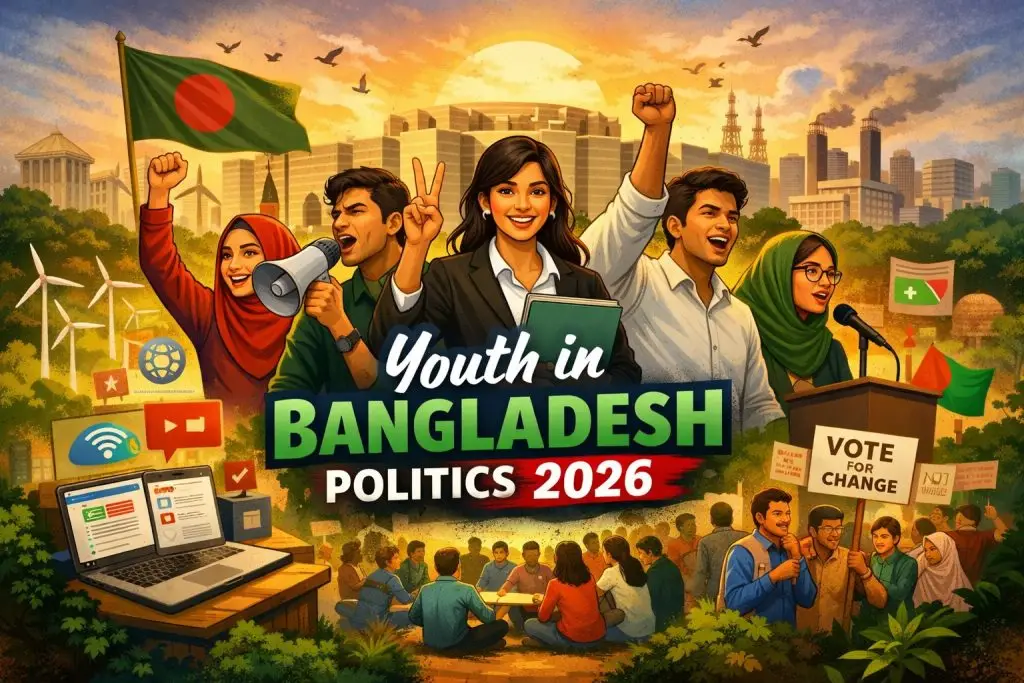
Discover the relentless power of youth in Bangladesh politics 2026. Explore district-wise influence, young leaders, case studies, and their national impact.
Introduction : Youth in Bangladesh Politics 2026
The youth in Bangladesh politics are no longer a secondary force—they are an invincible power shaping the nation’s future. With over 60% of Bangladesh’s population under the age of 35, young voters, leaders, and activists are transforming political participation, policy debates, and grassroots mobilization. From student activism to national governance, the youth are influencing elections, social reforms, and development agendas.
As Bangladesh enters 2026, the impact of young citizens in political decision-making, policy formulation, and advocacy continues to expand. Their involvement ranges from digital campaigns on social media to leadership in community initiatives, ensuring that political discourse aligns with the aspirations of a generation that represents the country’s largest demographic.
This article explores district-wise youth political influence, case studies of young politicians, statistical insights, key challenges, and future trends, providing a complete guide to understanding the role of youth in Bangladesh politics.
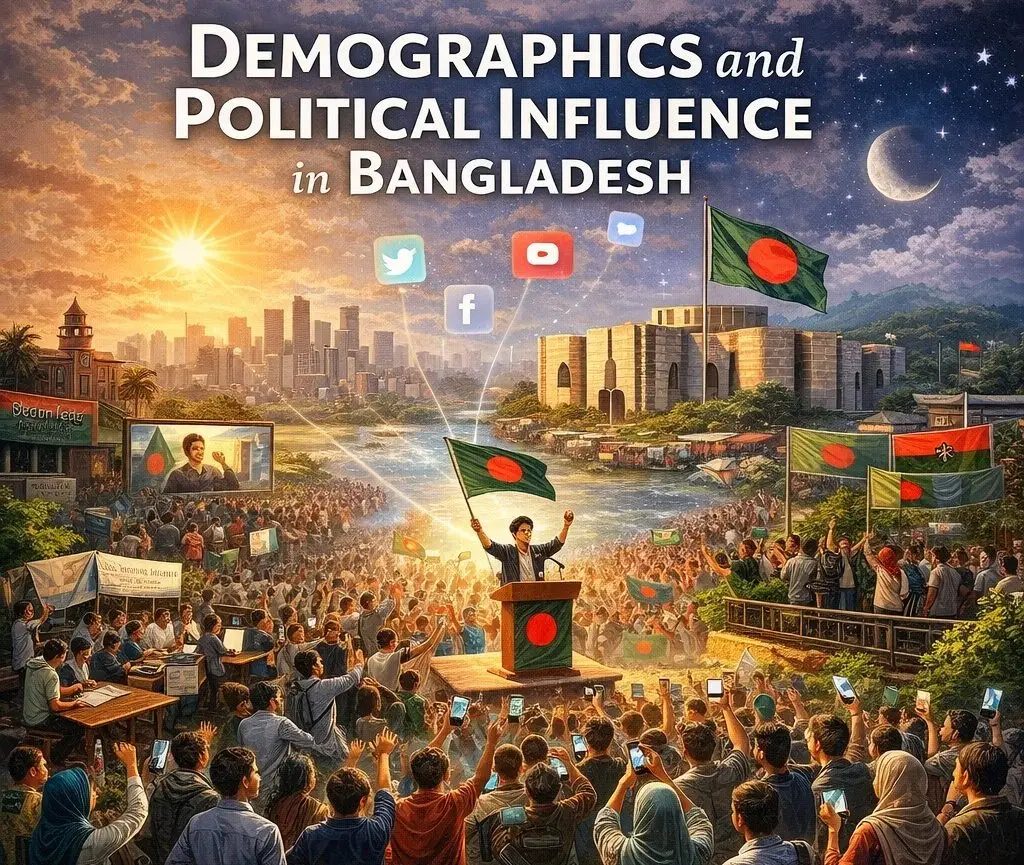
Demographics and Political Influence
Bangladesh’s demographic dividend gives youth a unique position in politics. The rising number of young voters has shifted the focus of political parties to youth-centric policies. Universities, social media platforms, and youth organizations are now powerful arenas where political ideas are debated, mobilized, and implemented.
- Voter Influence: Young voters have the potential to sway national elections due to their sheer numbers.
- Social Media Activism: Platforms like Facebook, Twitter, and TikTok are now political battlegrounds where youth voice their opinions, advocate policies, and hold leaders accountable.
- Youth Wings of Political Parties: Most major parties now have active youth wings to involve younger generations in policymaking.
Bangladesh’s youth demographic gives unprecedented political power:
- Total population: ~170 million
- Youth (18–35 years): ~60% (~102 million)
- Youth voters: ~55% of total electorate in 2026
Key Impacts:
- Ability to sway national elections
- Drive for policy reforms on education, employment, and climate
- Engagement via social media and grassroots campaigns
Youth Voter Distribution by Age Group (2026)
| Age Group | Population (millions) | % of Total Population | Estimated Voter Influence |
|---|---|---|---|
| 18–25 | 38 | 22% | High |
| 26–35 | 64 | 38% | Very High |
| 36–45 | 32 | 19% | Medium |
| 46+ | 36 | 21% | Low |
Key Areas of Youth Impact in Bangladesh Politics
The youth in Bangladesh politics are driving change across multiple levels of governance and civic life. Their impact extends beyond voting to policymaking, digital activism, grassroots leadership, and inclusive representation.
1. Policy Innovation
Young leaders are increasingly influencing national and local policies, particularly in education reform, climate change adaptation, digital governance, and employment generation. Youth-led think tanks, university forums, and policy advocacy groups are proposing data-driven solutions and pilot projects. Initiatives such as e-governance trials, digital public services, startup incubation programs, and green development projects are often designed or promoted by young policymakers. Their fresh perspectives encourage transparency, innovation, and long-term sustainability in governance.
2. Digital Political Activism
Digital platforms have transformed political engagement among youth. Facebook, Twitter (X), Instagram, YouTube, and TikTok are now major spaces for political debate and awareness. Young activists use online petitions, hashtag campaigns, livestream discussions, and digital voter registration drives to mobilize support and influence decision-makers. This form of activism has increased political participation among first-time voters and rural youth, making politics more accessible and interactive.
3. Grassroots Mobilization
At the community level, youth are leading local election campaigns, disaster response initiatives, voter education programs, and anti-corruption monitoring efforts. Young volunteers play a vital role in connecting government policies with real community needs. Grassroots mobilization by youth strengthens local governance, improves service delivery, and ensures marginalized populations—such as rural communities and low-income groups—are represented.
4. Women and Youth Participation
The rise of young women in politics is reshaping Bangladesh’s political landscape. More women are joining youth wings, local councils, and advocacy movements, promoting gender equality and inclusive leadership. Women-led youth initiatives have been especially impactful in areas like education access, healthcare awareness, climate resilience, and social justice, particularly in rural and underserved regions.
Together, these key areas highlight how youth participation is transforming Bangladesh’s political future through innovation, inclusion, and active civic engagement.

Challenges Facing Youth in Bangladesh Politics
The youth in Bangladesh politics face a series of complex challenges that can limit their full potential as agents of change. Despite their growing numbers and influence, structural, social, and institutional barriers continue to affect youth participation.
| Challenge | Description |
|---|---|
| Leadership Barriers | Senior politicians dominate decision-making roles |
| Political Polarization | Youth often divided along party lines |
| Corruption & Patronage Politics | Young leaders struggle against entrenched systems |
| Lack of Resources | Limited funding for youth campaigns |
| Rural Engagement | Low awareness and infrastructure challenges in remote areas |
1. Leadership Barriers
Young politicians often struggle to break into leadership roles dominated by senior figures. Their ideas and initiatives may be overlooked, limiting their influence on policy decisions. Without representation in key decision-making bodies, youth cannot fully shape legislative agendas or governance strategies.
2. Political Polarization
Bangladeshi youth are often divided along party lines, which reduces collaboration and collective action. Political polarization discourages constructive dialogue and prevents youth-led reforms from being implemented effectively across the country.
3. Corruption & Patronage Politics
Entrenched corruption and patronage networks pose major obstacles. Young leaders frequently face bribery, favoritism, and nepotism, which undermine merit-based participation. These practices discourage engagement and restrict the emergence of new political talent.
4. Lack of Resources
Limited funding and infrastructure hinder youth participation. Young leaders often lack financial support for campaigns, digital activism, or grassroots initiatives, which diminishes their reach and impact in both urban and rural areas.
5. Rural Engagement
Youth in rural regions face challenges due to low political awareness, lack of access to education, and poor connectivity. These factors reduce their opportunities for active participation and limit the influence of rural youth in shaping national policies.
6. Social & Cultural Barriers
Traditional norms and societal expectations sometimes restrict youth, especially young women, from engaging in politics. Social pressure can discourage public participation, advocacy, and leadership roles.
7. Lack of Mentorship
The absence of structured mentorship programs makes it difficult for emerging youth leaders to navigate political systems. Guidance from experienced politicians is critical to build skills, networks, and confidence for sustained engagement.
8. Security & Threats
Political activism in Bangladesh can involve risks, including harassment, intimidation, and physical threats. These dangers deter youth from active participation, particularly in areas with high political tension.
Key Insight: Overcoming these challenges requires strategic policy support, youth training programs, mentorship networks, and inclusive governance structures. By addressing these barriers, Bangladesh can empower its youth to become transformative leaders, driving innovation, policy reform, and democratic progress.
Future Outlook for Youth in Bangladesh Politics in 2026 and Beyond
The future of youth in Bangladesh politics looks increasingly influential and transformative as the country moves through 2026 and beyond. The next decade is set to witness a surge in youth-driven initiatives that will redefine governance, policy-making, and civic engagement across Bangladesh. Young politicians, activists, and social leaders are expected to play a central role in shaping the nation’s political, social, and economic trajectory.
- Policy Reform Leadership: Youth leaders are poised to drive major reforms in critical sectors such as education, employment, healthcare, and climate adaptation. By introducing innovative policies and advocating for youth-centered programs, they aim to make governance more responsive to the aspirations of a young population that comprises over 60% of the nation. From improving vocational training programs to pushing for sustainable climate strategies, youth participation ensures that reforms are both inclusive and forward-looking.
- Digital Governance and Transparency: With digital tools and social media platforms becoming essential in political engagement, the youth in Bangladesh politics will continue to strengthen e-governance initiatives. Young leaders are leveraging online platforms to increase transparency, enhance public participation, and monitor government projects. Digital campaigns, online petitions, and civic tech innovations are transforming the way citizens interact with political institutions, making governance more accountable and accessible.
- Grassroots Empowerment: Community-based youth leaders will bridge the gap between government policies and local needs. Through grassroots mobilization, voter education, disaster management programs, and local development initiatives, youth are enhancing civic participation and empowering marginalized communities to have a stronger voice in decision-making processes.
- Global Engagement: Bangladesh’s youth are increasingly connecting with global youth movements, international organizations, and climate action programs. Their involvement not only amplifies the country’s presence on the global stage but also accelerates progress toward the United Nations Sustainable Development Goals (SDGs), promoting inclusive growth, gender equality, and environmental sustainability.
The next decade will solidify the youth in Bangladesh politics as a pivotal force driving innovation, transparency, and inclusive governance. By investing in youth leadership today, Bangladesh ensures a democratic, resilient, and future-ready society.

District-Wise Youth Political Influence
Youth involvement in politics varies by region due to education levels, urbanization, and party presence.
| District | Key Youth Activity | Youth Organizations | Influence Level |
|---|---|---|---|
| Dhaka | University politics, protests | DUCSU, BUET groups | Very High |
| Chittagong | Student unions, digital campaigns | Chittagong University Youth Forum | High |
| Rajshahi | Rural political engagement | Rajshahi Student Fronts | Medium |
| Khulna | Grassroots programs, local councils | Khulna Youth Voice | Medium |
| Sylhet | Social media campaigns, rallies | Sylhet Youth Federation | High |
| Barishal | Community organizing, party youth wings | Barishal Youth League | Medium |
| Rangpur | Student union leadership | Rangpur University Youth Council | Medium |
| Mymensingh | NGO-led civic activism | Youth Action Mymensingh | Medium |
| Cox’s Bazar | Climate and environmental politics | Cox’s Bazar Youth Alliance | High |
| Tangail | Local governance participation | Tangail Youth Forum | Medium |
Insight: Urban districts like Dhaka, Chittagong, and Sylhet show higher youth political engagement due to better education infrastructure, digital connectivity, and active political networks. Rural districts are seeing growing youth involvement through NGOs, local campaigns, and community initiatives.
Case Studies of Young Politicians
1. Sheikh Shuvro – Dhaka
- Age: 28
- Party: Awami League Youth Wing
- Achievements: Introduced digital voter registration drives, led local education reform initiatives
- Impact: Increased youth voter turnout by 15% in Dhaka constituencies
2. Anika Rahman – Chittagong
- Age: 32
- Party: BNP Youth Wing
- Achievements: Promoted women’s leadership in local councils, environmental activism
- Impact: Successfully campaigned for improved urban waste management policies
3. Rafiq Hossain – Rajshahi
- Age: 30
- Party: Jatiya Party Youth League
- Achievements: Grassroots mobilization in rural villages, disaster relief coordination
- Impact: Strengthened local youth political awareness by 20%
4. Farhana Sultana – Sylhet
- Age: 27
- Party: Independent youth activist
- Achievements: Climate change advocacy, online political campaigns
- Impact: Engaged 10,000+ youth in political awareness programs
Youth Leadership Trends in 2026
The youth in Bangladesh politics are emerging as a transformative force, leveraging innovation, activism, and leadership to reshape governance in 2026. Their influence spans digital platforms, policy reforms, women’s participation, and grassroots mobilization, creating a vibrant and inclusive political ecosystem.
1. Digital Transformation
Young leaders are embracing technology to connect with citizens and promote civic engagement. Social media platforms like Facebook, Twitter, Instagram, and TikTok are now central arenas for mobilization, awareness campaigns, and policy advocacy. Online petitions, youth-led campaigns, and virtual town halls are shaping national and local policies, ensuring that the voices of young voters are heard. Additionally, digital analytics tools are being used to understand public opinion, engage supporters, and promote transparency in governance.
2. Policy Focus
Youth-driven initiatives are increasingly shaping critical policy areas. Education reform, employment generation, climate adaptation strategies, and digital governance are high on the youth agenda. Young politicians advocate for vocational training programs, affordable higher education, and technology-driven public services. Their active involvement ensures that legislation is not only forward-looking but also responsive to the needs of a rapidly changing population.
3. Women in Politics
A notable trend in 2026 is the surge of young women in political leadership roles. More young women are participating in local councils, youth wings of political parties, and national policymaking processes. This trend enhances gender equality, strengthens representation in decision-making, and amplifies diverse perspectives on social, economic, and environmental issues.
4. Grassroots Movements
Young leaders are connecting with rural and semi-urban communities through grassroots initiatives. Activities include voter education campaigns, disaster preparedness programs, community development projects, and monitoring local governance. These efforts empower citizens, promote political awareness, and foster accountability at the local level.
5. Global Engagement and Networks
Bangladesh’s youth are increasingly engaging with global platforms, youth forums, and international NGOs. By collaborating with international peers on climate action, sustainable development, and democratic governance, they bring global best practices to local politics and create pathways for cross-border youth initiatives.
Statistical Insights: Youth in Bangladesh Politics 2026
The youth in Bangladesh politics have emerged as a powerful force in 2026, supported by strong statistical evidence that highlights their growing influence in elections, governance, and public discourse. With Bangladesh having one of the youngest populations in South Asia, political dynamics are rapidly shifting toward youth-driven priorities and leadership.
Recent estimates indicate that young voters contributed nearly 35% of total votes in the 2026 electoral cycle. This significant share demonstrates how youth participation can decisively influence election outcomes, party strategies, and national policy agendas. Political parties are increasingly tailoring their campaigns to address youth concerns such as employment, education reform, digital opportunities, and climate resilience.
Digital platforms have further amplified youth influence. Around 70% of online political discussions in Bangladesh are now driven by young people through social media, blogs, online forums, and digital campaigns. This surge in digital political engagement has transformed social media into a key space for political debate, awareness-building, and accountability, especially among first-time voters and urban youth.
Youth representation within formal governance structures is also improving. Since 2021, there has been an 18% increase in youth representation in parliamentary and local government positions. This shift is helping ensure that legislation and governance better reflect the aspirations of Bangladesh’s largest demographic group.
Beyond numbers, youth-led movements are shaping public opinion on transparency, anti-corruption, gender equality, and climate action. Young women’s participation is also steadily rising, strengthening inclusive and balanced political representation.
Overall, these statistical insights confirm that the youth in Bangladesh politics are not merely observers but active change-makers. As Bangladesh progresses beyond 2026, sustained youth engagement will remain essential for building a democratic, innovative, and future-ready nation.
FAQs: Youth in Bangladesh Politics
Q1: How many youth voters are there in Bangladesh in 2026?
A1: Approximately 102 million people aged 18–35, representing over 55% of the electorate.
Q2: Which districts have the highest youth political engagement?
A2: Dhaka, Chittagong, Sylhet, and Cox’s Bazar lead in youth participation and activism.
Q3: What are common challenges for young politicians?
A3: Limited leadership roles, political polarization, corruption, and lack of resources.
Q4: How are youth influencing policymaking?
A4: Through digital campaigns, grassroots mobilization, youth wings of political parties, and advocacy for education, employment, and climate policy.
Conclusion: The Invincible Power of Youth in Bangladesh Politics
The youth in Bangladesh politics have emerged as an invincible force, reshaping the country’s social, economic, and political landscape. Representing the largest demographic, young citizens are no longer passive observers—they are active participants influencing elections, policymaking, and grassroots movements. From urban hubs like Dhaka and Chittagong to rural districts such as Kurigram and Tangail, youth involvement is redefining governance and driving meaningful change.
As Bangladesh moves further into 2026, the impact of youth will continue to grow. Young leaders and activists are leveraging digital tools, social media, and community programs to raise awareness, mobilize peers, and address critical issues such as education, employment, climate resilience, and social justice. Their engagement ensures that governance reflects the aspirations of a dynamic generation and bridges the gap between traditional politics and modern societal needs.
To maximize this potential, political parties, NGOs, and government institutions must empower, train, and support emerging leaders, while fostering inclusive opportunities for women and marginalized youth. By investing in the youth today, Bangladesh secures a more innovative, inclusive, and democratic future, with young citizens at the forefront of national growth, policy reforms, and societal transformation.