
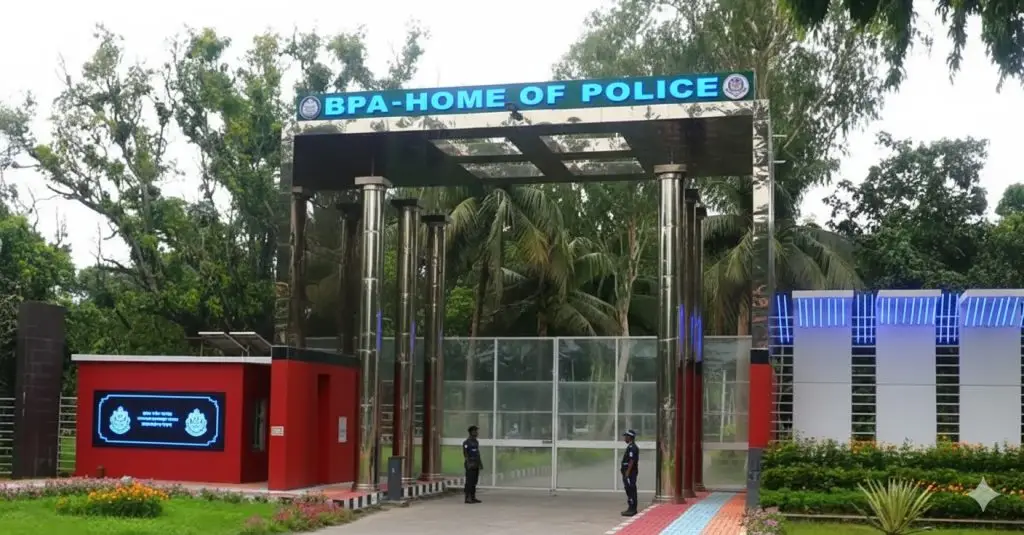
Discover the history and key facts of Bangladesh Police Academy(BPA), including its training programs, milestones, and role in law enforcement.
Introduction Of Bangladesh Police Academy & PTC
The Bangladesh Police Academy (BPA), also known as the Police Training Center (PTC), is the premier institution for police training in Bangladesh. Recognized as the alma mater of police officers, BPA has been shaping disciplined, skilled, and professional law enforcement personnel for decades. Strategically located in Sardah under Charghat police station in Rajshahi District, about 20 miles from Rajshahi city, the academy provides a serene and secure environment for intensive training.
At BPA/PTC, cadets receive comprehensive education in criminal law, investigation techniques, physical fitness, leadership, and community policing, combining both theoretical knowledge and practical field experience. Over the years, the academy has played a crucial role in modernizing Bangladesh’s police force, producing officers capable of maintaining law, order, and public safety across the nation. Today, the Bangladesh Police Academy stands as a symbol of excellence in police training, professional development, and law enforcement education.
History, Training, and Career Opportunities
The Bangladesh Police Academy (BPA) is the oldest and most prestigious police training institute in Bangladesh. Known as the alma mater of police training, BPA has been producing skilled, disciplined, and professional officers who serve the country’s law enforcement system with dedication. Established to shape the nation’s policing standards, the academy combines a rich historical legacy with modern training practices.
This comprehensive guide explores the history, location, training programs, courses, curriculum, life at the academy, and career opportunities, offering valuable insights for aspiring police officers and anyone interested in Bangladesh’s law enforcement system.

1. History of the Bangladesh Police Academy
The Bangladesh Police Academy (BPA) is the oldest and most prestigious police training institution in Bangladesh. Known as the alma mater of police officers, BPA has played a pivotal role in shaping the country’s law enforcement system since its establishment. The academy’s long history reflects its commitment to producing skilled, disciplined, and professional officers.
Early Beginnings
The origins of the Bangladesh Police Academy trace back to the British colonial period, when formal police training institutions were first established in Bengal. These early institutions focused on maintaining law and order, instilling discipline, and teaching basic policing techniques. Over time, the need for a centralized and modernized police training facility led to the formation of BPA.
Post-Independence Development
After the independence of Bangladesh in 1971, the academy was reorganized and expanded to meet the growing needs of the newly formed country. BPA became the central hub for police training, responsible for developing programs for cadets, officers, and specialized units. During this period, the academy began incorporating modern law enforcement techniques, physical training, and ethical standards to prepare officers for contemporary policing challenges.
Modern Era
Today, the Bangladesh Police Academy stands as a modern, state-of-the-art institution located at Sardah under Charghat police station in Rajshahi District, about 20 miles from Rajshahi city. The academy combines traditional policing principles with modern training methods, offering courses in criminal law, investigation techniques, cybercrime, counter-terrorism, community policing, and leadership development.
Over the decades, BPA has trained thousands of police officers, shaping the backbone of Bangladesh’s law enforcement system and continuing its legacy as a center of excellence in police training.
2. Location and Infrastructure of the Bangladesh Police Academy
The Bangladesh Police Academy (BPA) is strategically located at Sardah under Charghat police station in Rajshahi District, approximately 20 miles from Rajshahi city. This location provides a serene, secure, and focused environment ideal for intensive police training. Surrounded by lush greenery and open spaces, the academy offers cadets an environment conducive to both academic learning and physical training.
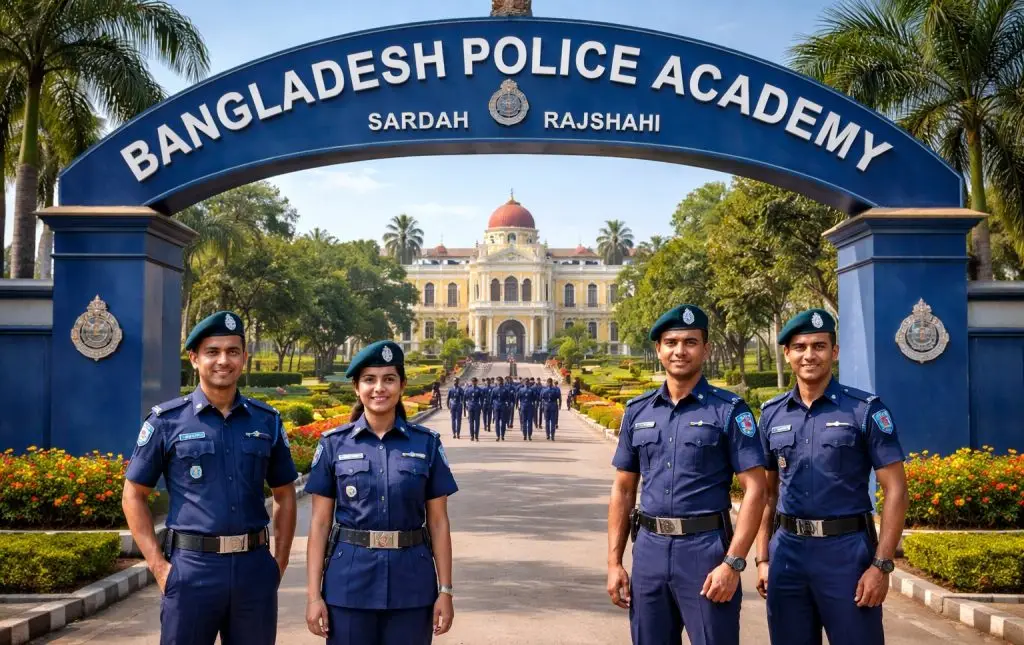
Infrastructure of Bangladesh Police Academy
The Bangladesh Police Academy is equipped with modern facilities designed to train cadets comprehensively. Key infrastructure includes:
- Academic Facilities: Modern classrooms, lecture halls, and libraries equipped with the latest learning resources
- Training Grounds: Large fields for physical training, drills, obstacle courses, and tactical exercises
- Firing Ranges: Safe and well-maintained ranges for firearms training
- Simulation Centers: Real-life scenario-based training for operational readiness
- Residential Facilities: Comfortable hostels for cadets, including dining halls and recreational areas
- Sports and Cultural Facilities: Areas for sports, team-building exercises, and extracurricular activities
The combination of strategic location and modern infrastructure ensures that cadets receive both theoretical knowledge and practical experience, preparing them for real-world policing challenges.
The Bangladesh Police Academy’s state-of-the-art facilities and serene location make it an ideal institution for producing disciplined, skilled, and professional police officers who can serve the nation effectively.
3. Admission and Eligibility Criteria
The Bangladesh Police Academy (BPA) is the top institution for police training in Bangladesh. Admission to BPA is highly competitive, as it aims to select candidates with the right combination of education, discipline, physical fitness, and ethical standards to become professional police officers. Understanding the admission process and eligibility criteria is crucial for aspiring cadets who wish to pursue a career in law enforcement.
Eligibility Criteria:
- Citizenship: Must be a citizen of Bangladesh
- Educational Qualification: Minimum requirement is usually a bachelor’s degree from a recognized institution
- Age Limit: Candidates must meet the age requirements set by the recruitment regulations
- Physical Fitness: Must pass physical fitness and endurance tests, including running, strength, and agility assessments
- Medical Fitness: Clear medical examination ensuring overall health and capability for police duties
- Background Check: Must have a clean criminal record and demonstrate ethical conduct

Admission Process:
- Written Examination: Tests knowledge, analytical skills, and general awareness
- Physical and Endurance Tests: Evaluates fitness, stamina, and agility
- Interview: Assesses personality, leadership potential, and ethical values
- Final Selection: Based on combined performance in exams, physical tests, and interviews
By following these admission and eligibility criteria, candidates can secure a position at the Bangladesh Police Academy and begin a career as a skilled, disciplined, and professional law enforcement officer. BPA’s structured process ensures that only the most capable and dedicated individuals join the country’s police force.
4. Training Programs and Courses
The Bangladesh Police Academy (BPA) is the premier institution for police training in Bangladesh, offering comprehensive programs to equip cadets with the skills, knowledge, and discipline needed for modern law enforcement. BPA’s training programs and courses are designed to prepare officers for diverse challenges, from maintaining law and order to handling specialized investigations.
The academy combines theoretical lessons with practical exercises, ensuring cadets develop critical thinking, leadership, and operational skills. Training is continuously updated to reflect modern policing trends, technological advancements, and international best practices.
Key Training Programs and Courses at BPA:
- Basic Police Training: Introduction to law enforcement, ethics, and physical fitness
- Specialized Training: Criminal investigation, cybercrime, traffic management, counter-terrorism
- Leadership and Management Courses: Strategic planning, decision-making, team leadership
- Refresher Courses for Serving Officers: Updates on modern techniques, legal reforms, and technology use
- Community Policing Programs: Engaging with communities and improving public trust
- Practical Drills and Simulation Exercises: Real-life scenarios, obstacle courses, and tactical training
These programs ensure that cadets graduate as well-rounded, skilled, and professional officers, ready to serve Bangladesh effectively. The Bangladesh Police Academy continues to be a center of excellence, producing officers who uphold law, order, and public safety across the nation.
5. Curriculum and Skill Development at Bangladesh Police Academy
The Bangladesh Police Academy (BPA) offers a comprehensive curriculum designed to develop skilled and professional police officers. Training combines theoretical knowledge with practical exercises, ensuring cadets are fully prepared for modern policing challenges.
Key Components of BPA Curriculum:
- Law and Legal Studies: Criminal law, constitutional law, and ethics
- Criminal Investigation: Evidence collection, crime scene management
- Physical Training: Fitness, martial arts, self-defense, and firearms
- Leadership Skills: Strategic decision-making and team management
- Community Policing: Building trust and engaging with local communities
- Modern Policing Techniques: Cybercrime, forensics, and technology use
This structured curriculum emphasizes critical thinking, discipline, and ethical decision-making, producing well-rounded officers ready to serve Bangladesh effectively.
6. Life at the Bangladesh Police Academy
Life at the Bangladesh Police Academy (BPA) is structured, disciplined, and focused on developing skilled law enforcement officers. Cadets follow a rigorous daily schedule that balances academic lessons, physical training, and practical exercises.
Morning routines include fitness drills, obstacle courses, and self-defense training, while classrooms cover law, criminal investigation, ethics, and leadership skills. Cadets also participate in community policing exercises, cultural programs, and teamwork activities, fostering both professional and personal growth.
The academy emphasizes discipline, resilience, and teamwork, preparing cadets for real-world policing challenges. With experienced instructors, modern facilities, and a supportive learning environment, life at BPA ensures that every cadet graduates as a well-rounded, professional, and ethical police officer.
7. Career Opportunities after Graduation
Graduates of the Bangladesh Police Academy (BPA) have a wide range of career opportunities in law enforcement. After completing rigorous training, cadets can serve as Assistant Superintendent of Police (ASP), Police Inspector, Sub-Inspector, Criminal Investigator, Traffic Management Officer, or Special Units Officer in areas like cybercrime and counter-terrorism.
The academy also opens doors to international training programs, leadership roles, and administrative positions within the Bangladesh Police. With its focus on professional skills, ethics, and practical experience, BPA ensures that every graduate is well-prepared for a rewarding and impactful career in policing, contributing to law, order, and public safety across Bangladesh.
8. Achievements and Contributions
The BPA has achieved significant milestones in law enforcement training:
- Trained thousands of skilled police officers annually
- Introduced modern policing techniques and technology
- Promoted community policing initiatives
- Enhanced public trust through ethical practices
These achievements highlight BPA’s role as the cornerstone of professional policing in Bangladesh.
9. Challenges and Reforms at the Bangladesh Police Academy
Despite its long-standing success, the Bangladesh Police Academy (BPA) faces several challenges in maintaining its role as the leading police training institution in the country. Rapid changes in criminal activities, technological advancements, and evolving public expectations demand continuous adaptation. Some of the key challenges include:
- Adapting to Cybercrime and Modern Criminal Trends: With increasing cybercrime, digital fraud, and online threats, BPA must constantly update its training programs to prepare officers for these new challenges.
- Updating Facilities and Technology: Modern policing requires state-of-the-art infrastructure, advanced simulation tools, and technology-driven learning methods, which must be regularly upgraded.
- Ensuring Ethical Standards and Professionalism Among Cadets: Maintaining discipline, ethics, and professionalism in cadets is crucial to build public trust and effective law enforcement.
Ongoing Reforms at BPA
To address these challenges, BPA has implemented several reforms aimed at modernizing police training and ensuring officers are prepared for contemporary policing needs:
- Advanced Cybercrime and Forensics Training: Cadets are trained in digital investigations, cybercrime prevention, and forensic techniques.
- Enhanced Tactical and Physical Training Programs: Improved obstacle courses, tactical drills, and firearms training strengthen operational readiness.
- Community Policing and Human Rights Modules: Emphasis on public engagement, cultural sensitivity, and human rights ensures officers serve communities responsibly.
- International Partnerships for Skill and Knowledge Exchange: Collaborations with foreign police academies and law enforcement agencies enhance global knowledge and best practices.
These reforms ensure that the Bangladesh Police Academy remains modern, effective, and relevant, producing officers capable of meeting the demands of 21st-century policing. By continuously evolving, BPA not only strengthens Bangladesh’s law enforcement system but also contributes to building a professional, ethical, and technologically skilled police force.
10. Future of the Bangladesh Police Academy
The Bangladesh Police Academy (BPA) has long been the cornerstone of professional police training in Bangladesh. Known as the alma mater of police officers, it has consistently produced skilled, disciplined, and ethical law enforcement personnel. As the landscape of crime and security evolves, the future of the Bangladesh Police Academy is focused on modernization, innovation, and adapting to new challenges in law enforcement.
Future initiatives include advanced digital policing, forensic training, counter-terrorism programs, and community-oriented policing. Cadets will also benefit from leadership development, international collaborations, and research-driven learning, preparing them for complex policing challenges.
With upgraded facilities, simulation-based training, and emphasis on ethical and professional development, BPA aims to produce officers who are highly skilled, adaptable, and capable of maintaining law and order across Bangladesh.
The future of the Bangladesh Police Academy promises a modern, world-class training environment that ensures the country’s police force remains efficient, professional, and trusted by the public.
Modernizing Training Programs
One of the key focuses for the future of BPA is the modernization of training programs. Traditional courses in law, criminal investigation, and physical training are being enhanced with:
- Advanced digital policing techniques for cybercrime investigations
- Forensic science and evidence management training
- Counter-terrorism and intelligence programs
- Community policing and human rights education
These improvements aim to ensure that future police officers are fully equipped to handle complex and modern-day criminal scenarios effectively.
Integration of Technology
The Bangladesh Police Academy is increasingly leveraging technology to enhance its training programs:
- Simulation-based training for real-life policing situations
- E-learning platforms for continuous skill development
- AI and data analytics tools for crime pattern recognition
- Digital crime reporting and case management systems
By integrating technology, BPA is preparing officers who can operate in a digitally connected world while maintaining high professional standards.
Infrastructure Expansion and Modern Facilities
The future development plans of BPA include upgrading its infrastructure to match international standards:
- Modernized classrooms and lecture halls with digital teaching tools
- Advanced physical training grounds and obstacle courses
- State-of-the-art firing ranges and tactical training facilities
- Modern hostels and residential facilities for cadets
These enhancements aim to create a safe, efficient, and motivating learning environment for future police officers.
Emphasis on Leadership and Professional Development
BPA is focusing on leadership and management training for both junior and senior officers. Future programs will include:
- Strategic management and decision-making courses
- Crisis management and conflict resolution training
- Ethics and professional conduct workshops
- International exposure programs through collaborations with police academies worldwide
This ensures that Bangladesh Police officers not only have operational expertise but also the leadership skills to manage complex situations and teams.
Research and Innovation in Policing at the Bangladesh Police Academy
The Bangladesh Police Academy (BPA) is not only a premier institution for training police officers but also a center for research and innovation in policing. In a rapidly evolving world, crime patterns, technology, and public safety challenges are constantly changing. BPA recognizes the importance of research-driven policing and innovative strategies to prepare officers for modern law enforcement.
Importance of Research in Policing
Research plays a critical role in understanding crime trends, identifying emerging threats, and developing effective policing strategies. At BPA, research initiatives focus on:
- Studying crime patterns and statistics across urban and rural areas
- Investigating cybercrime, digital fraud, and online threats
- Assessing the effectiveness of community policing programs
- Evaluating public safety strategies and law enforcement policies
By integrating research into training, cadets and officers gain evidence-based knowledge that improves decision-making and operational effectiveness.
Innovation in Policing
Innovation is at the core of modern law enforcement at BPA. The academy emphasizes:
- Technological Advancements: Use of digital tools, AI, and data analytics for crime prevention
- Simulation Training: Realistic scenario-based exercises to enhance operational readiness
- Modern Investigation Techniques: Forensics, cybercrime tracking, and advanced surveillance methods
- Community Engagement Programs: Innovative strategies for building public trust and cooperation
These initiatives ensure that Bangladesh Police officers are equipped to handle both traditional and emerging challenges, from organized crime to cyber threats.
Benefits of Research and Innovation
Integrating research and innovation into police training at BPA results in:
- More effective crime prevention strategies
- Enhanced investigative skills among officers
- Improved public trust and community engagement
- Adaptability to new challenges in law enforcement
The Bangladesh Police Academy continues to lead in research and innovation, ensuring that its graduates are knowledgeable, skilled, and ready to serve the nation efficiently and ethically.
Conclusion
The Bangladesh Police Academy (BPA), located in Sardah, Rajshahi, is the oldest and most respected police training institute in Bangladesh. With its rich history, modern infrastructure, rigorous training programs, and commitment to professional excellence, BPA continues to produce highly skilled officers who serve the nation with integrity.
From basic training to specialized courses, leadership programs, and community policing, BPA equips cadets with the knowledge, skills, and discipline necessary to face the challenges of modern law enforcement. Its graduates enjoy diverse career opportunities and contribute significantly to maintaining law, order, and public safety across Bangladesh.
For anyone interested in policing or understanding the evolution of law enforcement in Bangladesh, the Bangladesh Police Academy remains a symbol of tradition, professionalism, and modern policing excellence.