
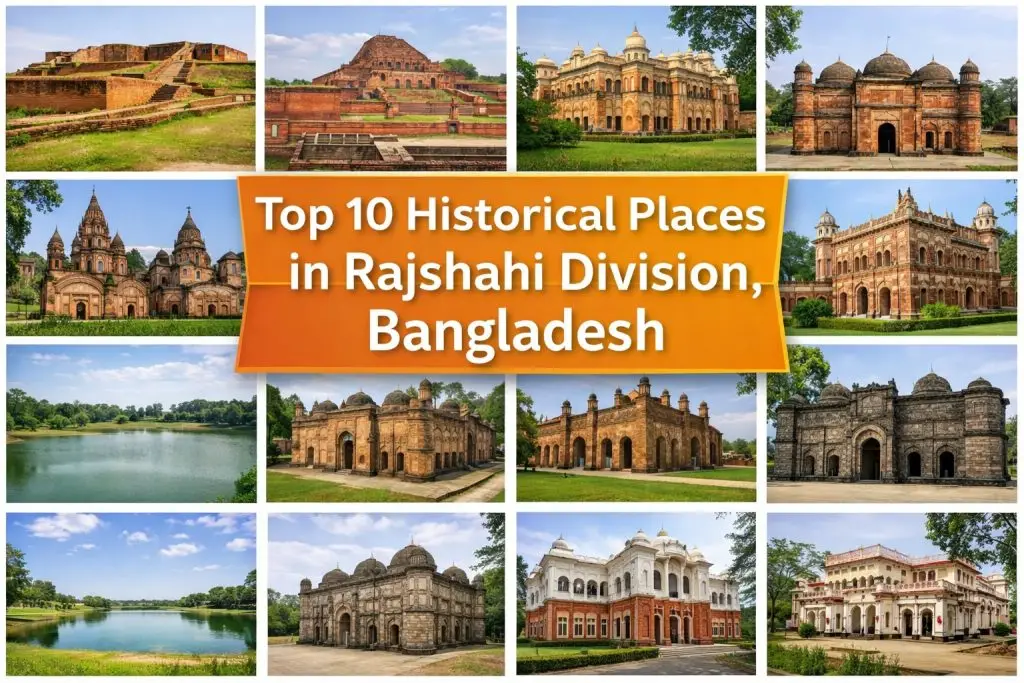
Explore Rajshahi Division, the cultural capital of Bangladesh, famous for ancient mosques, historic sites, mango orchards, Padma River views and heritage site.
History of Rajshahi : The Cultural and Historical Heart of Bangladesh
Rajshahi, located in the northwest of Bangladesh, is a city rich in history, culture, and architectural heritage. Known as the “Silk City” and often referred to as the cultural capital of Bangladesh, Rajshahi has played a significant role in the country’s history from ancient times to the present.
The history of Rajshahi dates back to the Maurya and Gupta periods, when the region was part of ancient Bengal. Later, during the Pala and Sena dynasties, it became an important center for trade, education, and religion. Rajshahi’s strategic location along the Padma River contributed to its growth as a hub of commerce, agriculture, and cultural exchange.
During the Mughal era, Rajshahi gained prominence with the construction of mosques, forts, and administrative centers. The British colonial period further shaped the city with the development of roads, railways, educational institutions, and administrative buildings. Today, Rajshahi is famous for its historical landmarks such as Puthia Temple Complex, Bagha Mosque, and Natore Rajbari, which reflect its glorious past.
Rajshahi’s history is also closely linked to art, literature, and education. The city has produced renowned poets, scholars, and cultural icons, preserving its identity as a center of learning and tradition. Visiting Rajshahi provides a unique opportunity to explore centuries of Bangladesh’s history, architecture, and cultural heritage, making it an essential destination for travelers interested in the historical heart of the country.
Top 10 Historical Places in Rajshahi Division – Temples, Mosques & Heritage
Discover Rajshahi Division’s top 10 historical sites, including ancient cities, temples, mosques, monasteries, and royal palaces of Bengal’s heritage that showcase the rich history and cultural heritage of Bengal. History and Heritage of Rajshahi Zone.
Rajshahi is one of the most historically and culturally significant regions of Bangladesh. Situated in the northwestern part of the country, this division has been a cradle of civilization for thousands of years. Ancient kingdoms, Buddhist scholars, Hindu rulers, Muslim sultans, and colonial administrators all left their marks on this land. As a result, Rajshahi Division is home to some of the most remarkable historical places in Bangladesh.
From ancient urban settlements like Mahasthangarh to world-famous Buddhist monasteries such as Somapura Mahavihara, from magnificent Hindu temple complexes to beautifully designed Islamic mosques, the region reflects a long journey of cultural evolution. These historical places of Rajshahi Region not only represent architectural brilliance but also tell stories of religion, education, governance, and daily life of the past. This article explores the top 10 historical places in Rajshahi Region, providing detailed insights into their history, architectural features, and cultural importance. It serves as a complete guide for history lovers, students, researchers, and travelers.
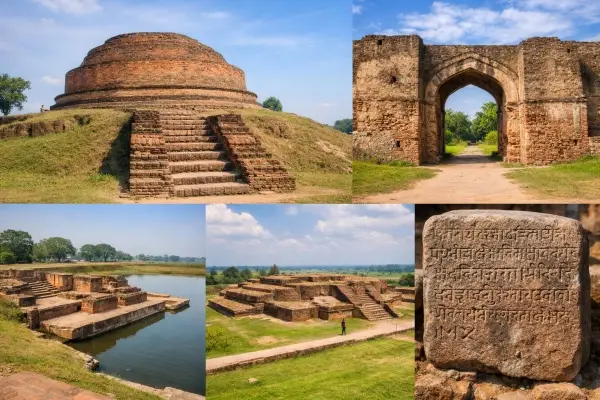
1. Mahasthangarh : The Ancient City of Bangladesh
Mahasthangarh, located in Bogura District of Rajshahi Division, Bangladesh, is the oldest archaeological site in the country and one of South Asia’s most significant ancient cities. Dating back to at least the 3rd century BCE, this fortified city was the capital of the ancient Pundra Kingdom and played a key role in the region’s political, cultural, and religious history.
The site covers a large area, including massive brick walls, ancient gates, residential zones, and Buddhist monasteries. Excavations at Mahasthangarh have revealed coins, pottery, sculptures, inscriptions, and other artifacts, showcasing the city’s long history of trade, governance, and urban development. Visitors can explore the ruins of temples, stupas, and ancient fortifications, gaining insight into the daily life and architecture of early Bengal civilizations.
Mahasthangarh is not only historically significant but also an important educational and cultural site. Its well-preserved structures and archaeological findings make it a popular destination for historians, archaeologists, students, and travelers interested in Bangladesh’s rich past.
Visiting Mahasthangarh offers a unique journey into the ancient heritage of Rajshahi Division, allowing tourists to experience the grandeur of one of Bangladesh’s earliest cities and understand the region’s historical evolution.
2. Somapura Mahavihara (Paharpur): A UNESCO World Heritage Site in Bangladesh
Somapura Mahavihara, located in Paharpur, Naogaon District of Rajshahi Division, Bangladesh, is one of the most important archaeological and Buddhist heritage sites in South Asia. Built in the 8th century during the Pala Dynasty, this ancient monastery is recognized as a UNESCO World Heritage Site for its historical, architectural, and cultural significance.
The Mahavihara served as a major center of Buddhist learning, attracting scholars, monks, and students from across Asia. The site features a large quadrangular structure with numerous cells, stupas, shrines, and intricate terracotta decorations depicting Buddhist mythology. Its unique layout and architectural style highlight the brilliance of medieval Bengal and the influence of Buddhism in the region.
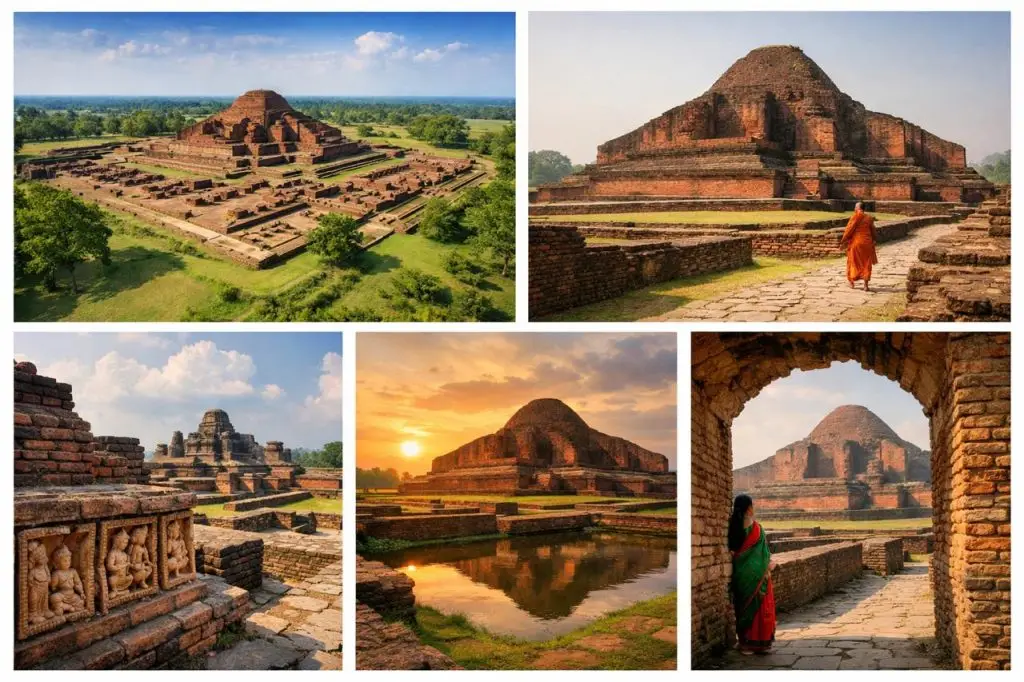
Visitors to Somapura Mahavihara can explore the extensive ruins, including the central shrine, monk cells, and intricately carved panels. The site provides valuable insights into the religious practices, education system, and urban planning of the Pala period. Surrounded by serene landscapes and open fields, Paharpur offers a peaceful atmosphere for history enthusiasts, researchers, and travelers alike.
Today, Somapura Mahavihara stands as a symbol of Bangladesh’s rich historical and cultural heritage. Exploring this ancient monastery offers a fascinating glimpse into the Buddhist legacy and architectural mastery of Rajshahi Division, making it a must-visit destination for heritage tourism.
This massive monastery was once a renowned center of Buddhist learning that attracted scholars from China, Tibet, Southeast Asia, and other regions. The structure follows a unique square layout, with more than 170 monk cells surrounding a large central shrine. The terracotta plaques decorating the walls are among the finest examples of ancient Bengali art. They depict religious symbols, floral patterns, animals, and scenes from everyday life. Due to its historical, architectural, and cultural importance, Somapura Mahavihara has been recognized as a UNESCO World Heritage Site. Today, Paharpur stands as a symbol of Bengal’s contribution to global education and Buddhist culture.
3. Puthia Temple Complex
Puthia Temple Complex is one of the most remarkable historical and archaeological sites in Bangladesh, located in Puthia Upazila of Rajshahi District. This famous temple complex is renowned for its stunning Hindu architecture, intricate terracotta designs, and rich cultural heritage, making it a must-visit destination for history lovers and travelers.
Built mainly during the 18th and 19th centuries under the patronage of the Puthia Raj family, the Puthia Temple Complex features several magnificent temples, including the Govinda Temple, Shiva Temple, Jagannath Temple, and Choto Govinda Temple. The Govinda Temple is especially famous for its exquisite terracotta panels that depict scenes from Hindu epics like the Ramayana and Mahabharata, as well as daily life of that era.
Surrounded by a large sacred pond, the complex offers a peaceful and scenic atmosphere. The symmetrical layout, red-brick structures, and detailed carvings highlight the excellence of traditional Bengali temple architecture. Visitors can enjoy photography, cultural exploration, and quiet walks while learning about the region’s religious history.
Today, Puthia Temple Complex stands as a symbol of Rajshahi’s rich heritage and artistic brilliance. Easily accessible from Rajshahi city, it attracts both domestic and international tourists. A visit to this iconic site offers a fascinating journey into Bangladesh’s past, showcasing timeless craftsmanship, spirituality, and cultural pride.

4. Varendra Research Museum
Oldest Museum in Bangladesh Established in 1910, the Varendra Research Museum is the oldest in Bangladesh. Located in Rajshahi city, the museum was founded to preserve the archaeological and cultural heritage of northern Bengal, also known as the Varendra region.
The museum houses an extensive collection of stone sculptures, bronze images, inscriptions, ancient coins, terracotta plaques, manuscripts, and folk artifacts. Many of these items were collected from important archaeological sites such as Mahasthangarh and Paharpur. The Varendra Research Museum plays a vital role in historical research, education, and heritage preservation. It provides visitors with a comprehensive understanding of the region’s ancient and medieval history.
5. Bagha Mosque
Bagha Mosque is one of the most significant historical and religious landmarks in Bangladesh, located in Bagha Upazila of Rajshahi District. This ancient mosque is a remarkable example of Sultanate-era architecture and attracts history lovers, architecture enthusiasts, and spiritual travelers from across the country.
Built in 1523 AD during the reign of Sultan Nusrat Shah of the Bengal Sultanate, Bagha Mosque is famous for its elegant brick structure and exquisite terracotta ornamentation. The mosque features a rectangular prayer hall supported by stone pillars and crowned with multiple domes, reflecting classic Islamic architectural design of medieval Bengal. The detailed floral and geometric patterns on the walls highlight the artistic excellence of that era.
Surrounded by a peaceful rural setting, Bagha Mosque offers a calm and spiritual atmosphere for visitors. The mosque remains an active place of worship, especially during the annual Bagha Mosque Fair, which draws devotees and tourists alike. Nearby, the historical Bagha Dighi (large pond) adds scenic beauty to the area.
Today, Bagha Mosque stands as a proud symbol of Rajshahi’s Islamic heritage and architectural legacy. Easily accessible from Rajshahi city, it is a must-visit destination for anyone exploring the historical places of Rajshahi Region and seeking a deeper understanding of Bangladesh’s rich past.
6. Kantaji Temple : A Terracotta Marvel of Bangladesh
Kantaji Temple, also known as Kantanagar Temple, is one of Bangladesh’s most celebrated historical and architectural landmarks, located in Dinajpur District of the Rajshahi Region. Built in the 18th century, this Hindu temple is renowned for its intricate terracotta decorations, majestic spires, and unique architectural style, making it a must-visit destination for history buffs, architecture enthusiasts, and cultural travelers.
The temple was commissioned by Maharaja Pran Nath and completed in 1722. It features a multi-tiered roof with nine spires, detailed terracotta panels depicting scenes from Hindu epics such as the Ramayana and Mahabharata, and elaborate floral and geometric designs. The craftsmanship of Kantaji Temple highlights the excellence of medieval Bengali temple architecture and provides insight into the cultural and religious heritage of the region.
Surrounded by lush gardens and a tranquil setting, Kantaji Temple offers visitors a serene atmosphere for exploration, photography, and spiritual reflection. Despite some damage from earthquakes over the years, the temple’s grandeur and artistic brilliance continue to attract tourists from around the world.
Visiting Kantaji Temple provides a remarkable opportunity to experience the rich history, culture, and architectural heritage of North-Western Bangladesh, making it one of the top historical attractions in Bangladesh.
7. Ramsagar: The Historic Reservoir of Bangladesh
Ramsagar, located in Dinajpur, Rajshahi Division, Bangladesh, is one of the most remarkable historical and architectural landmarks in the country. Built in the 18th century by Raja Ram Nath, this large rectangular tank spans approximately 85 acres and is a testament to the engineering and cultural achievements of medieval Bengal. Ramsagar is often referred to as the “Water Palace of Dinajpur” due to its grandeur and significance.
The tank was constructed for water conservation, irrigation, and aesthetic purposes, surrounded by beautifully designed embankments and lush greenery. Its calm waters reflect the surrounding landscape, offering a peaceful environment for visitors. Ramsagar also has historical importance as a site of social gatherings, festivals, and community events in the past.
Today, Ramsagar attracts tourists, historians, and photographers who come to admire its serene beauty and explore its historical significance. The reservoir not only serves as a reminder of Bengal’s rich heritage but also as a popular recreational spot for locals and travelers.
Visiting Ramsagar provides a unique glimpse into the ingenuity, culture, and history of Rajshahi Division, making it a must-see destination for heritage enthusiasts, travelers, and anyone interested in Bangladesh’s historical landmarks.
8. Choto Sona Mosque : A Historic Gem of Rajshahi Division
Choto Sona Mosque, located in the historic city of Gaur in Rajshahi Division, Bangladesh, is one of the most remarkable examples of medieval Islamic architecture in the region. Built during the 15th century under the Bengal Sultanate, this mosque is renowned for its exquisite design, golden-colored stone decorations, and historical significance, making it a must-visit destination for history enthusiasts and travelers.
The mosque’s name, “Choto Sona”, meaning “Small Golden Mosque,” comes from the gilded decorations that once adorned its walls and domes. Constructed primarily with stone and brick, the mosque features seven domes, elegant arched entrances, and intricately carved mihrabs. Its terracotta and stone ornamentation showcase the craftsmanship of medieval Bengal and reflect the rich Islamic culture of that era.
Surrounded by ancient ruins and historical landmarks of the former capital of Bengal, Gaur, Choto Sona Mosque offers a peaceful and educational experience for visitors. The mosque not only serves as a place of worship but also stands as a symbol of the region’s architectural brilliance and cultural heritage.
Today, Choto Sona Mosque attracts both domestic and international tourists, historians, and photographers eager to explore the grandeur of medieval Bengal. Visiting this iconic mosque provides a unique opportunity to experience the rich history and artistry of Rajshahi Division’s historical places.
9. Kusumba Mosque: A Historic Landmark of Bangladesh
Kusumba Mosque, located in Naogaon District of Rajshahi Division, Bangladesh, is one of the finest examples of medieval Islamic architecture in the region. Built in the 16th century during the reign of Sultan Ghiyasuddin Mahmud Shah of the Bengal Sultanate, this mosque is renowned for its impressive stone and terracotta construction, intricate carvings, and historical significance.
The mosque, constructed entirely of sandstone, features a rectangular prayer hall topped with multiple domes and intricately designed mihrabs. The walls are adorned with floral patterns, Quranic inscriptions, and geometric designs, showcasing the remarkable craftsmanship of the Bengal Sultanate era. Despite suffering damage from earthquakes over the centuries, Kusumba Mosque has been carefully restored and remains an active place of worship.
Surrounded by lush greenery and peaceful rural landscapes, Kusumba Mosque offers visitors a serene environment for exploration, photography, and cultural study. It is considered one of the most important historical sites in Rajshahi Division, attracting both domestic and international tourists.
A visit to Kusumba Mosque provides a deep insight into Bangladesh’s Islamic heritage, architectural excellence, and the rich history of the Bengal Sultanate, making it a must-see destination for history and culture enthusiasts.
10. Natore Rajbari: A Historic Palace in Rajshahi
Natore Rajbari, located in Natore District of Rajshahi Division, Bangladesh, is one of the most iconic historical landmarks of the region. Also known as the Natore Palace, this majestic estate was the residence of the Rajas of Natore and stands as a symbol of Bengal’s royal heritage, attracting history enthusiasts and tourists alike.
Built in the 18th century, Natore Rajbari features classical Bengali architecture combined with colonial influences, reflecting the grandeur and lifestyle of the former rulers. The palace complex includes elegant courtyards, spacious halls, temples, gardens, and decorative pillars, all showcasing remarkable craftsmanship. Its strategic location and historical significance make it an important site for learning about the culture and governance of Bengal during the pre-colonial and colonial periods.
The surrounding area of Natore Rajbari adds to its charm with scenic landscapes, ancient temples, and a serene environment. Visitors can explore the palace grounds, photograph the beautiful architecture, and experience the royal heritage firsthand. Events and cultural programs are occasionally held in the palace, bringing its history to life for modern audiences.
Today, Natore Rajbari is a must-visit destination for travelers exploring the historical places of Rajshahi Zone, offering a glimpse into Bangladesh’s royal past, architectural brilliance, and rich cultural heritage.
Conclusion
In conclusion, the historical places of Rajshahi reflect the rich cultural, religious, and architectural heritage of Bangladesh. From ancient temples and mosques to archaeological sites and royal landmarks, Rajshahi offers a unique journey into the country’s glorious past. Destinations like Puthia Temple Complex, Mahasthangarh, and Varendra Research Museum highlight centuries of history and craftsmanship. Exploring the Rajshahi Territory historical places is ideal for history lovers, cultural travelers, and heritage enthusiasts seeking an authentic and educational travel experience in Bangladesh.