

Explore the best 10 Bangladeshi traditional foods and street snacks. Taste Bhuna Khichuri, Panta Ilish, Fuchka, Jhalmuri, Pitha, and more.
Introduction: Bangladeshi Traditional Foods and Street Snacks
Bangladesh is a land of rich culture, vibrant traditions, and flavorful cuisine. The culinary landscape of the country is deeply rooted in its history, rivers, and agricultural abundance. Bangladeshi traditional foods and street foods are more than just meals—they are a reflection of the nation’s heritage, lifestyle, and creativity. From hearty home-cooked dishes to spicy and tangy street foods, these culinary delights offer a unique taste experience that attracts both locals and international food lovers.
In this blog, we explore the best 10 Bangladeshi traditional foods and street snacks, highlighting their flavors, ingredients, preparation methods, and cultural significance.
Historical Roots of Bangladeshi Traditional Food and Street Snacks
Traditional Bangladeshi cuisine have a rich history shaped by geography, rivers, agriculture, and centuries of cultural influences. Rice, fish, and lentils have been staples for thousands of years, with local spices like mustard, turmeric, and garlic creating the distinctive flavors of Bangladeshi cuisine.
The Mughal era introduced rich curries, biryanis, and desserts like Pitha, while the colonial period popularized fried snacks and street foods such as Samosa, Singara, and Fuchka. Regional variations also define the cuisine: Dhaka is famous for Mughlai curries and Hilsa fish, Chittagong for spicy seafood, and Sylhet for tea-based treats like Seven Layer Tea.
These foods are more than meals—they reflect festivals, family traditions, and street culture, offering a culinary journey through Bangladesh’s heritage and history.
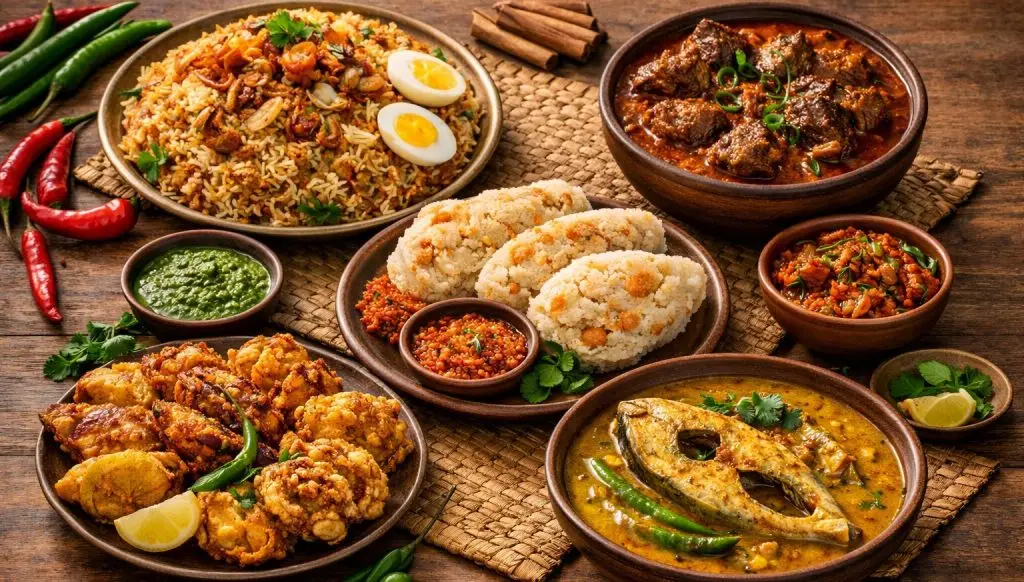
Top 05 Bangladeshi Traditional Food
1. Bhuna Khichuri: The Aromatic Comfort Food
Bhuna Khichuri is a popular and Authentic Bangladeshi food known for its rich aroma, spicy flavor, and thick texture. Unlike regular khichuri, it is cooked with less water and slow-fried spices, giving it a deep, savory taste. This comforting dish is especially enjoyed during monsoon seasons, festivals, and family gatherings.
Made with fragrant rice, lentils, onions, ginger, garlic, and aromatic spices, bhuna khichuri is often prepared with beef, chicken, or mutton for added richness. It is commonly served with beguni, fried eggplant, pickles, or salad, making it a hearty and satisfying meal.
Bhuna khichuri is more than just food—it reflects Bangladeshi tradition, warmth, and cultural heritage.
Why It’s Special
- Spicy, flavorful, and filling
- Often paired with fried Hilsa fish, chicken, or vegetables
- Celebrated during cultural and religious events
Regional Variation: In rural Bangladesh, some families add mustard seeds or dried fish for an authentic traditional taste.

2. Panta Ilish: An Iconic Bangladeshi Traditional Dish
Panta Ilish is one of the most celebrated Bangladeshi traditional dishs, deeply connected to the country’s culture and heritage. This iconic dish consists of fermented rice (panta bhat) served with Hilsa fish (ilish), seasoned with mustard oil, green chilies, onions, and sometimes dried red chili. Simple yet flavorful, Panta Ilish offers a unique blend of tangy, salty, and savory tastes.
Traditionally enjoyed during Pahela Baishakh (Bengali New Year), Panta Ilish represents rural life, seasonal eating habits, and the strong bond between Bengalis and their rivers. The soft texture of fermented rice perfectly complements the rich, oily flavor of Hilsa, making it a refreshing and satisfying meal, especially in warm weather.
Beyond its taste, Panta Ilish holds cultural significance as a symbol of tradition, simplicity, and national pride. Today, it is served not only in homes but also in restaurants, allowing locals and visitors alike to experience an authentic flavor of Bangladesh’s culinary heritage.
Why It’s Special
- Represents rural Bangladeshi breakfast culture
- Mustard oil enhances the Hilsa’s natural taste
- Often garnished with onions, green chilies, and lime
Cultural Insight: Panta Ilish reflects the importance of Hilsa fish in Bangladeshi culture, symbolizing prosperity and celebration.

3. Hilsa Fish Curry: A Signature Bangladeshi Dish
Hilsa Fish Curry is one of the most iconic Bangladeshi traditional foods, celebrated for its rich flavor and cultural significance. Made from the national fish, Hilsa (Ilish), this dish is typically cooked with mustard paste, turmeric, chilies, and mustard oil, giving it a bold and aromatic taste.
Hilsa Curry is especially popular during the monsoon season, when the fish is at its peak freshness. It is often served with plain rice or Bhuna Khichuri, creating a classic Bangladeshi meal enjoyed across households and festive occasions.
This dish is more than food—it represents Bangladesh’s culinary heritage, connecting generations through tradition and celebration. With its tender fish, fragrant spices, and unique flavor, Hilsa Fish Curry remains a must-try dish for anyone exploring authentic Bangladeshi cuisine.
Why It’s Special
- Signature Bangladeshi flavor with mustard oil
- Soft, tender fish that melts in your mouth
- Served with plain rice or Bhuna Khichuri
Regional Variation: Barisal and Dhaka are famous for their distinct Hilsa preparations, with Barisal using extra mustard and turmeric for a sharper taste.
4. Pitha: Traditional Bangladeshi Rice Cakes
Pitha is a beloved Bangladeshi traditional food, made from rice flour and often filled or topped with jaggery, coconut, lentils, or sesame seeds. This versatile dish comes in sweet and savory varieties and is an integral part of Bangladeshi festivals, weddings, and family gatherings.
Pitha is especially popular during winter and harvest seasons, reflecting the agricultural roots of Bangladesh. Common types include Bhapa Pitha (steamed), Patishapta (rolled with sweet filling), and Puli Pitha (rice flour dumplings).
More than just a dessert or snack, Pitha represents Bangladesh’s culinary heritage and cultural traditions, offering a taste of history in every bite. Whether served at home or in local markets, it remains a timeless symbol of Bangladeshi cuisine.
Why It’s Special
- Sweet and savory varieties
- Traditional preparation methods
- Symbol of Bengali culture and family gatherings
Cultural Insight: Pitha-making is a social and festive activity, often prepared at home with family participation.
5. Shutki Maach: Traditional Bangladeshi Dried Fish Delicacy
Shutki Maach is a unique and flavorful Bangladeshi traditional food, made from dried fish preserved using sun and salt. This iconic dish is especially popular in rural Bangladesh, where it reflects the country’s rich riverine culture and culinary heritage.
Shutki Maach is often cooked with mustard oil, garlic, onions, and spices, creating a bold, tangy, and aromatic flavor. It can be served as a curry, stir-fried dish, or with rice, making it a versatile staple in Bangladeshi homes.
Beyond its taste, Shutki Maach symbolizes traditional preservation techniques and seasonal eating habits. Loved for its intense flavor and cultural significance, Shutki Maach remains a must-try dish for anyone exploring authentic Bangladeshi cuisine.
Why It’s Special
- Unique Flavor
- Cultural Heritage
- Versatile Dish
- Seasonal & Authentic
- Loved by Locals
Top 05 Bangladeshi Street Snack
1. Fuchka (Pani Puri): Tangy Street Delight
Fuchka, the Bangladeshi version of Pani Puri, is one of the most beloved street snacks in the country and a true symbol of local street food culture. Crispy hollow shells are carefully filled with a spicy mixture of mashed potatoes, boiled chickpeas, chopped onions, green chilies, and coriander, then topped with tangy tamarind water that creates a burst of bold flavors in every bite. Known for being spicier and more flavorful than its counterparts, Fuchka offers a perfect balance of crunch, heat, and sourness.
Fuchka vendors are a common sight on busy streets and marketplaces, especially in cities like Dhaka, Chittagong, and Sylhet, where people of all ages enjoy this affordable and mouthwatering snack as a quick treat or social food experience.
Why It’s Special
- Tangy, spicy, and crunchy
- Affordable and widely available
- Social food enjoyed with friends and family
Cultural Insight: Eating Fuchka is a social activity, bringing communities together in markets and roadside stalls.
2. Chotpoti: A Spicy Bangladeshi Street Food Classic
Chotpoti is a well-known Bangladeshi street snack celebrated for its bold spices and rich, tangy taste. Made with boiled chickpeas, potatoes, onions, green chilies, and a flavorful tamarind sauce, Chotpoti is often topped with sliced boiled eggs and fresh coriander.
Commonly found at roadside stalls and local markets across Bangladesh, Chotpoti is both affordable and filling. Its perfect mix of spice, sourness, and texture makes it a favorite among street food lovers and an essential part of authentic Bangladeshi food culture.
Why It’s Special
- Quick, flavorful snack
- Popular in street markets and near schools
- Offers a unique combination of textures and tastes
Regional Variation: In Chittagong, Chotpoti is often spicier with extra mustard oil.
3. Jhalmuri: A Flavorful Bangladeshi Street Snack
Jhalmuri is a classic Bangladeshi street food loved for its light, crunchy texture and spicy taste. Made with puffed rice mixed with mustard oil, chopped onions, green chilies, roasted peanuts, coriander, and aromatic spices, Jhalmuri delivers a bold burst of flavor in every bite.
Commonly enjoyed as an evening snack across Bangladesh, Jhalmuri is affordable, healthy, and full of local taste. Its simple ingredients and unique spice blend make it an iconic snack that perfectly represents Bangladeshi street food culture.
Why It’s Special
- Healthy and filling snack
- Quick to prepare and inexpensive
- Loved for its tangy, spicy flavor
Cultural Insight: Jhalmuri represents Bangladesh’s street food culture, where simplicity meets bold flavors.
4. Singara & Samosa: Beloved Bangladeshi Snacks
Singara and Samosa are two of the most popular and iconic Bangladeshi snacks, cherished for their crispy texture and flavorful fillings. Singara is a round, deep-fried pastry typically stuffed with spiced potatoes, peas, lentils, or minced meat, while Samosa is a triangular pastry filled with a savory mix of potatoes, onions, peas, or meat and fried to a golden crisp.
These snacks are widely enjoyed across Bangladesh at street stalls, local markets, and tea shops, making them a staple of everyday life and social gatherings. Perfect as a tea-time treat or a quick snack, Singara and Samosa offer a delightful combination of crunch and spice. Affordable, delicious, and deeply rooted in Bangladeshi food culture, they are a must-try for anyone exploring the country’s traditional street foods.
Why Singara Is Special
- Crispy outside, flavorful inside
- Commonly enjoyed during tea breaks
- Versatile fillings for vegetarian and non-vegetarian options
Cultural Insight: Singara is often served at festivals, family gatherings, and roadside stalls, making it a social favorite.
Why Samosa Is Special
- Quick, tasty, and filling
- Loved by children and adults alike
- Served with chutneys or sauces for extra flavor
Cultural Insight: Samosas showcase the influence of Indian Mughlai cuisine on Bangladeshi street foods.
5. Seven Layer Tea: A Unique Bangladeshi Beverage Experience
Originating in Srimangal, the tea capital of Bangladesh, Seven Layer Tea is a vibrant, layered tea drink combining different tea flavors, milk, and sugar.
Seven Layer Tea is a visually stunning and flavorful Bangladeshi tea, famous for its layered presentation and rich taste. This special tea is made by carefully pouring seven different layers, each with unique ingredients and sweetness, including black tea, milk tea, condensed milk, cream, sugar, and sometimes chocolate or spices. The result is a beautiful, multicolored drink that delights both the eyes and the palate.
Popular in cafés, tea shops, and restaurants across Bangladesh, Seven Layer Tea is more than just a beverage—it’s an experience. Its combination of textures, flavors, and colors makes it a favorite among tea lovers and social media enthusiasts alike. Perfect for relaxing afternoons or casual gatherings, Seven Layer Tea has become an iconic part of Bangladeshi food and drink culture, attracting locals and tourists who want to taste this unique creation.
Why It’s Special
- Instagram-worthy and photogenic
- Sweet, creamy, and flavorful
- A unique experience for tea lovers visiting Bangladesh
Cultural Insight: It reflects Bangladesh’s tea culture and creativity, attracting tourists and locals alike.
Ancient Culinary Traditions of Bangladesh
Bangladesh has a rich and ancient culinary heritage that dates back thousands of years. Rice, fish, and lentils have long been the core staples of Bengali cuisine, forming the foundation of traditional Bangladeshi foods. The fertile plains along the Padma, Jamuna, and Meghna rivers provided an abundance of fresh ingredients, allowing generations of cooks to create diverse and flavorful dishes.
Traditional Bangladeshi cooking has always emphasized the use of aromatic spices and herbs. Mustard seeds, turmeric, garlic, ginger, and chili were commonly used to enhance flavors and preserve food. Over time, these simple ingredients evolved into rich curries, savory rice dishes, and mouthwatering snacks that are still beloved today. Dishes like Bhuna Khichuri, Hilsa Fish Curry, Panta Ilish, and various street snacks reflect this deep-rooted culinary tradition.
The combination of fresh river fish, locally grown vegetables, lentils, and aromatic spices created a cuisine that is both wholesome and flavorful. Even today, Bangladeshi culinary traditions continue to celebrate these ancient practices, blending age-old techniques with modern flavors while preserving the authentic taste that has defined the country’s food culture for centuries.
Bangladesh’s ancient culinary traditions are not just about food—they represent a cultural heritage, reflecting the geography, history, and lifestyle of its people. For anyone exploring Bangladeshi traditional foods, understanding this rich history adds depth to every bite and highlights why these dishes remain timeless favorites.
Influence of Empires and Kingdoms
The Bengali kingdoms introduced unique cooking methods, while the Mughal era brought rich curries, biryanis, and desserts like Pitha and Rosogolla. Mughal influence emphasized aromatic spices, ghee, and yogurt, creating distinctive flavors still celebrated today.
During the colonial period, frying techniques and pastries became popular, giving rise to street foods like Fuchka, Chotpoti, Singara, and Samosa. These snacks reflect urban culture and social interaction, connecting communities across markets and streets.
Regional Variations
- Dhaka: Mughlai-style curries and Hilsa preparations
- Chittagong: Spicy seafood and coastal flavors
- Sylhet and Srimangal: Tea-inspired treats and sweets
- Rural Bengal: Fermented rice dishes and mustard-based curries
Cultural Significance
Bangladeshi traditional foods and street snacks are central to festivals, family gatherings, and daily life. Dishes like Bhuna Khichuri, Panta Ilish, Hilsa Curry, and Pitha are tied to celebrations, while Fuchka, Chotpoti, and Jhalmuri reflect the lively street culture. Each dish tells a story of regional history, agriculture, and culinary evolution.
Why It Matters
Understanding the historical roots of Bangladeshi traditional foods and street snacks gives insight into the country’s culture, social life, and heritage. From riverside staples to festive delicacies and street treats, each dish offers a journey through Bangladesh’s culinary history.
Bangladeshi traditional foods are not just meals—they are a living record of the nation’s rich history, traditions, and creativity. Exploring these dishes is a must for travelers and food lovers seeking an authentic taste of Bangladesh.
Why Bangladeshi Traditional Foods and Street Snacks Are Unique
Bangladeshi traditional foods are celebrated for their bold flavors, aromatic spices, and cultural significance. Street snacks reflect the vibrant social life of Bangladesh, where markets, tea stalls, and streets are hubs of community interaction. Each dish tells a story of regional history, agriculture, and cultural heritage, making them more than just meals—they are a window into Bangladesh’s soul.
From the spicy Chotpoti and Fuchka to the festive Panta Ilish and Pitha, these dishes offer a complete culinary journey, giving travelers and food lovers an unforgettable taste of Bangladesh.
Whether you are visiting Dhaka, Sylhet, Chittagong, or Srimangal, trying these top 10 Bangladeshi traditional foods and street snacks is a must for a genuine gastronomic experience.
Tips for Experiencing Bangladeshi Foods
Exploring Bangladeshi cuisine is a delightful journey for the taste buds. Here are some quick tips to make the most of your culinary adventure:
- Try Street Foods – Don’t miss favorites like Fuchka, Chotpoti, Jhalmuri, Singara, and Samosa.
- Visit Local Markets – Experience authentic flavors and fresh ingredients.
- Taste Traditional Dishes – Enjoy classics like Hilsa Fish Curry, Bhuna Khichuri, and Shutki Maach.
- Pair with Local Beverages – Sip Seven Layer Tea or Borhani for a complete taste experience.
- Be Adventurous – Bangladeshi food is rich in spices and unique flavors—try everything you can.
- Observe Hygiene – Choose busy and popular stalls for safer street food experiences.
These tips will help you enjoy the true flavors of Bangladesh while exploring its vibrant food culture.
Conclusion
Bangladeshi traditional foods and street snacks represent a perfect blend of taste, culture, and centuries-old tradition. From rich, home-cooked meals prepared with aromatic spices to vibrant street treats served hot and fresh, every dish reflects the country’s diverse culinary identity. These foods are not just about satisfying hunger—they tell stories of history, regional diversity, and the warmth of local hospitality.
Whether it’s enjoying a hearty plate of rice and curry or tasting popular street snacks bursting with flavor, each experience offers a deeper connection to Bangladesh’s lifestyle and traditions. Street food, in particular, adds excitement with its affordability, variety, and authentic preparation methods that have been passed down through generations.
For travelers and food lovers alike, exploring Bangladeshi cuisine is an unforgettable journey. It provides a genuine taste of the nation while showcasing the creativity and passion of its people. Ultimately, these traditional dishes and street snacks serve as a delicious gateway to understanding the heart and soul of Bangladesh.