
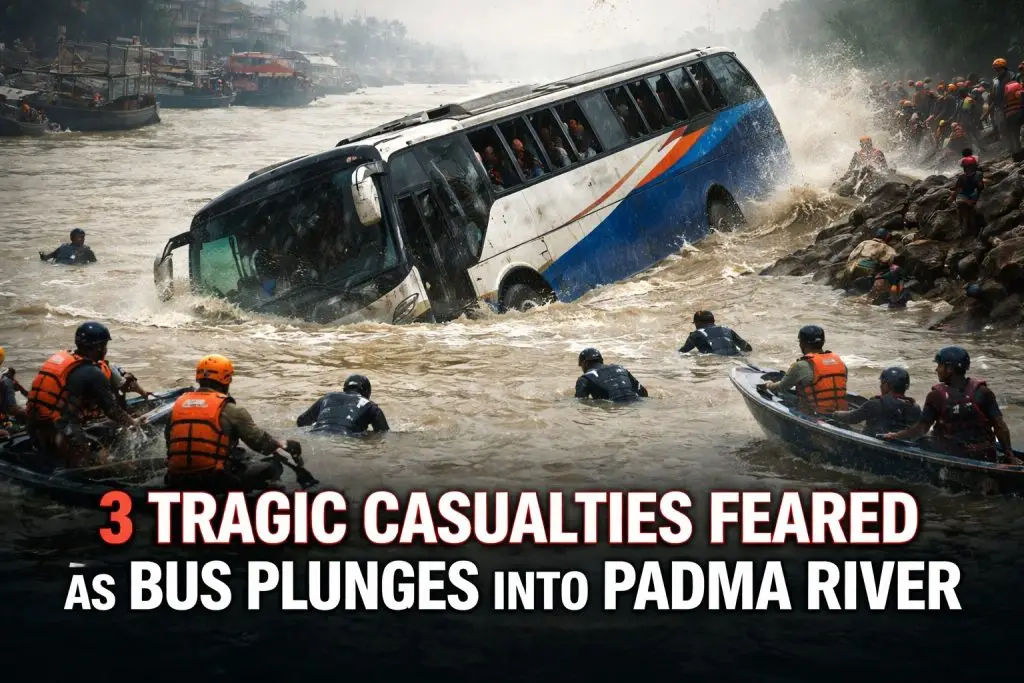
Bus plunges into Padma River at Daulatdia, raising fears of casualties. Rescue teams rush to the scene as search efforts continue.
Introduction: Bus plunges into Padma River at Daulatdia
A tragic accident has raised serious concerns after a passenger bus reportedly plunged into the mighty Padma River near Daulatdia, leaving authorities and locals fearing multiple casualties. The incident occurred at one of the busiest river crossing points in Bangladesh, known for its heavy traffic, ferry operations, and frequent congestion.
The Incident: What Happened
According to initial reports, the accident took place during peak travel hours when the bus was approaching or waiting near the Daulatdia ferry terminal. Eyewitnesses claim that the vehicle lost control, possibly due to slippery conditions, mechanical failure, or driver misjudgment, before plunging into the river.
The Padma River, one of the largest and most powerful rivers in Bangladesh, is known for its strong currents and deep waters. This has made rescue operations extremely challenging. Locals reported hearing loud screams and seeing the bus disappear into the water within seconds, leaving little time for immediate rescue.
Immediate Response and Rescue Efforts
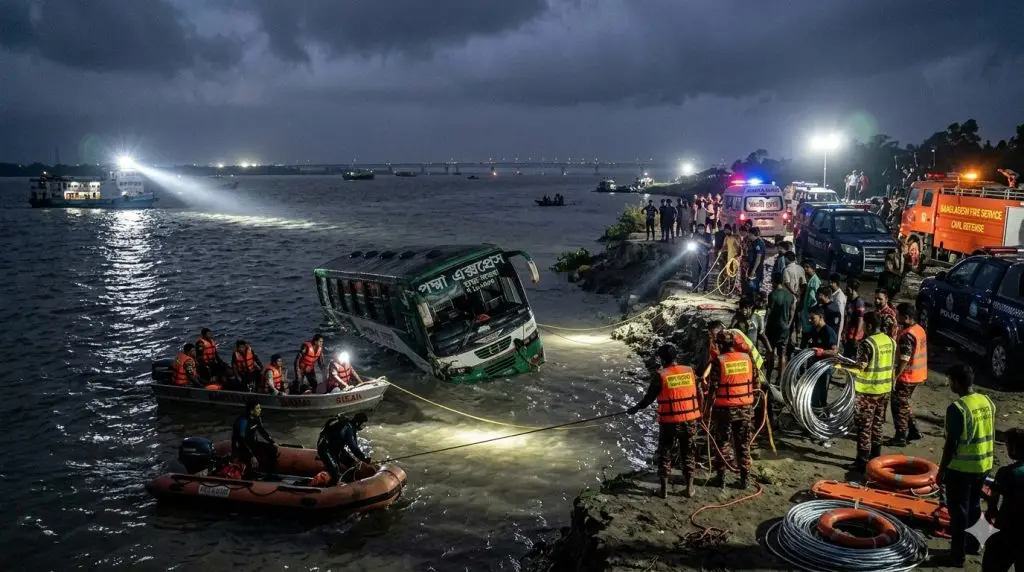
Following the incident, local authorities, fire service teams, and members of the coast guard rushed to the scene. Divers were deployed to locate the submerged vehicle and search for survivors. Boats from nearby ferry services were also used to assist in rescue efforts.
Officials from the Bangladesh Fire Service and Civil Defence confirmed that rescue operations began within minutes, but visibility under water and strong currents significantly slowed progress. Emergency response teams continued working tirelessly, hoping to find survivors trapped inside the bus or floating nearby.
Several local fishermen and residents also joined the rescue mission, demonstrating remarkable bravery by diving into the river despite dangerous conditions.
Casualties Feared
While the exact number of passengers on board remains unclear, authorities fear multiple casualties. The bus is believed to have been carrying dozens of passengers, many of whom may have been unable to escape before it sank.
At the time of writing, only a few survivors have reportedly been rescued, though official confirmation is still pending. Hospitals in nearby areas have been placed on high alert, and medical teams are prepared to treat injured victims.
Family members of passengers have gathered at the accident site, anxiously waiting for updates. The emotional scenes highlight the devastating impact such accidents have on families and communities.
Possible Causes of the Accident
Although a full investigation is yet to be conducted, several possible causes are being considered:
1. Driver Error
Fatigue, speeding, or misjudgment while maneuvering near the ferry ghat could have contributed to the accident.
2. Poor Road Conditions
Daulatdia ferry terminal often experiences muddy, slippery, and uneven roads, especially during adverse weather conditions. This increases the risk of vehicles losing control.
3. Mechanical Failure
A sudden brake failure or steering malfunction may have prevented the driver from stopping the bus in time.
4. Overcrowding and Traffic Pressure
Heavy congestion and pressure to board ferries quickly may lead to reckless driving and reduced attention to safety.
Authorities are expected to launch a formal investigation to determine the exact cause and hold those responsible accountable.
Challenges in Rescue Operations
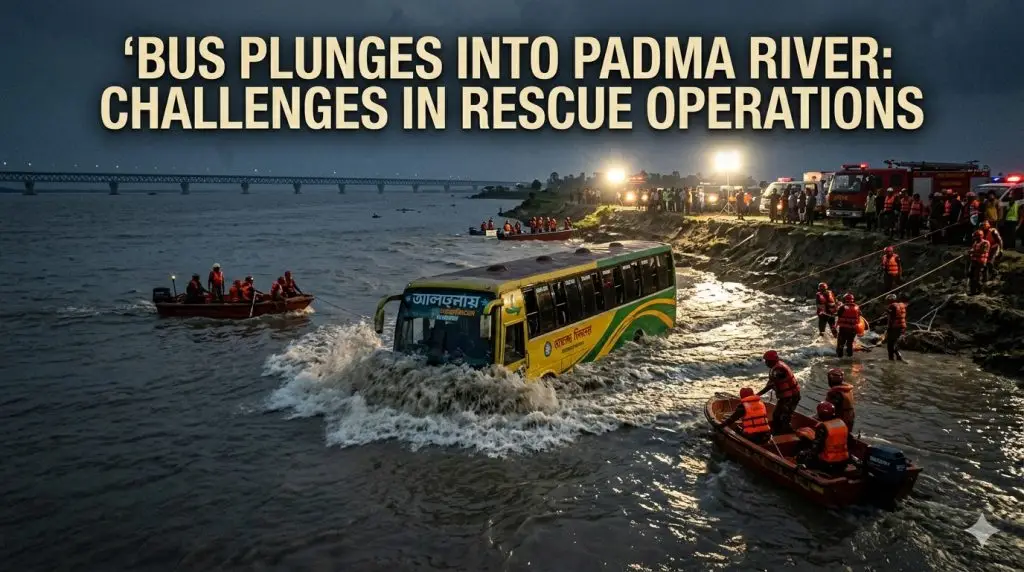
Rescue efforts in river accidents are always complex, and this case is no exception. Several challenges have made operations more difficult:
- Strong River Currents: The Padma River’s fast-moving water can carry debris and victims far from the accident site.
- Limited Visibility: Murky water conditions make underwater search extremely difficult.
- Depth of Water: The river is deep in this area, requiring specialized diving equipment and expertise.
- Time Sensitivity: The chances of survival decrease significantly after the first few hours.
Despite these challenges, rescue teams remain committed to continuing their efforts until all passengers are accounted for.
Importance of Daulatdia Ferry Ghat
Daulatdia is one of the most crucial transport hubs in Bangladesh, connecting the southern and southwestern regions with the capital. Thousands of vehicles and passengers pass through this ferry terminal every day.
Due to its importance, the area often experiences heavy traffic congestion, especially during holidays and peak travel times. This increases the risk of accidents, particularly when safety measures are not strictly followed.
Eyewitness Accounts
Eyewitnesses described the incident as sudden and horrifying. One local resident said:
“The bus was moving slowly near the edge, and suddenly it slipped and went straight into the river. People were screaming, and everything happened within seconds.”
Another witness mentioned that there were no proper barriers or safety measures strong enough to prevent vehicles from falling into the water.
These accounts highlight the urgent need for improved safety infrastructure at ferry terminals.
Government and Authority Response
Local government officials have expressed deep concern over the incident and assured that all necessary measures are being taken. Senior officials from transport and disaster management departments have visited the site to oversee rescue operations.
Authorities have also promised a thorough investigation and emphasized the importance of implementing stricter safety regulations at ferry ghats across the country.
Compensation for victims and their families is expected to be announced once the situation becomes clearer.
Road and River Safety Concerns in Bangladesh
This tragic incident once again highlights ongoing safety challenges in Bangladesh’s transport system. Road accidents and ferry-related incidents are unfortunately common due to a combination of factors such as:
- Poor infrastructure
- Lack of enforcement of traffic laws
- Overloaded vehicles
- Inadequate safety barriers
- Limited driver training
Experts stress the need for long-term solutions, including better infrastructure, stricter regulations, and increased public awareness.
Preventive Measures That Could Save Lives
To prevent similar tragedies in the future, several measures can be taken:
1. Installation of Strong Safety Barriers
Ferry terminals should have reinforced barriers to prevent vehicles from accidentally falling into the river.
2. Improved Traffic Management
Better organization and control of vehicle movement can reduce congestion and confusion.
3. Regular Vehicle Inspections
Ensuring that buses and other vehicles are in proper working condition can prevent mechanical failures.
4. Driver Training and Monitoring
Professional training and strict monitoring of drivers can significantly improve safety standards.
5. Emergency Preparedness
Rescue teams should be equipped with advanced tools and training to respond quickly and effectively.
Community Reaction
The incident has sparked widespread concern and grief across the country. Social media platforms are flooded with messages of sympathy, prayers, and calls for improved safety measures.
Many people are urging authorities to take immediate action to prevent such accidents from happening again. The tragedy has once again brought attention to the urgent need for systemic changes in transportation safety.
Ongoing Search and Hope for Survivors
As rescue operations continue, families and communities remain hopeful that more survivors will be found. Every passing hour is critical, and rescue teams are working against time to locate missing passengers.
Authorities have requested the public to avoid crowding the area, as it may hinder rescue efforts. Instead, people are encouraged to cooperate with officials and provide any useful information that could assist in the operation.
Conclusion
The bus accident in the Padma River near Daulatdia is a heartbreaking reminder of the risks associated with transportation in challenging environments. With casualties feared and families anxiously waiting for news, the nation watches closely as rescue efforts continue.
This tragic event underscores the urgent need for improved safety measures, better infrastructure, and stricter enforcement of regulations. Only through collective effort and commitment can such incidents be prevented in the future.
As the situation develops, authorities are expected to provide more updates regarding casualties, survivors, and the cause of the accident. Until then, the focus remains on rescue operations and supporting affected families during this difficult time.