
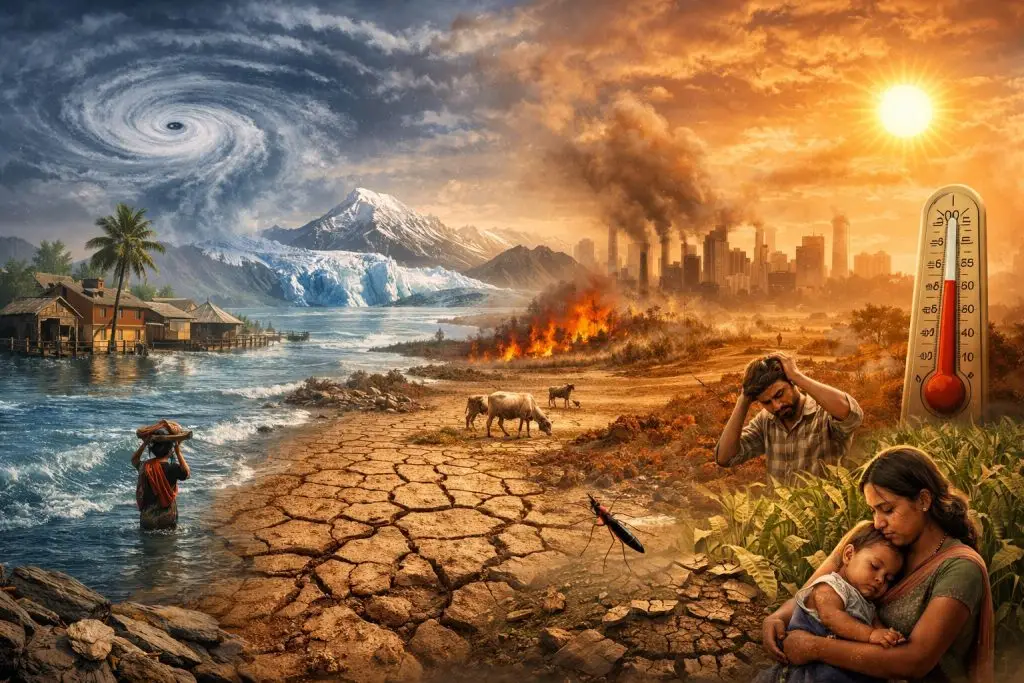
Discover 9 severe climate change effects in different countries in 2026, from rising seas and extreme heatwaves to food insecurity, crises and economic losses.
Introduction : Climate Change Effects 2026
Climate change is no longer a distant threat—it is a global reality affecting countries in every corner of the world. From rising seas in coastal nations to extreme heatwaves in arid regions, the climate change effects are increasingly severe and undeniable in 2026. These effects are not only impacting the environment but also threatening human health, food security, economies, and biodiversity. Understanding how different countries experience these changes is crucial for governments, communities, and individuals to adapt and take effective action. In this article, we explore 9 severe climate change effects in different countries, highlighting the challenges, the human and ecological consequences, and why urgent action is needed to mitigate these impacts before they escalate further.
1. Rising Sea Levels and Coastal Flooding
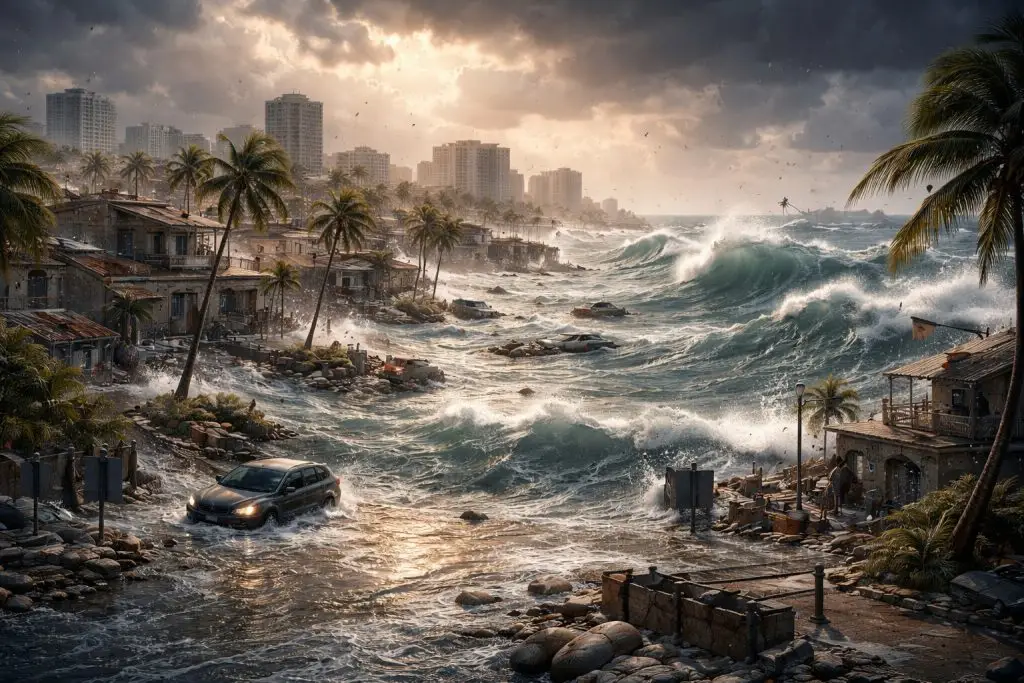
One of the most visible climate change effects is rising sea levels, primarily caused by melting glaciers and the expansion of warming ocean waters. Countries with extensive coastlines, like Bangladesh, the Maldives, and the Netherlands, are especially vulnerable. Rising seas not only threaten homes and infrastructure but also increase the risk of saltwater intrusion, contaminating freshwater supplies and agricultural land. Coastal erosion is accelerating, forcing communities to relocate and adapt to changing shorelines. Moreover, low-lying islands and delta regions face the constant danger of permanent submersion, making early warning systems and sustainable coastal management critical for protecting both people and ecosystems.
Causes:
- Global warming leading to glacier melt
- Thermal expansion of seawater
- Increased ice sheet loss in Greenland and Antarctica
Impacts:
- Coastal flooding destroying homes and infrastructure
- Salinity intrusion affecting freshwater supplies
- Displacement of millions of people in low-lying areas
Example: Rising sea levels in Bangladesh put almost one-third of the coastal population at risk, driving significant migration from rural regions to urban cities.
2. Extreme Heatwaves and Record Temperatures
Rising global temperatures are causing severe heatwaves worldwide. Countries like India, Pakistan, Australia, and the United States have reported unprecedented highs. Vulnerable groups, including the elderly, children, and outdoor workers, face the greatest risk.
Extreme heat also strains electricity and water supplies, disrupts agriculture, and increases food insecurity. Urban areas experience intensified heat due to the “heat island effect,” while hospitals see a rise in heat-related illnesses. These climate change effects highlight the urgent need for adaptation and preventive measures to protect lives and livelihoods.
Causes:
- Greenhouse gas emissions trapping heat
- Deforestation reducing natural cooling
- Urban heat islands in densely populated cities
- Loss of vegetation and natural water bodies that help regulate local temperatures
- Industrial and vehicular pollution increasing ambient heat levels
- Climate feedback loops, such as reduced snow cover, intensifying warming
- Global warming disrupting natural weather patterns and heat distribution
Impacts:
- Increased mortality due to heat stress
- Electricity demand spikes, leading to blackouts and energy shortages
- Wildfires in forests and grasslands, destroying habitats and property
- Water shortages and reduced agricultural productivity due to extreme heat
- Economic losses in sectors like farming, tourism, and energy
Example: In 2023, India experienced a heatwave exceeding 50°C in some regions, causing over 3,000 deaths. Similarly, parts of Australia faced prolonged heatwaves that triggered large-scale bushfires, forcing thousands to evacuate and causing billions in property damage.

3. Severe Droughts and Water Scarcity
Droughts are becoming more frequent and intense due to changing rainfall patterns and rising temperatures. Countries like Kenya, Ethiopia, Spain, and Iran face water shortages affecting millions. These prolonged dry spells not only disrupt agriculture but also threaten drinking water supplies and ecosystems, making everyday life increasingly challenging for rural and urban populations alike. Vulnerable communities, particularly smallholder farmers and pastoralists, bear the brunt of these water shortages, struggling to sustain their crops and livestock.
Causes:
- Reduced rainfall and prolonged dry seasons
- Increased evaporation from higher temperatures
- Overuse of groundwater and unsustainable irrigation practices
- Deforestation and land degradation reducing soil moisture retention
Impacts:
- Crop failures leading to food insecurity and rising prices
- Loss of livestock and livelihoods, pushing families into poverty
- Conflicts over scarce water resources, sometimes escalating to social unrest
- Environmental degradation, including desertification and loss of vegetation
- Long-term economic consequences for affected regions
Fact: Ethiopia suffered its worst drought in decades in 2022, affecting over 8 million people. Similarly, parts of Kenya experienced failed harvests, forcing mass migrations to urban centers in search of water and work.
4. Intense Storms and Hurricanes
Tropical storms, hurricanes, and cyclones have grown more destructive due to climate change effects, with rising ocean temperatures and altered weather patterns intensifying their frequency and severity. Coastal countries such as the Philippines, the USA (Gulf Coast), and Bangladesh regularly face these severe storms, which can devastate communities, disrupt economies, and displace millions of people. These storms not only cause immediate destruction but also create long-term challenges for recovery, public health, and local ecosystems.
Causes:
- Warmer ocean waters fueling storm intensity
- Rising sea levels worsening storm surges
- Shifts in atmospheric patterns and jet streams
- Increased humidity providing more energy for storm formation
Impacts:
- Infrastructure damage, power outages, and transportation disruptions
- Loss of lives, homes, and livelihoods
- Economic strain due to increased insurance claims and rebuilding costs
- Contamination of freshwater supplies and flooding of agricultural lands
- Long-term displacement of communities, leading to social and psychological stress
Example: Hurricane Ida (USA, 2021) caused over $65 billion in damages, highlighting the economic toll of extreme weather. Similarly, Cyclone Amphan in 2020 devastated parts of India and Bangladesh, destroying homes, submerging farmland, and affecting millions, demonstrating how coastal regions remain extremely vulnerable to climate-induced storms.
5. Melting Glaciers and Snowcaps
The accelerated melting of glaciers and snowcaps in regions such as the Himalayas, the Arctic, and Antarctica represents one of the most visible climate change effects. Rising global temperatures are causing ice sheets to shrink at unprecedented rates, disrupting ecosystems, freshwater availability, and global sea levels. These changes have far-reaching consequences not only for local communities but for millions of people worldwide who rely on glacier-fed rivers for drinking water, agriculture, and hydropower.
Causes:
- Rising global temperatures due to greenhouse gas emissions
- Air pollution, particularly soot and black carbon, settling on ice and increasing melting rates
- Natural climate variability amplified by human activity, accelerating glacier retreat
Impacts:
- Rising sea levels, which contribute to coastal flooding in low-lying regions
- Disruption of freshwater sources, threatening drinking water and irrigation for millions of people
- Altered river flows, affecting agriculture, hydroelectric power generation, and freshwater ecosystems
- Increased risk of glacial lake outburst floods (GLOFs), which can destroy villages and infrastructure downstream
Case Study: Himalayan glacier melt threatens water supplies for over 1.5 billion people in Asia. Rivers fed by these glaciers, such as the Ganges, Brahmaputra, and Indus, are critical for irrigation, hydropower, and domestic use. As glaciers retreat, seasonal water availability becomes unpredictable, creating challenges for farmers, energy producers, and urban populations.
Addressing this climate change effect requires urgent global action to reduce greenhouse gas emissions, limit further warming, and implement strategies for sustainable water management in glacier-dependent regions.
6. Loss of Biodiversity and Ecosystems
The climate change effects extend far beyond humans, significantly impacting ecosystems and wildlife worldwide. Rapid shifts in temperature, altered rainfall patterns, and extreme weather events are destroying habitats and threatening species survival. Countries rich in biodiversity, such as Brazil (Amazon rainforest), Indonesia, and Madagascar, are experiencing rapid biodiversity loss, which disrupts ecological balance and undermines the essential services ecosystems provide.
Causes:
- Habitat loss due to shifting climate zones and deforestation
- Ocean acidification harming marine life, including coral reefs and shellfish
- Increased forest fires and land degradation reducing safe habitats for wildlife
- Changes in seasonal patterns affecting migration, reproduction, and feeding of animals
Impacts:
- Extinction of species, which disrupts food chains and ecosystem stability
- Reduction of critical ecosystem services like pollination, water purification, and climate regulation
- Negative effects on communities relying on forests, oceans, and other natural resources for food, medicine, and livelihoods
- Increased vulnerability to natural disasters, as degraded ecosystems can no longer buffer floods, landslides, or storms
- Long-term global biodiversity loss, threatening planetary health and resilience
Fact: Scientists estimate that by 2050, up to 1 million species could face extinction due to climate change. For example, the Amazon rainforest is losing habitats for countless plant and animal species, while coral reefs in Southeast Asia are bleaching, threatening marine biodiversity and fisheries.
Addressing these challenges requires urgent conservation efforts, sustainable land and marine management, and global cooperation to reduce greenhouse gas emissions. Protecting biodiversity is essential not only for wildlife but also for human survival, food security, and the stability of ecosystems under increasing climate change effects.
7. Agricultural Disruptions and Food Insecurity
Agriculture is one of the most climate-sensitive sectors, and the climate change effects are increasingly disrupting food production around the world. Extreme weather events, including floods, droughts, heatwaves, and unseasonal rainfall, are affecting crop yields, livestock health, and overall food security in countries like India, Bangladesh, the USA, and Nigeria. These disruptions have serious economic and social consequences, particularly for vulnerable populations that rely heavily on farming for their livelihoods.
Causes:
- Unpredictable rainfall patterns leading to floods or prolonged dry periods
- Heat stress on crops, which reduces growth, flowering, and fruiting, ultimately lowering yields
- Increased frequency of pests, diseases, and invasive species intensified by warming temperatures
- Soil degradation, erosion, and salinity intrusion due to rising sea levels and extreme weather events
- Water scarcity affecting irrigation and livestock watering
Impacts:
- Reduced crop yields and economic losses for farmers, affecting national and global food supply
- Higher food prices, which disproportionately impact low-income and vulnerable populations
- Migration from rural areas to urban centers as farmers seek alternative livelihoods due to crop failures
- Increased reliance on food imports, which can strain national economies and reduce self-sufficiency
- Long-term impacts on nutrition and health, particularly for children and vulnerable groups
Example: In Bangladesh, annual rice and wheat production losses due to floods and salinity intrusion significantly affect national food security. Farmers are forced to adapt by changing crop varieties or migrating to cities, but many lack the resources to respond effectively. Similarly, in India and Nigeria, unpredictable monsoon patterns and heatwaves have led to widespread crop failure, demonstrating how climate change effects are directly linked to global food insecurity.
Addressing these challenges requires climate-resilient agricultural practices, improved irrigation and water management, government support, and global cooperation to reduce greenhouse gas emissions. Ensuring food security in the era of climate change is critical to protecting livelihoods, reducing poverty, and building a more resilient world.
8. Public Health Risks and Disease Outbreaks
The climate change effects are not limited to the environment—they have profound implications for human health. Rising global temperatures, extreme weather events, and changing precipitation patterns contribute to a growing risk of disease outbreaks and other health crises. Floods, droughts, heatwaves, and storms create conditions that allow pathogens and disease vectors to thrive, placing millions of people at risk, particularly in vulnerable and densely populated regions.
Causes:
- Waterborne diseases from flooding, contaminated water supplies, and inadequate sanitation
- Heat stress and cardiovascular problems caused by prolonged exposure to extreme temperatures
- Vector-borne diseases like malaria, dengue, and Zika, which increase as warmer climates expand mosquito habitats
- Poor air quality from wildfires and pollution exacerbating respiratory diseases
- Malnutrition and food insecurity caused by crop failures in drought- or flood-affected regions
Impacts:
- Increased mortality and morbidity, particularly among children, the elderly, and immunocompromised populations
- Strain on healthcare systems due to higher patient loads, lack of medical resources, and the need for emergency response
- Economic burdens on governments and communities due to increased healthcare costs, lost productivity, and disaster recovery efforts
- Long-term psychological impacts, including stress, anxiety, and trauma in communities affected by repeated climate-related disasters
Case Study: Dengue outbreaks have surged in Southeast Asia as rising temperatures and humidity create ideal mosquito breeding conditions. Countries such as Thailand, the Philippines, and Vietnam have reported record numbers of cases, overwhelming hospitals and public health systems. Similarly, flooding in Bangladesh and India has led to widespread waterborne diseases like cholera and diarrhea, highlighting the direct link between climate change and public health crises.
Addressing these public health challenges requires proactive planning, including early warning systems, climate-resilient healthcare infrastructure, community education, and global cooperation to reduce greenhouse gas emissions. Mitigating the climate change effects on human health is essential to ensure safer, healthier, and more resilient populations worldwide.
9. Economic Losses and Social Inequality
The economic consequences of climate change effects are profound and global, but their distribution is highly unequal. While all nations face some level of economic disruption, vulnerable and developing countries bear the heaviest burden despite contributing far less to global greenhouse gas emissions. The increasing frequency and intensity of climate-related disasters—such as storms, floods, droughts, and heatwaves—have devastating effects on infrastructure, agriculture, fisheries, and public health systems, leading to long-term economic instability.
Causes:
- Damage to infrastructure and homes due to extreme weather events
- Agricultural and fisheries losses from floods, droughts, and shifting climates
- Increased health and disaster management costs to treat affected populations and rebuild communities
- Disruption of trade and supply chains, leading to economic slowdowns
Impacts:
- Widening economic inequality between rich and poor nations, as wealthier countries can better absorb losses while poorer nations struggle to recover
- Job losses in climate-sensitive sectors such as farming, fishing, and tourism, directly affecting livelihoods
- Forced migration of populations from disaster-prone areas, creating additional social and economic stress in receiving regions
- Rising costs of basic goods and services due to decreased productivity and damaged infrastructure
- Social unrest and political instability as communities compete for limited resources and support
Fact: Developing countries bear nearly 80% of climate-related losses despite having significantly lower greenhouse gas emissions. For example, small island nations like the Maldives and countries in Sub-Saharan Africa often experience catastrophic flooding or droughts that destroy homes, crops, and livelihoods, yet lack the financial resources to rebuild effectively.
Addressing these inequalities requires global cooperation, financial support for adaptation and mitigation, and investment in climate-resilient infrastructure. Ensuring that vulnerable populations have access to resources and protection is critical to reduce the human and economic toll of climate change effects in the coming decades.
Conclusion: Urgent Action Needed in 2026
The 9 severe climate change effects outlined above demonstrate that climate change is a global crisis with local consequences. Countries worldwide are experiencing rising seas, extreme heat, droughts, biodiversity loss, and economic instability.
Key Takeaways:
- Vulnerable nations need support in adaptation and mitigation
- Strong global cooperation is essential to reduce greenhouse gas emissions
- Individual actions—reducing waste, conserving energy, planting trees—can collectively make a difference
2026 is a pivotal year: governments, organizations, and citizens must act decisively to minimize these climate change effects and protect our planet for future generations.
Furthermore, investing in renewable energy, sustainable agriculture, and disaster-resilient infrastructure can help reduce the long-term impact of climate change. Education and awareness campaigns are crucial to empower communities to make environmentally responsible choices. Every small effort counts—when combined globally, they can slow the pace of climate change and safeguard both human and ecological well-being. Immediate action today ensures a safer, healthier planet tomorrow.