
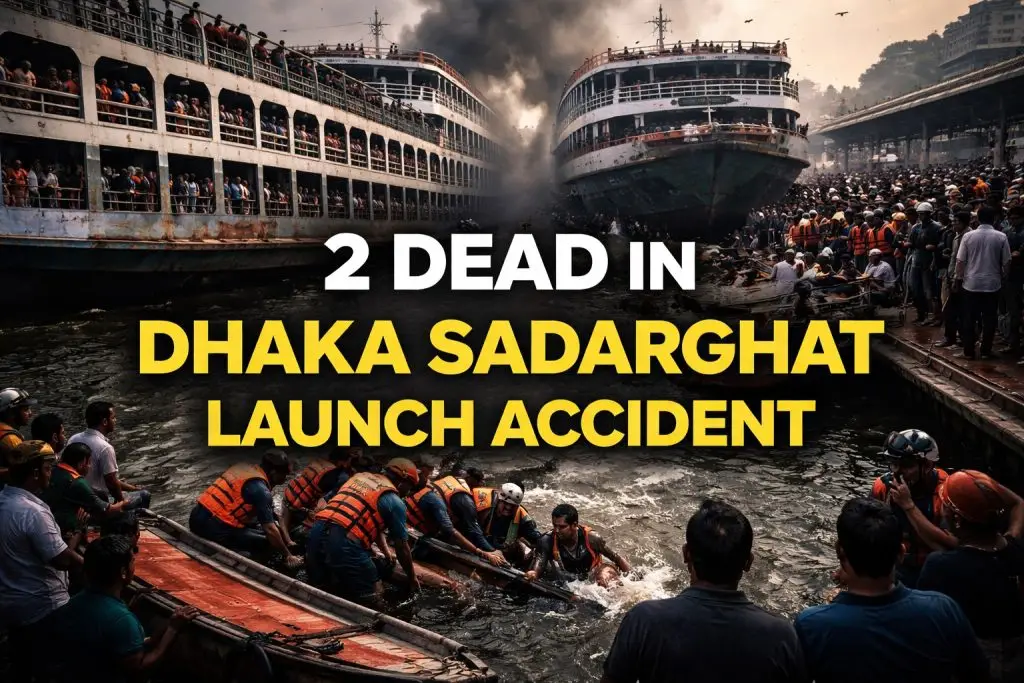
Two people died in the Dhaka Sadarghat Launch Accident, 2026, as vessels collided. Authorities are investigating the cause, and rescue operations continue.
In a tragic and shocking development on the evening of March 18, 2026, at least two people lost their lives in a devastating incident at the bustling river port of Sadarghat in Dhaka. The fatal collision occurred amid the heavy flow of travellers rushing to return home for Eid‑ul‑Fitr festivities, one of Bangladesh’s most important cultural and religious occasions. With crowded waterways and overloaded vessels, the accident has once again raised serious concerns about water transport safety in the country.
The Dhaka Sadarghat Launch Accident happened when two launches collided while passengers were attempting to board a smaller motorised trawler from the river terminal. One vessel known locally as MV Jaker‑3 reportedly struck another launch from behind, crushing passengers who were trying to embark via the trawler. The impact was so severe that at least two people died at the scene. At least two others remain missing, and one person was seriously injured in the chaos.
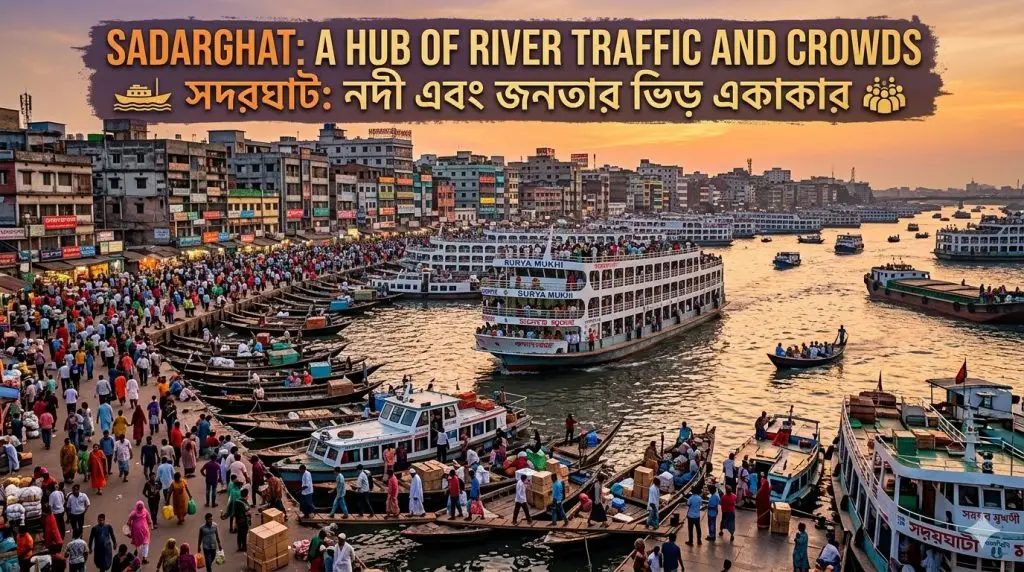
Sadarghat: A Hub of River Traffic and Crowds
Sadarghat, located on the famed Buriganga River, is the busiest inland water port in Bangladesh, connecting Dhaka to various southern districts. Thousands of passengers transit through its launch terminals daily — a number that increases dramatically during festive seasons like Eid.
The port sees motor launches, steamers, trawlers, and private boats coming and going constantly, often in tightly packed formations. While this system facilitates vital connections between regions, it also creates conditions where accidents can happen quickly, especially when safety precautions and crowd management practices are inadequate.
On the evening of the accident, the port was extremely crowded as Eid travellers attempted to leave Dhaka after the official announcement of holiday dates. The Dhaka Sadarghat Launch Accident took place during that peak travel period — known locally as “Eid rush” — when passengers of all ages and backgrounds gather in dense groups near docks and boarding ramps.
How the Accident Unfolded
Eyewitnesses described scenes of confusion and panic in the moments leading up to the accident. As passengers were boarding one launch via a trawler — a smaller vessel used to facilitate embarkation — the larger launch MV Jaker‑3 reversed at a dangerous angle and struck from behind, catching both the trawler and the people on board in between two heavy vessels. The force of the collision was immense, and those caught in the middle had little chance to escape.
According to initial reports, the accident occurred just before sunset — a time when shadows on the river and heavy activity on docks can make navigation more complex. One youth, identified as 22‑year‑old Md Sohel Fakir, tragically lost his life in the collision. His wife, 20‑year‑old Rupa Akhter, was also severely injured and rushed to a hospital for emergency treatment. At least two more passengers were still unaccounted for at the time of early reporting.
This sudden and brutal event immediately sparked chaos. Many travellers attempting to catch their Eid‑period launches were left shocked, while rescue efforts were launched by nearby boat crews and police. River police and port authorities intervened quickly to restore order and assist with rescue operations.
Eyewitness Reactions and Survivor Accounts
Several passengers at Sadarghat described the frightening moments when the collision occurred. According to witnesses, some people were screaming and thrown into the water due to the force of the impact, while others tried desperately to pull their loved ones to safety. One witness noted that the crowded conditions and general disorganization at the terminal contributed to the accident.
Many travellers told reporters that boarding procedures at the terminal were chaotic even before the collision, as vessels struggled to accommodate the heavy flow of passengers. Some said that there were not enough officials or safety personnel present to coordinate the boarding process, despite advance warnings that the Eid rush could lead to overcrowding.
Prime eyewitness accounts highlighted that while some passengers managed to jump to safety, others were unable to escape the narrow space between the two massive launches when they collided. Emergency first‑aid was immediately provided on site, but the severity of injuries made survival difficult for those caught in the worst of the collision.
Response from Authorities
Local police and port officials arrived at the scene within minutes and cordoned off the area to prevent further risk to bystanders. Authorities also launched an immediate search for missing passengers, deploying boats and rescue teams along the river. Initial efforts were focused on locating survivors and recovering bodies from the water.
Police officials have stated that they will conduct a thorough investigation into the circumstances of the collision. The initial priority, they said, is to determine whether negligence, operational error, overcrowding, or lack of safety protocols played a role in the tragedy. A senior officer from the River Police has urged calm among the public, calling for cooperation while authorities work to establish facts.
The Port Authority also noted that it will review its boarding and docking procedures, especially during high‑traffic periods like Eid, when passenger numbers surge dramatically. Early indications suggest that a combination of heavy rush, inadequate safety measures, and operational oversight may have contributed to the accident.
Historical Context: Water Transport Risks in Bangladesh
Accidents involving launches, ferries, and trawlers are unfortunately not uncommon in Bangladesh, a country with an extensive network of rivers and waterways. With millions of people relying on water transport daily — especially in rural and semi‑urban regions — safety standards, oversight, and infrastructure challenges have been central issues for decades.
For example, the tragic sinking of MV Morning Bird on the Buriganga River in June 2020 resulted in more than 30 deaths when the vessel sank after a collision near Dhaka’s river port. These kinds of incidents have repeatedly highlighted gaps in maritime safety protocols, enforcement, and emergency preparedness.
While some progress has been made over the years with improved training and river police patrols, the Dhaka Sadarghat Launch Accident again underscores how easily disasters can occur when large crowds and heavy vessels converge in a confined space without stringent safety systems in place.

Impact on Families and Communities After the Dhaka Sadarghat Launch Accident
The tragic Dhaka Sadarghat Launch Accident has left the victims’ families struggling to cope with immense loss and trauma. Relatives of those who lost their lives expressed deep sorrow, anger, and frustration over the incident, calling for accountability from authorities and demanding justice for the victims. Many family members stressed that the tragedy could have been prevented if proper safety measures, crowd management, and strict enforcement of regulations had been implemented at the busy terminal. The accident has reignited public debate about the safety standards at Sadarghat and other river ports, highlighting the urgent need for reforms to prevent similar incidents in the future.
Among the injured, 20-year-old Rupa Akhter’s condition drew particular concern due to the severity of her injuries. Her family has been anxiously awaiting updates on her recovery, while the community rallies to provide support. Local residents, civic groups, and volunteers have come forward to assist the affected families, offering emotional support and helping with immediate necessities. Prayer gatherings have been organized to honor the victims, and public appeals have been made for the government to strengthen safety protocols. The combined efforts of the community demonstrate solidarity in the face of tragedy, while underscoring the urgent need for systemic changes to protect passengers and prevent such accidents in Bangladesh’s waterways.
Transport Safety Debate Intensifies
In the aftermath of the incident, public debate about transport safety in Bangladesh has intensified. Civil rights activists and transport experts have reiterated long‑standing calls for stricter enforcement of maritime safety regulations, better infrastructure at river terminals, and professional training for launch crews.
Some safety advocates have pointed out that overcrowding at launch terminals, lack of designated boarding lanes, inadequate signage, and minimal oversight by authorities create dangerous conditions, especially during peak travel seasons like Eid and national holidays.
“The Dhaka Sadarghat Launch Accident is not an isolated incident but a symptom of deeper systemic issues in water transport safety,” said a river transport analyst, calling on the government to prioritize comprehensive reforms. Advocates also emphasized the need for mandatory safety drills, licensed transport operators, proper maintenance of vessels, and enhanced emergency response capabilities.
Government and Policy Perspectives
Officials from the Bangladesh Inland Water Transport Authority (BIWTA) have acknowledged the need to review existing protocols and implement improvements. While BIWTA representatives have pledged cooperation with law enforcement investigations, they have also recognized the challenge of managing enormous passenger volumes at river terminals with limited space and resources.
In recent years, several government bodies have proposed updated safety frameworks, including digital tracking of vessel movements, clearer boarding guidelines, and improved communication networks for emergencies. However, the pace of implementation has sometimes lagged behind demand.
The Dhaka Sadarghat Launch Accident has renewed calls from lawmakers to accelerate reforms and ensure accountability across all levels of river transport operations. Some lawmakers have urged the immediate suspension of routes that fail to meet basic safety requirements until improvements can be verified.
Community and Social Media Response to the Dhaka Sadarghat Launch Accident
News of the tragic Dhaka Sadarghat Launch Accident quickly spread across social media platforms, capturing national attention and sparking widespread public reaction. Many Bangladeshis took to Twitter, Facebook, and other platforms to express grief, shock, and concern over safety at the country’s busy river ports. Hashtags related to the incident quickly began trending, with users sharing news reports, eyewitness videos, and personal messages of condolence for the victims and their families.
In addition to expressions of sympathy, social media became a forum for debate about transport safety and government accountability. Many users drew comparisons to past maritime accidents in Bangladesh, highlighting the recurring risks faced by passengers due to overcrowding, lax regulations, and insufficient enforcement. Commenters repeatedly emphasized the urgent need for strict licensing, thorough vessel inspections, and better crowd management at launch terminals.
The online discussions also included calls for immediate government intervention to prevent similar tragedies in the future. By raising public awareness, social media played a critical role in amplifying the voices of concerned citizens, encouraging authorities to prioritize safety reforms, and fostering a nationwide conversation about improving water transport standards in Bangladesh.
Efforts to Support Victims of the Dhaka Sadarghat Launch Accident
Following the tragic Dhaka Sadarghat Launch Accident, numerous community groups and charitable organisations have mobilized to provide immediate assistance to the families affected. Relief funds have been established to help cover funeral expenses, medical bills for the injured, and other urgent needs of those who lost loved ones. These efforts aim to offer both financial and emotional support to grieving families during this difficult time. Local religious organisations have also played a crucial role, offering prayers, spiritual counselling, and guidance to help the victims’ families cope with the sudden loss and trauma.
In addition to direct aid, volunteers and non-governmental organisations have launched awareness campaigns focused on water safety, proper boarding procedures, and emergency preparedness near busy river terminals like Sadarghat. These initiatives include distributing informational pamphlets, conducting safety drills, and engaging with local transport operators to encourage stricter adherence to safety regulations. By promoting awareness and preparedness, these efforts hope to prevent similar accidents in the future. The combined work of charities, volunteers, and authorities demonstrates the community’s commitment to supporting victims while highlighting the ongoing need for improved maritime safety in Bangladesh.
Conclusion: A Call for Change
The Dhaka Sadarghat Launch Accident of 2026 was not only a heartbreaking tragedy that claimed innocent lives but also a stark reminder of the inherent risks associated with water transport in Bangladesh — especially during peak travel periods.
While investigations continue and families mourn their losses, public outcry for improved safety measures and systemic reforms is growing louder. The accident has highlighted the urgent need for stronger enforcement of safety protocols, better infrastructure at river terminals, and comprehensive training for transport operators.
As the nation reflects on this tragedy, it is clear that preventing future disasters will require coordinated efforts from authorities, lawmakers, safety experts, and the community at large. Only through collective will and decisive action can Bangladesh hope to make its waterways safer for the millions of passengers who depend on them each day.