
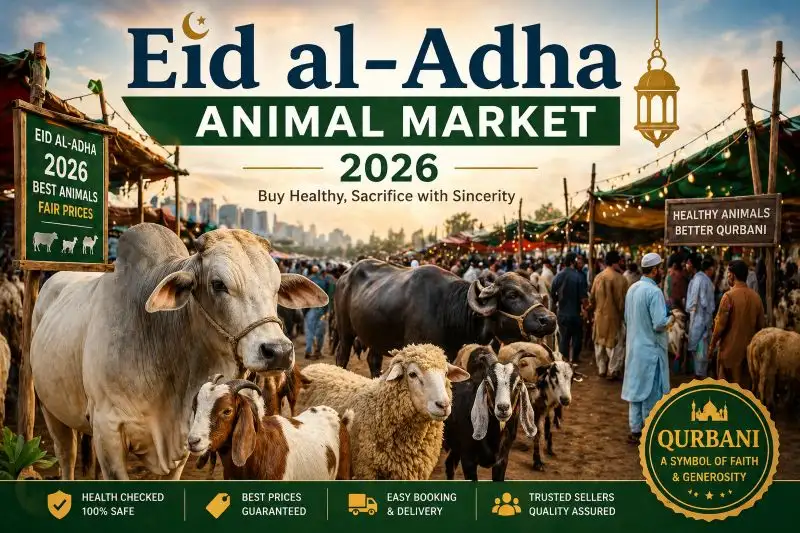
Looking for the latest Eid al-Adha Animal Market trends? Find best places to buy, updated prices for 2026, and expert tips for your Qurbani in this guide.
Introduction: Eid al-Adha Animal Market 2026
Eid al-Adha is one of the most important Islamic festivals, observed by Muslims around the world with deep faith, sacrifice, and generosity. The essence of this holy occasion lies in the act of Qurbani, where believers sacrifice an animal to honor the tradition of Prophet Ibrahim (AS) and share the meat with family, friends, and those in need. As a result, purchasing a healthy, eligible, and well-cared-for animal becomes a key part of Eid preparation. Every year, millions of people visit local and regional Eid al-Adha Animal Markets to choose from a wide range of livestock, including cows, goats, sheep, and, in some regions, camels.
In 2026, the demand for sacrificial animals is expected to increase even more due to population growth, rising income levels, and greater awareness of quality livestock and proper animal care. Urban expansion has also led to the development of larger and more organized cattle markets, making it easier for buyers to find suitable options. This comprehensive guide will help you discover the best places to buy animals, understand current price trends, and learn essential tips for selecting healthy livestock, ensuring a smooth, safe, and meaningful Qurbani experience.
What is an Eid al-Adha Animal Market?
An Eid al-Adha Animal Market, often referred to as a Haat or Mandi, is much more than a simple place of commerce; it is a massive, temporary ecosystem that springs to life in the weeks leading up to the “Festival of Sacrifice.” These markets serve as the primary bridge between rural livestock farmers and urban dwellers looking to fulfill their religious obligations.
The Atmosphere and Scale
While some permanent markets exist, the scale of trade before Eid necessitates the creation of sprawling, open-air hubs on the outskirts of cities and within town squares. These areas are transformed into bustling labyrinths of bamboo enclosures, colorful banners, and makeshift stalls. The air is filled with the sounds of livestock, the scent of hay, and the high-energy rhythm of price negotiations.
A Diverse Range of Livestock
Traders bring their finest stock, often raised for years specifically for this season. The variety is extensive, catering to different budgets and preferences:
- Cows & Bulls: The most common choice, ranging from small local breeds (Deshi) to massive, grain-fed bulls.
- Goats & Sheep: Popular for individuals or smaller families, featuring breeds like the hardy Black Bengal or the long-eared Jamunapari.
- Buffalo & Camels: In specific regions, particularly across the Middle East and parts of South Asia, these majestic animals are sought after for their size and symbolic value.
Timing and Culture
These markets usually reach their peak 10–15 days before Eid. For many, visiting the market is a family tradition. It’s a place where “animal beauty contests” happen informally, as buyers look for the healthiest and most well-groomed specimens. The market remains a hive of activity until the very morning of the holiday, embodying a unique blend of ancient tradition and modern-day trade.
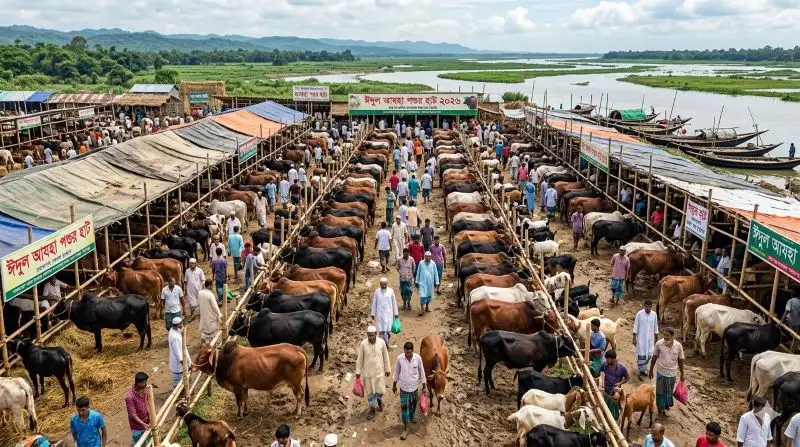
Best Eid al-Adha Animal Markets in Bangladesh 2026
If you’re in Bangladesh, you’ll find some of the biggest and most organized animal markets in major cities. Here are the top locations:
1. Gabtoli Animal Market – Dhaka
One of the largest cattle markets in the country, located in Dhaka.
Why it’s popular:
- Huge variety of cows and goats
- Competitive prices due to high supply
- Easy transportation access
Price Range (2026 estimate):
- Cow: ৳80,000 – ৳3,00,000+
- Goat: ৳12,000 – ৳40,000
2. Meradia & Aftabnagar Market – Dhaka
Located in the residential zones of Dhaka, these markets are cleaner and more organized.
Best for:
- Medium-budget buyers
- Families looking for hygienic environments
3. Sagorika Animal Market – Chattogram
Situated in Chattogram, this is the biggest market in the southeastern region.
Highlights:
- Large imported cows
- Good transport facilities from nearby districts
4. Rajshahi Cattle Market
Located in Rajshahi, known for locally raised healthy cattle.
Why choose Rajshahi:
- Naturally raised animals
- Lower prices compared to Dhaka
5. Khulna Livestock Market
In Khulna, this market is famous for goats and medium-sized cows.
6. Sylhet Animal Market
In Sylhet, you’ll find premium cattle, often preferred for larger Qurbani shares.

Global Eid al-Adha Animal Markets
While animal markets are a global phenomenon, several international hubs stand out due to their sheer scale, historical significance, and rigorous standards. These markets transform into major economic engines in the weeks leading up to Eid al-Adha.
- Karachi Super Highway Cattle Market – Pakistan: Often cited as Asia’s largest cattle market, this massive site near Sohrab Goth spans over 900 acres. Every year, it hosts roughly 700,000 to 1,000,000 animals, primarily from the rural regions of Sindh and Punjab. The market is famous for its “VIP Tents,” where breeders showcase prize-winning, exceptionally large bulls adorned with decorative garlands. It is a vibrant cultural spectacle that generates billions in trade, featuring everything from local Deshi breeds to majestic camels.
- Al Mawashi Market – Saudi Arabia: Located near Riyadh, the Al Mawashi market is a global leader in livestock logistics. Operated by the Livestock Transport and Trading Company, it is renowned for its strict health and safety standards. Unlike more traditional open-air haats, this hub utilizes state-of-the-art facilities and marine transport to manage millions of sheep and goats. It caters to both local residents and the millions of pilgrims performing Hajj, offering a highly organized and hygienic environment for selection and sacrifice.
- Deonar Slaughterhouse Market – India: Situated in the eastern suburbs of Mumbai, Deonar was historically the largest abattoir in Asia. During the Eid season, it becomes a central hub for livestock traders from across India. The market is particularly known for its vast selection of goats and sheep, with prices for rare breeds occasionally reaching record-breaking figures. It serves as a critical supply point for the metropolitan population, balancing tradition with municipal regulation.
Eid al-Adha Animal Prices 2026 (Expected Trends)
Prices vary based on size, breed, weight, and demand. Here’s a general estimate for 2026:
🐄 Cows
- Small: ৳70,000 – ৳1,00,000
- Medium: ৳1,00,000 – ৳2,00,000
- Large: ৳2,00,000 – ৳5,00,000+
🐐 Goats
- Regular: ৳10,000 – ৳25,000
- Premium: ৳25,000 – ৳60,000
🐑 Sheep
- ৳15,000 – ৳50,000
🐃 Buffalo
- ৳1,50,000 – ৳4,00,000
🐪 Camels (rare in Bangladesh)
- ৳3,00,000 – ৳10,00,000

Factors Affecting Animal Prices
Understanding the pricing structure of an animal market is essential for making an informed purchase. Prices are rarely fixed; instead, they are the result of a complex interplay between biological traits, rearing costs, and macroeconomic trends. By analyzing these five core factors, buyers can better navigate negotiations and find an animal that fits both their religious requirements and their budget.
- The Weight and Size Premium: The most direct indicator of price is the animal’s physical mass. In many modern markets, traders have moved toward “live weight” pricing, where the cost is calculated per kilogram. Larger animals, particularly bulls weighing over 250–300 kg, command a premium not just for the meat yield but for the prestige they carry. As the size increases, the price often rises exponentially rather than linearly, as larger animals require significantly more resources to maintain and transport.
- Breed Quality and Aesthetics: Genetic lineage plays a massive role in valuation. While local breeds (Deshi) are often praised for the taste of their meat and their hardiness, imported or crossbred varieties—such as the Sahiwal or Brahman—are prized for their immense size and muscular build. Similarly, with goats, specific breeds like the Jamunapari are more expensive due to their height and distinctive features. Aesthetic symmetry, the health of the coat, and even the color of the animal can influence the final “beauty premium” added by the seller.
- Feed, Care, and Organic Rearing: The “input costs” of raising livestock have risen sharply. Animals that have been raised on natural, organic fodder—such as fresh grass, oil cakes, and bran—without the use of growth hormones or steroids are highly sought after. These “farm-fresh” or “organically raised” animals are marketed as being healthier and providing superior meat quality, justifying a higher price tag compared to those raised in mass-market commercial settings.
- The Countdown: Market Demand and Timing: Livestock pricing is highly sensitive to the calendar. In the weeks leading up to Eid al-Adha, prices typically start at a baseline and fluctuate based on supply chain efficiency. However, as the festival draws closer (24–48 hours before), prices can spike dramatically due to the sheer volume of last-minute buyers. Conversely, in some rare instances, prices may drop on the very last evening if there is an oversupply and traders are anxious to return home.
- Geographical Location: Where you shop matters as much as what you buy. Urban markets in major metropolitan areas are consistently more expensive than rural haats. This is due to the added costs of long-distance transportation, city entry taxes, and the rental fees for market stalls. Buying directly from a rural farm or a village market can often save a buyer 10–20%, though it requires more effort in terms of personal transport and logistics.
Tips for Buying from an Eid al-Adha Animal Market
Buying the right animal is crucial for a valid and meaningful Qurbani.
✔️ Check Physical Health
- Bright eyes
- Clean skin
- Active movement
✔️ Verify Age
- Cow: Minimum 2 years
- Goat/Sheep: Minimum 1 year
✔️ Inspect Teeth
Teeth condition helps determine the age.
✔️ Avoid Sick Animals
Stay away from animals with:
- Coughing
- Weakness
- Injuries
✔️ Bargain Smartly
Always negotiate. Prices can drop by 5–20%.
Online Eid al-Adha Animal Markets 2026
Digital platforms are becoming popular for buying sacrificial animals.
Benefits:
- No crowd hassle
- Home delivery
- Verified sellers
Popular platforms include:
- Daraz (seasonal livestock listings)
- Local farm websites
- Facebook marketplace groups
Government Regulations & Safety Measures
Authorities in Bangladesh and other countries implement strict rules to ensure safe trading:
Key Measures:
- Veterinary health checks
- Designated market zones
- Waste management systems
- Traffic control near markets
Always buy from authorized Eid al-Adha Animal Markets to avoid fraud.
Best Time to Buy Animals
Timing plays a big role in pricing and availability.
Early Purchase (10–15 days before Eid)
- Lower prices
- More options
Mid-Time (5–7 days before Eid)
- Moderate prices
- Balanced selection
Last Moment (1–2 days before Eid)
- High prices
- Limited choices
Transportation & Care After Purchase
After buying your animal:
🚚 Transportation Tips
- Use safe vehicles
- Avoid overcrowding
- Ensure ventilation
🏠 Home Care
- Provide clean water
- Feed properly
- Keep in a hygienic space
Common Mistakes to Avoid
Many buyers make avoidable mistakes:
- ❌ Buying without checking health
- ❌ Overpaying due to urgency
- ❌ Ignoring age requirements
- ❌ Purchasing from unauthorized sellers
Avoid these to ensure a smooth Qurbani.
Sustainability & Ethical Considerations
In recent years, the traditional animal market has begun to intersect with a growing global movement toward ethical consumerism and environmental stewardship. Modern buyers are increasingly recognizing that the religious significance of Eid al-Adha is deeply tied to the concepts of compassion and responsibility, leading to a shift in how livestock is selected and managed.
- Prioritizing Animal Welfare: Ethical considerations start long before the animal reaches the market. Conscious buyers are now seeking out farms that prioritize humane treatment, ensuring that the livestock has had access to ample space, clean water, and a natural diet. This focus on welfare is not just a modern trend but a core religious tenet that emphasizes the sanctity of life and the minimization of suffering.
- The Impact of Sourcing Locally: Choosing locally raised animals is one of the most effective ways to ensure sustainability. By purchasing from nearby farmers, buyers significantly reduce the carbon footprint associated with long-distance transportation. Furthermore, supporting local agriculture keeps capital within the community and ensures that the buyer can more easily verify the conditions in which the animal was raised.
- Waste Management and Proper Practices: Sustainability also extends to the act of sacrifice itself. There is a rising emphasis on proper slaughter practices that prioritize hygiene and environmental health. This includes the use of designated areas to prevent soil and water contamination and the implementation of efficient waste disposal systems. By adopting these ethical and sustainable practices, the community ensures that the tradition of Eid remains a source of blessing for both people and the planet.
The Socio-Economic Significance of Eid al-Adha Animal Markets
The Eid al-Adha animal market is far more than a simple venue for commerce; it serves as a cornerstone for the economic and social fabric of many communities. These seasonal hubs represent a critical intersection where religious devotion, traditional heritage, and modern economic survival meet.
- Empowering Rural Agriculture: For rural farmers, these markets are the culmination of years of labor. The sale of livestock often represents their primary source of annual income, which is then reinvested into their farms and families. By providing a direct channel to urban consumers, these markets help sustain small-scale agricultural practices that might otherwise vanish in an increasingly industrial world.
- Catalysts for Economic Growth: The arrival of a market triggers a massive boost to local economies. Beyond the livestock traders, a secondary economy flourishes around the site. Feed and fodder sellers, transporters, security personnel, and food vendors all see a surge in demand. This activity creates vital seasonal employment for thousands of people, offering a temporary but significant financial cushion for laborers and small entrepreneurs.
- Preserving Living Traditions: Beyond the numbers, these markets are essential for preserving cultural traditions. They provide a space where generations meet, sharing knowledge about animal husbandry and the art of negotiation. The vibrant, communal atmosphere reinforces a sense of shared identity and religious continuity, ensuring that the customs surrounding the festival remain a living, breathing part of the social landscape.
Final Thoughts
The Eid al-Adha Animal Market 2026 is expected to be larger, better organized, and more technologically advanced than ever before. With the rapid growth of urban areas and increasing demand for quality livestock, both traditional and modern marketplaces are evolving to meet buyers’ needs. In cities like Dhaka, large cattle markets will continue to attract thousands of buyers daily, offering a wide range of animals at competitive prices. At the same time, online platforms and digital livestock marketplaces are making it easier for people to purchase animals from the comfort of their homes.
Whether you choose to visit a physical market or explore online options, proper planning remains essential. Understanding current market trends, comparing prices, and checking animal health can help you avoid common mistakes and ensure a smooth buying experience. It is also important to consider ethical practices, ensuring that the animal you choose is healthy and treated well.
By staying informed and making thoughtful decisions, you can confidently select the right animal for Qurbani. This not only fulfills a religious obligation but also enhances the true spirit of Eid—sharing, sacrifice, and compassion with others in your community.
SEO FAQs (Eid al-Adha Animal Market)
What is the best place to buy Qurbani animals in Bangladesh?
Top markets include Gabtoli, Aftabnagar, and Sagorika in major cities.
When should I buy animals for Eid al-Adha 2026?
10–15 days before Eid for the best price and selection.
What is the average cow price in Eid al-Adha Animal Market 2026?
Between ৳80,000 to ৳3,00,000 depending on size and breed.
Is it safe to buy animals online?
Yes, if you choose verified platforms and trusted sellers.