
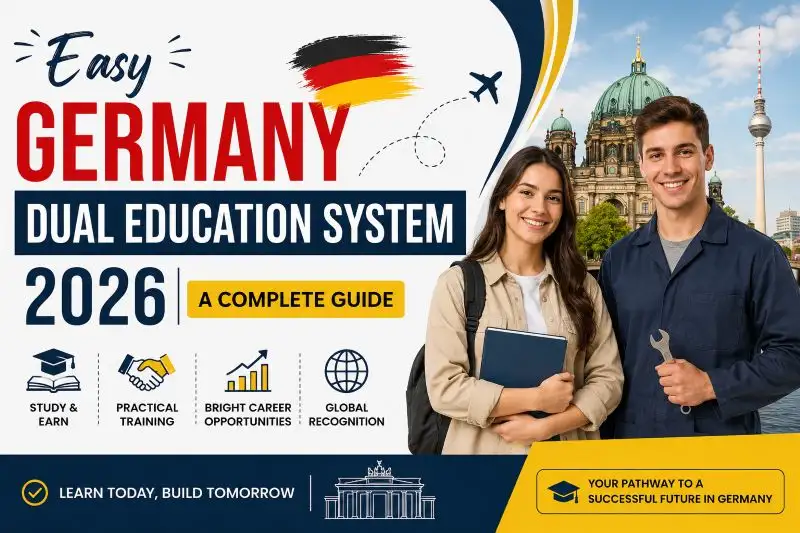
Looking for a career in Europe? Discover how the Germany Dual Education System combines practical work with theory. Get the ultimate 2026 guide here!
Introduction: Germany Dual Education System 2026
The Germany Dual Education System is widely recognized as one of the best vocational education systems in the world. Thousands of international students move to Germany every year to gain practical skills, quality education, and strong career opportunities through this unique training model. In 2026, the system remains highly popular because it offers affordable education, paid vocational training, and excellent employment prospects after graduation.
Unlike traditional education systems that focus mostly on classroom learning, the Germany Dual Education System combines academic study with hands-on workplace experience. Students attend vocational schools to learn theoretical subjects while also working directly with companies to gain practical knowledge. This balanced learning method helps students develop technical expertise, professional confidence, and real industry experience at the same time.
One of the biggest advantages of this system is that trainees usually receive a monthly salary during their education. This financial support helps many students manage their living expenses while studying in Germany. The system also improves job readiness because students graduate with practical work experience already included in their training.
For students seeking a career-focused and affordable education abroad, Germany provides an excellent pathway. In 2026, sectors like healthcare, engineering, IT, hospitality, and business are providing excellent career and training opportunities through the Germany Dual Education System.
What Is the Germany Dual Education System?
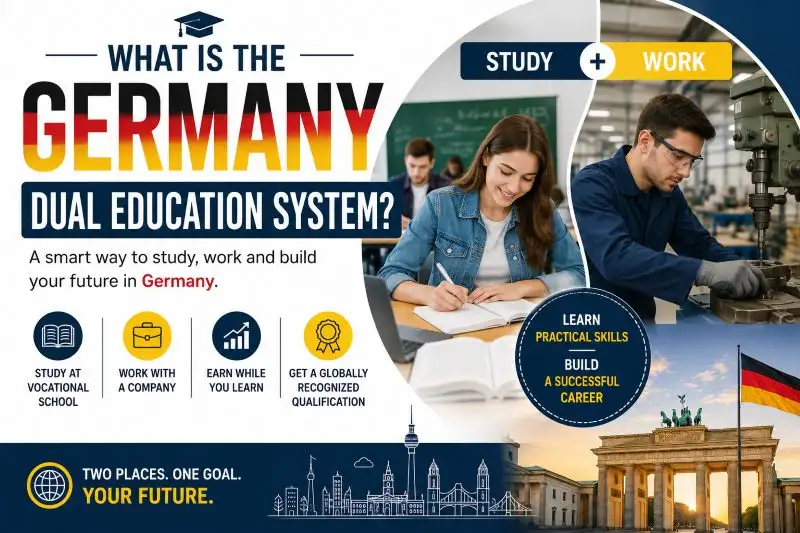
The German Dual VET System (Vocational Education and Training) is a globally recognized pathway that bridges the gap between classroom learning and real-world employment. By syncing education with industry needs, it ensures students graduate with both a qualification and highly relevant work experience.
Here is a closer look at how the model functions:
- The Dual Approach: The program splits a student’s week between two distinct environments. They spend roughly 30–40% of their time absorbing theoretical knowledge at a state-funded vocational school (Berufsschule) and the remaining 60–70% gaining hands-on experience at a participating company.
- Active Application: This structural split allows trainees to immediately test classroom concepts in a live corporate setting, turning abstract theory into practical competency.
- Earn While You Learn: Unlike traditional students, trainees enter a contractual agreement with an employer, meaning they receive a monthly stipend throughout their training.
- Standardized Quality: The entire framework is heavily backed and regulated by the federal government, trade unions, and chambers of commerce. This ensures that the certifications carry equal, respected weight nationwide.
Ultimately, this collaborative model keeps unemployment low by producing a highly skilled workforce tailored directly to market demands.
Why the Germany Dual Education System Is Popular in 2026
The popularity of the Germany Dual Education System continues to grow because it offers several advantages for local and international students.
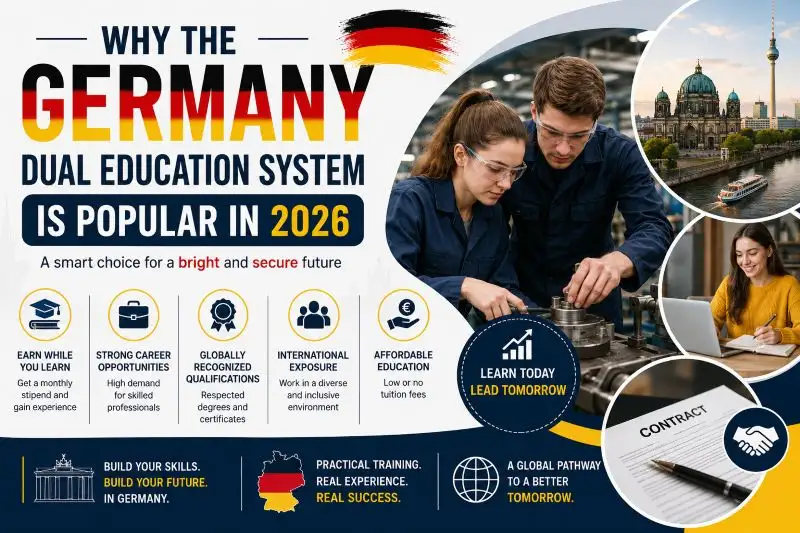
- Earn While Learning:One of the biggest benefits is that students receive a monthly salary during training. Depending on the profession and company, trainees can earn between €800 and €1,500 per month. This financial support helps students manage living expenses while studying in Germany.
- Strong Career Opportunities: Germany has a strong economy and a high demand for skilled workers. Many students receive permanent job offers from the companies where they complete their training. The Germany Dual Education System prepares students for direct employment after graduation.
- Affordable Education: Most dual vocational programs have little or no tuition fees. Compared to expensive university education in many countries, this system is highly affordable.
- International Recognition:German vocational qualifications are respected worldwide. Graduates often find employment opportunities in Europe and other international markets.
- Practical Experience:Students gain real-world work experience from the beginning of their education. This practical knowledge makes them more competitive in the job market.
How the Germany Dual Education System Works
The Germany Dual Education System usually lasts between 2 and 3.5 years depending on the profession.
Here is how the process works:
| Activity | Description |
|---|---|
| Vocational School | Students learn theory, technical subjects, and professional knowledge |
| Company Training | Students work under professional supervision and gain practical skills |
| Monthly Salary | Companies pay trainees during their training period |
| Final Examination | Students complete exams to receive official qualifications |
This structure helps students develop both academic and practical expertise.
Best Fields in the Germany Dual Education System
The Germany Dual Education System provides a wide range of vocational training opportunities across different industries. In 2026, several sectors remain highly popular among international students because of strong job demand, practical learning opportunities, and long-term career growth.
- Nursing and Healthcare:Germany still faces a growing demand for skilled healthcare workers, which has made nursing and healthcare education increasingly popular among international students. Students in this field often benefit from strong employment opportunities, competitive salaries, career stability, and favorable visa options after graduation.
- Information Technology (IT): The technology sector in Germany is expanding quickly, creating high demand for skilled IT professionals. Vocational programs in IT allow students to gain practical experience in areas such as software programming, cybersecurity, network management, and data analytics.
- Engineering and Technical Fields:Germany is internationally recognized for its engineering and industrial expertise. Technical vocational programs provide excellent career prospects in industries like mechanical engineering, electrical technology, and automotive systems.
- Hospitality and Tourism:The hospitality industry also offers promising opportunities for international students. Popular training areas include hotel operations, culinary studies, and restaurant management services.
- Business and Administration: Business-related vocational courses help students build important professional skills in office administration, communication, customer support, and organizational management, preparing them for careers in modern business environments.
Eligibility Requirements for the Germany Dual Education System
International students who want to join the Germany Dual Education System must fulfill several important eligibility conditions before applying for vocational training programs in Germany.
- Educational Qualifications: Applicants are generally required to have completed their secondary or high school education. Students must also provide academic certificates that are officially recognized or considered equivalent to German educational standards.
- German Language Proficiency: German language ability plays a major role in the application process because most vocational courses and workplace communication are conducted in German. In many cases, students need language skills between A2 and B1 level. However, certain sectors such as healthcare and nursing may require a higher proficiency level, including B2 certification.
- Age Criteria: Although there is no officially fixed age restriction for vocational training, the majority of international applicants are usually between 18 and 30 years old. Applicants within a younger age range are generally more likely to be selected for highly competitive vocational training programs.
- Medical and Character Requirements: Some vocational sectors, particularly healthcare-related programs, may request additional documents before admission. These can include medical fitness reports to confirm physical capability and police clearance certificates to verify good conduct.
Meeting these eligibility requirements can significantly improve the chances of acceptance into the Germany Dual Education System in 2026.
Documents Required for Application
To apply for the Germany Dual Education System, students usually need the following documents:
- Passport
- Academic certificates
- Updated CV or resume
- Motivation letter
- German language certificate
- Passport-sized photos
- Training contract from a German company
Proper documentation increases the chance of acceptance.
How to Apply for the Germany Dual Education System
Applying for the Germany Dual Education System requires careful planning and preparation. International students must complete several important steps to improve their chances of acceptance.
- Step 1: Learn the German Language: German language skills are very important because most vocational programs and workplace communication are conducted in German. Starting language preparation early can greatly increase application success.
- Step 2: Select a Suitable Vocational Course: Research different industries and choose a training program that matches your interests, qualifications, and long-term career goals.
- Step 3: Find a Training Company: Applicants must secure a training contract with a German company that offers vocational education. Opportunities can be found through company websites, online job portals, and vocational training platforms.
- Step 4: Prepare Application Documents: Create a professional CV and write a strong motivation letter specifically tailored to the chosen program and employer.
- Step 5: Complete the Interview Process: Many companies conduct online or virtual interviews to evaluate applicants’ communication skills and suitability.
- Step 6: Apply for a German Visa: After receiving the training contract, students can apply for a vocational training visa to begin their education in Germany.
Germany Dual Education System Visa Process
International students from countries outside the European Union must obtain a visa before starting vocational training in Germany under the Germany Dual Education System.
- Required Documents: Applicants generally need several important documents for the visa application process. These commonly include a valid passport, an official vocational training agreement from a German company, proof of German language ability, financial evidence, health insurance coverage, and a completed visa application form.
- Visa Processing Duration: The processing time for a German vocational training visa can vary depending on the country and embassy workload. In some cases, approval may take several weeks or even a few months. Because of this, students are advised to apply as early as possible to avoid delays.
- Residence Permit After Arrival: Once students arrive in Germany, they are usually required to register their address and apply for a residence permit through the local immigration office. This permit allows them to legally stay in Germany during their vocational training program.
Monthly Salary in the Germany Dual Education System
The Germany Dual Education System is attractive because trainees receive salaries during their studies.
Here is an estimated monthly income range in 2026:
| Profession | Average Monthly Salary |
|---|---|
| Nursing | €1,100 – €1,400 |
| IT Specialist | €1,000 – €1,300 |
| Hotel Management | €850 – €1,100 |
| Mechanical Technician | €1,000 – €1,400 |
| Retail and Business | €800 – €1,100 |
Salaries usually increase each year during training.
Cost of Living in Germany for Students
Although the Germany Dual Education System is affordable, students should understand living costs.
Average Monthly Expenses
| Expense | Estimated Cost |
|---|---|
| Accommodation | €300 – €600 |
| Food | €150 – €250 |
| Transportation | €50 – €100 |
| Health Insurance | €100 – €150 |
| Miscellaneous | €100 – €200 |
Many students can manage expenses using their training salary.
Benefits of the Germany Dual Education System
The Germany Dual Education System offers numerous advantages compared to traditional education systems.
- Practical Learning Environment: Students develop hands-on experience in real workplaces.
- Financial Support: Monthly salaries reduce financial pressure.
- Employment Opportunities: Graduates often receive immediate job offers.
- Permanent Residency Pathway: Skilled workers may qualify for long-term residence options in Germany.
- Industry Connections: Students build professional networks during training.
Challenges of the Germany Dual Education System
Although the Germany Dual Education System offers many advantages, international students may also face several challenges during their educational journey.
- German Language Difficulties: Good German communication skills are essential for both classroom learning and workplace training. Students who are not confident in the language may initially struggle with daily interactions and professional responsibilities.
- High Competition: Many vocational programs in Germany are highly popular, especially in fields like healthcare and IT. As a result, applicants often face strong competition for limited training positions.
- Managing Study and Work: The dual education model requires students to balance academic studies with practical job training. Managing academic studies alongside workplace training can occasionally be challenging and mentally exhausting for students.
- Cultural Adaptation: International students may also need time to adjust to German traditions, work ethics, and social environments. Understanding workplace culture and adapting to a new lifestyle can take patience and effort.
Despite these challenges, proper preparation and dedication can help students succeed in the Germany Dual Education System.
Best Cities for Vocational Training in Germany
Many cities in Germany are well known for offering excellent vocational training opportunities to international students through the Germany Dual Education System.
- Berlin: Berlin is a popular destination for students interested in information technology, digital media, and hospitality-related careers. The city’s modern business environment creates strong learning opportunities.
- Munich:Munich is recognized for its advanced engineering, automotive, and technology industries. It is an excellent choice for technical and industrial vocational training.
- Hamburg: Hamburg offers strong career possibilities in logistics, international trade, and business administration due to its major port and commercial activities.
- Frankfurt: Frankfurt is one of Germany’s leading financial centers and provides quality training programs in banking, finance, and corporate business sectors.
- Cologne: Cologne is widely chosen for vocational education in healthcare, tourism, and media-related industries.
Germany Dual Education System vs Traditional University Education
| Feature | Dual Education System | Traditional University |
|---|---|---|
| Practical Training | Yes | Limited |
| Salary During Study | Yes | Usually No |
| Tuition Fees | Low or Free | May vary |
| Career Readiness | High | Moderate |
| Duration | 2–3.5 Years | 3–5 Years |
The Germany Dual Education System is ideal for students who prefer practical learning and faster career entry.
Career Opportunities After Completing the Germany Dual Education System
Graduates have strong employment prospects in Germany.
- Full-Time Employment: Many trainees continue working for their training companies.
- Higher Education Opportunities: Students can later pursue advanced qualifications or university studies.
- Permanent Residence Opportunities: Skilled workers may become eligible for long-term residency after employment.
- International Career Growth: German vocational qualifications are valued internationally.
Tips for Success in the Germany Dual Education System
- Improve German Skills: Better communication increases academic and professional success.
- Be Professional: German workplaces value punctuality, discipline, and responsibility.
- Build Relationships: Networking with teachers and employers can create future opportunities.
- Stay Organized: Balancing study and work requires strong time management.
- Learn German Culture: Understanding workplace culture helps students integrate more easily.
Common Mistakes to Avoid
Students applying for the Germany Dual Education System should avoid these mistakes:
- Applying without German language preparation
- Submitting incomplete documents
- Ignoring visa requirements
- Choosing programs without career research
- Sending unprofessional CVs
Careful planning significantly improves success chances.
Is the Germany Dual Education System Worth It in 2026?
Yes, the Germany Dual Education System remains one of the best educational pathways for international students in 2026.
It offers:
- Affordable education
- Paid practical training
- High job demand
- Internationally recognized qualifications
- Opportunities for long-term settlement in Germany
For students seeking career-focused education without large financial burdens, this system provides an excellent solution.
Future of the Germany Dual Education System
Germany continues to invest heavily in vocational education. In 2026 and beyond, demand for skilled workers is expected to rise in:
- Healthcare
- Technology
- Renewable energy
- Engineering
- Logistics
International students will continue to play an important role in filling labor shortages across Germany.
The expansion of digital education, advanced workplace technology, and global hiring initiatives is making vocational training programs more accessible for international students.
Frequently Asked Questions About the Germany Dual Education System
Can international students apply for the Germany Dual Education System?
Yes, international students from many countries can apply if they meet language and educational requirements.
Is German language mandatory?
Yes, most programs require German language skills because classes and workplace communication are mainly in German.
Do students receive salaries?
Yes, trainees receive monthly payments from their training companies.
Can students stay in Germany after graduation?
Many graduates receive job offers and can continue living and working in Germany.
Is the Germany Dual Education System free?
Most vocational programs have very low or no tuition fees.
Conclusion
The Germany Dual Education System has become one of the most effective and career-focused educational models in 2026. Its unique approach combines academic learning with practical workplace training, allowing students to develop both theoretical knowledge and hands-on professional experience. This balanced system helps graduates become skilled workers who are fully prepared for modern industries and global job markets.
For international students, the program offers several major advantages. It provides affordable education, monthly training salaries, and excellent career opportunities after graduation. Instead of depending only on classroom study, students gain direct industry exposure while learning from experienced professionals in real work environments. This practical training significantly improves employability and career readiness.
Germany’s growing demand for skilled workers also makes vocational education an attractive option for students from around the world. Popular industries such as healthcare, engineering, information technology, hospitality, and business continue to offer strong career prospects through the dual education system. Many graduates receive full-time employment opportunities after completing their training programs.
In addition, the Germany Dual Education System can create pathways toward long-term professional growth and future settlement opportunities in Germany. For anyone looking for a cost-effective international education with practical experience and stable job prospects, this system remains an excellent choice for building a successful future in 2026 and beyond.