
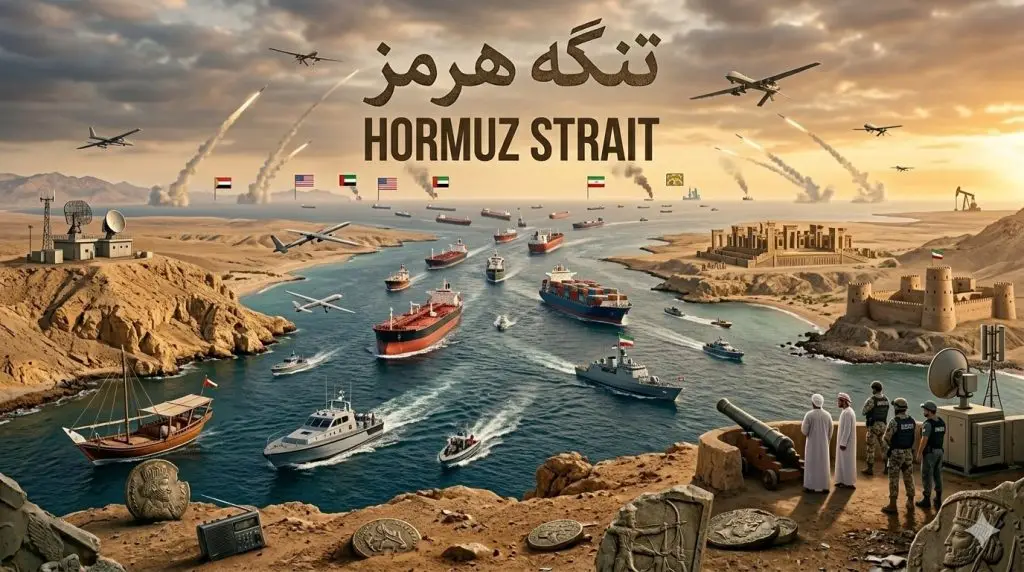
Explore how the Hormuz Strait shapes the Iran War 2026 and drives a looming global oil crisis, impacting supply routes, prices, and economic stability.
Introduction: Impact of Hormuz Strait on Global Oil Crisis
The escalation of the Iran War 2026 has intensified global concerns about energy security, geopolitical stability, and economic resilience. One of the most critical strategic locations affected by this conflict is the Hormuz Strait — a narrow but highly significant maritime chokepoint through which a large percentage of the world’s oil supply is transported.
Any disruption in this waterway immediately triggers volatility in global oil markets, supply chain instability, and fuel price spikes. As tensions between Iran and Western powers increase, the strategic importance of the Hormuz Strait becomes central to discussions about the global oil crisis and international trade stability.
This article provides an in-depth analysis of how the Iran War 2026 impacts the Hormuz Strait and why this corridor plays a decisive role in shaping the global oil economy.
What is the Hormuz Strait ?
Hormuz Strait is a narrow and highly strategic water passage that connects the Persian Gulf with the Gulf of Oman and the Arabian Sea. It plays a vital role in global trade because a large share of the world’s oil and liquefied natural gas shipments move through this route every day. Its location between southern Iran and the Arabian Peninsula makes it one of the most important maritime chokepoints in international commerce.
Because of its economic importance, any instability or conflict near the Hormuz Strait can quickly disrupt energy supplies and increase global oil prices. The heavy traffic of tankers and cargo ships passing through this narrow corridor highlights its significance for energy security, international shipping, and global economic stability.
Key Facts About the Hormuz Strait:
- It is recognized as one of the most critical routes for transporting oil across the world and plays a major role in global energy trade.
- Around 20%–30% of global seaborne oil trade passes through this strait.
- Major exporters including Saudi Arabia, Iraq, Kuwait, UAE, and Iran depend on it for shipping oil.
- Liquefied Natural Gas (LNG) shipments also transit through this route.
Because of its geographic location, any military confrontation involving Iran directly affects traffic in the Hormuz Strait.

Why the Hormuz Strait Matters in the Iran War 2026
During the Iran War 2026, intensified military operations, retaliatory strikes, and rising regional tensions significantly increase the risk of disruption around the Hormuz Strait. Any instability in this strategic waterway threatens global oil shipments, LNG transport, and commercial shipping routes. Because a large portion of the world’s energy trade passes through this narrow passage, conflict escalation can quickly trigger supply shortages, price spikes, insurance cost increases, and widespread economic uncertainty across international markets.
- Blockades or restricted shipping access – Temporary or partial closure of sea routes can interrupt oil transport and disrupt global trade.
- Missile threats targeting oil tankers – Attacks or threats against vessels create safety risks and increase uncertainty for commercial shipping.
- Naval confrontation between military forces – Direct clashes between naval units can escalate tensions and endanger maritime security.
- Cyberattacks on port and shipping infrastructure – Digital attacks on logistics systems and port operations can delay shipments and damage trade stability.
Iran has historically threatened to close or disrupt the Hormuz Strait during periods of conflict as a strategic countermeasure. Such a move would significantly disrupt global oil distribution.
The strategic leverage of the Hormuz Strait gives Iran both defensive and offensive bargaining power in geopolitical negotiations.
How the Iran War 2026 Affects Oil Transportation
The Iran War 2026 significantly disrupts global oil transportation by increasing risks around key shipping routes such as the Hormuz Strait. Military tensions, missile threats, and naval confrontations create delays for oil tankers and raise insurance and shipping costs. Possible blockades or attacks can reduce oil flow from Gulf countries, triggering supply shortages, market instability, and sharp increases in global fuel prices and transportation expenses worldwide.
1. Increased Shipping Risk
As military tension rises, commercial oil tankers face increased danger from:
- Drone attacks – Unmanned aerial vehicles can be used to target ships, ports, or coastal facilities and disrupt maritime activities.
- Missile strikes – Guided missile attacks may damage tankers, naval vessels, or infrastructure near key shipping routes.
- Naval interception – Military forces may stop or inspect vessels in strategic waters, increasing the risk of confrontation and delays.
- Explosions near maritime routes – Blasts close to shipping lanes can create danger for vessels and force temporary route closures.
Shipping companies may delay or reroute tankers to avoid entering high-risk zones. This leads to transport delays and supply shortages.
2. Insurance Premium Surge
When geopolitical instability escalates around the Hormuz Strait, maritime insurance companies classify the region as high risk.
Consequences include:
- Higher insurance costs for oil tankers – Risky conditions in conflict zones raise insurance premiums for vessels transporting oil.
- Increased shipping expenses – Security measures and route changes make transportation more expensive for global trade operations.
- Higher fuel prices for consumers – Rising transport and supply costs eventually lead to increased fuel prices for end users worldwide.
These additional costs are often transferred to global oil markets.
3. Possible Temporary Blockade
If Iran attempts to restrict navigation through the Hormuz Strait as part of its military strategy:
- Oil exports from Gulf countries could be interrupted – Conflict or disruption in key waterways may temporarily halt or delay crude oil shipments.
- Global supply chains would experience shock – Trade networks and industries worldwide could face sudden instability due to restricted energy flow.
- Oil prices could spike dramatically within hours – Market uncertainty and supply threats often trigger rapid increases in global oil prices.
Even a temporary blockade lasting a few days could create panic in financial markets.

Global Oil Market Reaction to Hormuz Strait Disruption
The impact of disruption in the Hormuz Strait during the Iran War 2026 would not remain limited to the region. Because a significant share of global oil and LNG shipments passes through this strategic waterway, any interruption would quickly affect international energy markets. Oil prices could surge, transportation costs would rise, and global supply chains may experience instability. Financial markets, import-dependent economies, and industries worldwide would feel the pressure from reduced energy availability and heightened geopolitical uncertainty.
1. Oil Price Volatility
Oil prices tend to react instantly to supply threats.
If supply through the Hormuz Strait decreases:
- Brent crude prices may surge – Supply concerns and geopolitical tensions can push international benchmark oil prices upward quickly.
- WTI prices could increase significantly – Disruptions in energy supply often lead to a sharp rise in West Texas Intermediate crude prices.
- Energy stock markets experience sharp fluctuations – Uncertainty in oil production and trade creates volatility in shares of energy-related companies.
Investors closely monitor developments around this region for early signals.
2. Inflation and Economic Pressure
Higher oil prices lead to:
- Increased transportation costs – Fuel supply disruptions and market instability raise the overall cost of moving goods and services.
- Higher production expenses – Industries face increased operational costs as energy prices rise during supply chain disruptions.
- Rising consumer fuel prices – Market uncertainty and reduced supply often lead to higher prices at fuel stations for consumers.
Countries that rely heavily on imported energy face inflationary pressure, reducing purchasing power and slowing economic growth.
3. Impact on Developing Economies
Developing nations are more vulnerable to energy price spikes.
Effects include:
- Higher electricity costs – Rising energy prices increase power generation expenses, leading to more expensive electricity for households and businesses.
- Increased food prices (due to transport expenses) – Higher fuel and shipping costs raise transportation expenses, which contribute to rising food prices.
- Budget deficits caused by fuel subsidies – Governments may face financial pressure when maintaining fuel subsidies during periods of high global energy prices.
Many countries depend on stable oil imports from the Gulf region, making the Hormuz Strait crucial to their economic stability.

Military Dynamics Around the Hormuz Strait
During the Iran War 2026, naval and air forces play a crucial role in maintaining control and security around the Hormuz Strait. Military assets are deployed to monitor shipping lanes, protect strategic interests, and deter potential attacks on vessels or infrastructure. Increased patrols, surveillance operations, missile defenses, and rapid response units help prevent escalation. At the same time, opposing forces may strengthen defensive positions, raising the risk of confrontation and further intensifying regional tensions.
1. Iranian Naval Strategy
Iran maintains naval assets near the Hormuz Strait, including:
- Missile-equipped speedboats – Small, fast naval vessels armed with missiles are used for rapid attacks and strategic defense in coastal waters.
- Coastal defense systems – Land-based military installations protect shorelines by monitoring and targeting approaching naval threats.
- Anti-ship missile capabilities – Advanced missile technology enables forces to strike enemy ships from land, sea, or air with precision.
- Submarine operations – Underwater vessels conduct surveillance, deterrence, and tactical missions to strengthen maritime defense strategies.
Iran’s strategy often focuses on asymmetric warfare to create deterrence.
2. U.S. and Allied Naval Presence
The United States and its allies typically maintain naval patrols in the Gulf to ensure maritime security.
Their objectives include:
- Protecting commercial shipping – Naval forces ensure the safety of trade vessels passing through strategic maritime routes.
- Deterring blockade attempts – Military presence helps prevent efforts to block or restrict access to important sea passages.
- Maintaining open navigation routes – Security operations aim to keep key waterways accessible for international trade and transportation.
Increased military presence can reduce disruption but also increases the risk of direct confrontation.
Energy Security Concerns During Iran War 2026
During the Iran War 2026, energy security becomes a major priority for governments as instability around the Hormuz Strait threatens global oil and gas supplies. Countries dependent on imports take emergency measures to secure alternative energy sources and stabilize domestic markets. Rising risks of supply disruption lead to higher fuel prices, strategic stockpiling, and policy adjustments. Ensuring uninterrupted energy flow is critical to preventing economic shocks, controlling inflation, and maintaining global industrial stability.
Countries Affected Most:
- China – Relies heavily on Middle Eastern oil imports, making it vulnerable to disruptions in regional supply routes.
- India – Depends on stable energy imports to support its growing economy and industrial development.
- Japan – Imports most of its energy resources, so any supply interruption impacts its energy security.
- South Korea – Requires consistent oil and gas imports to sustain manufacturing and economic growth.
- European Union nations – Depend on international energy markets, and disruptions can increase costs and affect economic stability across member states.
These economies depend on consistent oil supply through maritime trade routes.
Alternative Oil Routes if Hormuz Strait Is Disrupted
If traffic through the Hormuz Strait becomes unsafe during the Iran War 2026, countries and oil exporters may shift to alternative transportation routes. Pipelines that bypass the Strait, land-based export corridors, and expanded Red Sea shipping routes can help reduce dependence on this chokepoint. Governments may also increase storage capacity and diversify supply chains to maintain energy stability. However, these alternatives have limited capacity and cannot fully replace the volume normally transported through the Strait.
1. Saudi Pipeline Alternatives
Saudi Arabia uses pipelines that bypass the Hormuz Strait, transporting oil directly to the Red Sea to reduce disruption risks during regional conflicts or shipping instability.
However:
- Capacity is limited – The alternative pipeline systems can transport only a portion of total oil exports and have restricted throughput.
- It cannot fully replace Hormuz shipping volumes – These routes are unable to handle the massive daily oil trade that normally passes through the Hormuz Strait.
2. Increased Domestic Production
Oil-importing nations may:
- Increase domestic energy output – Countries expand local oil, gas, or power production to reduce dependence on unstable international supply routes.
- Invest in renewable energy – Governments develop solar, wind, and other clean energy sources to improve long-term energy security.
- Accelerate strategic petroleum reserves usage – Nations release stored oil reserves to stabilize markets and manage temporary supply disruptions.
These measures reduce short-term dependence on the Strait.
Long-Term Impact on Global Energy Policy
The Iran War 2026 and uncertainty surrounding the Hormuz Strait may accelerate long-term energy transitions.
Possible Outcomes:
- Faster investment in renewable energy – Governments and businesses accelerate the development of solar, wind, and other clean energy sources to reduce reliance on oil imports.
- Increased diversification of energy supply chains – Countries expand their energy partnerships and import sources to minimize risk from disruptions in a single region.
- Expansion of liquefied natural gas infrastructure – Investments in LNG terminals and transport systems improve flexibility in global gas supply.
- Strategic oil stockpiling by governments – Nations store additional oil reserves to protect their economies against sudden supply shocks and price spikes.
Geopolitical risk often encourages energy independence strategies.
Financial Market Reactions to Hormuz Strait Tensions
Global financial markets respond strongly to disruptions in oil transit routes.
Stock Market Impact:
- Energy sector stocks may rise – Oil and gas companies often gain value when supply disruptions increase energy prices.
- Airline and transportation stocks may decline – Higher fuel costs and travel restrictions can reduce profits and lower stock performance in these industries.
- Defense industry stocks may increase – Military spending and security concerns typically boost demand for defense equipment and services.
Currency Impact:
- Oil-exporting nations’ currencies may strengthen – Higher global oil prices increase export revenues, supporting the value of currencies in producing countries.
- Import-dependent countries may face currency pressure – Nations that rely on energy imports may experience currency depreciation due to rising trade costs and external financial strain.
Investors track developments in the Hormuz Strait carefully during conflict periods.
Humanitarian and Environmental Risks
Military confrontation in the Hormuz Strait poses environmental risks:
- Oil spills from damaged tankers – Military attacks or accidents can release crude oil into the sea, causing environmental contamination.
- Marine ecosystem damage – Spilled oil and explosions harm fish, coral reefs, and other marine life in affected waters.
- Pollution affecting coastal communities – Contaminated water and shoreline damage disrupt local livelihoods, fishing activities, and public health.
A major accident could create long-term environmental damage in the Persian Gulf region.
Humanitarian concerns also rise if fuel shortages affect electricity and essential services.
Can the Hormuz Strait Be Fully Closed?
In practice, completely closing the Hormuz Strait is difficult because:
- It is internationally monitored – Global maritime organizations and security forces keep close observation to ensure safe passage through the waterway.
- Naval forces patrol the region – Military ships from different countries operate in the area to protect shipping and maintain stability.
- Global powers oppose permanent closure – Major nations reject any long-term shutdown because it would severely disrupt international trade and energy supplies.
However, temporary disruption through military escalation or sabotage remains a realistic risk during the Iran War 2026.
Future Scenarios for the Hormuz Strait
Scenario 1: Escalation and Partial Disruption
Continued conflict leads to periodic disruptions and supply instability.
Scenario 2: International Mediation
Diplomatic intervention ensures safe passage for commercial shipping while tensions remain high.
Scenario 3: Rapid De-escalation
Ceasefire agreements reduce military threats, restoring confidence in oil markets.
Conclusion: Hormuz Strait
The Hormuz Strait stands at the center of global energy security during the Iran War 2026. Its strategic location makes it one of the most influential maritime corridors in the world.
Any instability around this waterway directly influences oil prices, global inflation, shipping insurance, and international trade stability. As long as tensions remain high, uncertainty in the region will continue to shape the global oil crisis.
For governments, businesses, and investors, monitoring developments in the Hormuz Strait is essential to understanding future economic risks and geopolitical shifts.