
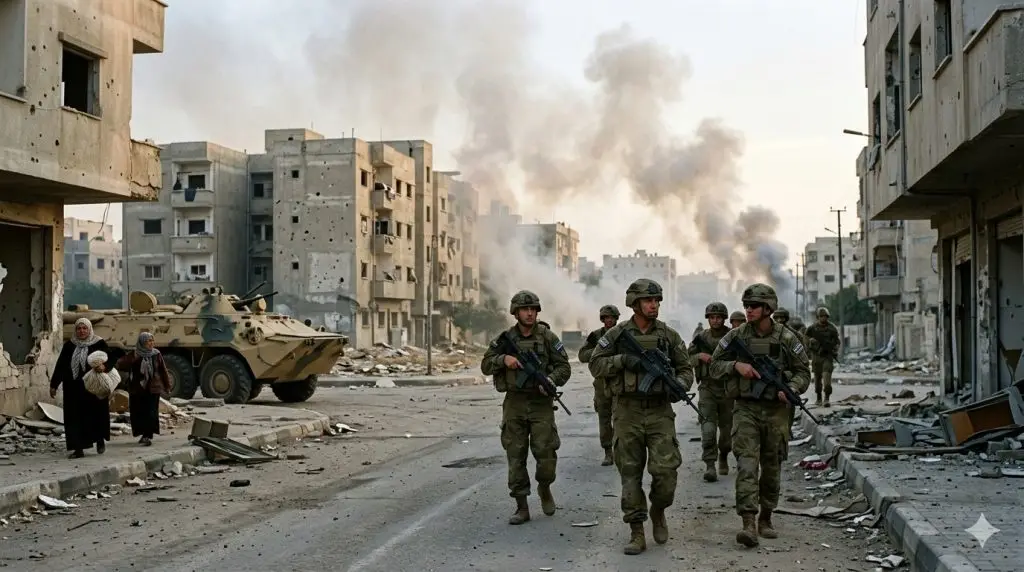
Iran War 2026 intensifies after US-Israel strikes on Iran, triggering retaliation, regional tensions, oil market shocks, and global diplomatic crisis.
Introduction: Iran War 2026
The Iran War 2026 marks a pivotal moment in modern geopolitical history. A highly coordinated military offensive by the United States and Israel launched at the end of February 2026 has dramatically intensified tensions across the Middle East, leading to one of the most severe escalations since World War II. What began as mounting distrust over nuclear ambitions and regional influence quickly spiraled into a direct confrontation involving large-scale air campaigns, retaliatory strikes, national leadership assassinations, and widespread fear of a broader regional war.
The consequences of this conflict are not confined to the Middle East. The crisis has reverberated across global energy markets, trade routes, diplomacy, and multinational alliances. This article provides an in-depth analysis of the Iran War 2026, its origins, key actors, domestic and international responses, and the near-term prospects for peace or further escalation.
Origins of the Iran War 2026
Tensions Over Nuclear Capabilities and Regional Influence
Tensions between Iran and Western powers, particularly the United States and Israel, have rooted in decades of mistrust. Iran’s nuclear programme, ballistic missile development, and influence over proxy groups like Hezbollah in Lebanon and Houthi forces in Yemen have long been perceived by Israel and its allies as existential threats.
Diplomatic overtures and negotiations took place in late 2025 and early 2026 in attempts to prevent confrontation, but these talks failed to bridge key gaps, particularly over Iran’s enrichment levels and inspections by the International Atomic Energy Agency (IAEA). As diplomatic efforts unraveled, mutual threats and military buildups heightened the risk of open conflict.
Operation Epic Fury / Lion’s Roar
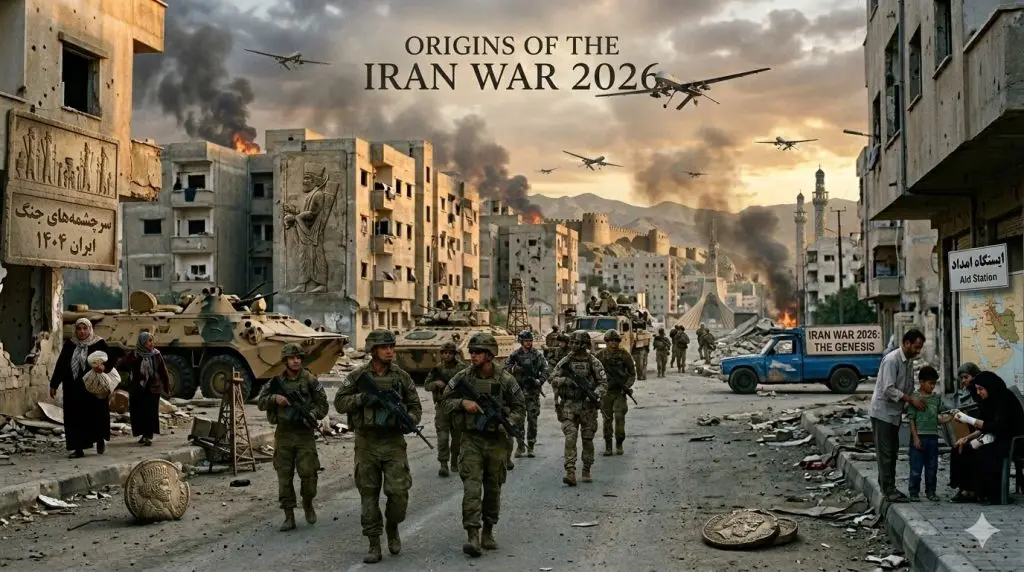
On February 28, 2026, the United States and Israel initiated a coordinated military offensive in Iran. This campaign — dubbed Operation Epic Fury by U.S. officials and Operation Lion’s Roar by Israel — involved massive aerial bombardments targeting key military, nuclear, and political infrastructure across major Iranian cities including Tehran, Isfahan, Natanz and Fordow.
According to official reports, the operation’s primary objectives were:
- To degrade Iran’s nuclear and ballistic missile capabilities.
- To disrupt command and control structures of the Islamic Revolutionary Guard Corps (IRGC).
- To remove senior leadership deemed responsible for threatening regional and global security.
The strikes were among the most extensive offensive actions taken against Iran in modern history and set the stage for subsequent retaliation.
Major Turning Point: Death of Iran’s Supreme Leader
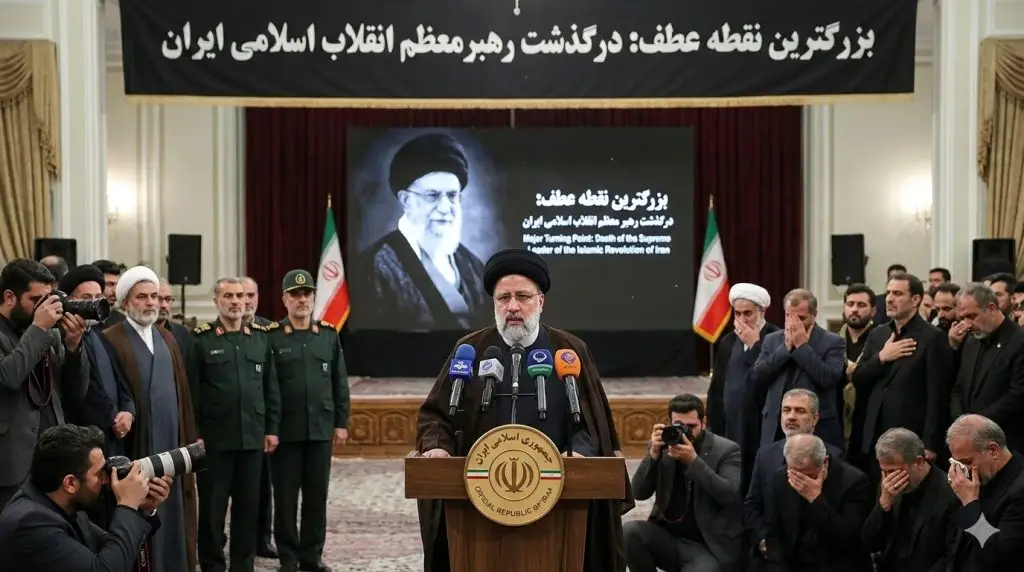
One of the most dramatic developments in the Iran War 2026 was the confirmed killing of Ayatollah Ali Khamenei, Iran’s Supreme Leader and the central authority of the Islamic Republic’s political and religious establishment. Iranian state media and international outlets reported that Khamenei was killed in the February 28 joint U.S.-Israeli strike, triggering a 40-day mourning period and deep shockwaves throughout Iranian society.
Khamenei’s death — the first time a head of state has been killed in a multinational military offensive involving their own country’s territory — represents a monumental shift. The power vacuum has immediately raised questions about:
- Continuity of command within Iran’s government and military.
- Succession arrangements in a highly centralized religious state.
- The potential for internal political fragmentation or radicalization.
Iranian President Masoud Pezeshkian publicly vowed revenge, underscoring a stance that could move the conflict from conventional retaliation to a potentially protracted struggle.
Iran’s Retaliation and Regional Escalation
Missile and Drone Strikes Across the Middle East
Within hours of the U.S.-Israeli offensive, Iran launched a series of retaliatory attacks. These included ballistic missiles, drones, and long-range assaults targeting several nations and military bases hosting U.S. forces across the Gulf region. According to reports, Iranian strikes reached:
- Israeli cities, including Tel Aviv and northern targets.
- United States military bases and facilities across Jordan, Iraq, Kuwait, Qatar, Saudi Arabia, and the United Arab Emirates.
The retaliation extended beyond direct military installations. Iranian forces reportedly struck critical infrastructure in Dubai and Kuwait, compelling nations to declare emergencies, close airspace, and suspend flights. These actions caused disruptions in global aviation and economic activity.

Proxy Engagement and Wider Conflict Risks
Iran’s regional allies and proxy groups have also signalled increased mobilisation. Groups like Hezbollah in Lebanon and Houthi forces in Yemen have been cited as potential contributors to a broader intensification of hostilities, indicating that the Iran War 2026 may not be confined to direct U.S.–Israel–Iran engagements but could expand into asymmetric warfare across multiple fronts.
International Reactions and Diplomatic Implications
The Iran War 2026 has provoked diverse and often conflicting global reactions:
Global Powers and United Nations Response
At an emergency United Nations Security Council meeting, world leaders sharply debated the legality and humanitarian implications of the strikes. UN Secretary-General António Guterres condemned all acts of violence, warning that ongoing escalation could plunge the world into broader conflict and violate international law.
Russia and China issued statements critical of the U.S.-Israeli operation, advocating de-escalation and cautioning against further military actions. By contrast, Western allies like the United Kingdom, France, and Germany expressed concern over instability while also emphasising the need for diplomatic engagement.
Regional Reactions
Arab states in the Gulf, some aligned with U.S. interests, find themselves in a delicate balance. Most have closed airspace and prepared defensive positions, but many express worry that their territories could be drawn into wider conflict. Meanwhile, non-aligned regional actors like Turkey and Qatar have cautiously emphasised diplomacy to prevent further catastrophe.
Humanitarian and Economic Toll
Civilian Casualties and Displacement
The escalation has already caused significant civilian suffering. Reports indicate hundreds of Iranians have been killed in bombardments, and many more have been injured or displaced. Attacks on civilian infrastructure, including in cities like Minab, highlight the increasing toll on non-combatant populations.
Global Economy and Oil Markets
The Iran War 2026 has triggered broad economic disruptions:
- Global oil markets have become highly volatile due to threats to shipping lanes, especially the strategic Strait of Hormuz — through which a substantial share of the world’s oil supplies transit.
- International airlines have cancelled hundreds of flights and rerouted aviation traffic to avoid conflict zones, affecting global mobility and commerce.
Fuel price instability and logistical disruptions could have cascading impacts on inflation, supply chains, and national economies worldwide.
Domestic Consequences Inside Iran
Political Vacuum and Uncertainties
The death of a leader as central as Khamenei has profound implications for domestic governance. Iran is now facing:
- A leadership transition under an emergency governing council.
- Heightened political uncertainty contributing to instability within the government apparatus.
- The risk of factional struggles between conservatives, hardliners, and moderate factions seeking to fill the power vacuum.
Public Sentiment and Opposition Dynamics
Widespread domestic protests that began in 2025 over economic hardship and political repression had already weakened popular confidence in the regime. The war may intensify public frustration, particularly if casualties mount, public services are disrupted, and military conscription expands.
Analysis — Why Iran War 2026 Matters
The Iran War 2026 represents not only a major military confrontation but an inflection point in global governance, international law, and geopolitical alliances. The following factors highlight why this conflict is pivotal:
1. Shift in Warfare Norms
The targeted killing of a sitting sovereign leader during active hostilities introduces a new precedent in modern warfare, raising questions about legal justification, sovereignty rights, and future military doctrines.
2. Realignment of Alliances
The crisis has revealed deep divisions among global powers — particularly between Western alliances and countries like Russia and China — potentially reshaping international geopolitics for years.
3. Energy Security Risks
Disruptions to the Strait of Hormuz and Gulf energy infrastructure threaten global energy security, potentially driving up fuel costs, increasing inflationary pressures, and forcing economies to seek alternative supplies and routes.
4. Potential for Broader War
Iran’s deep proxy networks across the region mean the conflict could stretch beyond territorial boundaries, involving non-state actors and secondary wars in Lebanon, Yemen, Iraq, and even influencing relations with NATO and other blocs.
Future Scenarios for Iran War 2026
As the Iran War 2026 unfolds following recent U.S.–Israeli strikes and Iranian retaliation, analysts outline several key future scenarios shaping the conflict’s trajectory. One possibility is a broader regional escalation, where continued hostilities intensify and involve proxy forces across the Middle East, threatening Gulf shipping routes and global energy markets. Another scenario envisions a negotiated ceasefire and diplomatic settlement that stabilizes tensions through international mediation.
Alternatively, the war could settle into a prolonged stalemate, with periodic flare-ups and no decisive victory, straining political alliances and economic systems. A final possibility includes internal political shifts within Iran, where leadership changes or regime pressures influence the war’s direction and potential resolutions. Each scenario carries profound implications for regional stability and global security.
Scenario 1 — Escalation Into Full Regional War
If Iran continues aggressive retaliation and Western powers maintain offensive pressure, the conflict could intensify into a multi-year regional war involving state actors, proxy groups, and potential indirect confrontations between global powers.
Scenario 2 — Negotiated Settlement
Diplomatic efforts through neutral states or institutions could lead to a ceasefire and negotiation framework. A high-stakes diplomatic track may incorporate security guarantees, nuclear limits, and gradual de-escalation, though this requires significant compromise from all parties.
Scenario 3 — Stalemate and Frozen Conflict
Conflict could plateau into a prolonged stalemate with intermittent hostilities, similar to Cold War dynamics, where neither side achieves decisive victory but ongoing tensions persist.
Conclusion: A World on Edge
The Iran War 2026 has reshaped global geopolitics and demonstrated how swiftly diplomatic tensions can escalate into open conflict. From the unexpected death of Iran’s Supreme Leader to the involvement of major world powers, this conflict underscores the fragility of peace and the immense human and economic costs of war.
The path forward remains uncertain, and the world watches nervously as leaders, diplomats, citizens, and analysts grapple with a crisis that will shape the future of the Middle East and global stability for decades to come.