
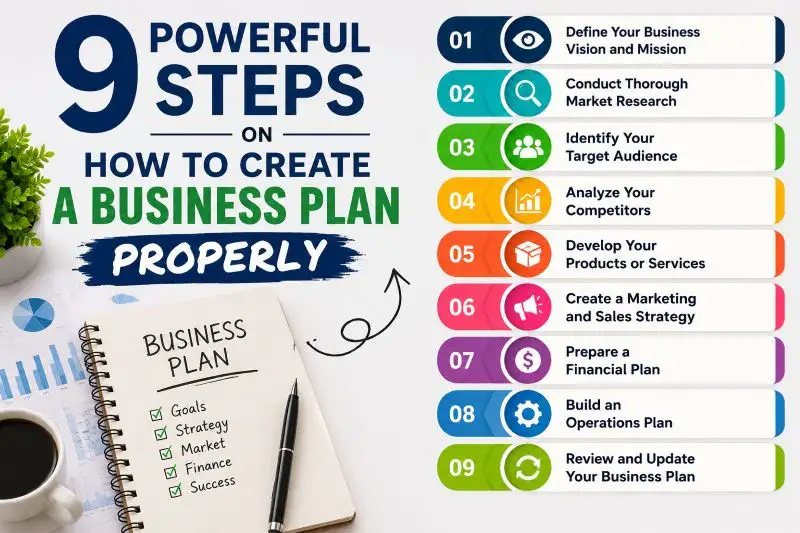
Learn How to Create a Business Plan with 9 powerful steps. Build a clear, effective strategy to attract investors and grow your business successfully.
Introduction: How to Create a Business Plan Properly
Learning How to Create a Business Plan is one of the most important steps toward building a successful business. Whether you’re starting a small business, launching a startup, or expanding an existing company, a well-written business plan provides a clear roadmap for achieving your goals. It outlines your business idea, target market, financial projections, marketing strategies, and long-term objectives in one organized document.
Many entrepreneurs have excellent business ideas but struggle because they lack a structured plan. Without proper planning, it becomes difficult to secure funding, manage business operations, or measure progress. A comprehensive business plan helps you make informed decisions, identify potential risks, and prepare effective solutions before challenges arise.
A business plan is not only useful for business owners but also for investors and lenders. Financial institutions often require a professional business plan before approving loans or investments. A clear and detailed plan demonstrates that you understand your industry and have a realistic strategy for growth.
In this guide, you’ll discover 9 powerful steps on How to Create a Business Plan properly. These practical strategies will help you organize your ideas, build a strong foundation, and increase your chances of long-term business success.

Why a Business Plan Is Important
Before learning How to Create a Business Plan, it’s essential to understand why this document plays such a critical role in business success.
A business plan serves as a blueprint for your company. It explains your objectives, outlines your strategies, and helps you stay focused as your business grows. Rather than making decisions based on guesswork, you can rely on a structured plan to guide every stage of your journey.
Some key benefits of having a business plan include:
- Provides a clear direction for your business.
- Helps attract investors and secure funding.
- Identifies potential risks and opportunities.
- Improves financial planning and budgeting.
- Supports better decision-making.
- Measures business performance over time.
- Builds confidence among partners and stakeholders.
Another major advantage is that a business plan encourages you to think carefully about every aspect of your business before investing significant time and money. It helps you evaluate whether your business idea is practical, profitable, and capable of meeting market demand.
Remember that a business plan is not a one-time document. As your business evolves, you should update your plan regularly to reflect new goals, market changes, and business growth.

Step 1: Define Your Business Vision and Mission
The first step in understanding How to Create a Business Plan is defining your business vision and mission. These statements provide direction and help communicate your company’s purpose to customers, employees, and investors.
Create a Clear Vision Statement
A vision statement describes where you want your business to be in the future. It should inspire growth while giving your organization a long-term goal.
Ask yourself questions such as:
- What do I want my business to achieve?
- Where do I see my company in five or ten years?
- How will my business make a positive impact?
Your vision should be ambitious but realistic enough to guide future planning.
Develop a Strong Mission Statement
While the vision focuses on the future, the mission explains your business’s current purpose. It describes what your company does, who it serves, and how it delivers value.
An effective mission statement should answer:
- What products or services do we provide?
- Who are our customers?
- What makes our business unique?
- What value do we offer?
Keep your mission concise, clear, and easy to understand.
Set Measurable Business Goals
Once your vision and mission are established, create specific business goals that support them.
Your goals should be:
- Specific
- Measurable
- Achievable
- Relevant
- Time-bound
For example:
- Launch the business within six months.
- Reach 500 customers during the first year.
- Increase annual revenue by 20%.
- Expand into new markets within three years.
Having measurable objectives makes it easier to monitor progress and evaluate success.

Step 2: Conduct Market Research
Another essential step in How to Create a Business Plan is conducting detailed market research. Understanding your industry helps you identify customer needs, recognize market trends, and position your business effectively. Market research reduces uncertainty and helps you make informed business decisions based on real data rather than assumptions.
Understand Your Industry
Begin by studying your industry carefully. Consider questions such as:
- Is the industry growing?
- What trends are shaping the market?
- What challenges could affect your business?
- Are there seasonal demand changes?
Reliable industry knowledge helps you develop realistic strategies.
Analyze Customer Needs
Successful businesses solve customer problems. Research what your potential customers want by using:
- Online surveys
- Customer interviews
- Social media discussions
- Product reviews
- Industry reports
Understanding customer preferences allows you to create products or services that meet real market demand.
Study Market Trends
Consumer behavior changes over time. Stay updated by monitoring:
- New technologies
- Economic conditions
- Consumer preferences
- Industry innovations
- Competitor activities
Businesses that adapt quickly often gain a competitive advantage.
Gather Reliable Data
Use trustworthy information sources such as:
- Government reports
- Industry publications
- Market research firms
- Business associations
- Customer feedback
Accurate research strengthens your business plan and improves your credibility with investors.
Step 3: Identify Your Target Audience
An essential part of learning How to Create a Business Plan is identifying the customers who are most likely to buy your products or services. Instead of trying to appeal to everyone, focus on a specific audience whose needs match your business offerings. Understanding your target market helps you create effective marketing strategies and build stronger customer relationships.
Define Your Ideal Customer
Gather information about your potential customers, including:
- Age
- Gender
- Income level
- Education
- Occupation
- Location
- Family status
These details help you create a clear customer profile.
Understand Customer Behavior
Learn how your audience makes purchasing decisions by researching:
- Buying habits
- Personal interests
- Lifestyle preferences
- Spending patterns
- Preferred shopping methods
This knowledge allows you to develop products and promotions that better meet customer expectations.
Identify Customer Needs
Ask yourself the following questions:
- What challenges or needs are my potential customers looking to address?
- In what ways does my product or service meet my customers’ needs or solve their problems?
- What makes my business different from competitors?
Create Customer Personas
Develop fictional profiles that represent your ideal customers. Include details such as their age, occupation, goals, challenges, and buying behavior. These personas help guide your product development, marketing campaigns, and customer service strategies.
Clearly identifying your target audience enables you to deliver greater value, attract loyal customers, and build a stronger foundation for long-term business success.
Step 4: Analyze Your Competitors
A successful business plan is not only about understanding your own company but also about knowing who your competitors are. One of the most important parts of How to Create a Business Plan is conducting a thorough competitor analysis. This process helps you identify market gaps, improve your products or services, and develop strategies that give your business a competitive advantage.
Instead of viewing competitors as obstacles, consider them valuable sources of information. Studying their strengths and weaknesses can help you make better business decisions and avoid common mistakes.
Identify Your Main Competitors
Begin by listing businesses that offer products or services similar to yours. These competitors may operate locally, nationally, or online.
Pay attention to factors such as:
- Product or service quality
- Pricing strategies
- Customer reviews
- Brand reputation
- Marketing channels
- Website and social media presence
- Customer service
This research provides useful insights into what customers appreciate and where competitors may be falling short.
Discover Your Competitive Advantage
After analyzing your competitors, determine what makes your business unique.
Ask yourself:
- What problem does my business solve better?
- What value do I offer that competitors do not?
- Why should customers choose my brand?
Your competitive advantage might include:
- Higher product quality
- More affordable pricing
- Faster delivery
- Exceptional customer support
- Innovative features
- Personalized services
Highlighting these strengths within your business plan demonstrates how your company can stand out in a competitive marketplace.
Monitor Industry Changes
Competitor analysis should be an ongoing activity rather than a one-time task.
Regularly monitor:
- New product launches
- Pricing changes
- Customer feedback
- Marketing campaigns
- Industry trends
Keeping up with market developments allows you to adapt your strategies and maintain a competitive edge.
Step 5: Develop Your Products or Services
An important step in understanding How to Create a Business Plan is clearly explaining the products or services your business will provide. A detailed description helps investors, lenders, and customers understand how your offerings solve problems and deliver value. It also shows that you have carefully planned your business strategy.
Describe Your Products or Services
Provide clear information about what your business offers, including:
- Main features
- Key customer benefits
- Quality standards
- Pricing approach
- Target market
- Product or service lifecycle
Use simple language to explain how your offerings meet customer needs instead of relying on technical terms.
Focus on Customer Benefits
Rather than listing only features, explain how your products improve customers’ lives. Highlight the practical advantages your business provides, such as saving time, reducing costs, increasing convenience, or solving specific problems. This approach makes your business plan more convincing and customer-focused.
Plan for Future Growth
Show how your business can expand by considering:
- Introducing new products or services
- Adding advanced features
- Entering new markets
- Enhancing customer support
- Offering subscription or membership options
Protect Your Business Assets
If your business has unique ideas or innovations, explain how you will protect them through:
- Trademark registration
- Patent applications
- Copyright protection
- Confidential business practices
A well-developed product or service strategy demonstrates long-term potential and strengthens the overall quality of your business plan.
Step 6: Create a Marketing and Sales Strategy
A business cannot grow without customers. That is why developing a strong marketing and sales strategy is a crucial part of How to Create a Business Plan. This section explains how you will attract potential customers, generate sales, and build lasting relationships.
Your marketing plan should focus on reaching the right audience with the right message at the right time.
Build a Strong Marketing Strategy
Start by identifying the marketing channels that best suit your target audience.
Popular options include:
- Search engine optimization (SEO)
- Content marketing
- Social media marketing
- Email marketing
- Pay-per-click advertising
- Influencer partnerships
- Video marketing
Using a combination of channels can help increase brand awareness and drive consistent traffic to your business.
Develop Your Brand Identity
A memorable brand helps customers recognize and trust your business.
Your brand identity should include:
- Business name
- Logo
- Brand colors
- Tone of voice
- Mission and values
- Unique selling proposition
Consistency across your website, social media, and promotional materials strengthens your brand image and builds customer confidence.
Create an Effective Sales Plan
Your sales strategy should explain how customers will purchase your products or services.
Include information about:
- Sales channels
- Pricing model
- Payment options
- Customer support
- Delivery methods
- Follow-up communication
A clear sales process improves customer satisfaction and increases conversion rates.
Set Realistic Marketing Goals
Establish measurable objectives that align with your overall business strategy.
Examples include:
- Increase website traffic by 30% within six months.
- Gain 2,000 social media followers in one year.
- Generate 500 qualified leads each quarter.
- Improve customer retention by 20%.
Tracking these goals allows you to evaluate marketing performance and make data-driven improvements.
Measure Your Results
Marketing should never rely on guesswork. Monitor important performance indicators such as:
- Website visitors
- Conversion rates
- Customer acquisition cost
- Return on investment (ROI)
- Email open rates
- Social media engagement
- Customer satisfaction
Analyzing these metrics helps you identify successful campaigns and refine strategies for better results.
Step 7: Prepare a Financial Plan
A financial plan is one of the most critical sections when learning How to Create a Business Plan. It demonstrates that your business idea is financially viable and provides a clear picture of how you expect the company to generate revenue and manage expenses. Investors and lenders often review this section carefully before deciding whether to support your business.
Estimate Startup Costs
Begin by calculating the initial investment required to launch your business. Your startup budget may include:
- Business registration fees
- Equipment and machinery
- Office or store rent
- Inventory purchases
- Website development
- Marketing and advertising
- Employee salaries
- Insurance and licenses
Accurate cost estimates help you determine how much funding you need before operations begin.
Prepare Revenue and Expense Forecasts
Estimate how much income your business expects to earn over the first one to three years. At the same time, calculate regular operating expenses such as rent, salaries, utilities, inventory, and marketing.
Your financial projections should include:
- Monthly sales estimates
- Operating expenses
- Gross profit
- Net profit
- Cash flow projections
Using realistic figures instead of overly optimistic assumptions will make your business plan more credible.
Determine Your Funding Requirements
If you need outside funding, clearly explain:
- How much money you require.
- How the funds will be used.
- Expected return on investment.
- Repayment strategy, if applicable.
Providing detailed financial information increases investor confidence and improves your chances of securing financial support.
Step 8: Build an Operations Plan
Another important step in How to Create a Business Plan is creating an operations plan. This section explains how your business will function on a daily basis, ensuring that products or services are delivered efficiently while maintaining high quality. A well-structured operations plan shows that your business is organized and prepared for long-term success.
Describe Daily Business Activities
Explain the processes involved in running your business, including:
- Product sourcing or manufacturing
- Inventory management
- Customer service
- Order processing
- Shipping and delivery
- Quality control
Clearly outlining these activities helps demonstrate operational efficiency.
Define Your Team Structure
Introduce the people responsible for managing your business.
Include information such as:
- Business owner
- Management team
- Department leaders
- Employees
- External consultants or advisors
Briefly describe each person’s responsibilities and relevant experience.
Choose the Right Business Location
If your business operates from a physical location, explain why it is suitable.
Consider factors such as:
- Accessibility
- Customer traffic
- Rental costs
- Nearby competitors
- Transportation
- Available facilities
Online businesses can describe their digital infrastructure, including website platforms, software, and cloud-based systems.
Plan for Business Growth
An operations plan should also address future expansion.
Possible growth strategies include:
- Hiring additional employees.
- Opening new locations.
- Expanding product lines.
- Entering new markets.
- Automating business processes.
- Investing in new technology.
Planning ahead helps ensure your business can grow without disrupting daily operations.
Step 9: Review and Update Your Business Plan
The final step in How to Create a Business Plan is reviewing and updating it regularly. A business plan should never remain unchanged because markets, customer preferences, and business goals evolve over time. Treat your business plan as a living document that guides decision-making throughout your company’s journey.
Review Your Goals
Regularly compare your actual performance with your original objectives.
Ask yourself:
- Have sales targets been achieved?
- Are expenses within budget?
- Have customer needs changed?
- Are marketing strategies producing results?
This evaluation helps identify areas requiring improvement.
Update Market Information
Industries change constantly, making it essential to refresh your research.
Review:
- Competitor activities
- Industry trends
- Customer behavior
- Pricing strategies
- Economic conditions
Keeping your business plan current ensures it remains relevant and effective.
Improve Based on Results
Use real business data to strengthen your strategy.
Adjust areas such as:
- Marketing campaigns
- Pricing
- Financial forecasts
- Product offerings
- Customer service
- Operational processes
Continuous improvement allows your business to remain competitive and adapt to changing market conditions.
Frequently Asked Questions (FAQs)
1. What is a business plan? A business plan is a detailed document that explains your business objectives, target audience, products or services, marketing approach, financial forecasts, and operational strategy. It serves as a guide for starting, managing, and growing a successful business.
2. Why is having a business plan important? A business plan helps you set clear goals, evaluate risks, attract investors, secure funding, and make informed business decisions while tracking your overall progress.
3. What is the ideal length for a business plan?The length varies depending on your business needs. Most small business plans are 15–30 pages, while plans prepared for investors may require additional detail.
4. Can beginners write a business plan? Yes. With proper research and a structured approach, even first-time entrepreneurs can create a professional business plan.
5. What should every business plan include? Essential sections include an executive summary, business overview, market analysis, products or services, marketing strategy, operations plan, financial plan, and growth objectives.
Conclusion
Learning How to Create a Business Plan is one of the most valuable investments you can make as an entrepreneur. A well-prepared business plan provides a clear direction, helps you make informed decisions, and improves your ability to manage risks while pursuing long-term growth.
By following these nine powerful steps, you can transform your business idea into a practical strategy that attracts customers, builds investor confidence, and supports sustainable success. Start by defining your vision, researching your market, and understanding your target audience. Then strengthen your plan through competitor analysis, product development, marketing strategies, financial planning, and efficient operations.
Remember that a business plan is not a one-time document. Review it regularly, monitor your progress, and make adjustments as your business evolves. Staying flexible and responsive to market changes will help you remain competitive and achieve your goals.
Whether you are launching your first startup or expanding an existing company, taking the time to create a thoughtful and detailed business plan will increase your chances of long-term success. Apply these strategies with confidence, stay committed to continuous improvement, and build a strong foundation for a thriving business.
Quick Recap: 9 Powerful Steps on How to Create a Business Plan Properly
- Define your business vision and mission.
- Conduct thorough market research.
- Identify your target audience.
- Analyze your competitors.
- Develop your products or services.
- Create a marketing and sales strategy.
- Prepare a realistic financial plan.
- Build an effective operations plan.
- Review and update your business plan regularly.
Following these steps will help you create a professional, organized, and effective business plan that supports long-term business growth and success.