
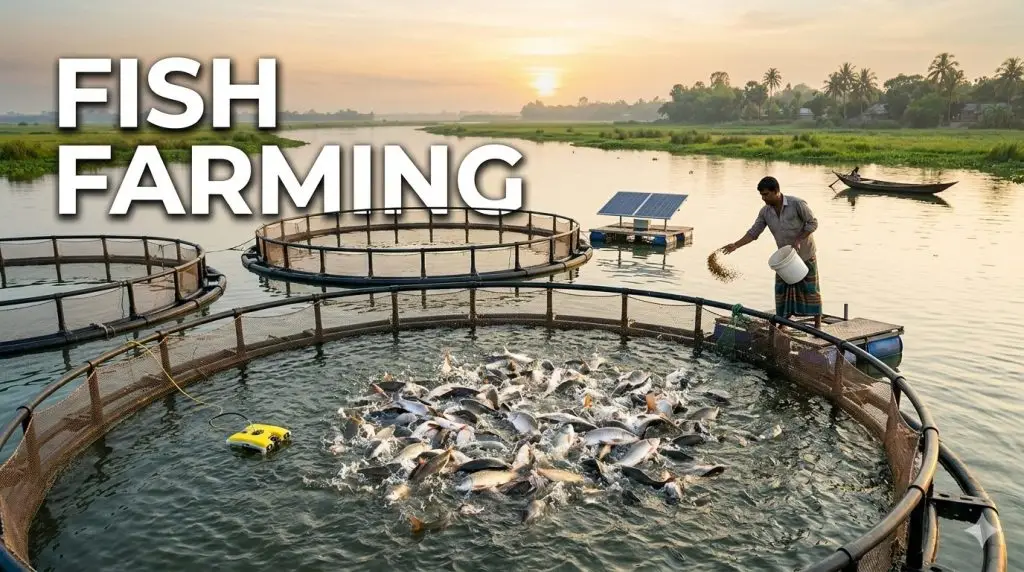
Discover Fish Farming profit per acre in Bangladesh 2026. Learn cost, yield, income breakdown, and smart tips to start a profitable fish farming business.
Introduction: Fish Farming Profit Acre in Bangladesh 2026
Fish Farming in Bangladesh is one of the most profitable agricultural businesses in 2026. With the growing demand for fish in local markets and increasing export opportunities, many farmers are choosing commercial fish farming as a stable and long-term income source. Proper planning, quality feed, and effective pond management can generate strong profits within a short production cycle. If you are planning to start fish farming per acre, understanding the cost, yield, and profit structure is essential. This complete guide will help you learn the investment requirements and income potential step by step.
Bangladesh is a riverine country, and fish plays a major role in daily food consumption. Due to high demand and limited natural fish resources, commercial fish farming has become a fast-growing and sustainable business sector. Farmers are adopting modern techniques to increase production and maximize profit.
Why Fish Farming is Profitable in Bangladesh
Fish farming is highly profitable in Bangladesh because fish is the main source of animal protein for most people. The demand for fresh fish remains strong throughout the year in both rural and urban markets. As population growth increases, the need for affordable and quality fish also rises, creating stable market opportunities for farmers.
Popular species like Rui, Katla, Tilapia, Pangas, and Koi have high commercial value and fast growth rates. These species are easy to farm and generate good returns within a short time. With proper pond management and feeding, farmers can achieve consistent production and strong profit from fish farming.
Main Reasons Fish Farming is Profitable:
- High local demand – Fish is widely consumed in Bangladesh, ensuring steady sales and consistent market demand.
- Fast-growing fish varieties available – Species like Tilapia and Pangas grow quickly, helping farmers earn profit in a shorter time.
- Suitable climate and water resources – Bangladesh’s warm weather and abundant water make fish farming easier and more productive.
- Government support and training programs – Farmers receive technical guidance, training, and financial support to improve production.
- Good wholesale and retail market network – Strong market connections allow farmers to sell fish easily at competitive prices.
With proper management, one acre of fish farming can generate significant profit within 8–10 months.

Types of Fish Farming in Bangladesh
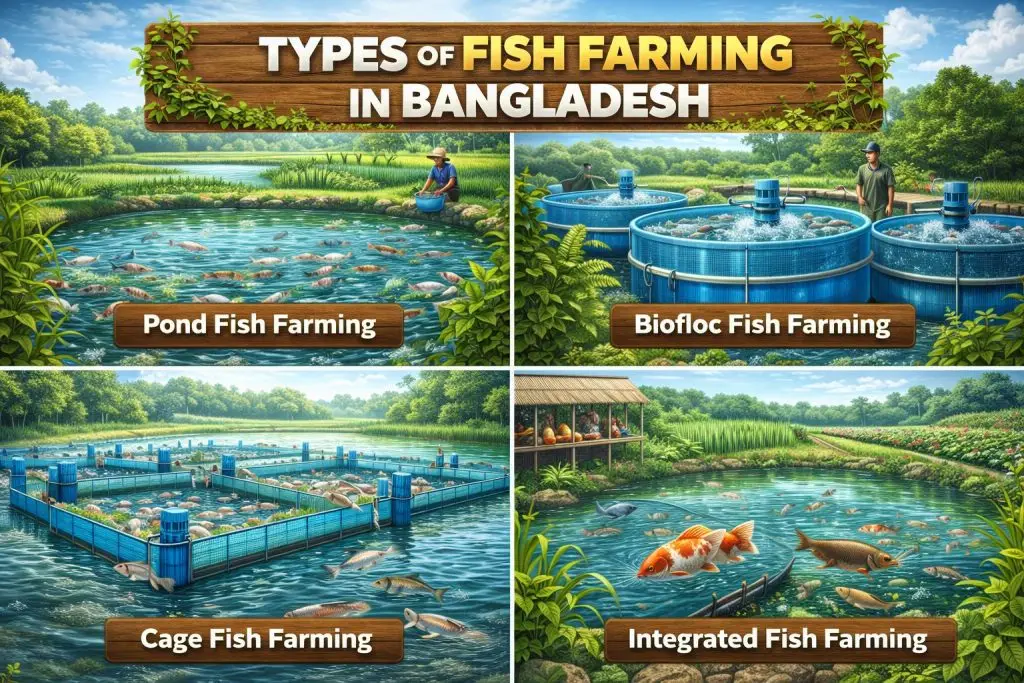
Fish farming in Bangladesh is practiced using different methods depending on land, investment, and production goals. Choosing the right farming method is very important for maximizing profit and reducing risk. Some farmers prefer traditional pond farming, while others adopt modern systems for higher efficiency and yield.
Each method has its own advantages in terms of cost, management, and production capacity. Proper selection of the farming system ensures better growth, improved fish health, and sustainable income for farmers.
- Pond Fish Farming – The most common and traditional method where farmers use natural or excavated ponds for fish cultivation with regular feeding and management.
- Biofloc Fish Farming – A modern technique that requires less water and space, involves water recycling, and has higher initial costs but faster production and better feed efficiency.
- Cage Fish Farming – Practiced in rivers, lakes, or large water bodies using floating cages to raise fish with controlled feeding and monitoring.
- Integrated Fish Farming – A combined system where fish farming is integrated with poultry, livestock, or vegetable farming to maximize land use and increase overall profit.
For beginners, pond fish farming per acre is the safest and most profitable option.
Best Fish Species for Per Acre Farming
Selecting the right fish species is essential for maximizing production and profit in fish farming. High-demand and fast-growing species ensure better market price and quicker returns. Proper species selection based on climate, water quality, and investment capacity directly impacts overall farm success and sustainability.
Popular Profitable Fish in Bangladesh:
- Rui (Rohu) – A highly demanded freshwater fish known for its good taste, fast growth, and strong market value in Bangladesh.
- Katla – A large-sized carp species that grows quickly and brings high profit due to strong consumer demand.
- Mrigal – A bottom-feeding fish that is easy to farm and commonly cultivated with other carp species for better yield.
- Tilapia – A fast-growing and hardy fish species that adapts well to different water conditions and provides quick returns.
- Pangas – A popular commercial fish with rapid growth and high production potential in intensive farming systems.
- Koi – A highly profitable fish species known for its quick growth and strong local market demand.
- Shing & Magur (Catfish) – Premium fish species with high market price and good profitability due to increasing consumer preference.
Many farmers follow polyculture fish farming, meaning multiple species are cultured in one pond for maximum production.

Fish Farming Cost Per Acre in Bangladesh 2026
Understanding the cost structure is essential before starting fish farming per acre. In 2026, investment depends on pond condition, fish species, feed price, and labor cost. Major expenses include pond preparation, fish fry purchase, feed supply, labor wages, and disease management.
Proper budgeting helps farmers control unnecessary expenses and increase profit. A clear cost breakdown allows better financial planning and ensures sustainable production while reducing risks during the farming cycle.
(Note: Cost may vary by district, but this is an average estimation for 2026.)
1. Pond Preparation Cost
- Cleaning and drying: 10,000 – 15,000 BDT
- Lime and medicine: 8,000 – 12,000 BDT
- Fertilizer and water treatment: 10,000 BDT
Total Pond Preparation Cost: 30,000 – 40,000 BDT
2. Fish Fry Cost (Fingerlings)
For one acre, around 8,000–12,000 pieces of fry are needed.
- Average fry cost: 2–5 BDT per piece
- Total: 40,000 – 60,000 BDT
3. Fish Feed Cost
Feed is the biggest investment in fish farming.
- Commercial feed cost per cycle: 200,000 – 300,000 BDT
Feed cost depends on species and growth duration.
4. Labor & Maintenance
- Labor: 40,000 – 60,000 BDT
- Electricity (if needed): 15,000 – 25,000 BDT
- Medicine & emergency treatment: 20,000 BDT
Total Investment Per Acre (2026 Estimate)
| Cost Type | Estimated Amount (BDT) |
|---|---|
| Pond Preparation | 35,000 |
| Fry Purchase | 50,000 |
| Feed | 250,000 |
| Labor & Others | 100,000 |
| Total Investment | 435,000 BDT (Approx.) |
Fish Farming Yield Per Acre
Fish farming yield per acre depends mainly on the selected species, feeding quality, water management, and overall farm supervision. With proper care and balanced feed, farmers can achieve higher production within a single growing cycle.
Good pond preparation, regular monitoring, and disease control significantly improve output. Efficient management practices ensure maximum fish growth and better market weight, leading to increased productivity and higher overall profit from each acre of fish farming.
Average Yield Per Acre:
- 3,000 kg – 5,000 kg per cycle
With improved management, production can reach 6,000 kg.
Fish Farming Income Calculation (2026)
The average fish market price in Bangladesh usually ranges from 150 to 220 BDT per kg, depending on the fish species, size, quality, and market demand. Premium species and larger-sized fish often sell at higher prices compared to common varieties.
Market price also fluctuates based on season, supply, and transportation cost. Farmers who time their harvest according to high-demand periods can earn better profit and maximize their income from fish farming.
Let’s calculate:
If production = 4,000 kg
Average selling price = 180 BDT/kg
Total Income = 4,000 × 180 = 720,000 BDT
Net Profit Per Acre
Total Income: 720,000 BDT
Total Investment: 435,000 BDT
Net Profit = 285,000 BDT per cycle
One cycle takes 8–10 months.
If managed efficiently, annual profit can cross 3–5 lakh BDT per acre.
Factors That Increase Fish Farming Profit
Several key factors directly influence Fish Farming profit in Bangladesh. Proper pond preparation, quality fish fry selection, and balanced feeding significantly improve production. Maintaining good water quality and regular health monitoring reduce disease risks and fish loss.
Market timing also plays an important role — selling fish during high-demand seasons increases price and revenue. Efficient cost management, government support, and modern farming techniques further enhance profitability. With smart planning and proper management, farmers can maximize income from fish farming.
- Quality fish fry selection – Choosing healthy and disease-free fish fry ensures better growth and higher production.
- Proper feeding schedule – Providing balanced feed at the right time helps fish grow faster and improves overall yield.
- Regular water quality monitoring – Checking water conditions frequently maintains a healthy environment for fish development.
- Disease control and vaccination – Preventing and treating diseases early reduces mortality and protects farm investment.
- Market timing (sell during high demand) – Selling fish during peak demand periods increases selling price and maximizes profit.
Common Challenges in Fish Farming
Although fish farming is a profitable business, farmers face several risks and operational challenges. Proper management is required to reduce losses and maintain consistent production. Issues like disease outbreaks, poor water management, rising feed costs, and natural disasters can impact overall yield. Market price fluctuations also affect income stability.
Understanding these challenges in advance and implementing preventive measures helps farmers protect their investment and improve long-term profitability in fish farming.
- Fish disease outbreak – Sudden diseases can spread quickly and cause high mortality, reducing overall production and profit.
- Poor water quality – Contaminated or unbalanced water conditions negatively affect fish growth and increase health risks.
- Feed price increase – Rising feed costs increase total investment and reduce overall profit margins for farmers.
- Flood or heavy rainfall damage – Excess water and flooding can overflow ponds, causing fish loss and infrastructure damage.
- Market price fluctuation – Changes in market demand and supply can affect selling prices and impact expected income.
Proper planning plays a crucial role in minimizing risks in fish farming. By preparing a clear budget, selecting quality fish fry, maintaining good water management, and monitoring fish health regularly, farmers can reduce potential losses. Strategic planning also helps improve production efficiency and ensures stable profit over time.
Government Support for Fish Farming in Bangladesh
The Bangladesh government actively supports Fish Farming to boost production and farmer income. Various programs provide low-interest agricultural loans to help farmers start or expand their farms. Training sessions and technical guidance improve farming skills and productivity.
Additionally, the government promotes hatchery development and modern farming techniques to ensure quality fish fry supply. These initiatives strengthen the fish farming sector and create sustainable growth opportunities for farmers across the country.
- Low-interest agricultural loans – Farmers can access affordable financing to start or expand fish farming with lower financial pressure.
- Fisheries training programs – Government and organizations provide training to improve farming skills, productivity, and management knowledge.
- Technical support – Experts offer guidance on pond management, disease control, and production techniques to increase efficiency.
- Hatchery development programs – Improved hatcheries ensure the supply of quality fish fry, supporting higher production and better farm performance.
Farmers can contact local fisheries offices to receive expert guidance, technical support, and updated information on fish farming practices. These offices provide training programs, disease management advice, and government scheme details. Seeking professional assistance helps farmers improve productivity, reduce risks, and increase overall profitability in fish farming operations.
How to Start Fish Farming Per Acre (Step-by-Step)
Step 1: Select Location
Choose flood-free land with good water supply.
Step 2: Prepare Pond
Dry pond, apply lime, and treat water.
Step 3: Stock Quality Fry
Buy from reliable hatchery.
Step 4: Feed Management
Feed twice daily in proper quantity.
Step 5: Regular Monitoring
Check fish health and water quality weekly.
Step 6: Harvest & Sell
Harvest at market size for maximum price.
Is Fish Farming Better Than Crop Farming?
In many areas of Bangladesh, Fish Farming provides higher profit per acre compared to traditional crop farming like rice cultivation. Fish farming usually generates faster returns within a shorter production cycle, while crop farming often depends on seasonal harvests and market price fluctuations.
However, both businesses require proper management and investment. With good planning, fish farming can offer better income potential, especially in areas with suitable water resources and strong market demand.
- Rice farming profit per acre: Rice farming usually generates a lower profit margin because production depends on weather conditions, input costs, and market price. Farmers often face limited income after deducting seed, fertilizer, labor, and irrigation expenses.
- Fish farming profit per acre: Fish farming generally provides a higher profit margin when managed properly with quality feed, good pond care, and market timing. Although the initial investment is higher, strong market demand and better yield potential help farmers earn significantly more income per acre.
However, fish farming requires more active management.
Future of Fish Farming in Bangladesh 2026
The future of Fish Farming in Bangladesh is promising as demand continues to grow every year. With population growth, increasing health awareness, and rising protein consumption, the need for quality fish is expanding rapidly. Export opportunities and government support also strengthen the sector.
Modern farming techniques and improved management systems will further increase production and profitability, making fish farming one of the most sustainable and profitable agricultural businesses in Bangladesh.
- Population growth – As the population increases, the demand for fish rises because it remains an affordable and essential protein source.
- Rising health awareness – More people include fish in their diet due to its nutritional value and health benefits, increasing market demand.
- Export opportunities – Strong global demand for quality fish allows farmers to earn extra income by selling products to international markets.
Modern techniques like biofloc and intensive farming will increase production further.
Fish farming is expected to remain one of the top profitable agribusiness sectors in Bangladesh.
Tips for Beginners in Fish Farming
- Start with small investment – Begin fish farming with limited capital to reduce financial risk and gain practical experience.
Expanding gradually after success helps ensure stable growth and better management. - Avoid overstocking – Stock fish according to pond capacity to prevent overcrowding and oxygen shortage.
Proper stocking density improves fish health and increases overall production efficiency. - Use high-quality feed – Provide nutritious and balanced feed to support fast growth and strong immunity.
Quality feed directly improves yield and maximizes farm profit. - Maintain pond hygiene – Keep the pond clean by monitoring water quality and removing waste regularly.
Good hygiene reduces disease risk and creates a healthy environment for fish. - Learn from experienced farmers – Gain practical knowledge from successful farmers and industry experts.
Learning real experience helps improve farming techniques and avoid common mistakes.
FAQ – Fish Farming Profit in Bangladesh
1. How much profit from fish farming per acre in Bangladesh?
Average profit is 2.5–3 lakh BDT per cycle depending on management.
2. How long does fish farming take?
Usually 8–10 months per production cycle.
3. Which fish is most profitable?
Pangas, Tilapia, and Koi are highly profitable due to fast growth.
4. What is the biggest cost in fish farming?
Fish feed is the largest expense.
5. Is fish farming risky?
Yes, but proper management reduces risk significantly.
Conclusion
Fish Farming in Bangladesh 2026 is a highly profitable and sustainable business when managed with proper planning, quality feed, and effective pond management. With the right investment per acre, farmers can achieve strong production, stable market demand, and impressive returns within one production cycle. Careful cost control and smart selling strategies significantly increase overall profit.
Starting Fish Farming requires preparation, research, and regular monitoring to reduce risks like disease and price fluctuation. By following modern farming techniques and government support programs, farmers can maximize yield and long-term income. For anyone looking for a reliable agricultural investment, fish farming per acre offers excellent growth potential in Bangladesh.