
Boost your band score with IELTS Preparation Tips. Discover 9 powerful strategies to study smarter, avoid mistakes, and achieve higher IELTS scores.
Introduction: IELTS Preparation Tips
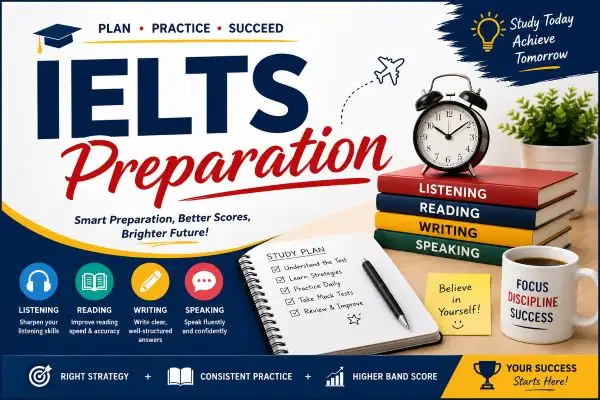
Preparing for the International English Language Testing System (IELTS) can feel challenging, especially if you aim for a high band score. Whether you are planning to study abroad, apply for immigration, or advance your career, having the right IELTS Preparation Tips can make your learning journey more effective and less stressful.
The IELTS exam measures your English proficiency in four key areas: Listening, Reading, Writing, and Speaking. Success requires more than just knowing English—it also depends on understanding the exam format, practicing regularly, and developing smart test-taking strategies.
Many candidates spend months studying without a clear plan, which often leads to disappointing results. The good news is that you can improve your performance by following proven preparation techniques and staying consistent with your practice.
In this comprehensive guide, you’ll discover nine powerful IELTS Preparation Tips that can help you build confidence, avoid common mistakes, and achieve a higher band score. Whether you’re a beginner or planning to retake the exam, these practical tips will help you prepare smarter and maximize your potential.
1. Understand the IELTS Exam Format Thoroughly
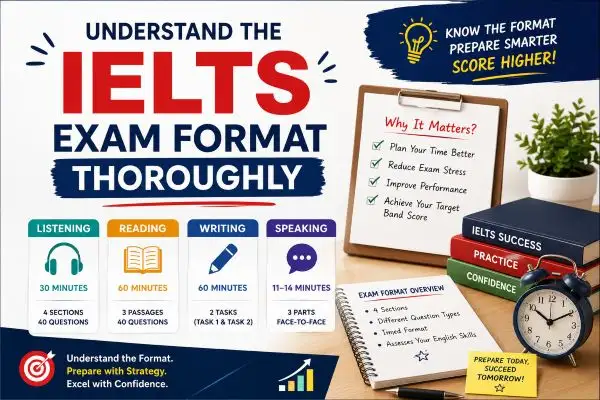
One of the most important IELTS Preparation Tips is to understand exactly how the exam works before you begin studying. Many candidates lose valuable marks simply because they are unfamiliar with the test structure rather than lacking English skills.
The IELTS exam consists of four sections:
- Listening
- Reading
- Writing
- Speaking
Each section evaluates different language abilities and has unique question types. Learning these formats in advance helps reduce surprises on exam day and allows you to focus on answering questions effectively.
For example, the Listening test includes multiple accents such as British, Australian, and Canadian English. Becoming familiar with these accents through podcasts, news broadcasts, and educational videos can significantly improve your listening comprehension.
The Reading section includes various question types, including:
- Multiple choice
- Matching headings
- True/False/Not Given
- Sentence completion
- Summary completion
Becoming familiar with IELTS question types improves both speed and accuracy. Learn the specific requirements for your test version, practice speaking naturally to build confidence, and review official sample papers before starting your preparation. A solid understanding of the exam structure helps you study more effectively and perform with greater confidence on test day.
2. Create a Realistic and Consistent Study Plan
Another highly effective IELTS Preparation Tips strategy is creating a study schedule that matches your current English level, available time, and target band score. Many students try to study for several hours one day and then skip the next few days. Unfortunately, inconsistent preparation often slows progress. Instead, studying consistently—even for shorter periods—can produce much better results. Start by assessing your current abilities in Listening, Reading, Writing, and Speaking. Identify your weakest skills so you can dedicate additional time to improving them.
An effective weekly study plan may include:
Monday
- Listening practice
- Vocabulary building
Tuesday
- Reading comprehension
- Grammar review
Wednesday
- Writing Task 1 or Task 2
Thursday
- Speaking practice with a partner
Friday
- Full Listening and Reading practice test
Saturday
- Writing evaluation
- Vocabulary revision
Sunday
- Mock IELTS test
- Performance review
Studying consistently is far more effective than spending long hours without a clear goal. Aim for focused daily sessions, take short breaks to stay mentally refreshed, and regularly review your practice results. Monitoring your progress helps identify areas for improvement, while a well-planned study routine keeps you organized, motivated, and prepared for every section of the IELTS exam.
3. Build a Strong English Vocabulary Every Day
Expanding your vocabulary is among the most valuable IELTS Preparation Tips because vocabulary influences every part of the IELTS exam. Many candidates mistakenly memorize long word lists without understanding how to use those words naturally. Instead, focus on learning vocabulary in context. Read English newspapers, magazines, blogs, and academic articles daily. Whenever you encounter unfamiliar words, write them down along with their meanings and example sentences.
Useful vocabulary categories include:
Academic Vocabulary
Academic words frequently appear in IELTS Reading passages and Writing tasks. Learning these words improves both comprehension and writing quality.
Examples include:
- Analyze
- Significant
- Consequently
- Furthermore
- Evaluate
- Sustainable
Topic-Based Vocabulary
IELTS commonly includes topics such as:
- Education
- Technology
- Environment
- Health
- Culture
- Transportation
- Tourism
- Business
Building vocabulary for these subjects prepares you for both Speaking and Writing tasks.
Collocations
Native English speakers naturally combine certain words together.
Examples include:
- Make progress
- Reach a conclusion
- Heavy traffic
- Renewable energy
- Strong evidence
Using collocations correctly makes your English sound more fluent and natural.
Synonyms
The IELTS exam often paraphrases information instead of repeating identical words.
For example:
- Increase → Rise
- Important → Essential
- Difficult → Challenging
- Improve → Enhance
Learning synonyms helps you understand Reading passages more easily while avoiding repetition in your Writing responses.
Daily Vocabulary Habits
Develop simple habits that strengthen your vocabulary over time:
- Learn 10–15 new words daily.
- Review previously learned words every week.
- Use new vocabulary in sentences.
- Listen to English podcasts.
- Read English articles regularly.
- Practice speaking using newly learned expressions.
Understanding how to use words naturally is far more valuable than memorizing hundreds of isolated definitions. A rich vocabulary improves your confidence in Speaking, increases your Writing band score, and helps you answer Reading questions more accurately.
4. Practice with Official IELTS Mock Tests Regularly
Taking full-length mock exams is an excellent way to prepare for IELTS. Regular practice reveals your strengths and weaknesses while improving time management. Complete at least one timed test each week in a distraction-free environment to build confidence, develop exam stamina, and become familiar with real test conditions.
Benefits of Mock Tests
Regular mock tests offer several advantages:
- Improve time management.
- Familiarize you with question patterns.
- Increase confidence.
- Reduce exam-day anxiety.
- Identify strengths and weaknesses.
- Measure your progress over time.
After completing each test, carefully review every incorrect answer. Understanding why you made a mistake is just as important as getting the correct answer.
For example:
- Did you misread the question?
- Did you run out of time?
- Was your vocabulary insufficient?
- Did you misunderstand the audio?
- Did grammar mistakes affect your writing?
Answering these questions helps you create a more focused study plan.
Track Your Progress
Keep a notebook or spreadsheet with your practice scores for each section:
| Section | Week 1 | Week 3 | Week 6 |
|---|---|---|---|
| Listening | 6.5 | 7.0 | 7.5 |
| Reading | 6.0 | 6.5 | 7.0 |
| Writing | 5.5 | 6.0 | 6.5 |
| Speaking | 6.0 | 6.5 | 7.0 |
Tracking your results helps you see measurable improvement and keeps you motivated throughout your preparation journey.
Remember, practice tests should not simply measure your ability—they should guide your learning. Every mock exam is an opportunity to refine your strategy and move closer to your target band score.
5. Improve Your Writing Skills Through Daily Practice
Among the most valuable IELTS Preparation Tips, practicing writing every day can significantly improve your band score. The IELTS Writing test measures your ability to organize ideas, use appropriate vocabulary, apply correct grammar, and respond fully to the given task. Developing these skills through regular practice will make your writing clearer and more effective.
Know the Writing Tasks
- Academic IELTS Task 1: Describe graphs, charts, tables, maps, or diagrams.
- Academic IELTS Task 2: Write an essay expressing your opinion or discussing a topic.
- General Training Task 1: Prepare a letter based on the given situation, which may require a formal, semi-formal, or informal writing style depending on the purpose and recipient.
- General Training Task 2: Complete an essay on a specific issue.
Follow a Clear Essay Structure
- Write an introduction that paraphrases the question.
- Develop your ideas in two organized body paragraphs.
- Support your points with relevant examples.
- Finish with a concise conclusion that summarizes your response.
Strengthen Your Language Skills
- Use a wide range of vocabulary naturally.
- Replace repeated words with suitable synonyms.
- Combine simple and complex sentence structures.
- Avoid grammar, spelling, and punctuation mistakes.
Review Your Work
- Check whether you answered every part of the question.
- Improve paragraph organization and sentence flow.
- Ask a teacher or experienced IELTS candidate for feedback when possible.
Practicing one writing task each day will gradually improve your accuracy, confidence, and overall IELTS Writing performance.
6. Strengthen Your Speaking Skills Through Regular Conversation
One of the most effective IELTS Preparation Tips is practicing your speaking skills consistently. The IELTS Speaking test measures how clearly and confidently you communicate your ideas rather than expecting flawless English. Regular practice helps improve fluency, pronunciation, vocabulary, and confidence.
Practice Speaking Every Day
Spend at least 15–20 minutes speaking English daily. You can improve by:
- Talking with friends or family in English.
- Joining online English conversation groups.
- Practicing with a language exchange partner.
- Speaking in front of a mirror.
- Recording your answers and listening for improvements.
Prepare for Common IELTS Topics
Practice answering questions on familiar subjects, such as:
- Family and friends
- Education
- Travel
- Technology
- Food and health
- Environment
- Hobbies
- Work and career
- Future plans
Always give detailed answers with explanations and examples instead of responding with just one or two words.
Improve Pronunciation and Confidence
- Listen to English podcasts and news programs.
- Repeat sentences aloud to improve pronunciation.
- Practice stress, rhythm, and intonation.
- Listen to your recorded responses carefully to recognize mistakes and identify areas where you can improve your pronunciation, fluency, and overall speaking performance.
- Stay calm during the interview and politely ask the examiner to repeat a question if needed.
Consistent speaking practice will boost your confidence, improve communication skills, and help you achieve a higher IELTS Speaking band score.
7. Improve Your Listening Skills with Daily English Audio
One of the most effective IELTS Preparation Tips is making English listening practice part of your daily routine. The IELTS Listening test assesses your ability to understand conversations, lectures, and discussions delivered in a variety of English accents. Regular exposure to spoken English helps improve comprehension, concentration, and confidence.
Listen to Different Types of English Audio
Expand your listening skills by exploring various resources, such as:
- English podcasts
- News programs
- Educational videos
- Audiobooks
- Interviews
- Documentaries
Listening to different sources helps you become familiar with natural speech, pronunciation, and commonly used vocabulary.
Practice Active Listening
Strengthen your understanding by:
- Taking brief notes while listening.
- Identifying important keywords.
- Predicting upcoming information.
- Summarizing the main ideas afterward.
Become Familiar with Different Accents
The IELTS exam may feature speakers from countries like the United Kingdom, Australia, Canada, New Zealand, and the United States. Regularly listening to these accents will improve your ability to understand spoken English during the test.
Learn from Your Errors
After each practice session:
- Review incorrect answers carefully.
- Identify why mistakes occurred.
- Focus on improving weak areas.
- Practice similar exercises regularly.
Daily listening practice enhances your Listening, Speaking, Vocabulary, and Pronunciation skills, making it an essential part of successful IELTS preparation.
8. Master Time Management During the Exam
Effective time management is one of the most valuable IELTS Preparation Tips because completing every section within the allotted time is essential for achieving a high band score. Even candidates with strong English skills can lose marks if they spend too much time on difficult questions.
Practice Under Real Exam Conditions
Prepare yourself by using a timer during practice sessions. This helps you:
- Build confidence under time pressure.
- Increase your answering speed.
- Become familiar with official exam timing.
Don’t Spend Too Long on One Question
If a question seems difficult:
- Skip it temporarily.
- Continue with the remaining questions.
- Return to it if time is available.
Manage Your Reading and Writing Time
For the Reading section:
- Skim passages for the main idea.
- Scan for important keywords.
- Highlight key information.
- Avoid reading every sentence in detail.
For the Writing section:
- Spend about 20 minutes on Task 1.
- Reserve around 40 minutes for Task 2.
- Plan your ideas before writing to improve organization.
Review Before Submitting
If you finish early, check your work for:
- Spelling mistakes
- Grammar errors
- Missing words
- Incorrect answer transfers
- Unanswered questions
Using your time wisely helps reduce exam stress, improves accuracy, and gives you the best opportunity to achieve your target IELTS band score.
9. Stay Healthy, Confident, and Positive Before Exam Day
The final and perhaps most overlooked IELTS Preparation Tips involve taking care of your physical and mental well-being. Many candidates prepare for months but perform below their ability because of stress, poor sleep, or lack of confidence.
Get Enough Sleep
- Avoid studying late into the night before your exam.
- Aim for at least seven to eight hours of sleep so your brain remains alert and focused during the test.
Eat a Healthy Meal
- A balanced meal before the exam provides steady energy and improves concentration.
- Avoid excessive caffeine or sugary foods that may increase anxiety.
Prepare Everything in Advance
The night before your exam, organize:
- Identification documents
- Test confirmation details
- Pens or pencils (if required)
- Water bottle (if permitted)
- Comfortable clothing
Preparing early reduces unnecessary stress on exam morning.
Think Positively
- Confidence has a significant impact on performance.
- Instead of worrying about difficult questions, remind yourself of the preparation you have completed.
- Positive thinking helps you remain calm, especially during the Speaking interview.
Don’t Panic Over Small Mistakes
- Everyone makes mistakes during an exam.
- If you believe you answered one question incorrectly, stay focused and continue.
- Dwelling on previous errors can reduce your concentration on the remaining sections.
- Remember, IELTS measures your overall English ability—not perfection.
- Maintaining a calm and confident mindset allows you to perform at your best and maximize your final score.
Frequently Asked Questions (FAQs)
1. How long should I prepare for the IELTS exam? Preparation time depends on your current English level and target band score. Most candidates benefit from studying consistently for 6 to 12 weeks, while beginners may need several months of focused practice.
2. What is the best way to improve my IELTS Writing score? Practice writing essays and reports regularly, expand your vocabulary, improve grammar, and seek feedback from experienced teachers or qualified IELTS instructors.
3. Can I prepare for IELTS at home? Yes. Many successful candidates prepare independently using official practice materials, online courses, mock tests, and daily English practice.
4. How many hours should I study each day? Studying 1.5 to 3 hours daily with a structured plan is generally more effective than occasional long study sessions.
5. Is vocabulary important for all IELTS sections? Absolutely. A strong vocabulary helps improve your performance in Listening, Reading, Writing, and Speaking while making your communication more accurate and natural.
6. How often should I complete IELTS mock tests? Aim to complete at least one full mock test every week during your preparation. As the exam approaches, increase the frequency to identify remaining weaknesses and improve your confidence.
Conclusion
Achieving a high IELTS band score is possible with dedication, smart planning, and consistent practice. By applying these nine IELTS Preparation Tips, you can strengthen your Listening, Reading, Writing, and Speaking skills while building the confidence needed to perform well on exam day.
Start by understanding the test format, creating a realistic study schedule, and expanding your vocabulary. Practice regularly with official mock tests, improve your writing and speaking through daily exercises, and sharpen your listening skills using authentic English audio. Effective time management and a calm, positive mindset will also play a vital role in your success.
Remember that improving your English is a gradual process. Stay consistent, review your progress, learn from your mistakes, and focus on steady improvement rather than quick results. Every practice session brings you one step closer to your target band score.
With determination and the right preparation strategy, you can approach the IELTS exam with confidence and achieve the results you need for your academic, professional, or immigration goals.
Quick Recap of the 9 IELTS Preparation Tips
- Understand the IELTS exam format thoroughly.
- Create a realistic and consistent study plan.
- Build a strong English vocabulary every day.
- Practice with official IELTS mock tests regularly.
- Improve your writing skills through daily practice.
- Strengthen your speaking skills through regular conversation.
- Improve your listening skills with daily English audio.
- Master time management during the exam.
- Stay healthy, confident, and positive before exam day.
By following these IELTS Preparation Tips consistently, you’ll be well prepared to achieve a higher IELTS band score and move closer to your future goals.