
Iran war updatereveals 7 brutal choices facing Donald Trump as tensions rise, global crisis deepens, and no clear solution emerges after one month of conflict.
Introduction: A War Without Easy Answers
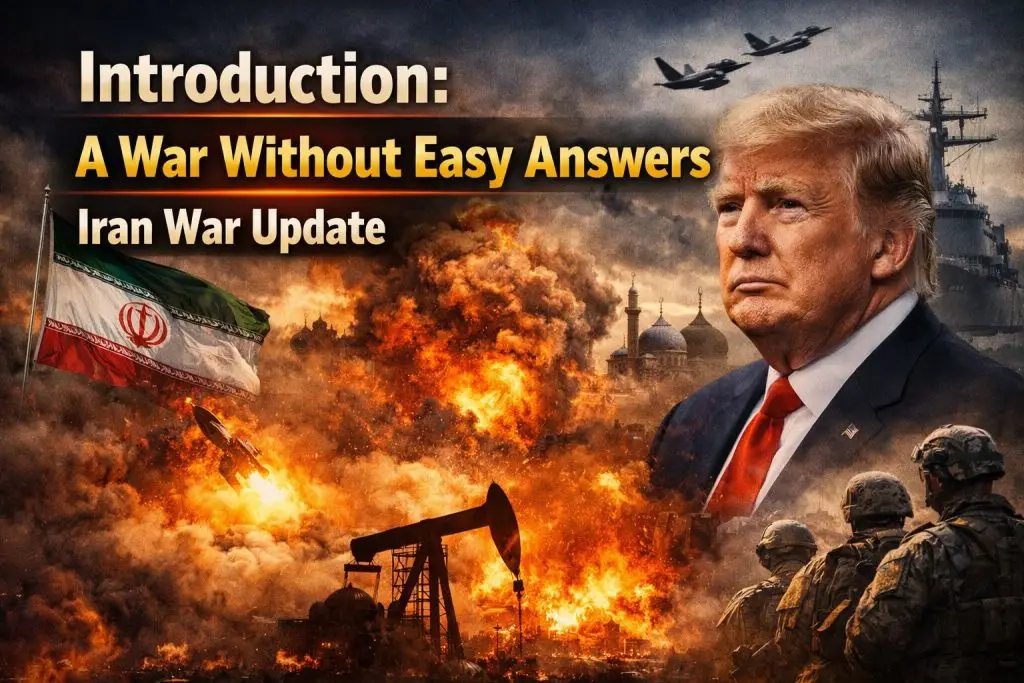
One month after the United States launched its high-stakes military campaign against Iran, President Donald Trump finds himself at a defining crossroads. What began as a bold and aggressive strategy aimed at weakening Tehran’s military power has evolved into a complex geopolitical crisis with no clear resolution.
The war has reshaped global politics, rattled energy markets, strained alliances, and raised critical questions about America’s long-term strategy in the Middle East. Despite initial confidence from Washington, the reality on the ground now presents only difficult—and potentially costly—choices.
The First Month: A Rapid Escalation
The conflict officially began with a coordinated U.S.-Israeli offensive targeting Iran’s military infrastructure. Within weeks, thousands of strikes were carried out against key installations, including missile bases, naval assets, and command centers.

According to U.S. military reports, over 11,000 targets have been hit in the first month alone, demonstrating the scale and intensity of the campaign.
Despite this overwhelming firepower, Iran has not collapsed militarily or politically. Instead, it has adapted—shifting to asymmetric warfare tactics, launching drone and missile attacks, and leveraging regional proxies.
Iran’s Strategy: Survival and Resistance
Rather than confronting the United States head-on, Iran has adopted a strategy focused on endurance. Its leadership appears less concerned with winning outright and more focused on surviving long enough to outlast U.S. political will.

Tehran has continued to strike targets across the region and disrupt shipping lanes, particularly in the strategically vital Strait of Hormuz. This has had a ripple effect on global oil markets, pushing energy prices higher and unsettling economies worldwide.
Iran’s ability to maintain operational missile and drone capabilities—even after weeks of bombardment—has surprised many analysts.
The Strategic Dilemma for Trump
At this stage of the war, President Trump faces three primary options:
1. Escalation: Risking a Wider War
Trump could intensify military operations, potentially including ground forces or expanded regional strikes. However, this option carries enormous risks:
- A prolonged and costly conflict
- Increased American casualties
- Potential escalation involving other regional powers
Analysts warn that escalation could transform the conflict into a long-term war with unpredictable consequences.
2. Diplomacy: A Difficult Exit
The Trump administration has reportedly explored diplomatic solutions, including a multi-point peace proposal. However, Iran has rejected these overtures, calling them unrealistic.
Diplomacy, while appealing, presents its own challenges:
- It may be perceived as a sign of weakness
- Key U.S. objectives remain unmet
- Iran may demand concessions unacceptable to Washington
3. Withdrawal: Political and Strategic Costs
Ending the war without achieving clear objectives could damage Trump’s credibility both domestically and internationally.
A withdrawal could:
- Undermine U.S. influence in the region
- Embolden adversaries
- Create political backlash ahead of elections
Unmet Objectives and Shifting Goals
One of the biggest challenges facing the administration is the lack of clearly defined and achievable goals.
Initially, the war aimed to:
- Destroy Iran’s military capabilities
- Eliminate its nuclear ambitions
- Protect regional allies
However, over time, these objectives have expanded and shifted.
Despite significant damage inflicted on Iran’s infrastructure, several goals remain out of reach:
- Iran still possesses missile and drone capabilities
- Its leadership remains intact
- Its regional influence persists
This has created confusion about what constitutes “victory.”
Economic Fallout: A Global Shockwave
The effects of the war extend far beyond the battlefield. It has triggered a global economic shock.
Oil Market Disruption
Iran’s actions in the Strait of Hormuz have disrupted one of the world’s most critical النفط transit routes, sending oil prices soaring.
Rising Costs Worldwide
Higher energy prices have led to increased costs for transportation, manufacturing, and everyday goods.
Political Pressure at Home
In the United States, rising prices and economic uncertainty are affecting public opinion, contributing to declining approval ratings for Trump.
Strained Alliances and Global Tensions
The war has also exposed fractures within traditional alliances.
NATO Divisions
Trump has openly criticized NATO allies for failing to provide sufficient support, even questioning the future of the alliance.
European Hesitation
Many European countries have been reluctant to fully back the U.S.-led campaign, preferring diplomatic solutions over military escalation.
Regional Anxiety
Middle Eastern nations, particularly in the Gulf, are increasingly concerned about being drawn deeper into the conflict.
Domestic Challenges: Political Risks Grow
At home, Trump faces mounting political pressure:
- Declining public support
- Criticism from both parties
- Concerns over a prolonged war
As midterm elections draw near, the political pressure intensifies. The war’s outcome could significantly influence the domestic political landscape.
A War Without a Clear Endgame
Perhaps the most troubling aspect of the conflict is the lack of a clear exit strategy.
Trump has alternated between:
- Declaring success
- Threatening further escalation
- Suggesting openness to negotiations
This inconsistency has created uncertainty among allies and adversaries alike.
The Human Cost of Conflict
Beyond strategy and politics, the war has taken a human toll:
- Military casualties
- Civilian suffering
- Displacement across the region
While exact numbers remain unclear, the humanitarian impact continues to grow with each passing day.
Global Implications: A New Geopolitical Reality
The Iran war is reshaping the global order:
- Challenging U.S. leadership
- Strengthening rival powers
- Redefining alliances
Countries around the world are closely watching how the conflict unfolds, as its outcome will influence future international relations.
What Comes Next?
As the war enters its second month, several scenarios are possible:
Prolonged Stalemate
The most likely outcome in the short term, with neither side achieving decisive victory.
Negotiated Settlement
A diplomatic breakthrough could end the conflict, but significant obstacles remain.
Wider Regional War
An escalation could draw in additional countries, dramatically increasing the stakes.
Conclusion: Leadership Under Pressure ( Iran war update)
One month into the Iran war, President Donald Trump faces the most difficult decisions of his presidency. Each available option carries significant risks, and none offers a clear path to success.
The conflict has evolved into a test of leadership, strategy, and resilience—not just for the United States, but for the entire international community.