

Discover 10 attractive Khulna Division Historical Places , from ancient mosques to royal monuments. Explore Bangladesh’s rich heritage with Viral Bangladesh.
Visitors can explore ancient mosques, royal structures, and archaeological ruins that highlight the region’s rich past. These historical places are not only important for tourism but also for preserving national identity and educating future generations. Whether you are a student, traveler, or history enthusiast, Khulna Division offers unforgettable experiences through its heritage sites.
At Viral Bangladesh, we bring you closer to these remarkable destinations, helping you discover the beauty, culture, and history that make Khulna Division truly special.
Introduction: Explore Khulna Division Historical Places in 2026
Khulna Division, in southwestern Bangladesh, is rich in history and culture. From ancient mosques and temples to royal palaces and colonial monuments, Khulna Division Historical Places showcase centuries of architecture, art, and tradition.
Visitors can admire the grandeur of royal palaces, intricate mosque carvings, and the spiritual significance of temples, reflecting the region’s multi-layered history. These sites also offer a glimpse into local lifestyles, festivals, and scenic landscapes, making them ideal for photography, educational trips, and cultural exploration.
Whether for a weekend getaway or a cultural expedition, exploring Khulna Division Historical Places enriches knowledge and helps preserve the region’s heritage. This guide highlights the 10 most attractive sites, complete with insights, travel tips, and fascinating stories.
1. The Heritage of the Mosque City of Bagerhat
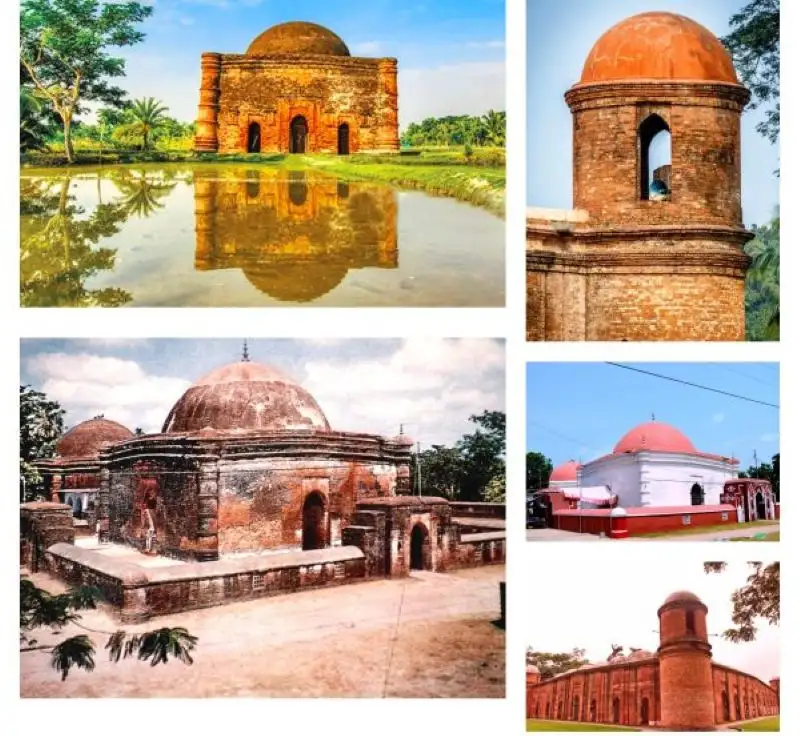
The Mosque City of Bagerhat stands as one of the most remarkable historical landmarks in Bangladesh and holds a prestigious designation as a UNESCO World Heritage Site. Founded in the 15th century by the visionary Turkish general, administrator, and Sufi saint Khan Jahan Ali, this ancient settlement served as a highly sophisticated, planned urban center during the peak of the Bengal Sultanate period. The city was meticulously organized, integrating a network of mosques, civic administrative offices, robust brick roads, massive freshwater reservoirs, and residential sectors into a functional layout.
Architecturally, the structures of Bagerhat are predominantly crafted from locally fired brick, a material choice driven by the natural scarcity of stone in the riverine delta. The region’s defining monuments feature elegant low-slung domes, sweeping arches, intricate terracotta ornamentation, and exceptionally thick, tapered walls. These structural elements vividly illustrate how global Islamic architectural traditions were creatively modified to withstand the damp, humid, and coastal environment of southern Bengal. Today, the preserved ruins of the Mosque City of Bagerhat endure as an indispensable historical archive, offering invaluable insight into medieval Islamic urban development, community planning, and engineering prowess within the Khulna Division.
2. The Grandeur of the Sixty Dome Mosque
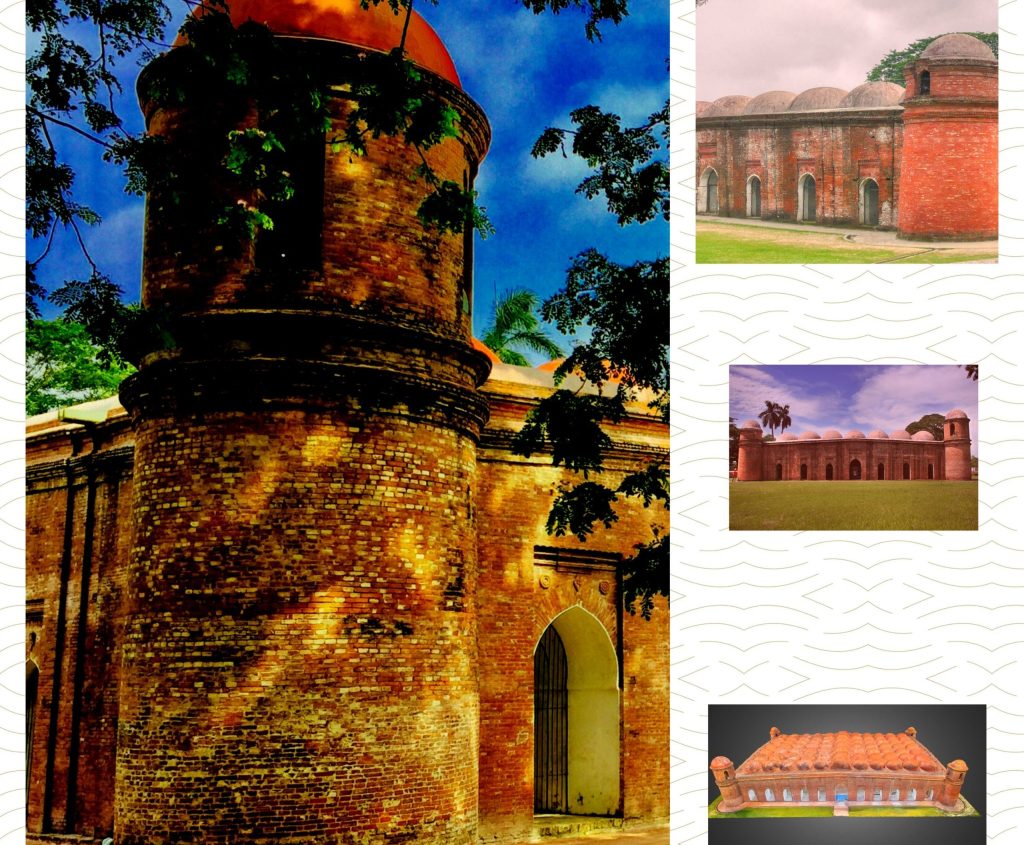
The Sixty Dome Mosque (Shat Gombuj Mosque) stands as the crown jewel of the historic Mosque City of Bagerhat. Constructed during the mid-15th century under the leadership of Sufi saint Khan Jahan Ali, it holds the prestigious distinction of being the largest Sultanate-period mosque in Bangladesh. Intriguingly, its name is an architectural misnomer; while the structure actually features 77 low-lying domes over the main roof—and 81 total including the corner towers—it is supported internally by exactly 60 ancient stone pillars.
The interior design features an expansive prayer hall organized into multiple long aisles and elegant rows of sweeping arches. Historical evidence reveals that these massive stone pillars were imported from distant regions outside the delta, a logistical feat that underscores the immense socio-political importance of the site and the vast resources available to its creators.
Its thick tapered walls, curved cornices, and complex brickwork demonstrate an advanced understanding of structural mechanics, allowing it to withstand the coastal climate for centuries. Ultimately, the Sixty Dome Mosque stands as an enduring testament to the peak of architectural and cultural achievements in medieval Bengal, making it a cornerstone of regional heritage.
3. The Legacy of Khan Jahan Ali’s Tomb
The tomb of Khan Jahan Ali stands as a highly revered historical and spiritual landmark situated adjacent to the ancient Mosque City of Bagerhat. Khan Jahan Ali was far more than a legendary military commander; he was a visionary social reformer, Sufi saint, and administrator who played a transformative role in clearing the dense mangrove forests to establish thriving settlements and vital infrastructure across medieval southern Bengal.
Architecturally, the mausoleum is built from a sturdy combination of stone and locally fired brick. It features a traditional square floor plan crowned by a singular, majestic domed roof, reflecting the elegant restraint of early Islamic burial architecture in the subcontinent. The interior and surrounding pathways still echo with the footsteps of countless pilgrims who visit daily to pay their respects.
Directly adjacent to the complex lies a massive, historic water reservoir known as the Khanjali Dighi. Believed to have been excavated under his direct supervision, this vast lake was a crucial public works project designed to supply clean, fresh drinking water to the coastal population. Today, the tomb complex serves as a profound monument to Khan Jahan Ali’s enduring legacy, beautifully illustrating how spiritual devotion and civic welfare intersected to shape the cultural identity of the Khulna Division.

4. The Sundarbans (Historical Significance)
Although widely known for its natural ecosystem, the Sundarbans also holds considerable historical importance. Ancient texts, inscriptions, and archaeological findings suggest that the region was once connected to early maritime trade networks. Coastal settlements used the waterways of the Sundarbans to transport goods such as timber, salt, and agricultural products.
The forest also served as a natural barrier protecting inland settlements from sea invasions and cyclones. Over time, myths, folklore, and historical accounts emerged around the Sundarbans, reflecting its role in shaping the cultural identity of the region. The historical relevance of the Sundarbans extends beyond ecology into economic and social history.
5. The Simplicity of Singair Mosque
The Singair Mosque stands as an important, yet frequently overlooked, heritage monument tucked away in the historic Bagerhat region. Erected during the 15th-century Sultanate era, this ancient structure shares a deep architectural and historical lineage with the more famous monuments scattered across the surrounding UNESCO World Heritage landscape.
Architecturally, the mosque is characterized by its compact, single-domed design (often mischaracterized as multi-domed) sitting atop a square prayer hall enclosed by remarkably thick, solid brick walls. The deliberate simplicity of its layout reflects the highly functional and modest approach that defined early Islamic religious architecture throughout the Bengal delta. Rather than relying on grand, ostentatious scales, the building focuses on structural endurance and spiritual utility.
Despite its reserved appearance and lack of elaborate ornamentation, the Singair Mosque holds immense historical value for researchers. It provides clear, tangible insight into how early Islamic institutions systematically expanded into rural and peripheral regions, stretching far beyond major medieval urban centers and administrative capitals. By serving as a localized community anchor, this enduring brick structure highlights the steady, grassroots spread of cultural and religious life in medieval Bengal, making it a quiet but vital treasure within the Khulna Division.
6. The Artistry of Chunakhola Mosque
The Chunakhola Mosque stands as an exceptional monument to cultural fusion, showcasing how indigenous artistic traditions seamlessly integrated into early Islamic architecture. Built during the 15th-century Sultanate period—contemporary with the grand monuments of the Bagerhat region—this single-domed structure is a prime example of localized medieval craftsmanship.
What truly distinguishes this mosque from traditional Islamic designs is its gently curved cornice. This distinct architectural feature was directly inspired by the sloping bamboo thatched roofs of traditional rural Bengali huts, adapted here into permanent brickwork to effectively shed heavy monsoon rainwater.
Beyond its unique structural silhouette, the facade of the mosque features delicate terracotta ornamentation. These intricate clay panels display floral and geometric patterns, demonstrating the exceptional skill and creativity of local artisans who adapted their ancestral crafts for Islamic religious spaces.
Ultimately, the Chunakhola Mosque is much more than a place of worship; it highlights the creative adaptation of global Islamic design principles to suit regional sensibilities. This striking monument reflects the profound cultural synthesis that occurred in medieval Bengal, where foreign architectural concepts blended harmoniously with the delta’s native identity, leaving a lasting legacy in the historic Khulna Division.
7. The Heritage of Dhopakhola Mosque
The Dhopakhola Mosque stands as a compelling historical relic from the Sultanate period, offering a glimpse into the early Islamic heritage of southern Bengal. Originally established as a vital spiritual and community hub, the mosque served as a central gathering place for religious devotion and local assembly during the medieval era.
Although centuries of neglect have left the structure partially ruined, its surviving architectural elements still command attention. The remaining portions of the building showcase remarkably thick brick masonry, robust structural engineering, and a highly disciplined, symmetrical layout characteristic of the period’s regional aesthetic.
Recent archaeological evaluations and structural examinations indicate that the design of the Dhopakhola Mosque closely aligns with the grand architectural blueprints found across the nearby UNESCO-listed monuments of Bagerhat. This stylistic connection underscores its historical value. Rather than just an isolated ruin, the site serves as a crucial piece of a larger historical puzzle. It provides researchers and historians with invaluable data regarding medieval settlement networks, population distributions, and the systematic spread of religious architecture across the Khulna Division. Today, the enduring ruins of the mosque remain a poignant symbol of the region’s rich cultural and architectural evolution.
8. The Legacy of Jessore Rajbari
The Jessore Rajbari stands as a prominent historical monument, deeply intertwined with the agrarian zamindari system that flourished under both Mughal rule and the British Raj. For generations, this majestic palace functioned as the primary administrative headquarters and residential estate for influential local landlords. These aristocrats wielded substantial authority, playing a pivotal role in regional governance, social order, and the collection of imperial revenues.
Architecturally, the mansion is a captivating study in cultural synthesis. Its design seamlessly blends indigenous Bengali construction techniques with grand European colonial aesthetics. Sprawling inner courtyards, highly detailed decorative facades, and expansive residential wings remain intact, vividly illustrating the opulent lifestyle, cultural patronage, and political clout enjoyed by the elite zamindar class.
Beyond its visual grandeur, the palace serves as an invaluable historical archive. It provides modern visitors with a clear window into the rigid socio-political hierarchies and economic frameworks that shaped rural Bengal prior to independence. Today, the remnants of Jessore Rajbari endure not just as a tourist attraction, but as a silent witness to a bygone era of feudal governance, making it a vital stop for anyone exploring the rich heritage of the Khulna Division.
9. Dakshinbangla Sugar Mill
The Dakshinbangla Sugar Mill is one of Bangladesh’s prominent industrial landmarks, known for its significant role in sugar production and agro-based industry development. Established decades ago, the mill has been a key driver of the local economy, providing jobs for workers, supporting sugarcane farmers, and contributing to the country’s overall sugar supply.
With modern machinery and large-scale production capacity, the Dakshinbangla Sugar Mill reflects the industrial heritage of Bangladesh and the evolution of agro-processing technology. Its operations have strengthened regional trade and shaped the livelihoods of communities dependent on sugarcane cultivation.
Beyond production, the mill serves as a symbol of Bangladesh’s industrial growth and the importance of sustainable agro-industries in fostering economic progress. Students, historians, and industry enthusiasts often visit to study its historical significance, production techniques, and impact on local communities.
10. Bhairab River Historical Trade Route
The Bhairab River Historical Trade Route was a vital waterway in Bangladesh, connecting inland towns to major markets and ports. For centuries, it facilitated the transport of rice, jute, spices, and handicrafts, boosting both commerce and cultural exchange.
Villages along the river developed into thriving trading hubs, supporting local economies and shaping cultural practices. Although modern roads and railways reduced river trade, the historical significance of the Bhairab River remains.
Exploring the Bhairab River Historical Trade Route offers insight into Bangladesh’s rich trade heritage, highlighting its role in shaping economic growth, culture, and regional connectivity. Preserving this legacy helps future generations appreciate the importance of river-based commerce in the country’s history.
Frequently Asked Questions: Khulna Division Historical Places
Which is the most famous UNESCO World Heritage historical site in Khulna Division?
The Mosque City of Bagerhat is the most renowned UNESCO World Heritage Site in the region. Founded in the 15th century by Sufi saint Khan Jahan Ali, it features a vast collection of medieval Islamic monuments, including the majestic Sixty Dome Mosque (Shait Gumbad).
Why is it called the “Sixty Dome Mosque” if it has more than sixty domes?
The name is historically attributed to a linguistic shift or architectural description. While the mosque actually features 77 low domes over the main hall (and 81 total including the corner towers), it is supported internally by exactly 60 stone pillars. Over time, “sixty pillars” (Shait Amud) likely evolved into “sixty domes” (Shait Gumbad).
What historical attractions can literature lovers visit in this division?
Khulna Division houses some of Bengal’s most important literary landmarks:
- Shilaidaha Kuthibari in Kushtia: The iconic country mansion where Nobel laureate Rabindranath Tagore lived and composed several famous works.
- Sagardari in Jessore: The ancestral home and museum of the revolutionary romantic poet Michael Madhusudan Dutt.
- Dakshindihi Rabindra Complex: The historic home of Tagore’s in-laws, located in Fultala.
How can travelers access these historical locations from Khulna city?
Most historic sites are highly accessible via public transport or private vehicle rentals. Bagerhat is located just 15 to 20 miles southeast of Khulna city, making it an easy half-day trip by bus or auto-rickshaw. Other spots like Kushtia and Jessore are well-connected by regional trains and highways.
When is the best time of year to tour these heritage sites?
The ideal window to explore the open-air heritage structures is during the dry winter season, running from November to March. The weather during these months is comfortably cool, avoiding the intense monsoon rains and extreme summer humidity.
Conclusion: Explore Khulna Division Historical Places
The historical sites of Khulna Division reveal a fascinating journey through centuries of culture, architecture, and tradition. From ancient temples and historic mosques to colonial-era landmarks and archaeological ruins, these places showcase the rich and diverse heritage of southwestern Bangladesh. Exploring the Khulna Division Historical Places offers visitors a chance to step back in time and witness how different civilizations, faiths, and cultures have shaped the region.
Each destination holds a unique story. The intricate carvings of historic temples reflect remarkable craftsmanship, while the grand mosques demonstrate the region’s deep Islamic heritage. Old palaces, monuments, and archaeological remains highlight the influence of past rulers and the evolving lifestyle of local communities. Beyond their architectural beauty, these places also provide a glimpse into traditional customs, festivals, and the everyday life of people who have lived here for generations.
Visiting these historical attractions is not only a rewarding travel experience but also an opportunity to appreciate the importance of cultural preservation. Protecting these landmarks ensures that future generations can continue to learn about Bangladesh’s past and take pride in its historical identity. Local tourism also supports surrounding communities and encourages greater awareness of heritage conservation.
Whether you are passionate about history, fascinated by architecture, or simply looking for meaningful travel experiences, Khulna Division offers an enriching journey. Its historical landmarks combine education, beauty, and cultural insight in a way that few destinations can match.
Plan your trip and explore the most captivating historical places across Khulna Division, where every monument tells a story and every visit creates lasting memories of Bangladesh’s vibrant heritage.