
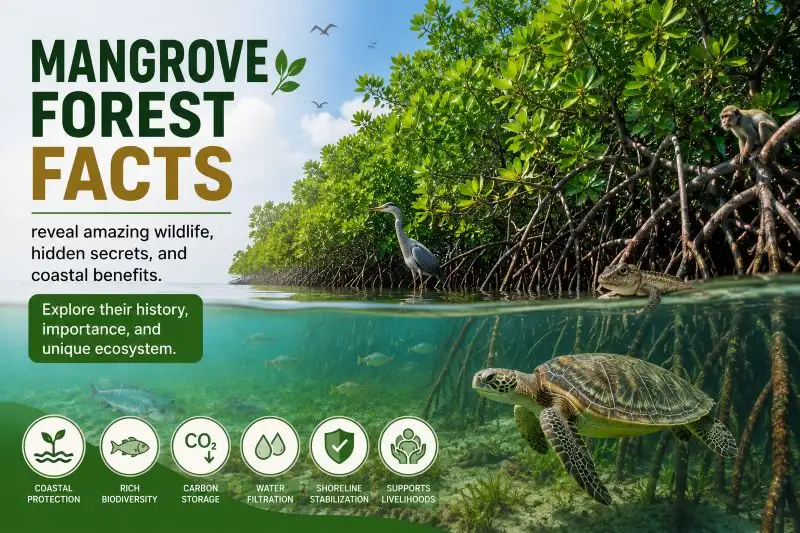
Mangrove Forest Facts reveal amazing wildlife, hidden secrets, and coastal benefits. Explore their history, importance, and unique ecosystem.
Introduction
When people think of forests, they often picture towering mountains covered with pine trees or lush tropical rainforests. However, one of Earth’s most remarkable ecosystems grows where the land meets the sea. Mangrove forests are unique coastal woodlands that thrive in salty, muddy environments where most other plants cannot survive.
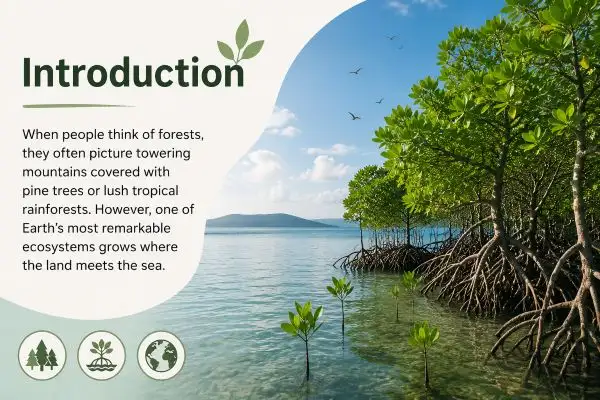
Their tangled roots, rich biodiversity, and incredible ability to protect coastlines make them one of the world’s most valuable natural resources.
Learning Mangrove Forest Facts helps us understand why these extraordinary forests are essential for wildlife, local communities, and the global climate. From providing shelter for thousands of marine species to capturing large amounts of carbon dioxide, mangrove forests perform countless ecological services that benefit people and nature alike.
Although they cover less than one percent of the world’s tropical forests, mangroves contribute significantly to biodiversity, fisheries, and coastal protection. Scientists continue discovering fascinating information about these resilient ecosystems, proving they are far more important than many people realize.
Whether you are a nature enthusiast, traveler, student, or environmental researcher, this guide explores the history, formation, ecological importance, and hidden wonders of mangrove forests in an easy-to-understand and engaging way.
The History of Mangrove Forests
Mangrove forests have existed on Earth for millions of years. Fossil evidence suggests that ancient mangrove species evolved over 60 million years ago, gradually adapting to life in coastal environments where seawater regularly floods the land.
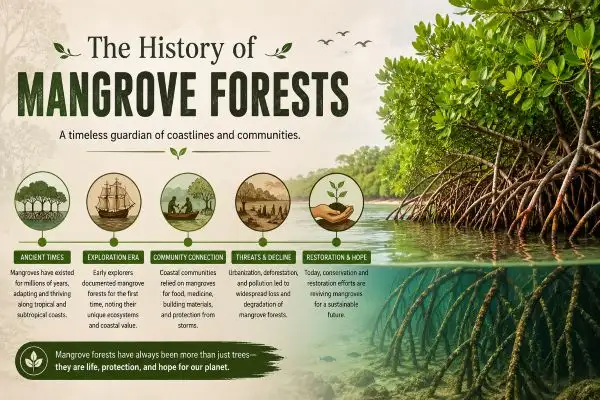
Unlike ordinary trees, mangroves developed specialized root systems capable of surviving in oxygen-poor soils and highly saline conditions. These remarkable adaptations allowed them to colonize tropical and subtropical coastlines across Asia, Africa, Australia, North America, and South America.
For centuries, coastal communities have relied on mangrove forests for food, medicine, fishing, timber, and protection against storms. Ancient civilizations understood the importance of preserving these forests because healthy mangroves supported abundant fish populations and reduced damage from coastal flooding.
Today, scientists recognize mangrove forests as one of the planet’s most productive ecosystems. They are increasingly protected through conservation programs because of their vital role in reducing climate change, conserving biodiversity, and safeguarding millions of people living near coastlines.
What Are Mangrove Forests?
Mangrove forests are coastal wetlands made up of salt-tolerant trees and shrubs that grow along tropical and subtropical shorelines. They flourish where rivers meet the sea, creating a unique transition zone between marine and terrestrial ecosystems.

These forests experience daily tidal flooding, exposing their roots to changing water levels. To survive, mangrove trees have evolved extraordinary adaptations that allow them to filter salt, absorb oxygen through aerial roots, and remain firmly anchored in unstable muddy soils.
More than 80 different mangrove tree species exist worldwide, although only a portion of them form extensive forests. Together, these trees create complex habitats that support fish, birds, reptiles, mammals, insects, shellfish, and countless microorganisms.
Mangrove ecosystems serve as vital breeding and nursery habitats where juvenile fish, crabs, shrimp, and many other sea creatures grow safely before migrating to coral reefs and deeper ocean waters.
1. Mangrove Trees Can Thrive in Saltwater
One of the most fascinating Mangrove Forest Facts is the incredible ability of mangrove trees to thrive in salty coastal environments where most plants cannot survive. High salt levels usually prevent ordinary vegetation from absorbing the freshwater needed for growth. However, mangrove trees have evolved remarkable adaptations to overcome this challenge.
Some species naturally filter salt through their roots, while others expel excess salt through specialized leaf glands or store it in aging leaves that later fall away. Their unique root systems also help them absorb oxygen from waterlogged soils and remain stable in shifting mud.
These extraordinary survival strategies enable mangrove forests to flourish along tropical coastlines, making them one of nature’s finest examples of resilience, adaptation, and ecological innovation.
2. Their Root Systems Are Unlike Any Other Trees
One of the most distinctive Mangrove Forest Facts is the extraordinary root system that allows these trees to survive in challenging coastal environments. Unlike most trees, many mangrove species develop aerial roots that extend above the muddy ground, enabling them to absorb oxygen from the air because waterlogged soils contain very little oxygen.
These strong, interwoven roots firmly anchor the trees against powerful tides, waves, and tropical storms while trapping sediment carried by rivers and ocean currents. This natural process helps build new coastal land, reduces shoreline erosion, and improves water quality.
Additionally, the tangled root network provides shelter, breeding grounds, and feeding areas for young fish, crabs, shrimp, and countless other marine species, making mangrove ecosystems essential for healthy coastal biodiversity.
3. Mangrove Forests Support Incredible Biodiversity
Another remarkable Mangrove Forest Fact is the extraordinary biodiversity these coastal ecosystems support. A single mangrove forest can provide habitat for hundreds of plant and animal species living both above and below the water’s surface.
From colorful birds, reptiles, and mammals to fish, crabs, shrimp, and shellfish, mangroves create a rich environment where wildlife can feed, breed, and thrive.
These forests also act as important ecological links between rivers, coral reefs, and the open ocean, helping maintain healthy marine ecosystems and supporting global biodiversity through their unique and productive natural habitats.
Common wildlife found in mangrove forests includes:
- Fish
- Mud crabs
- Shrimp
- Oysters
- Sea turtles
- Crocodiles
- Water snakes
- Kingfishers
- Herons
- Egrets
- Monkeys
- Otters
- Monitor lizards
Many commercially important fish species spend their early lives among mangrove roots before migrating to coral reefs or deeper waters.
Because of this, healthy mangrove forests directly support fisheries and food security for millions of people around the world.
The incredible biodiversity found within mangrove ecosystems highlights their importance as one of Earth’s richest coastal habitats.
4. Mangrove Forests Are Natural Shields Against Storms
One of the most valuable Mangrove Forest Facts is their ability to protect coastlines from powerful storms and rising sea levels. Dense networks of roots, trunks, and branches act as natural barriers that absorb wave energy before it reaches the shore.
During tropical cyclones, hurricanes, and storm surges, mangrove forests help reduce flooding, prevent coastal erosion, and safeguard nearby communities, homes, and infrastructure. Their thick vegetation slows fast-moving water, allowing sediment to settle and strengthening fragile shorelines over time.
Studies show that regions with healthy mangrove forests often experience less storm damage than areas where these ecosystems have been cleared. As climate change increases extreme weather events, conserving mangrove forests is essential for enhancing coastal resilience, protecting biodiversity, and saving lives.
5. Mangrove Forests Store Massive Amounts of Carbon
One of the most significant Mangrove Forest Facts is the extraordinary ability of these coastal ecosystems to capture and store carbon, making them powerful allies in the fight against climate change. Mangrove forests absorb carbon dioxide through photosynthesis and lock it away in their trunks, branches, leaves, roots, and especially in their waterlogged soils.
This stored carbon, known as blue carbon, can remain trapped for centuries or even thousands of years because decomposition occurs very slowly in oxygen-poor sediments. Despite covering only a small portion of the world’s forests, mangroves can store substantially more carbon per hectare than many tropical rainforests.
By reducing greenhouse gas emissions, protecting biodiversity, and strengthening coastal resilience, healthy mangrove forests play a vital role in environmental sustainability. Expanding mangrove conservation and restoration projects is essential for supporting global climate goals, preserving marine ecosystems, and creating a healthier, more resilient future for generations to come.
6. Mangrove Forests Are Nature’s Nursery for Marine Life
One of the most fascinating Mangrove Forest Facts is that these coastal forests serve as natural nurseries for thousands of marine species. The dense network of mangrove roots creates a safe environment where young fish, crabs, shrimp, lobsters, and other aquatic animals can grow before moving into deeper coastal waters.
The tangled roots protect juvenile marine life from larger predators while providing abundant food in the form of algae, plankton, and tiny aquatic organisms. Many commercially important seafood species spend the earliest stages of their lives in mangrove habitats.
Scientists estimate that a significant percentage of tropical fish populations depend on mangrove forests at some point in their life cycle. Without these coastal nurseries, fish populations would decline, affecting marine biodiversity, local fisheries, and the livelihoods of millions of people.
Healthy mangrove forests also strengthen nearby coral reefs and seagrass meadows by supplying young marine life and filtering sediments before they reach the ocean. This close ecological connection makes mangroves an essential part of thriving coastal ecosystems.
7. The World’s Largest Mangrove Forest Is the Sundarbans
Among the most remarkable Mangrove Forest Facts is the Sundarbans, the world’s largest continuous mangrove forest and one of the planet’s most important coastal ecosystems. Stretching across southern Bangladesh and eastern India, this vast natural landscape covers thousands of square kilometers of tidal rivers, creeks, mudflats, islands, and dense mangrove forests.
Designated as a UNESCO World Heritage Site, the Sundarbans is celebrated for its extraordinary biodiversity and is home to the iconic Royal Bengal Tiger, estuarine crocodiles, spotted deer, fishing cats, Irrawaddy dolphins, and hundreds of bird, fish, and reptile species.
Beyond its rich wildlife, the Sundarbans protects coastal communities from cyclones and storm surges, stores significant amounts of blue carbon, supports sustainable fisheries, and provides livelihoods for millions of people.
Its ecological importance makes it a global symbol of biodiversity conservation, climate resilience, and the urgent need to protect mangrove forests for future generations.
The Sundarbans is home to the iconic Royal Bengal Tiger, making it the only mangrove forest in the world where this magnificent big cat naturally lives. Besides tigers, the forest supports:
- Spotted deer
- Saltwater crocodiles
- Fishing cats
- Irrawaddy dolphins
- Monitor lizards
- King cobras
- Hundreds of bird species
- Numerous fish and crab species
Millions of people living near the Sundarbans depend on the forest for fishing, honey collection, eco-tourism, and natural protection from cyclones.
The Sundarbans helps protect coastlines from erosion while capturing and storing significant amounts of carbon, making it one of the planet’s most valuable natural ecosystems.
8. Mangrove Forests Face Serious Environmental Threats
Although mangrove forests are highly resilient, they face growing threats from human activities and the effects of climate change. Rapid coastal development often leads to the clearing of mangroves for roads, ports, resorts, shrimp farms, and industrial projects, destroying critical wildlife habitats.
Additional challenges such as pollution, illegal logging, rising sea levels, plastic waste, and stronger storms further damage these valuable ecosystems. Protecting mangrove forests through sustainable development and conservation is essential to preserve biodiversity, strengthen coastal protection, and maintain the many environmental benefits they provide.
Other major threats include:
- Illegal logging
- Water pollution
- Plastic waste
- Oil spills
- Shrimp farming expansion
- Rising sea levels
- Stronger tropical storms
- Changes in river flow
- Climate change
- Unsustainable tourism
When mangrove forests disappear, nearby communities become more vulnerable to flooding, erosion, and storm damage. Marine biodiversity also declines because many fish and shellfish lose their breeding grounds.
The loss of mangroves also releases stored carbon into the atmosphere, contributing to global climate change. Protecting these forests is therefore essential not only for wildlife but also for the health of our planet.
9. Mangrove Conservation Benefits People and Nature
The final Mangrove Forest Fact highlights why protecting these remarkable coastal ecosystems is more important than ever. Around the world, governments, scientists, conservation groups, and local communities are collaborating to restore degraded mangrove forests and safeguard existing ones.
These restoration efforts improve biodiversity, strengthen natural coastal defenses, support sustainable fisheries, and increase blue carbon storage, helping reduce the impacts of climate change. By investing in mangrove conservation today, we protect wildlife, preserve livelihoods, enhance coastal resilience, and ensure healthier ecosystems for future generations.
Conservation programs include:
- Planting native mangrove trees
- Establishing protected coastal reserves
- Reducing plastic pollution
- Promoting sustainable fishing practices
- Restoring degraded wetlands
- Supporting community-based conservation
- Encouraging responsible eco-tourism
- Raising environmental awareness
Every restored mangrove forest strengthens coastal ecosystems, improves biodiversity, captures more carbon, and helps communities adapt to climate change.
Individuals can also contribute by reducing plastic waste, supporting conservation projects, respecting protected areas, and choosing eco-friendly travel experiences.
Protecting mangrove forests today ensures that future generations will continue benefiting from these extraordinary coastal ecosystems.
Why Mangrove Forests Are So Important
Mangrove forests are essential coastal ecosystems that protect shorelines from erosion, reduce storm damage, and provide safe habitats for diverse wildlife. They support fisheries, strengthen local economies, improve water quality, and store large amounts of blue carbon, helping combat climate change.
Their environmental, economic, and ecological value makes mangrove forests indispensable for maintaining healthy coastal communities and preserving global biodiversity for future generations.
Environmental Benefits
- Protect coastlines from erosion
- Reduce storm surge damage
- Improve water quality
- Store large amounts of blue carbon
- Support marine biodiversity
- Prevent saltwater intrusion
- Stabilize coastal soils
Economic Benefits
- Support commercial fisheries
- Create eco-tourism opportunities
- Provide sustainable livelihoods
- Supply honey, fish, and other natural resources
- Reduce disaster recovery costs
Ecological Benefits
- Provide breeding habitats for marine life
- Connect coral reefs and seagrass ecosystems
- Maintain healthy food chains
- Protect endangered wildlife
- Increase ecosystem resilience
Conclusion
These Mangrove ForestFacts reveal that mangrove forests are far more than clusters of trees growing along the coast. They are living ecosystems that protect shorelines, support incredible biodiversity, store vast amounts of carbon, and sustain millions of people through fisheries, tourism, and natural resources.
From their remarkable salt-filtering abilities and unique aerial roots to their role as nurseries for marine life and natural barriers against powerful storms, mangroves demonstrate nature’s extraordinary ability to adapt and protect life.
However, these valuable ecosystems continue to face threats from climate change, pollution, deforestation, and rapid coastal development. Conserving and restoring mangrove forests is one of the most effective ways to strengthen coastal resilience, protect wildlife, and combat global warming.
Whether you are exploring the majestic Sundarbans, learning about coastal ecosystems, or simply appreciating the wonders of nature, understanding Mangrove Forest Facts helps us recognize the critical role these forests play in maintaining a healthier and more sustainable planet.
By supporting conservation efforts and spreading awareness, we can ensure that future generations continue to benefit from the hidden secrets and extraordinary advantages of the world’s mangrove forests.
Frequently Asked Questions (FAQs)
What are mangrove forests?
Mangrove forests are coastal wetlands made up of salt-tolerant trees and shrubs that grow along tropical and subtropical shorelines where land meets the sea.
Why are mangrove forests important?
They protect coastlines from storms, support marine biodiversity, store carbon, improve water quality, and provide habitats for thousands of plant and animal species.
Where are mangrove forests found?
Mangrove forests grow in tropical and subtropical regions across Asia, Africa, Australia, North and South America, and many Pacific islands.
What animals live in mangrove forests?
Mangrove forests are home to fish, crabs, shrimp, crocodiles, sea turtles, monkeys, otters, birds, reptiles, insects, and even the Royal Bengal Tiger in the Sundarbans.
Why do mangrove trees have exposed roots?
Their aerial roots help absorb oxygen from waterlogged soil, stabilize trees in muddy environments, and provide shelter for marine life.
How do mangroves help fight climate change?
Mangrove forests capture and store large amounts of carbon dioxide, known as blue carbon, helping reduce greenhouse gases in the atmosphere.