

Discover Sundarbans facts, wildlife, and ecosystem. Explore the largest mangrove forest, home of the Royal Bengal Tiger and a UNESCO World Heritage Site.
Introduction: Sundarbans Bangladesh
The Sundarbans stands as one of the most extraordinary natural landscapes on our planet. Recognized as the largest mangrove forest in the world, this vast and fascinating region is located in the delta formed by the Ganges, Brahmaputra, and Meghna rivers. Spanning across southern Bangladesh and eastern India, the Sundarbans is a unique blend of land and water, where dense forests meet tidal rivers and muddy wetlands.
This remarkable ecosystem is celebrated for its rich biodiversity and environmental significance. It provides a safe habitat for countless species, including the iconic Royal Bengal Tiger, as well as crocodiles, deer, dolphins, and hundreds of bird species. Beyond its wildlife, the Sundarbans plays a crucial role in protecting coastal communities by acting as a natural barrier against cyclones, storms, and rising sea levels.
In addition to its ecological value, the region holds deep cultural importance for local communities who depend on its resources for their livelihood. This article will take you through the geography, wildlife, climate, history, and conservation challenges of the Sundarbans, offering a clear and engaging overview of why this natural wonder is so important to both people and the planet.
📍 Where is the Mangrove Forest Located?
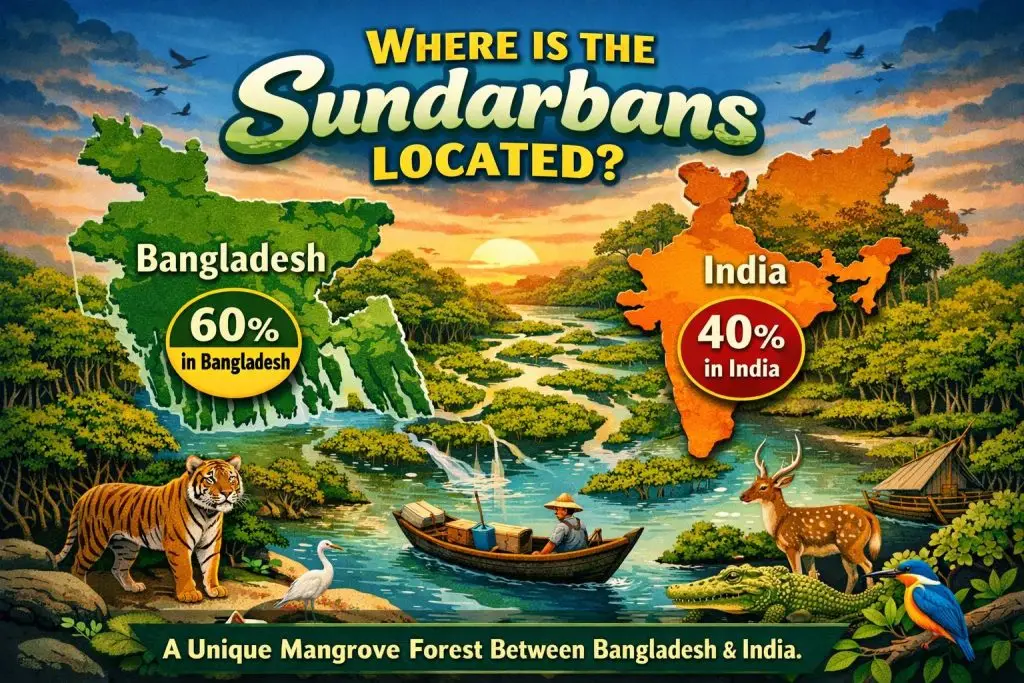
The Sundarbans is a vast and unique mangrove forest situated in the southern region of Bangladesh and the eastern part of India, along the shores of the Bay of Bengal. It forms an integral part of the Ganges-Brahmaputra-Meghna delta, which is recognized as the largest delta in the world. This sprawling forest is interlaced with a network of rivers, tidal waterways, and small islands, creating a rich ecosystem that supports diverse wildlife and plays a vital role in protecting coastal areas from natural disasters like cyclones and tidal surges.
Approximately:
- About 60% of the Sundarbans is located in Bangladesh, making it the larger share of this unique mangrove ecosystem.
- Around 40% of the Mangrove Forest extends into India, forming a smaller but equally important portion of the forest.
The Sundarbans is shaped by an intricate web of rivers, tidal channels, mudflats, and scattered islands. This ever-changing landscape is influenced by daily tides and seasonal shifts, creating a highly dynamic environment. Its unique structure supports rich biodiversity and makes it one of the most fascinating and constantly evolving ecosystems on Earth.
What Makes the Sundarbans Special?
The Sundarbans stands out for its vast and dense mangrove forests, uniquely adapted to survive in salty coastal waters. This remarkable ecosystem supports diverse wildlife and protects the coastline from storms. The name “Sundarbans” is thought to originate from the “Sundari” tree, a common and important mangrove species in the region. These trees play a vital role in maintaining ecological balance, making the forest both environmentally significant and naturally fascinating.
Key Features:
- Largest mangrove forest in the world: The Sundarbans is the largest mangrove forest on Earth, covering a vast coastal area.
- Home to the Royal Bengal Tiger: It is home to the famous Royal Bengal Tiger, known for its strength and adaptability.
- Located in a tidal ecosystem: The region exists within a dynamic tidal ecosystem, constantly shaped by rising and falling sea waters.
- UNESCO World Heritage Site: It is recognized as a UNESCO World Heritage Site for its global environmental importance.
- Rich biodiversity and wildlife habitat: The forest supports rich biodiversity, providing a natural habitat for countless species of wildlife.
Wildlife in the Sundarbans
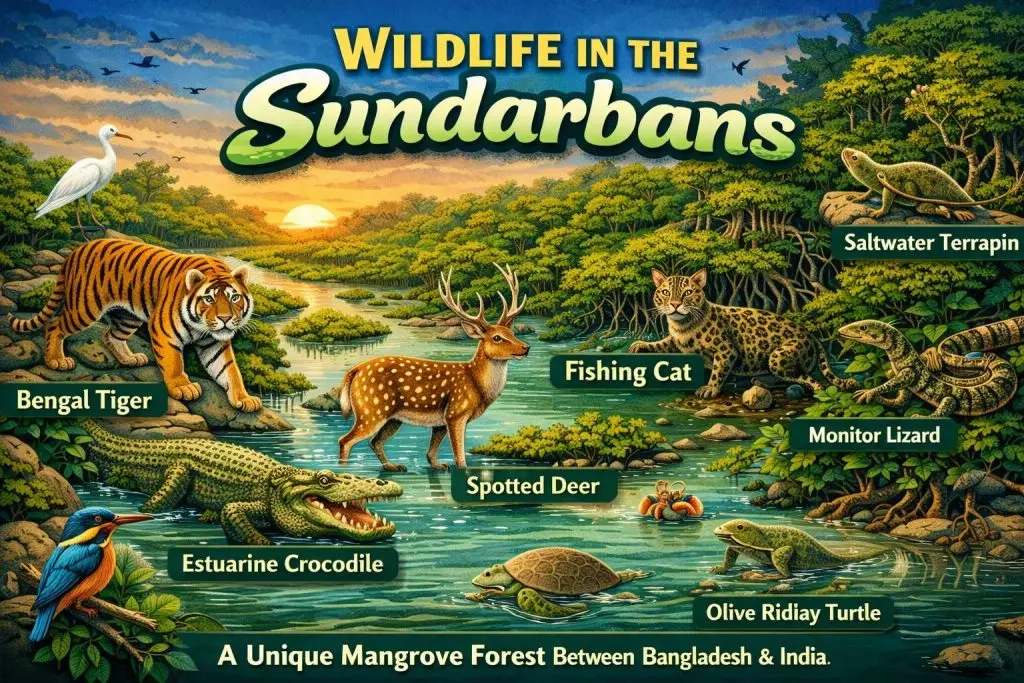
Wildlife in the Sundarbans is remarkably diverse, making it one of the richest ecosystems in the world. The forest is home to many rare and endangered species, including the Royal Bengal Tiger, spotted deer, crocodiles, and various bird species. Its unique mangrove habitat supports both land and aquatic animals. This biodiversity plays a crucial role in maintaining ecological balance and highlights the global importance of conserving this extraordinary natural environment.
Royal Bengal Tiger
The Royal Bengal Tiger in the Sundarbans is one of the world’s most iconic animals. These tigers are exceptional swimmers and have uniquely adapted to survive in the challenging mangrove environment, making them different from other tiger populations.
Other Animals in the Sundarbans
The forest is home to:
- Saltwater crocodiles
- Spotted deer (chital)
- Wild boars
- Fishing cats
- Monitor lizards
Bird Species
The Sundarbans hosts over 300 species of birds, including:
- Kingfishers
- Eagles
- Herons
- Migratory birds
Aquatic Life
- Irrawaddy dolphins
- Ganges river dolphins
- Various fish and crustaceans
👉 This rich biodiversity makes the Sundarbans ecosystem one of the most important in the world.
The Sundarbans Ecosystem
The Sundarbans ecosystem is a unique and fragile blend of land and water, creating a dynamic natural environment. It is heavily influenced by daily tidal movements, varying salinity levels, and seasonal weather changes. These factors shape the region’s vegetation, wildlife, and overall ecological balance. Mangrove trees thrive in these conditions, protecting the coastline and supporting diverse species. This delicate system requires careful conservation, as even small environmental changes can disrupt its stability and threaten the rich biodiversity that depends on it for survival.
Key Characteristics:
- Brackish water (mix of fresh and saltwater): The water in the Sundarbans is a mixture of river freshwater and salty seawater from the Bay of Bengal.
- Daily tidal flooding: The forest floor is regularly flooded by tides twice a day, shaping the ecosystem and supporting aquatic life.
- Nutrient-rich soil: Sediments carried by rivers deposit minerals and organic matter, creating fertile soil for mangrove growth.
- Dense mangrove vegetation: Thick mangrove forests with tangled roots provide shelter for wildlife and protect the coastline from storms.
Mangrove trees have special roots called pneumatophores, which help them breathe in waterlogged soil.
Climate of the Sundarbans
The Sundarbans features a tropical, humid climate characterized by warm temperatures typically fluctuating between 20°C and 35°C. This heat, combined with high moisture levels, sustains its dense mangrove ecosystem. The region follows a three-season cycle: a sweltering, muggy summer; a monsoon period defined by torrential rains and Bay of Bengal storms; and a mild, pleasant winter. These environmental factors, alongside constant tidal influences, are essential in maintaining the forest’s unique biodiversity, making it a critical yet challenging habitat for its diverse wildlife.
Seasonal Overview:
- Summer (March–June): In the Sundarbans, summer brings intense heat, high humidity, and strong sunshine across the mangrove landscape.
- Monsoon (June–September): During the monsoon, heavy rains and storms from the Bay of Bengal raise water levels and flood many forest channels.
- Winter (November–February): Winter offers cooler and more pleasant weather, making it an ideal time for tourists to explore and observe wildlife such as the Bengal Tiger.
The region is frequently affected by cyclones due to its location near the Bay of Bengal.

History of the Sundarbans
The Sundarbans has a rich and fascinating history that stretches back centuries. Ancient travelers and historians mentioned this vast mangrove forest in their writings, describing it as a mysterious and wild region filled with rivers, dense trees, and wildlife. Over time, local communities settled near its edges, depending on fishing, honey collection, and forest resources for survival. The forest also acted as a natural shield, protecting inland settlements from storms, cyclones, and even invading forces. Throughout history, the Sundarbans has remained an important ecological and cultural landmark, symbolizing the close relationship between nature and the people living around this remarkable forest.
Historically:
- It was sparsely populated due to its harsh environment: The difficult terrain, dense mangroves, and frequent flooding of the Sundarbans made permanent human settlement very limited.
- Local communities depended on fishing, honey collection, and wood gathering: People living near the forest traditionally earned their livelihood by fishing in rivers, collecting wild honey, and gathering timber and forest products.
- It has always been a mysterious and dangerous place due to wildlife: The presence of animals like the Bengal Tiger and crocodiles made the forest both fascinating and risky for those who entered it.
UNESCO World Heritage Site
The Sundarbans earned its UNESCO World Heritage status due to its unparalleled ecological significance as the world’s largest contiguous mangrove forest. This coastal wilderness serves as a complex transition zone between marine and terrestrial environments, shaped by intricate tidal networks and mudflats. Beyond its geological uniqueness, the site provides a critical sanctuary for endangered species, most notably the Bengal tiger. Its recognition highlights the global importance of preserving this resilient yet fragile ecosystem against the mounting threats of climate change and rising sea levels.
Why It’s Important:
- Unique biodiversity
- Critical tiger habitat
- Natural coastal protection
- Ecological significance
This recognition helps promote conservation and global awareness.
Importance of the Sundarbans
Beyond its striking beauty, the Sundarbans serves as a vital ecological shield, protecting inland communities from the devastating impact of cyclones and tidal surges. Acting as a massive carbon sink, this mangrove expanse plays a significant role in global climate regulation. Economically, it provides a primary livelihood for millions through fishing, honey collection, and timber. Furthermore, the region’s complex root systems filter pollutants and prevent coastal erosion, ensuring a stable habitat for rare fauna. Its preservation is essential for both environmental resilience and human survival.
Coastal Protection
Mangrove forests act as a natural barrier against:
- Cyclones
- Storm surges
- Coastal erosion
Environmental Benefits
- Absorbs carbon dioxide
- Maintains ecological balance
- Supports marine life
Human Livelihood
Millions rely on the Sundarbans for fishing, honey collection, and timber, alongside protection from storms and vital ecotourism-driven income.
- Fishing
- Honey collection
- Agriculture
Threats to the Sundarbans
The Sundarbans faces existential threats from rising sea levels and increased salinity, which disrupt the delicate freshwater balance required for mangrove survival. Climate change intensifies frequent, violent cyclones, while illegal poaching and deforestation further jeopardize its fragile biodiversity. Additionally, industrial pollution and oil spills from nearby shipping lanes contaminate the water, poisoning the food chain. These combined human and environmental pressures compromise the forest’s ability to act as a natural barrier, placing both wildlife and local communities at extreme risk.
Climate Change
- Rising sea levels
- Increased salinity
- Habitat loss
Natural Disasters
Severe cyclones regularly devastate the Mangrove Forest, destroying habitats, causing saltwater intrusion, and threatening the survival of its iconic, diverse wildlife.
Human Activities
- Illegal logging
- Poaching
- Pollution
Human-Wildlife Conflict
Encounters between humans and tigers are common, leading to casualties on both sides.
Conservation Efforts
Global conservation initiatives focus on reforestation, anti-poaching patrols, and community-led sustainability to safeguard this vital ecosystem. International partnerships aim to mitigate climate impacts, ensuring the mangroves continue to protect the coastline while preserving the habitat for endangered species.
Key Efforts:
- Wildlife protection laws
- Anti-poaching measures
- Sustainable tourism
- Mangrove reforestation
Both Bangladesh and India are working together to preserve this shared natural heritage.
Tourism in the Mangrove Forest
The Mangrove Forest is a popular destination for eco-tourism.
What You Can Experience:
- Boat safaris through rivers
- Wildlife spotting
- Bird watching
- Exploring mangrove forests
Best Time to Visit:
👉 November to February (cool and comfortable weather)
Tourism helps raise awareness and supports local communities.
Culture and Local Life
Life near the Sundarbans revolves around nature-centric traditions, where folk rituals and forest deities reflect a deep respect for the wilderness.
Traditions:
- Worship of forest deities like Bonbibi
- Dependence on natural resources
- Strong community bonds
Their lifestyle reflects harmony with the environment.
Why the Mangrove Forest Matters to the World
As a premier global ecological asset, the Sundarbans functions as one of the planet’s most efficient carbon sinks, sequestering vast amounts of atmospheric CO2 within its deep tidal sediments. Its vast mangrove network acts as a natural bio-shield, mitigating the force of tropical storms and protecting millions of lives. Furthermore, it serves as a critical evolutionary laboratory, hosting the world’s only mangrove-dwelling tiger population. Preserving this UNESCO site is essential for maintaining global marine health and stabilizing the fragile climate of the entire Indian Ocean region.
Global Importance:
- Helps fight climate change
- Preserves endangered species
- Protects coastal populations
Losing the Sundarbans would be a huge loss for the planet.
📌 7 Powerful Facts About the Mangrove Forest
- It is the largest mangrove forest in the world:The Sundarbans is recognized as the largest mangrove forest on Earth, covering thousands of square kilometers across deltaic land. Its dense network of salt-tolerant trees and waterways creates a unique ecosystem found nowhere else. This vast forest plays a crucial role in maintaining biodiversity, supporting marine life, and stabilizing coastal environments against erosion and natural disturbances.
- Home to the Royal Bengal Tiger: The Sundarbans is famous for being home to the majestic Royal Bengal Tiger, one of the most powerful predators in the wild. These tigers have uniquely adapted to the mangrove environment, often swimming between islands. Their presence highlights the ecological importance of the forest and makes the region one of the most significant tiger habitats globally.
- Spans Bangladesh and India: The Sundarbans stretches across two countries, Bangladesh and India, forming a shared natural heritage. Around sixty percent lies in Bangladesh, while the rest is in India. This cross-border ecosystem requires joint conservation efforts and cooperation between both nations to protect its wildlife, forests, and waterways, ensuring its sustainability for future generations.
- A UNESCO World Heritage Site: The Mangrove Forest has been designated as a UNESCO World Heritage Site due to its outstanding ecological value and biodiversity. This recognition highlights its global importance and encourages conservation efforts. It also helps raise international awareness about protecting this fragile ecosystem, ensuring that its unique environment and wildlife are preserved for future generations to admire and study.
- Contains over 300 species of birds:The Mangrove Forest is a paradise for bird lovers, hosting more than 300 species of birds throughout the year. Both resident and migratory birds thrive in its diverse habitats, including wetlands, forests, and riverbanks. These birds play an essential role in maintaining ecological balance and add to the natural beauty and richness of this unique environment.
- Acts as a natural shield against cyclones: The dense mangrove forests of the Mangrove Forest act as a natural barrier against cyclones, storms, and tidal surges. By reducing wind speed and absorbing wave energy, the forest helps protect nearby coastal communities. This protective function is vital for millions of people living in vulnerable regions, making the Mangrove Forest an essential defense against natural disasters.
- Supports millions of people: Millions of people depend on the Mangrove Forest for their livelihoods, including fishing, honey collection, and agriculture. The forest provides essential resources while supporting local economies and traditions. Communities living near the Sundarbans have developed unique lifestyles closely connected to nature, highlighting the importance of preserving this ecosystem for both environmental and human well-being.
Final Thoughts
The Mangrove Forest represents a stunning blend of natural beauty, ecological importance, and remarkable resilience. Its vast mangrove forests, winding waterways, and diverse wildlife make it one of the most unique ecosystems in the world. From sheltering the majestic Royal Bengal Tiger to supporting countless plant and animal species, this region plays a critical role in maintaining environmental balance. It also serves as a natural shield, protecting coastal communities from storms, cyclones, and rising sea levels.
Despite its strength, the Mangrove Forest is facing increasing threats from climate change, pollution, and human activities. Rising sea levels, loss of habitat, and declining biodiversity are serious challenges that cannot be ignored. Without proper action, this invaluable ecosystem could face irreversible damage in the future.
Protecting the Mangrove Forest requires a shared effort from governments, local communities, and people around the world. Promoting sustainable practices, raising awareness, and supporting conservation initiatives are essential steps toward preserving this natural treasure. By valuing and protecting the Sundarbans today, we can help ensure that its beauty, biodiversity, and life-supporting functions continue to benefit future generations.