
Discover the story of the New Leader of Iran, Mojtaba Khamenei, and how the influential cleric rose from the shadows to power and shaped Iran’s future.
Introduction: A Hidden Power Emerges
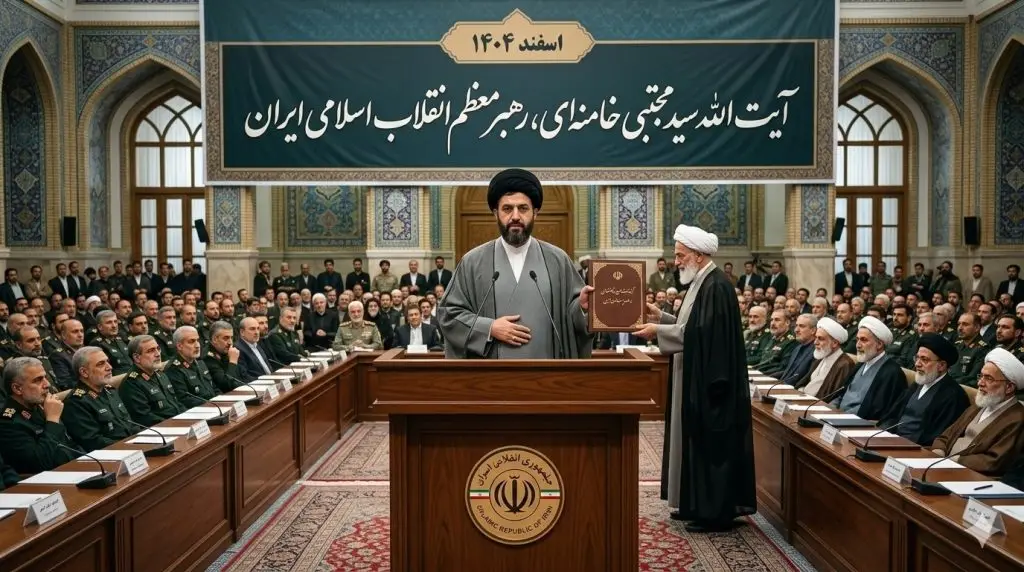
For decades, Mojtaba Khamenei was known as one of the most mysterious and influential figures inside the Iranian political establishment. Rarely appearing in public and holding no formal elected office, he operated behind the scenes within Iran’s powerful religious and security networks.
In March 2026, that changed dramatically. Following the death of his father, Ali Khamenei, Mojtaba was officially appointed as the third Supreme Leader of the Islamic Republic of Iran, marking a historic and controversial transition of power.
The appointment has drawn intense global attention because it represents a rare father-to-son leadership transition in Iran’s post-revolution political system. Analysts believe the move could reshape the country’s domestic politics, foreign policy, and the wider balance of power in the Middle East.
This article explores who Mojtaba Khamenei is, how he rose to power, why his leadership matters, and what it could mean for Iran and the world.
Who Is Mojtaba Khamenei?
Early Life and Family Background
Mojtaba Khamenei was born on September 8, 1969, in Tehran, Iran. He is the second son of Ali Khamenei, who served as Iran’s Supreme Leader from 1989 until his death in 2026.

Growing up in one of the most powerful political families in Iran, Mojtaba was immersed in the ideological and religious environment of the Islamic Republic from an early age. His father had already become a major political figure after the Iranian Revolution, which transformed Iran into a theocratic state governed by Islamic law.
Mojtaba attended religious schools and later pursued Islamic studies in the holy city of Qom, Iran’s most important center of Shiite scholarship. There he studied advanced Islamic jurisprudence and theology.
Unlike many political figures in Iran, Mojtaba rarely sought the spotlight. Instead, he cultivated influence quietly within elite religious and security circles.
Iran’s Supreme Leader: The Most Powerful Position in the Country
To understand Mojtaba Khamenei’s new role, it is essential to understand the power of the Supreme Leader in Iran.

The Supreme Leader serves as the top political and spiritual authority in the country. The position was created after the 1979 revolution and gives its holder sweeping powers over all branches of government.
The Supreme Leader:
- Commands Iran’s armed forces
- Appoints key judicial and military leaders
- Influences foreign policy and nuclear strategy
- Oversees state broadcasting and major institutions
- Has final authority over major national decisions
The position is filled by the Assembly of Experts, an 88-member clerical body responsible for selecting and supervising the Supreme Leader.
In March 2026, this body voted to appoint Mojtaba Khamenei as Iran’s next leader.
The Death of Ali Khamenei and the Leadership Crisis
The leadership transition occurred under dramatic circumstances.
According to international reports, Ali Khamenei died after a joint United States-Israel strike during escalating regional conflict in February 2026.

His death triggered one of the most significant political crises in Iran since the revolution.
For nearly four decades, Ali Khamenei had dominated Iranian politics. His leadership shaped the country’s foreign policy, nuclear ambitions, and domestic governance.
The sudden absence of such a powerful leader forced Iran’s political elite to quickly choose a successor.
After several days of deliberation, the Assembly of Experts announced Mojtaba Khamenei as the new Supreme Leader.
From Shadow Figure to National Leader
One of the most remarkable aspects of Mojtaba’s rise is that he never held a major public office.
Unlike many Iranian politicians, he was not a president, minister, or parliamentary figure. Instead, he gained influence through close connections to powerful institutions.
For years, analysts described him as a “shadow power broker” inside Iran.
He reportedly played an important role in:
- Coordinating political alliances
- Influencing conservative factions
- Maintaining ties with Iran’s security forces
Many experts believe Mojtaba helped shape the rise of former Iranian president Mahmoud Ahmadinejad in the 2000s.
Despite his influence, Mojtaba maintained an extremely low public profile.
His appointment as Supreme Leader therefore represents a major shift—from hidden strategist to the most visible authority in Iran.
Support from the Revolutionary Guard
A key factor behind Mojtaba Khamenei’s rise is his strong relationship with the Islamic Revolutionary Guard Corps (IRGC).
The IRGC is considered one of the most influential institutions in Iran. It functions not only as a military force but also as a major political and economic power center.
Shortly after Mojtaba’s appointment, the Revolutionary Guard publicly pledged loyalty to him.
This support is crucial because the IRGC controls:
- Advanced missile programs
- Military operations abroad
- Internal security networks
- Large sections of the Iranian economy
Analysts believe the Guard’s backing played a decisive role in securing Mojtaba’s leadership.
A Controversial Succession
The appointment of Mojtaba Khamenei has sparked debate both inside and outside Iran.
Critics argue that the transition resembles dynastic succession, something the Islamic Republic historically opposed.
Iran’s political system was designed to avoid monarchy after the overthrow of the Mohammad Reza Pahlavi during the 1979 revolution.
Yet the transfer of power from father to son has raised concerns that Iran may be moving toward a hereditary leadership model.
Some clerics also question whether Mojtaba has sufficient religious authority to serve as Supreme Leader.
However, supporters argue that his experience, political connections, and loyalty to Iran’s revolutionary ideology make him a suitable choice.
Iran’s Political System and Leadership Structure
Iran operates under a unique hybrid political system combining democratic and theocratic elements.
Key components include:
1. Supreme Leader
The ultimate authority overseeing all major decisions.
2. President
The head of government responsible for administration and economic policy.
Currently, Iran’s president is Masoud Pezeshkian.
3. Parliament (Majlis)
Responsible for legislation and oversight.
4. Guardian Council
A powerful body that reviews laws and approves election candidates.
5. Assembly of Experts
Selects and supervises the Supreme Leader.
This complex structure means Mojtaba Khamenei now sits at the top of a powerful political hierarchy.
Global Reactions to Mojtaba Khamenei’s Appointment
The international reaction to Mojtaba’s leadership has been mixed.
Western Governments
Some Western leaders expressed concern about the potential for increased tensions in the Middle East.
Regional Allies
Groups aligned with Iran welcomed the appointment, seeing it as continuity of the country’s revolutionary policies.
Economic Impact
The regional conflict and leadership change have also affected global markets. Oil prices surged amid fears of disruption in the Strait of Hormuz, a vital route for global energy supplies.
This highlights how Iranian political developments can influence the global economy.
How the New Leader of Iran Mojtaba Khamenei Could Shape the Nation
Experts believe Mojtaba Khamenei’s leadership could shape Iran in several ways.
1. Hardline Political Direction
Many analysts consider him more conservative than his father.
This may mean:
- Stronger resistance to Western pressure
- Continued expansion of missile programs
- Increased support for regional allies
2. Stronger Military Influence
His close ties to the Revolutionary Guard could increase the military’s role in politics.
3. Domestic Political Control
Mojtaba is expected to maintain tight control over internal dissent and political opposition.
4. Nuclear Policy
Iran’s nuclear ambitions remain a major international issue, and his leadership could affect negotiations.
Challenges Facing Iran’s New Supreme Leader
Despite holding one of the most powerful positions in the country, Mojtaba Khamenei faces several complex challenges as the new Supreme Leader of Iran. His leadership begins at a time when the nation is dealing with economic strain, geopolitical tensions, and domestic political pressure.
Economic Pressure
One of the most pressing issues is the country’s struggling economy. Years of international sanctions, limited foreign investment, and high inflation have created serious financial difficulties for many Iranian citizens. Rising living costs and unemployment continue to affect households across the country. Addressing these economic challenges while maintaining national stability will require careful economic planning and policy reforms.
Regional Conflict
Another major challenge is the volatile security situation in the Middle East. Tensions between Iran, Israel, and the United States remain high. Regional disputes, military confrontations, and ongoing geopolitical rivalries could significantly influence Iran’s foreign policy decisions under Mojtaba Khamenei’s leadership.
Domestic Unrest
In recent years, Iran has witnessed waves of public protests related to economic hardship, social freedoms, and political reforms. Managing internal dissatisfaction while maintaining order will be a key challenge for the new leadership.
Questions of Legitimacy
Some political observers and critics have also raised questions about the legitimacy of Mojtaba Khamenei’s appointment, arguing that the leadership transition from his father resembles a dynastic shift. Balancing these concerns while maintaining public trust and institutional authority will be crucial.
Successfully navigating these economic, political, and social challenges will ultimately determine how effective Mojtaba Khamenei’s leadership will be in shaping Iran’s future.
The Future of Iran Under Mojtaba Khamenei
The rise of Mojtaba Khamenei represents one of the most important turning points in Iran’s modern political history.
For decades, he remained largely invisible to the public while building influence behind the scenes.
Now, as Supreme Leader, he holds the most powerful office in the country.
His leadership will determine:
- Iran’s role in Middle East geopolitics
- The future of its nuclear program
- Relations with global powers
- Domestic political stability
Whether Mojtaba Khamenei becomes a stabilizing force or a catalyst for further tensions remains one of the most important geopolitical questions of the decade.
Conclusion
The story of Mojtaba Khamenei is one of quiet power, strategic influence, and sudden political transformation.
For years he operated in the shadows of Iran’s political system. Today he stands at its very center as the Supreme Leader of the Islamic Republic.
His appointment not only marks the end of an era defined by Ali Khamenei but also the beginning of a new chapter for Iran.
As global attention turns toward Tehran, the world will be watching closely to see how Mojtaba Khamenei shapes the future of one of the most influential countries in the Middle East.