
Iran’s President Masoud Pezeshkian says Iran will halt attacks on neighbouring countries unless strikes originate from their territory.
Introduction
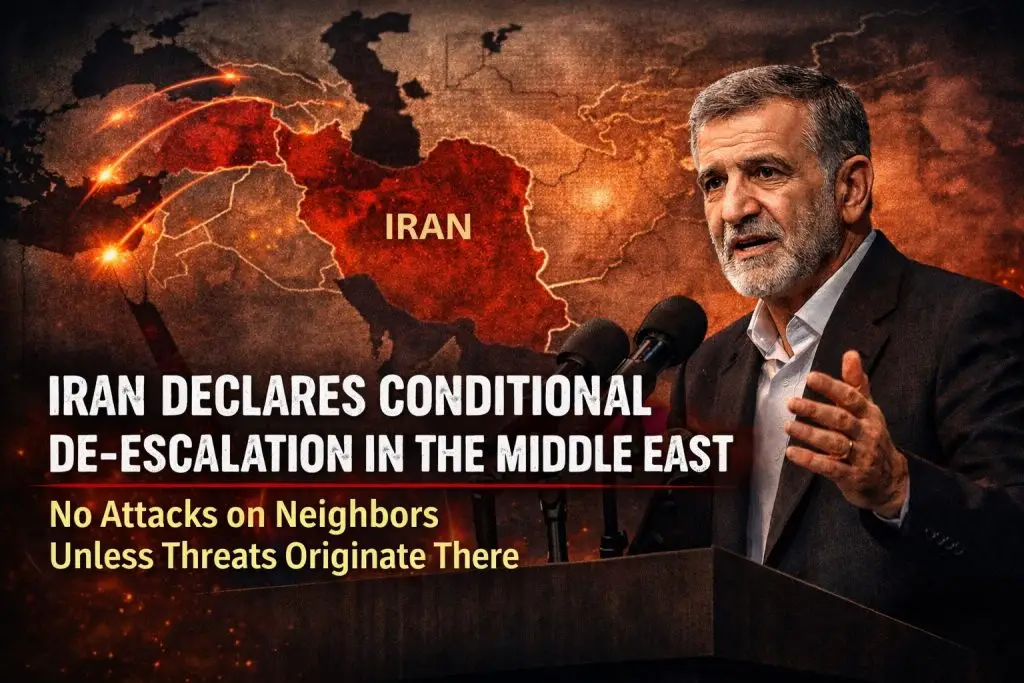
In a significant development amid escalating tensions in the Middle East, Iranian President Masoud Pezeshkian announced that Iran will stop attacking neighboring countries unless attacks against Iran originate from their territories. The statement came during a televised address as the region faces heightened conflict involving Iran, the United States, and Israel.
The announcement represents a conditional de-escalation strategy by Iran. While the country continues to defend itself against perceived threats, it has attempted to reassure nearby nations that they will not be targeted unless they directly participate in attacks against Iran. The decision has drawn global attention because it could potentially prevent the current conflict from expanding across the broader Middle East.
This article explains the background of the conflict, the details of Pezeshkian’s announcement, reactions from regional and international actors, and what this policy could mean for future stability in the region.
Background of the Regional Conflict
The latest tensions in the Middle East intensified following military strikes against Iran by the United States and Israel. These attacks triggered a broader regional confrontation, with Iran responding through missile and drone operations aimed at strategic targets across the region.
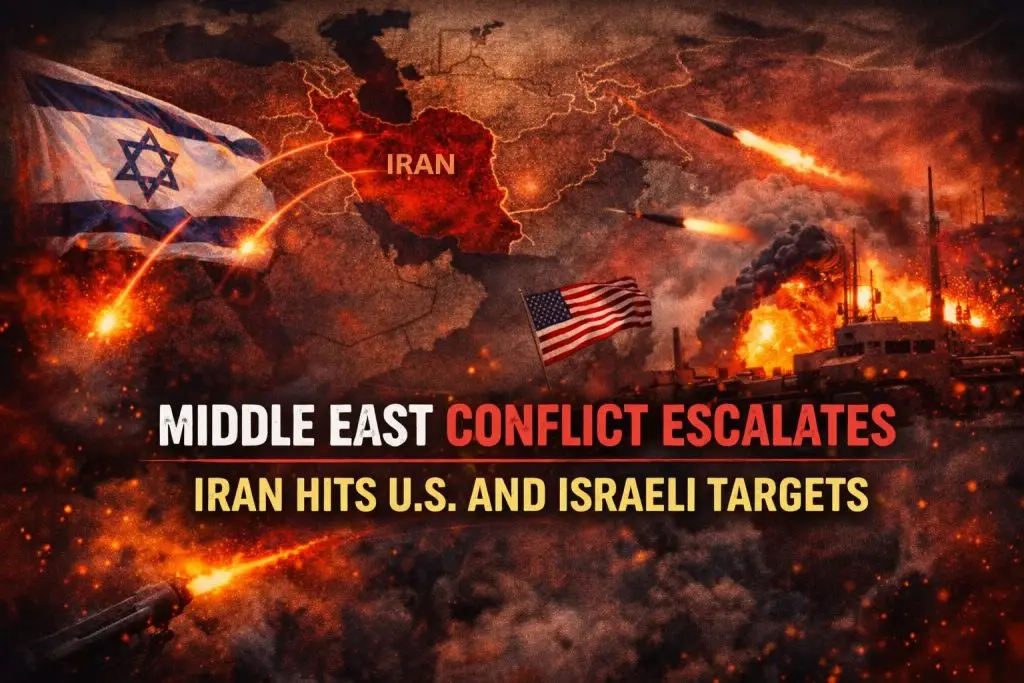
According to reports, the confrontation escalated dramatically after strikes killed Iran’s Supreme Leader, Ali Khamenei, along with several high-ranking officials. The event created a leadership crisis in Iran and pushed the country into a state of emergency governance led by a temporary leadership council.
Since then, the conflict has spread across multiple fronts. Iranian forces launched retaliatory strikes against Israeli targets and also targeted U.S. military assets located in Gulf countries. Several regional states—including Bahrain, Qatar, and the United Arab Emirates—have been affected due to the presence of U.S. military bases on their soil.
These developments raised fears that the conflict could transform into a full-scale regional war involving multiple countries.
Pezeshkian’s Announcement
During a speech broadcast on Iranian state television, President Masoud Pezeshkian made a clear statement about Iran’s future military actions. He said the country would refrain from attacking neighboring states unless attacks against Iran originated from those territories.
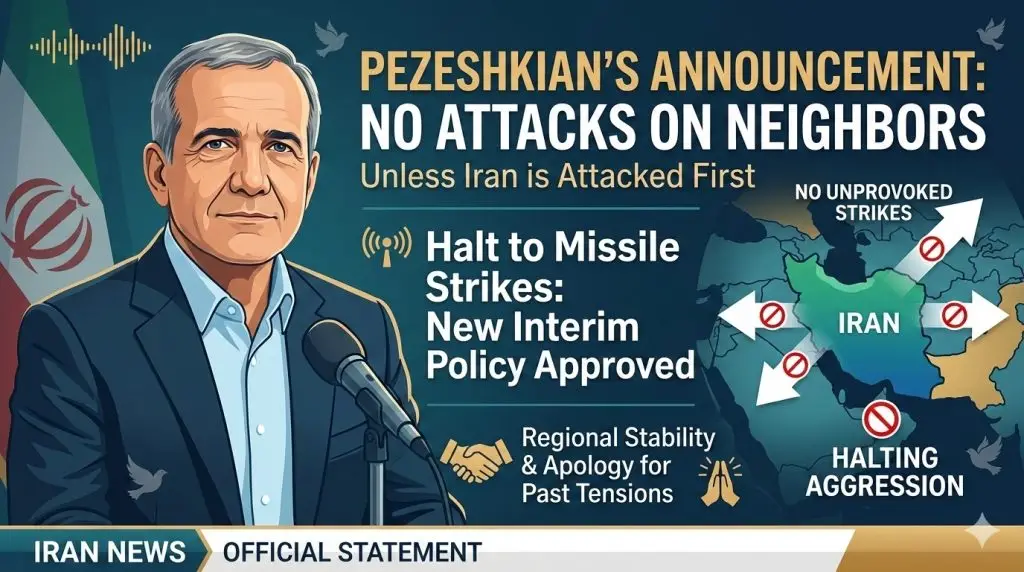
The president explained that Iran’s interim leadership council had approved the decision to halt missile strikes on neighboring countries unless they are directly involved in aggression against Iran.
Pezeshkian also issued an apology to countries that had already been affected by Iranian strikes during the recent escalation. He acknowledged that some of the attacks had created tensions with governments that Iran does not consider enemies.
His remarks included a message emphasizing that Iran does not seek hostility with its regional neighbors and wants to avoid expanding the conflict further.
Apology to Neighboring Countries
One of the most notable elements of Pezeshkian’s speech was his public apology to nearby countries impacted by Iranian strikes.

He said he personally apologized on behalf of the Iranian government to nations that had been hit during the conflict. The apology was seen as an attempt to calm diplomatic tensions and reassure regional governments that Iran does not intend to start wars with them.
The Iranian president stressed that Iran’s military operations were primarily directed at its main adversaries rather than neighboring states.
By acknowledging the concerns of nearby countries, Tehran appeared to signal that it wants to maintain regional relationships despite the ongoing conflict with larger powers.
Conditional Nature of the Policy
Although Iran’s statement suggests a reduction in attacks, the policy is conditional.
Iran has made it clear that if attacks on Iranian territory originate from another country—even indirectly through military bases—then Iran reserves the right to respond.
This means that nations hosting foreign military forces, particularly U.S. bases, could still become targets if those bases are used for attacks against Iran.
Therefore, the announcement does not represent a complete halt to military action but rather a warning to regional governments not to allow their territories to be used against Iran.
Ongoing Conflict With Israel and the United States
The broader conflict continues to revolve around Iran’s confrontation with Israel and the United States.
Iran has repeatedly stated that it will not surrender or retreat in the face of external pressure. During his speech, Pezeshkian rejected demands from U.S. President Donald Trump called for Iran to accept a total and unconditional capitulation.
He declared that such demands were unrealistic and insisted that Iran would defend its sovereignty and national dignity.
Meanwhile, clashes between Iran and Israel continue, with both sides exchanging missile strikes and drone attacks. The conflict has already caused significant casualties and infrastructure damage across several regions.
Impact on Gulf Countries
Several Gulf states have found themselves in a difficult position during the conflict.
Countries such as Qatar, Bahrain, and the United Arab Emirates host American military bases, which have become targets of Iranian attacks. At the same time, these nations are trying to avoid being dragged into a broader regional war.
Iran’s new policy could provide some reassurance to these governments. By stating that neighboring states will not be targeted unless attacks originate from their territory, Tehran is effectively urging them to remain neutral in the conflict.
However, the situation remains delicate because military alliances and security agreements with the United States make neutrality challenging.
Fear of Regional War
One of the biggest concerns among international observers is the possibility that the conflict could escalate into a regional war.
The Middle East is already home to numerous military alliances, armed groups, and ongoing conflicts. If several countries become involved simultaneously, the situation could spiral into a much larger confrontation.
Iran’s announcement may be intended to prevent such escalation. By clarifying its military policy toward neighboring countries, Tehran appears to be trying to limit the geographic scope of the conflict.
Experts believe that diplomatic efforts from regional and global actors will be crucial in preventing further escalation.
Internal Political Reactions in Iran
Despite the announcement, Pezeshkian’s statement has sparked debate within Iran itself.
Some political figures and military leaders criticized the president’s remarks, arguing that the offer not to attack neighboring states could be interpreted as a sign of weakness.
Certain hardline voices within Iran believe that stronger military responses are necessary to deter foreign aggression.
At the same time, others support the president’s approach, seeing it as a pragmatic attempt to avoid a broader regional conflict.
This debate highlights divisions within Iran’s political system about how the country should respond to the current crisis.
The Role of the Interim Leadership Council
The policy decision was reportedly approved by Iran’s interim leadership council, which is currently governing the country following the death of Supreme Leader Ali Khamenei.
The council is responsible for overseeing Iran’s political and military strategy until a new leadership structure is established.
Its decision to halt strikes against neighboring countries suggests that the leadership wants to focus its military efforts primarily on direct adversaries rather than expanding the conflict.
This approach may also be aimed at preserving diplomatic relationships with nearby countries.
Global Reactions
The international community has been closely monitoring Iran’s announcement.
Many governments and analysts view the statement as a potentially positive step toward de-escalation. If Iran truly refrains from attacking neighboring countries, it could reduce the risk of the conflict spreading throughout the region.
However, some observers remain skeptical about whether the policy will be fully implemented, especially given the complexity of the ongoing war.
International organizations and diplomatic mediators are reportedly working to facilitate ceasefire discussions and negotiations.
Strategic Significance
Iran’s announcement carries several strategic implications.
First, it signals that Tehran is aware of the risks associated with a multi-front war involving numerous countries.
Second, the policy attempts to separate Iran’s conflict with major adversaries from its relationships with neighboring states.
Third, the announcement serves as a warning to regional governments not to allow their territory to be used as a launch point for attacks against Iran.
From a strategic perspective, the move may help Iran focus its resources while limiting the number of countries involved in the conflict.
Economic and Energy Concerns
The ongoing conflict has also had major economic consequences.
Oil prices have surged due to fears that the conflict could disrupt energy supplies in the region. One of the biggest concerns is the potential impact on the Strait of Hormuz, a critical maritime route through which a significant portion of the world’s oil passes.
Any disruption to this route could have serious consequences for the global economy.
Iran’s effort to limit attacks on neighboring countries may help reduce the risk of disruptions to key energy infrastructure.
Possibility of Diplomacy and Ceasefire
Although the conflict remains intense, there are signs that diplomatic efforts may be underway.
Some countries have reportedly begun mediation attempts aimed at achieving a ceasefire or reducing tensions.
Iran has indicated that it is open to discussions about peace in the region, but it insists that any negotiations must respect the country’s sovereignty.
Whether these diplomatic efforts succeed will depend on the willingness of all parties involved to engage in dialogue.
Conclusion
Iran’s announcement that it will halt strikes on neighboring countries unless attacks originate from those territories represents a significant development in the ongoing Middle East conflict.
President Masoud Pezeshkian’s statement, along with his apology to regional governments, signals an attempt by Tehran to prevent the war from expanding further across the region.
However, the policy remains conditional, and Iran has made it clear that it will respond forcefully to any attacks launched against it.
The coming weeks will be critical in determining whether this announcement leads to a genuine reduction in regional tensions or whether the conflict will continue to escalate.
For now, the world watches closely as diplomacy, military strategy, and political decisions shape the future of the Middle East.