
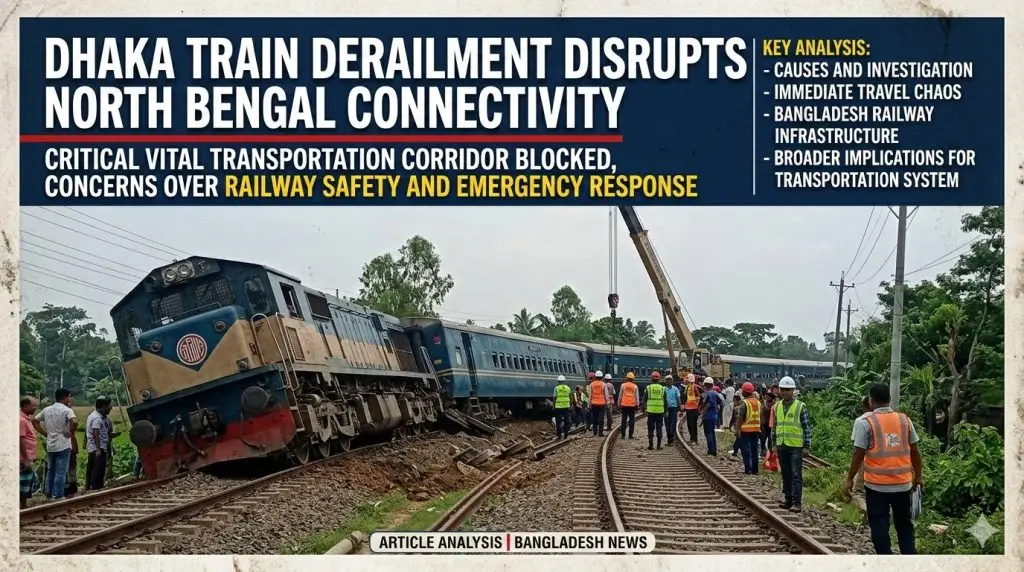
Dhaka–North Bengal rail derailment disrupts travel. Discover 5 shocking facts, causes, impact, and latest updates on Bangladesh railway crisis today.
Introduction: North Bengal Rail Derailment
A sudden passenger train derailment has severely crippled Dhaka’s primary transportation network, completely severing direct railway operations between the capital city and the northern region, universally known as North Bengal. This unexpected operational failure has triggered immense travel chaos for thousands of commuters, while simultaneously thrusting Bangladesh Railway’s safety protocols, infrastructural integrity, and emergency management systems into the spotlight of intense public scrutiny. Beyond the immediate disruption of regional travel, the accident highlights deep-seated vulnerabilities in the country’s aging rail networks and the urgent necessity for comprehensive modernization.
This in-depth, human-readable analytical report offers an objective examination of the entire incident. It meticulously explores the core sequence of events that led to the derailment, addresses why this strategic transit corridor matters to national connectivity, and evaluates the immediate rescue and restoration efforts initiated by state authorities. Furthermore, the discussion unpacks the long-term, broader socio-economic implications of such infrastructure failures on Bangladesh’s expanding transportation ecosystem. By examining technical oversights and systemic challenges, this article aims to provide readers with a clear understanding of the crisis and the vital structural reforms required to guarantee secure public transit across the nation moving forward.
Anatomy of the Crisis: The Mechanics of the Rail Failure
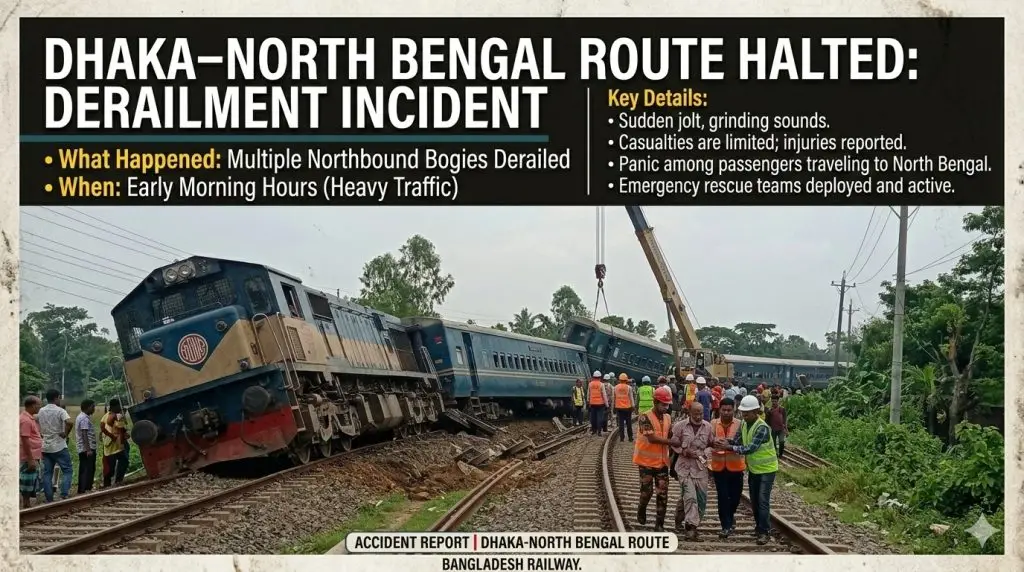
The operational crisis manifested when multiple carriages of a northbound passenger locomotive suddenly lost traction and slipped off the iron rails, instantly freezing all transit operations along the economically vital Dhaka–North Bengal corridor. Preliminary administrative findings indicate that the structural failure occurred during the early morning hours—a critical period when national rail tracks experience maximum congestion from concurrent passenger and commercial freight operations.
On-site eyewitnesses recounted experiencing a violent, unexpected vertical jolt, which was immediately accompanied by the deafening, screeching sound of twisting metal as the heavy coaches veered sharply off their designated alignment. A wave of intense anxiety rapidly swept through the stranded travelers, the vast majority of whom were embarked on long-distance journeys toward various northern districts.
Initial reports from first responders indicate that, fortunately, large-scale fatalities were avoided, although a significant number of commuters suffered varying degrees of physical trauma and injuries. Specialized emergency response units, local police, and medical personnel were quickly dispatched to the location to secure the perimeter, extract trapped individuals from the coaches, and administer urgent clinical assistance to the affected passengers.
Strategic Importance of the Dhaka–North Bengal Rail Link
The rail connection between Dhaka and North Bengal is one of the most important transport lifelines in Bangladesh.
Why This Route Matters:
- Economic Corridor: It connects agricultural hubs in the north with the capital.
- Passenger Volume: Thousands of commuters rely on this route daily.
- Trade Movement: Essential goods, including food grains, textiles, and industrial materials, pass through this line.
- Regional Connectivity: It links major districts such as Rajshahi, Rangpur, Bogura, and Dinajpur.
When this line is disrupted, the impact spreads far beyond transportation—it affects markets, supply chains, and livelihoods.
Immediate Impact of the Disruption
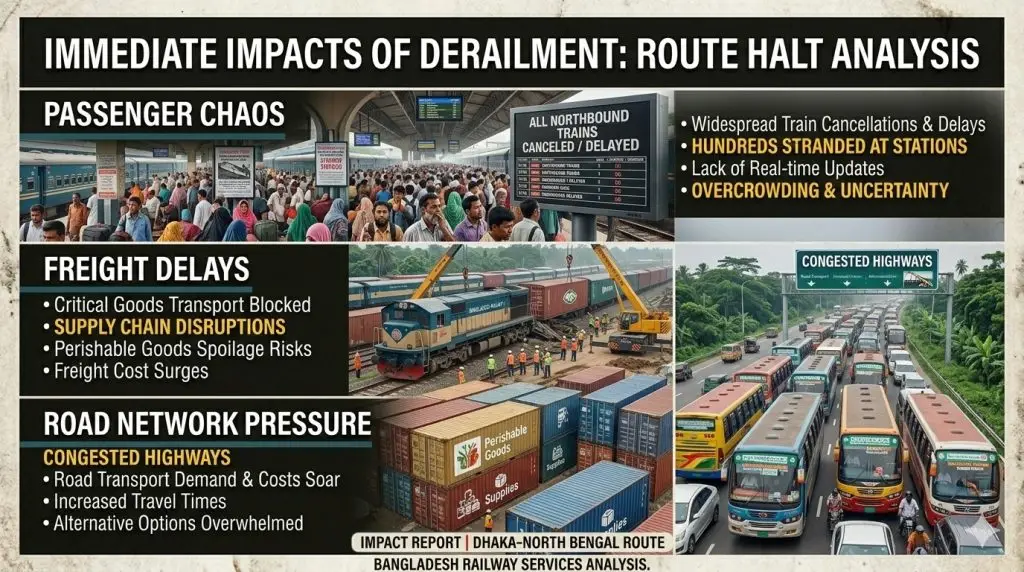
The derailment effectively snapped the rail link, causing widespread disruption.
🚉 Passenger Chaos
Hundreds of passengers were stranded at stations. Many trains scheduled to depart from Dhaka toward northern regions were either delayed or canceled.
- Travelers reported waiting for hours without clear updates.
- Families, students, and workers faced uncertainty and inconvenience.
- Alternative transport options became overcrowded and expensive.
🚛 Freight Delays
The railway is a critical channel for transporting goods.
- Perishable goods faced spoilage risks.
- Businesses experienced delays in supply deliveries.
- Transport costs surged as cargo shifted to road networks.
🛣️ Pressure on Road Transport
With trains unavailable, passengers turned to buses and private vehicles.
- Highways became congested.
- Bus fares increased due to demand.
- Travel time doubled in many cases.
Possible Causes of the Derailment
Although a comprehensive official investigation is currently underway, structural analysts and transport specialists are actively evaluating multiple contributing elements behind the accident. Identifying these root issues is essential for preventing future occurrences.
- Infrastructural and Track Anomalies Defects within the permanent way remain a primary catalyst for railway displacements. Key areas of concern include structural fractures or micro-cracks along the iron rails, displaced or degraded mechanical fastenings, and a general lack of routine track maintenance, which gradually compromises structural alignment.
- Mechanical Disruption and Equipment Failure The operational integrity of rolling stock is paramount. Serious internal malfunctions within vital locomotive or coach components—such as cracked wheel flanges, fatigued axles, or sudden failures within the pneumatic braking assemblies—can destabilize a moving train, causing it to jump the tracks.
- Signaling Discrepancies and Communication Lapses Modern transit relies heavily on precise automation. Inaccurate signaling commands or network glitches can inadvertently cause a train to maintain unsafe velocities, approach compromised sections blindly, or execute improper track switching maneuvers at high speeds.
- Human Factors and Operational Misjudgments Technical systems are only as reliable as their handlers. Inadvertent oversight, fatigue-induced errors by locomotive pilots, or minor operational miscalculations by track maintenance personnel during routine inspections can easily trigger catastrophic system failures.
- Adverse Environmental Conditions Climatic disruptions regularly challenge regional infrastructure. Intense seasonal downpours, flash floods, or prolonged waterlogging can severely erode the ballast and embankments supporting the tracks, particularly across vulnerable, low-lying geographic terrain.
To ensure accountability, senior officials from Bangladesh Railway have established a dedicated inquiry committee to isolate the definitive cause of this disruption.
Structural Overview of Emergency Rescue and Infrastructure Recovery
In the immediate aftermath of the derailment, rapid-response teams and local administrative units executed a coordinated strategy to stabilize the site. The comprehensive rescue and technical restoration operations are described through the following key points:
- Swift Evacuation and Medical Deployment: First responders successfully extracted trapped commuters from the heavily tilted carriages. Injured individuals were promptly stabilized and transferred to adjacent medical facilities for urgent clinical evaluation.
- Vital Local Community Assistance: Before the arrival of formal emergency services, courageous neighborhood residents proactively organized initial search efforts, offering crucial hands-on support and comfort to traumatized travelers.
- Heavy Machinery and Debris Clearance: Specialized engineering units deployed heavy-duty cranes and industrial equipment to systematically lift, secure, and clear the derailed railway bogies from the active transit corridor.
- Technical Track Assessment and Repair: Structural engineers immediately initiated a comprehensive damage analysis of the permanent way, while maintenance crews began replacing broken rails and fractured wooden sleepers.
- Strategic Service Restoration Timeline: Senior railway officials announced a phased reopening strategy, aiming to resume partial, speed-restricted operations within 24 to 48 hours, while full structural recovery remains dependent on final safety certifications.
Continuous updates are being provided as technical teams work around the clock.
Casualties and Injuries
Following the unexpected rail disruption, emergency response teams and local medical authorities immediately initiated on-site evaluations to assess the overall impact on commuters. While the situation remains under close observation, the documented details regarding casualties and medical interventions include the following specific points:
- Absence of Severe Fatalities: Preliminary assessments conducted by emergency personnel confirm that, fortunately, no large-scale or catastrophic loss of human life has been recorded at the crash site, preventing a major tragedy.
- Widespread Minor Injuries: A considerable number of commuters experienced physical trauma due to the sudden impact. Several passengers sustained moderate injuries and were promptly transferred to nearby healthcare facilities for detailed medical examinations.
- Immediate First Aid Deployment: The vast majority of affected individuals suffered minor cuts, bruises, or shock. These passengers received swift, professional first-aid treatment directly on-site from rapid-response medical units.
- Continuous Information Verification: Senior transit and administrative officials are actively working to double-check all medical registries. They continue to verify individual safety details as comprehensive information progressively becomes available from surrounding clinics.
Medical personnel remain stationed near the location to guarantee that all impacted travelers receive consistent care while official databases are updated.
Human Perspectives: Commuter Accounts and Community Resilience
The sudden derailment left an indelible mark on those on board, with individuals sharing deeply moving and intense personal narratives about the crisis. The diverse experiences of the passengers during and immediately after the accident are outlined through the following descriptive points:
- The Moment of Impact: Commuters recalled the terrifying transition from a routine journey to sudden chaos, describing a massive, deafening structural crash followed instantly by the violent tilting of the train carriages.
- Widespread Panic and Evacuation: In the immediate aftermath, intense fear gripped the compartments as passengers, operating under survival instincts, scrambled through dust and debris in a desperate rush to exit the derailed coaches.
- Immediate Local Humanitarian Support: Stranded travelers highly praised the exceptional bravery of local villagers from adjacent communities, who rushed to the accident site to provide critical rescue assistance long before official emergency teams arrived.
- Fear Balanced by Community Strength: These firsthand accounts powerfully illustrate not only the profound psychological trauma inflicted by transit disasters but also the inspiring resilience and unity shown by ordinary citizens during a crisis.
These shared memories emphasize the urgent need for safer public transit systems across the country.and the resilience of communities.
Infrastructure Challenges in Bangladesh Railways
The recent transit disruption has once again brought national attention to the long-standing debates surrounding the structural integrity and operational safety of the country’s rail network. The core infrastructural challenges are outlined through the following critical points:
- Declining State of Aging Rail Assets: A primary concern is the continued reliance on decades-old railway tracks, fatigued iron rails, and outdated rolling stock equipment that struggle to withstand modern operational demands.
- Inadequate Financial Allocation for Maintenance: The railway sector faces a persistent shortage of operational budgets dedicated specifically to routine safety inspections, high-quality track ballasting, and timely structural repairs.
- Strain from Overloaded Operational Schedules: To meet high public demand, locomotives and tracks are subjected to exhausting, back-to-back schedules, leaving insufficient downtime for essential engineering maintenance and safety checks.
- Delayed Adoption of Modern Transit Technology: Despite global advancements, the network suffers from a slow integration of automated signaling systems, digital track monitoring, and advanced accident-prevention technologies.
While recent development projects have introduced visible improvements, transport specialists strongly emphasize that massive, targeted capital investments remain vital to guarantee absolute commuter safety and system reliability nationwide.ements in recent years, experts argue that more investment is needed to ensure safety and reliability.
Historical Context: Safety Records and Recurring Transit Incidents
Railway disruptions, particularly unexpected train derailments, represent a persistent challenge within the national transportation matrix of Bangladesh. A historical analysis of the country’s transit safety record reveals specific operational vulnerabilities, which are described through the following points:
- High Prevalence of Structural Disruption: Statistically, train accidents and track misalignments are relatively frequent occurrences across the network, pointing to systemic weaknesses that require continuous monitoring.
- Dominance of Track-Related Anomalies: A recurring pattern in past accidents is the failure of physical infrastructure, including cracked rails, degraded wooden sleepers, and compromised track ballast.
- Frequent Signaling and Communication Failures: Systemic vulnerabilities are often worsened by outdated signaling networks and technical glitches, which can lead to improper track switching or unsafe speeds.
- Impact of Operational Human Error: Investigations frequently reveal that inadvertent oversight, fatigue, or misjudgments by locomotive pilots and maintenance staff contribute significantly to accidents.
- Varying Scale of Socio-Economic Consequences: While a large percentage of these recurring incidents result in minor technical delays, major structural derailments routinely cause massive regional transit shutdowns and tragic human casualties.
Understanding these historical patterns is essential for designing effective accident-prevention strategies moving forward.
Structural Analysis of Government and Official Interventions
In the immediate aftermath of the rail crisis, state authorities and senior transport administrators mobilized quickly to manage the situation and address public anxiety. The official response, structured around strategic containment and systemic accountability, is described through the following key points:
- Establishment of a Dedicated Investigation Committee: High-ranking ministry officials have formally commissioned a specialized inquiry board tasked with conducting a meticulous, unbiased investigation into the technical and operational failures that triggered the accident.
- Assurance of Rapid Infrastructure Restoration: Engineering teams and emergency workers were deployed immediately to clear the tracks. The government has issued firm reassurances that rail operations along this vital economic corridor will be fully restored within the shortest possible timeframe.
- Definitive Commitment to Advancing Public Safety: The administration has pledged to implement rigorous, long-term safety upgrades across the entire network, ensuring that similar infrastructural vulnerabilities are systematically identified and eliminated moving forward.
- Emphasis on Accountability and Systemic Progress: Transport officials heavily emphasized that commuter welfare remains the state’s absolute priority. They publicly stated that vital institutional lessons will be thoroughly extracted from this incident to prevent future occurrences.
Government spokespersons continue to provide transparent updates as the structural recovery progress advances.
Alternative Travel Arrangements
To effectively mitigate commuter distress and minimize widespread disruption along the affected corridor, transport administrators and private operators quickly introduced several alternative travel arrangements:
- Deployment of Emergency Bus Fleet: Regional transit authorities mobilized additional commercial buses on primary highways, organizing dedicated shuttle services to assist stranded rail passengers.
- Surge in Private Transport Demand: The sudden suspension of rail services triggered a massive reliance on private vehicle rentals and digital ride-sharing platforms to facilitate urgent travel.
- Phased and Rerouted Rail Operations: Wherever technically viable, railway management dynamically rerouted essential long-distance passenger trains through alternative junctions to keep key networks partially functional.
These coordinated measures helped maintain vital regional connectivity while engineering teams worked on track recovery.
Economic Impact on North Bengal
The disruption has a direct effect on the northern economy.
Key Sectors Affected:
- Agriculture (rice, vegetables, fruits)
- Small businesses
- Local markets
Farmers and traders rely heavily on rail transport to move goods efficiently. Delays can lead to financial losses.
Long-Term Implications
The derailment could have lasting consequences:
- Increased Focus on Safety: Authorities may implement stricter inspection protocols.
- Infrastructure Investment: More funding may be allocated to upgrade tracks and trains.
- Policy Reforms:Changes in operational procedures could be introduced.
Importance of Railway Modernization
Modern railway systems use advanced technology to prevent accidents.
Potential Improvements:
- Automated signaling systems
- Real-time track monitoring
- High-quality rail materials
- Regular safety audits
Countries that invest in such technologies significantly reduce derailment risks.
Regional Connectivity Concerns
The Dhaka–North Bengal route is also important for regional connectivity.
- It supports cross-border trade routes.
- It connects remote areas to urban centers.
- It plays a role in national development.
Any disruption affects not just local passengers but broader economic networks.
Challenges Faced by Railway Workers
Railway staff play a crucial role in maintaining operations.
Common Challenges:
- Limited resources
- High workload
- Safety risks during repairs
The derailment highlights the need to support and equip workers properly.
Lessons Learned
Every accident offers valuable lessons.
Key Takeaways:
- Regular maintenance is critical
- Early detection of faults can prevent disasters
- Emergency response systems must be efficient
- Passenger communication needs improvement
Future Outlook
The rail link between Dhaka and North Bengal is expected to be restored soon, but the incident will likely leave a lasting impact.
What to Expect:
- Increased inspections
- Public demand for safer travel
- Government focus on railway reforms
Conclusion: Resolving the Dhaka–North Bengal Railway Crisis
The recent train derailment that effectively severed the vital Dhaka–North Bengal transport link serves as an urgent wake-up call regarding the critical importance of transit safety and structural readiness. Although rapid emergency response and rescue operations successfully averted a catastrophic tragedy, the extensive operational disruption has fundamentally exposed glaring vulnerabilities within the country’s national railway architecture. For a rapidly developing nation like Bangladesh, where rail transportation functions as an irreplaceable socioeconomic lifeline for millions, maintaining absolute system reliability and commuter safety is no longer optional—it is an absolute necessity.
Moving forward, the state’s comprehensive handling of this crisis, specifically concerning immediate track repairs and the implementation of long-term structural reforms, will ultimately dictate how effectively the administration can mitigate similar infrastructural failures in the future. As commuter services gradually resume operational status, passengers, commercial enterprises, and government policymakers will be monitoring the situation closely. There is a collective expectation that this disruptive event will serve as a catalyst for meaningful, systemic advancements in maintenance protocols, rather than merely transitioning into another forgotten statistic within the historical record of regional railway accidents. Comprehensive modernization remains the definitive path forward.