
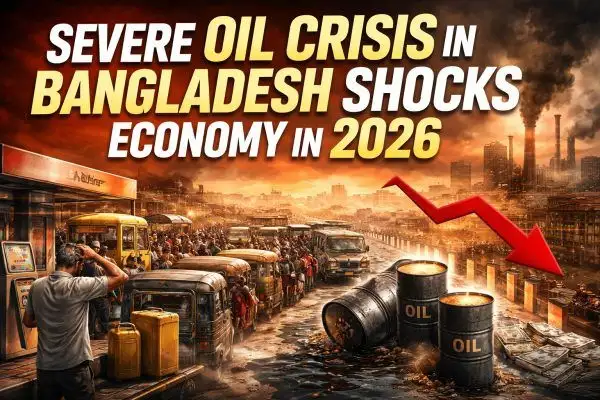
Bangladesh faces a severe oil crisis in 2026 as global supply disruptions raise fuel prices, impact transport, electricity, and increase inflation nationwide.
Introduction
In 2026, Bangladesh is facing one of the most significant energy challenges in its recent history. Rising global tensions, supply disruptions, and increasing fuel demand have created a serious oil crisis that is affecting industries, transportation, electricity generation, and the everyday lives of millions of citizens. The oil crisis in Bangladesh is not only a domestic economic issue but also a reflection of broader global energy instability.
As a developing nation with rapid industrial growth, Bangladesh relies heavily on imported petroleum products. When global oil supply chains are disrupted, the country immediately feels the pressure through rising prices, shortages, and economic uncertainty. In 2026, these pressures have intensified, forcing the government, businesses, and consumers to adjust to a new energy reality.
This article explores the causes of the 2026 oil crisis in Bangladesh, its economic and social consequences, and the potential strategies that could help the country reduce future vulnerability.
Background: Bangladesh’s Dependence on Imported Oil
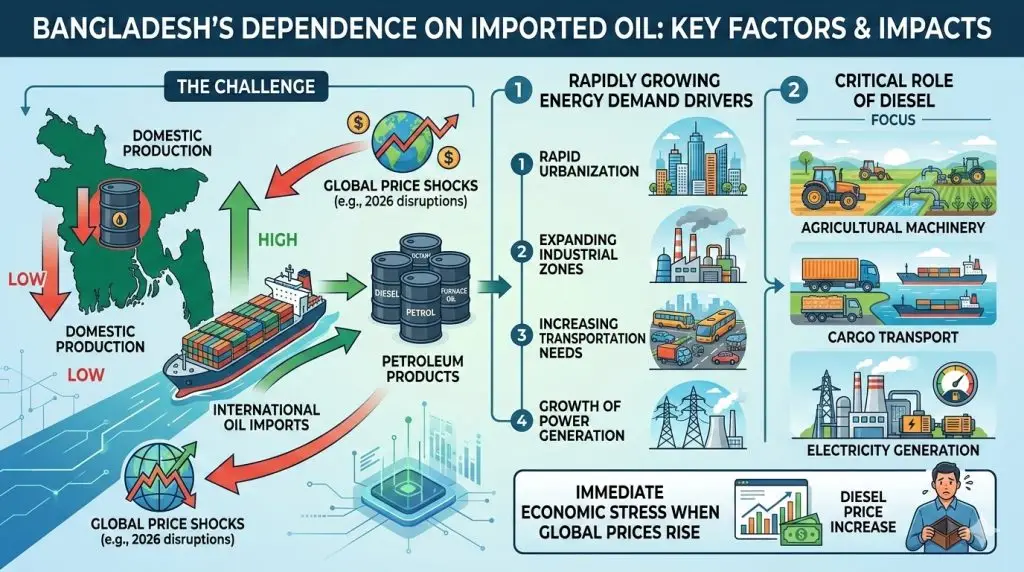
Bangladesh does not produce enough crude oil domestically to meet its national demand. The majority of petroleum products—such as diesel, octane, petrol, and furnace oil—are imported from international markets.
The country’s energy demand has grown rapidly over the past two decades due to several factors:
- Rapid urbanization
- Expanding industrial zones
- Increasing transportation needs
- Growth of power generation projects
Diesel alone plays a critical role in Bangladesh’s economy because it fuels agricultural machinery, cargo transport, and a large portion of the electricity generation system. When diesel prices increase globally, Bangladesh faces immediate economic stress.
In 2026, the global oil market experienced major disruptions, which directly affected Bangladesh’s ability to maintain stable fuel prices and supply levels.
Global Factors Behind the 2026 Oil Crisis
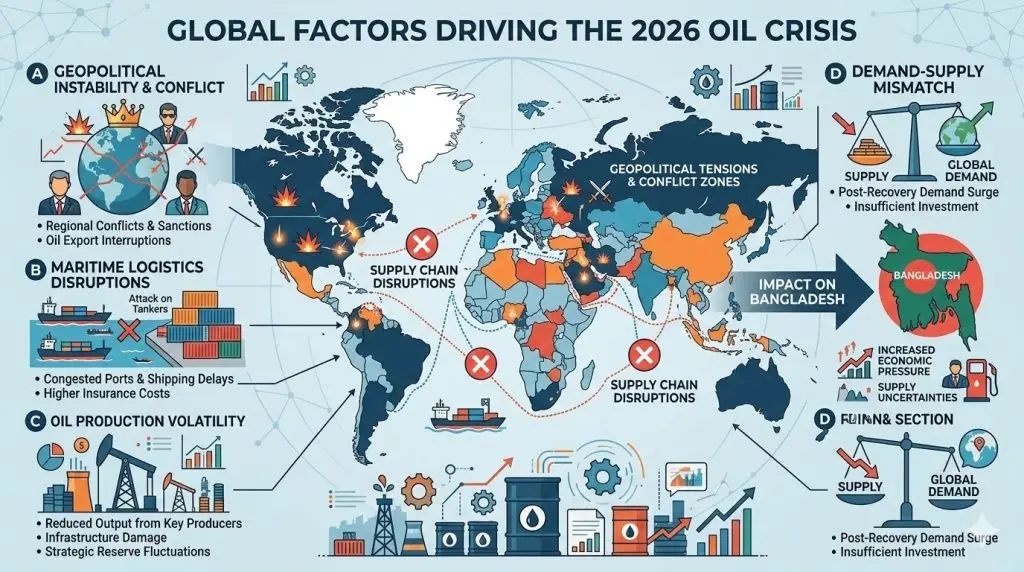
The oil crisis affecting Bangladesh in 2026 is closely linked to international geopolitical tensions and supply chain disruptions.
Several global developments have contributed to rising oil prices:
1. Middle East Conflicts
The Middle East remains the world’s most important oil-producing region. Any instability in this region quickly impacts global energy markets. In 2026, escalating tensions involving Iran, Israel, and other regional actors have created uncertainty around oil transportation routes.
Shipping lanes such as the Strait of Hormuz are extremely important for global oil trade. When military tensions rise in these areas, insurance costs for oil tankers increase and supply becomes less predictable.
2. Production Cuts by Major Oil Producers
Large oil-producing nations sometimes limit production in order to stabilize prices or protect national revenues. In 2026, several producers reduced output, tightening the global supply.
As a result, international crude prices rose sharply, forcing importing countries like Bangladesh to pay significantly higher costs for the same amount of fuel.
3. Rising Global Demand
After years of economic recovery and industrial growth across Asia, global demand for oil has increased again. Large economies in Asia require massive amounts of fuel for transportation, manufacturing, and electricity generation.
This rising demand has further strained supply chains.
Domestic Energy Challenges in Bangladesh
While global factors triggered the oil crisis, domestic energy vulnerabilities have also made Bangladesh more exposed to fuel shocks.
Limited Energy Diversification
Bangladesh still relies heavily on fossil fuels, particularly oil and natural gas. Although renewable energy initiatives have begun to develop, they currently represent only a small share of the country’s total energy supply.
Without diversified energy sources, fluctuations in oil prices quickly affect the entire energy sector.
Increasing Fuel Consumption
The country’s fuel consumption has been growing rapidly due to economic expansion. Transportation networks, industrial production, and agricultural mechanization all require large amounts of fuel.
More vehicles on the road and growing logistics operations mean that demand for diesel and petrol continues to increase.
Infrastructure and Storage Limitations
Bangladesh also faces challenges related to fuel storage capacity. Limited strategic reserves mean that the country cannot store large amounts of fuel to protect itself from temporary supply disruptions.
This makes Bangladesh more sensitive to sudden market changes.

Rising Fuel Prices in 2026
One of the most visible consequences of the oil crisis has been the sharp rise in fuel prices across Bangladesh.
In 2026, the government has been forced to adjust fuel prices several times due to the increasing cost of imports. Diesel, petrol, and octane prices have all experienced significant increases.
Higher fuel prices have created a chain reaction across the entire economy.
Transportation costs have risen dramatically, affecting both passengers and businesses. Trucking companies, shipping services, and delivery networks now face higher operating costs, which are often passed on to consumers through higher prices for goods.
Impact on Transportation Sector
The transportation sector is one of the most heavily affected areas during the oil crisis.
- Public Transport: Bus operators and other public transport providers rely on diesel fuel. As fuel costs rise, operators struggle to maintain affordable ticket prices while covering their expenses. This situation has created tensions between transport unions, passengers, and regulators.
- Freight and Logistics: The logistics sector is essential for moving goods across the country. Increased fuel costs mean higher shipping expenses for businesses transporting food, construction materials, and consumer products. These costs ultimately increase the price of goods in markets across Bangladesh.
- Ride-Sharing and Small Transport: Small transport businesses, including auto-rickshaws and ride-sharing drivers, are also feeling the pressure. Many drivers report that fuel expenses now consume a large portion of their daily income.
Effects on Electricity Generation
Electricity production in Bangladesh relies partly on oil-based power plants, especially during periods when natural gas supply is limited.
Furnace oil and diesel are used to generate electricity in several power facilities. When oil prices rise, the cost of producing electricity increases as well.
In 2026, this situation has placed additional pressure on the national power grid.
Higher production costs have forced the government to consider electricity price adjustments, which can affect households and industries.
Power shortages may also occur if fuel supply becomes inconsistent.
Impact on Agriculture
Agriculture remains a vital part of Bangladesh’s economy and food security. Farmers depend on diesel-powered irrigation pumps and agricultural machinery.
When diesel prices increase, farmers must spend more money to irrigate fields and operate equipment.
This situation creates multiple challenges:
- Higher production costs for crops
- Reduced profit margins for farmers
- Increased food prices for consumers
In some cases, farmers may reduce irrigation usage to cut costs, which can affect crop yields.
Food inflation becomes a serious concern during energy crises because agriculture is closely connected to fuel availability.
Industrial and Manufacturing Pressure
Bangladesh’s manufacturing sector, particularly the garment industry, plays a crucial role in the national economy. Factories require reliable electricity and transportation systems to maintain production.
The oil crisis has created several challenges for industries:
- Rising transportation costs for raw materials
- Higher electricity generation costs
- Increased logistics expenses for export shipments
Manufacturers are worried that rising energy costs could reduce competitiveness in global markets.
Export-driven industries must balance production costs while maintaining affordable pricing for international buyers.
Inflation and Cost of Living
The oil crisis has also contributed to inflation in Bangladesh.
Fuel prices influence many parts of the economy. When transportation costs increase, the price of food, construction materials, and consumer goods often rises as well.
For ordinary citizens, this means higher living expenses.
Households must spend more money on:
- Transportation
- Cooking fuel
- Food products
- Daily necessities
Low-income families are particularly vulnerable because a large portion of their income already goes toward essential needs.
Government Response to the Crisis
The government of Bangladesh has taken several steps to manage the oil crisis and reduce economic pressure.
Fuel Price Adjustments
Authorities have introduced periodic fuel price revisions to reflect global market conditions. These adjustments aim to balance import costs while preventing extreme price shocks.
Subsidy Management
Fuel subsidies have historically helped stabilize energy prices in Bangladesh. However, maintaining large subsidies during periods of high global oil prices places significant pressure on government budgets.
Officials must carefully balance financial stability with consumer protection.
Energy Import Agreements
Bangladesh is also exploring new energy supply agreements with international partners to ensure stable fuel imports.
Diversifying suppliers can help reduce dependence on a single region or market.
Renewable Energy as a Long-Term Solution
The oil crisis has highlighted the urgent need for Bangladesh to accelerate renewable energy development.
Solar energy has strong potential in Bangladesh due to the country’s climate and geographic conditions.
Several solar initiatives are already underway, including:
- Rooftop solar systems
- Solar irrigation projects
- Rural solar home programs
Wind energy and waste-to-energy projects are also being explored.
By expanding renewable energy capacity, Bangladesh could reduce reliance on imported oil and increase energy security.
Strategic Energy Planning
Experts emphasize the importance of long-term planning to prevent future energy crises.
Key strategies include:
Increasing Fuel Storage Capacity
Developing strategic oil reserves would allow Bangladesh to store fuel during periods of stable prices and use reserves during supply disruptions.
Improving Energy Efficiency
Encouraging energy-efficient technologies in transportation, industry, and households can reduce overall fuel demand.
Expanding Public Transportation
Modern public transport systems such as electric buses and metro networks can significantly reduce fuel consumption.
Strengthening Regional Energy Cooperation
Bangladesh may also benefit from energy cooperation with neighboring countries through electricity trading and pipeline infrastructure.
The Role of Public Awareness
Public awareness also plays an important role during energy crises.
Energy conservation measures can reduce national fuel consumption and help stabilize supply.
Simple actions such as reducing unnecessary vehicle use, improving fuel efficiency, and adopting renewable solutions can collectively make a significant difference.
Governments, businesses, and citizens must work together to manage energy resources responsibly.
Future Outlook
The oil crisis in Bangladesh during 2026 serves as a reminder of the country’s vulnerability to global energy fluctuations.
Although the current situation presents challenges, it also creates opportunities for reform and innovation in the energy sector.
If Bangladesh invests in renewable energy, modern infrastructure, and strategic fuel reserves, it can build a more resilient energy system for the future.
Economic growth will continue to drive energy demand, but smarter policies and technological advancements can help the country meet those needs sustainably.
Conclusion
The 2026 oil crisis in Bangladesh is the result of a complex combination of global geopolitical tensions, rising fuel demand, and domestic energy vulnerabilities. Higher oil prices have affected transportation, agriculture, electricity production, and everyday living costs across the country.
While short-term measures such as fuel price adjustments and subsidies may help stabilize the situation, long-term solutions require deeper structural changes in the energy sector.
Expanding renewable energy, improving efficiency, and strengthening strategic energy planning will be essential steps toward reducing Bangladesh’s dependence on imported oil.
The challenges of the 2026 oil crisis highlight an important lesson: energy security is not only about supply but also about resilience, innovation, and forward-looking policy decisions.
With the right strategies, Bangladesh can transform this crisis into an opportunity to build a stronger and more sustainable energy future.