
Asia faces a worsening fuel oil crisis as the Iran war disrupts Middle East supply routes. Rising prices, tanker risks, and shortages threaten energy security.
Introduction
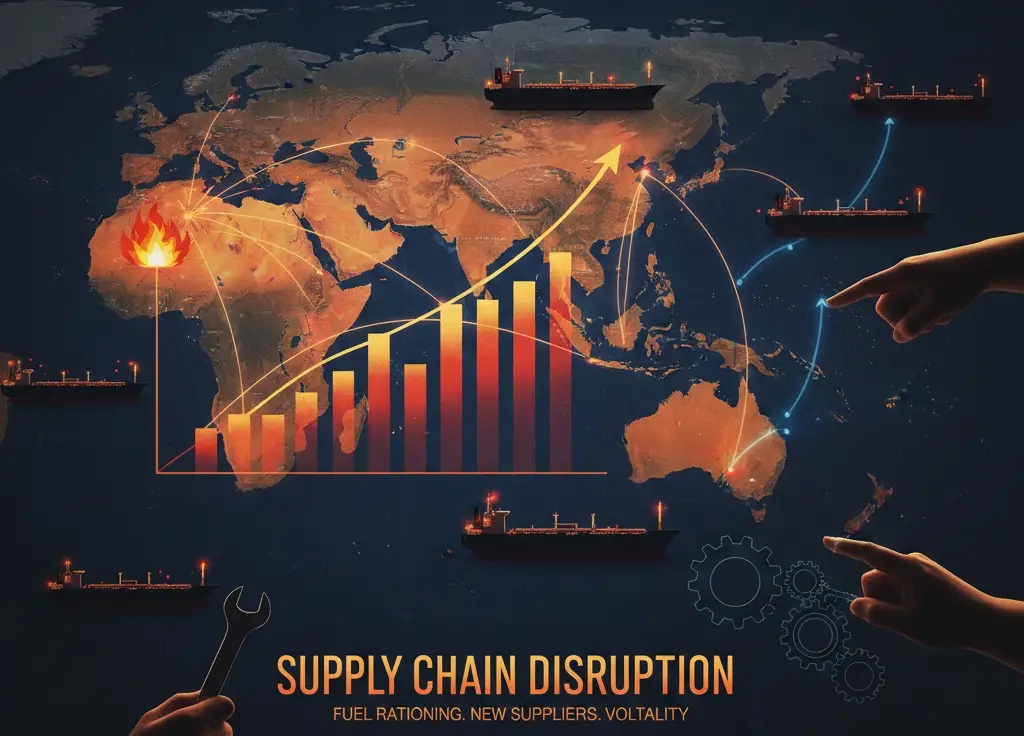
Asia is facing a growing energy challenge as the ongoing war involving Iran disrupts global fuel oil supplies and shakes international energy markets. The conflict in the Middle East has begun to affect one of the most important maritime energy routes in the world, the Strait of Hormuz. As shipments slow down and oil tankers face security risks, Asian countries are scrambling to secure alternative fuel sources to keep industries, shipping, and power generation running.
Fuel oil is a crucial energy resource used in shipping, manufacturing, electricity production, and transportation. Many Asian economies depend heavily on imports from the Middle East, making them particularly vulnerable when conflicts disrupt supply chains. As the war intensifies, energy traders, governments, and companies across Asia are racing against time to prevent shortages and stabilize markets.
The crisis is already pushing prices higher, forcing countries to consider rationing fuel and search for new suppliers from distant regions such as the United States, Mexico, and Venezuela. The situation highlights how geopolitical tensions can quickly ripple through global energy networks and impact everyday life across continents.
The Iran War and Its Impact on Energy Supply
The current crisis stems from escalating military tensions involving Iran and its regional rivals. As fighting spread across the Middle East, shipping activity around the Persian Gulf became increasingly dangerous.
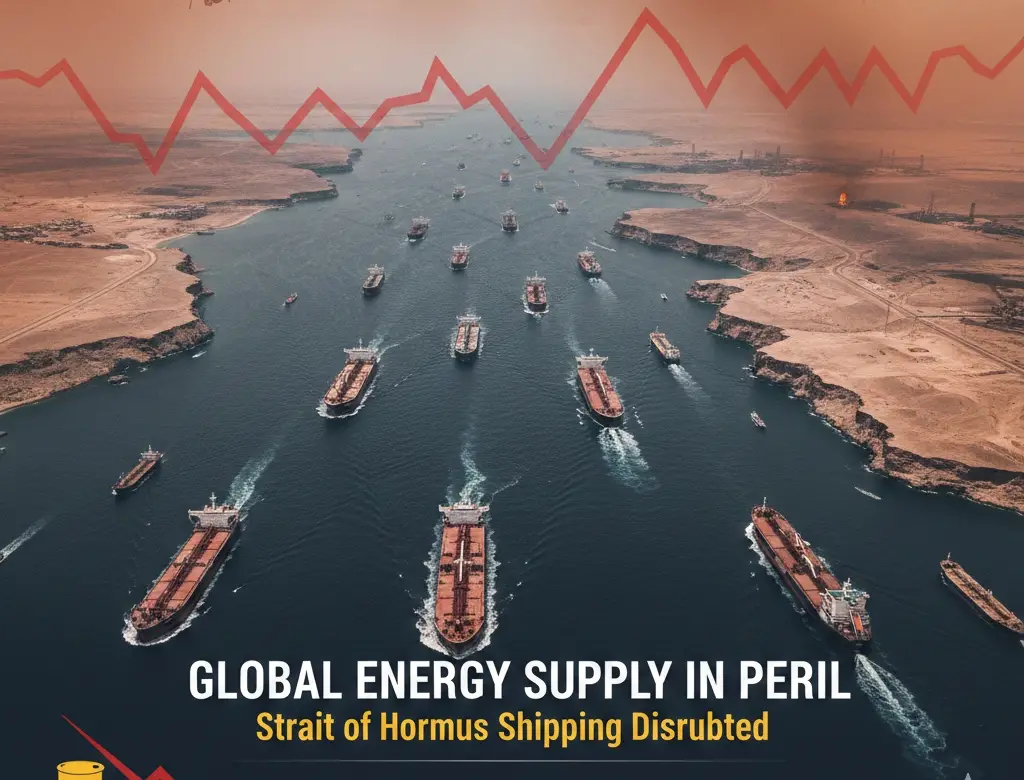
The Strait of Hormuz is a narrow maritime corridor separating Iran and Oman, and it functions as one of the world’s most vital routes for transporting oil shipments. Nearly one-fifth of the world’s oil shipments pass through this chokepoint every day. When military operations intensified in the region, tanker traffic declined dramatically as shipping companies tried to avoid the conflict zone.
According to market analysts, fuel oil exports passing through the strait toward Asia have dropped sharply since the war began. Normally, about 1.2 million metric tons of fuel oil flow to Asian markets each month through this route. However, tanker movements have fallen drastically as ships delay voyages or reroute to safer ports.
This sudden disruption has left traders struggling to find replacement cargoes. The shortage is especially serious for high-sulphur fuel oil, which is widely used as bunker fuel to power cargo ships.
The conflict has also created uncertainty about the security of energy infrastructure in the Gulf. Drone attacks, naval confrontations, and missile strikes have increased fears that oil facilities or tankers could become targets. Such risks have forced shipping companies to reconsider routes and insurance coverage, further complicating the flow of fuel.
Asia’s Heavy Dependence on Middle Eastern Energy
One of the main reasons Asia is feeling the impact so strongly is its heavy reliance on Middle Eastern energy supplies.
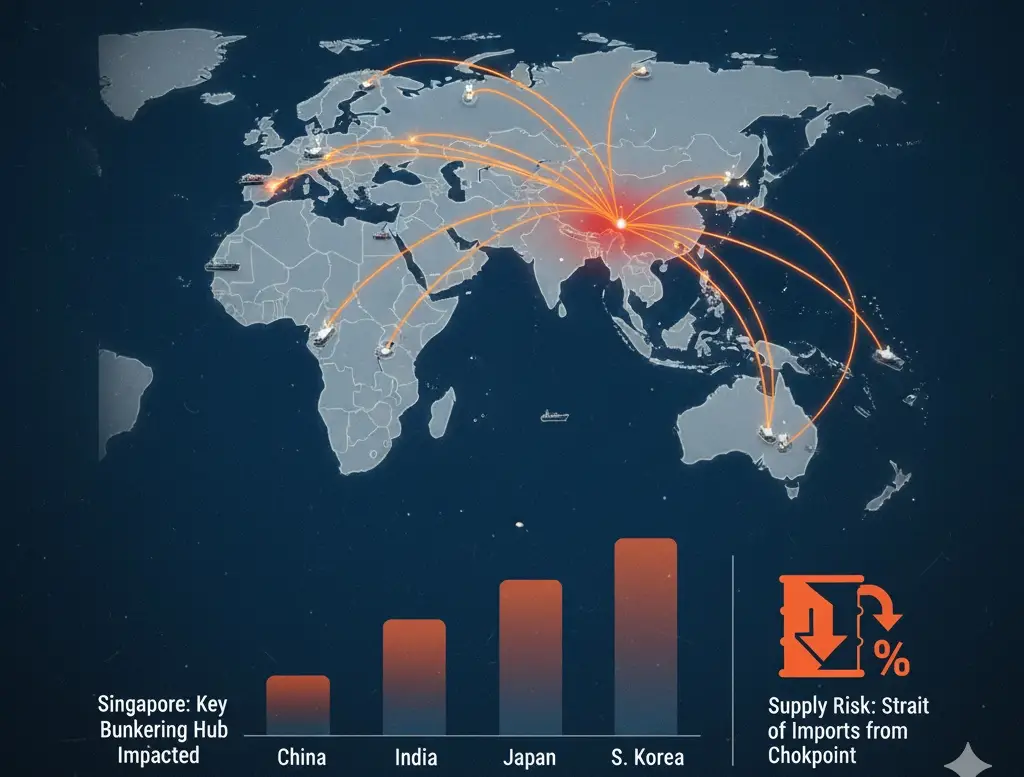
Many Asian countries import the majority of their crude oil and refined fuels from Gulf producers such as Saudi Arabia, Kuwait, Iraq, and the United Arab Emirates. These shipments typically pass through the Strait of Hormuz before heading toward major Asian ports including Singapore, Shanghai, and Mumbai.
This dependency means any disruption in the Persian Gulf immediately affects energy availability across the region.
Countries such as China, India, Japan, and South Korea are among the largest consumers of Middle Eastern oil. Rapid economic growth and industrial expansion have significantly increased their energy needs over the past two decades.
Southeast Asian economies also rely on imported fuel oil to support shipping operations and power generation. The world’s busiest bunkering hub, Singapore, provides fuel to thousands of vessels traveling through Asian trade routes every year. When supply tightens in this market, shipping companies worldwide feel the impact.
As the conflict continues, Asian energy markets are experiencing increasing pressure to diversify supply sources and reduce reliance on any single region.
Fuel Oil Traders Scramble for Alternative Supplies
With traditional supply lines disrupted, fuel oil traders across Asia are urgently seeking alternative sources to replace missing Middle Eastern cargoes.

Some traders are turning toward Western suppliers such as the United States and Mexico. However, transporting fuel oil from these distant locations involves higher shipping costs and longer delivery times. As a result, the economic feasibility of such trades becomes uncertain.
Another potential source is Venezuela, which has large reserves of heavy fuel oil suitable for maritime use. However, limited export capacity and logistical challenges have slowed the flow of Venezuelan shipments to Asian markets.
Russian fuel oil could also help fill the gap, but geopolitical sanctions and political considerations have complicated such purchases for some countries. While certain buyers continue trading with Russian suppliers, others remain cautious due to legal and diplomatic risks.
As one energy trader explained, the situation has become increasingly difficult for the market. Tanker costs have surged and supply options are shrinking, making it challenging to secure shipments for the coming weeks.
This scramble for supplies is creating a highly competitive environment where buyers must move quickly to secure available cargoes.
Fuel Prices Surge Across Asian Markets
One of the most immediate consequences of the supply disruption is a sharp rise in fuel prices across Asia.
Bunker fuel prices at major refueling hubs have climbed significantly since the conflict began. In Singapore, the region’s largest bunkering center, prices for high-sulphur fuel oil have increased by more than 40 percent.
This price surge is affecting shipping companies that rely on fuel oil to operate cargo vessels. As fuel costs rise, shipping expenses increase, which eventually leads to higher prices for transported goods.
The consequences of this disruption may spread throughout international supply chains. Everything from consumer electronics to food products could become more expensive if transportation costs continue to rise.
Refining margins in Asia have also surged to their highest levels in several years, reflecting the tightening supply conditions in fuel markets.
These developments highlight how energy market disruptions can quickly spread across industries and impact economic stability.
Shipping Industry Under Pressure
The shipping industry is particularly vulnerable to the current fuel supply crisis.
Cargo ships rely heavily on bunker fuel, and any disruption in supply can significantly increase operating costs. When fuel becomes scarce or expensive, shipping companies must adjust freight rates to maintain profitability.
This situation creates a chain reaction that affects international trade. Higher shipping costs make it more expensive for companies to move goods between continents, potentially slowing economic activity.
Some shipping operators have already begun adjusting their schedules or seeking alternative fueling locations to cope with the rising costs.
Insurance premiums for vessels traveling near the conflict zone have also increased dramatically. War risk insurance, which covers ships operating in dangerous areas, has become significantly more expensive.
For many shipping companies, the combination of higher fuel prices and increased insurance costs represents a serious financial challenge.
Regional Governments Take Emergency Measures
Governments across Asia are closely monitoring the energy situation and implementing measures to prevent shortages.
Some countries have begun releasing fuel from strategic reserves to stabilize markets. Others are negotiating emergency supply deals with alternative exporters.
In certain cases, authorities have introduced fuel rationing to prevent panic buying and hoarding.
For example, Bangladesh recently imposed temporary limits on fuel purchases after panic buying surged amid fears of shortages. Officials emphasized that supplies remain available but warned that hoarding could create unnecessary disruptions.
Similarly, other nations are encouraging energy conservation measures to reduce demand until supply chains stabilize.
Governments are also working with shipping companies and energy traders to coordinate supply deliveries and prevent logistical bottlenecks.
These actions reflect the urgency of the situation and the need for coordinated responses to maintain energy security.
Impact on Developing Economies
Developing countries in Asia are likely to face the greatest challenges during the fuel supply crisis.
Many of these nations lack large strategic fuel reserves and depend heavily on imported energy. When prices rise or shipments are delayed, their economies can experience immediate strain.
Higher fuel costs can lead to inflation as transportation, electricity, and manufacturing expenses increase.
Industries such as agriculture and fisheries may also struggle with rising fuel costs for machinery and transport.
In some cases, governments may need to increase subsidies to keep fuel affordable for consumers. However, such subsidies can strain national budgets, especially for countries already facing economic challenges.
The crisis therefore highlights the vulnerability of developing economies to global energy disruptions.
Energy Security Becomes a Strategic Priority
The current crisis is likely to accelerate discussions about long-term energy security across Asia.
Many governments are already exploring ways to reduce dependence on imported fossil fuels. These strategies include investing in renewable energy, expanding nuclear power programs, and developing regional energy partnerships.
Diversifying supply sources is another key priority. By importing fuel from multiple regions rather than relying on a single route or supplier, countries can reduce the risk of disruptions during geopolitical crises.
Strategic petroleum reserves will also play an important role in future energy planning. These reserves allow governments to release emergency fuel supplies during crises, helping stabilize markets.
In addition, investments in energy infrastructure such as pipelines and storage facilities could improve resilience against supply disruptions.
Global Economic Implications
Although the crisis is currently affecting Asia most directly, its consequences could spread across the global economy.
Higher energy prices tend to increase production costs for industries worldwide. This situation may push prices higher while also weakening the pace of economic growth.
Financial markets are already reacting to the uncertainty surrounding the Middle East conflict. Oil prices have climbed as traders anticipate potential supply shortages.
If the conflict continues or expands, global energy markets could experience further volatility.
International organizations and energy agencies are closely monitoring the situation to assess potential risks to the global economy.
The crisis serves as a reminder of how interconnected the modern world has become. A conflict in one region can quickly influence markets, supply chains, and economic conditions across the planet.
What Happens Next?
The future of the fuel oil market largely depends on how the geopolitical situation develops.
If tensions in the Middle East ease and shipping routes reopen, fuel supplies could gradually stabilize and prices may begin to fall.
However, if the conflict escalates or continues for an extended period, the supply shortage could worsen.
Energy analysts warn that prolonged disruptions in the Strait of Hormuz would have serious consequences for global energy markets.
In such a scenario, countries may need to rely more heavily on alternative suppliers and emergency reserves.
The situation remains highly uncertain, and markets are likely to remain volatile in the coming weeks.
Conclusion
Asia’s struggle to secure fuel oil amid the Iran war highlights the fragile nature of global energy supply chains.
The conflict has disrupted one of the world’s most important oil transit routes, forcing traders and governments to search for alternative sources of fuel. Rising prices, supply shortages, and logistical challenges are already affecting shipping, industries, and national economies across the region.
While emergency measures and alternative supply routes may help ease the immediate pressure, the crisis underscores the importance of long-term energy security strategies.
For Asia and the global economy, the coming months will be critical in determining whether the energy market can adapt to the disruption—or whether the crisis will deepen further.