
Persian Gulf cargo ship attacks spark global alarm after three vessels were targeted in Gulf waters. Oil prices surge near $100 as tensions threaten shipping routes.
By International Desk | Global Energy & Security Report
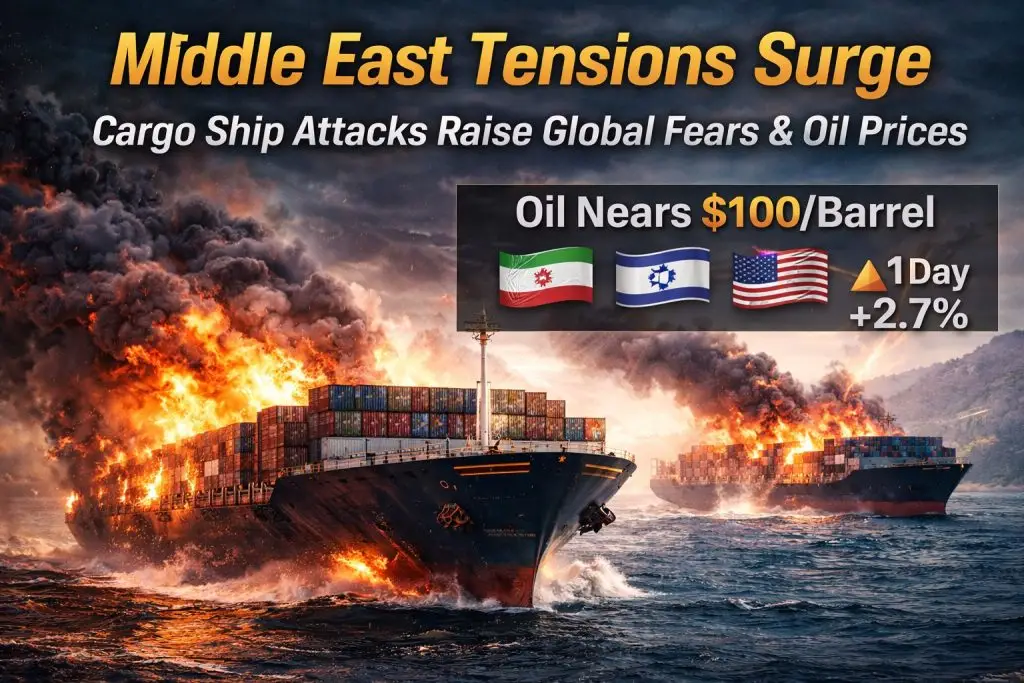
Tensions across the Middle East escalated sharply this week after multiple attacks were reported against commercial cargo vessels in the Persian Gulf, intensifying fears of a broader disruption to global trade and energy supplies. According to maritime security agencies and shipping companies, at least three additional cargo ships were targeted within a 24-hour period, raising serious concerns among governments, insurers, and energy markets worldwide.
The incidents come at a time when geopolitical tensions between Iran, Israel, and the United States remain high, with the region already on edge due to military confrontations and threats to major shipping routes. As news of the attacks spread, global oil markets reacted quickly, pushing crude prices close to $100 per barrel, a level not seen in months.
Experts warn that continued instability in the region could have far-reaching consequences for the global economy, energy security, and maritime trade.
New Wave of Maritime Attacks
Initial reports from international maritime monitoring organizations indicated that three commercial cargo vessels traveling through strategic Gulf waters were struck by suspected drone or missile attacks late Tuesday night. While details remain limited, early investigations suggest the ships sustained varying degrees of damage.
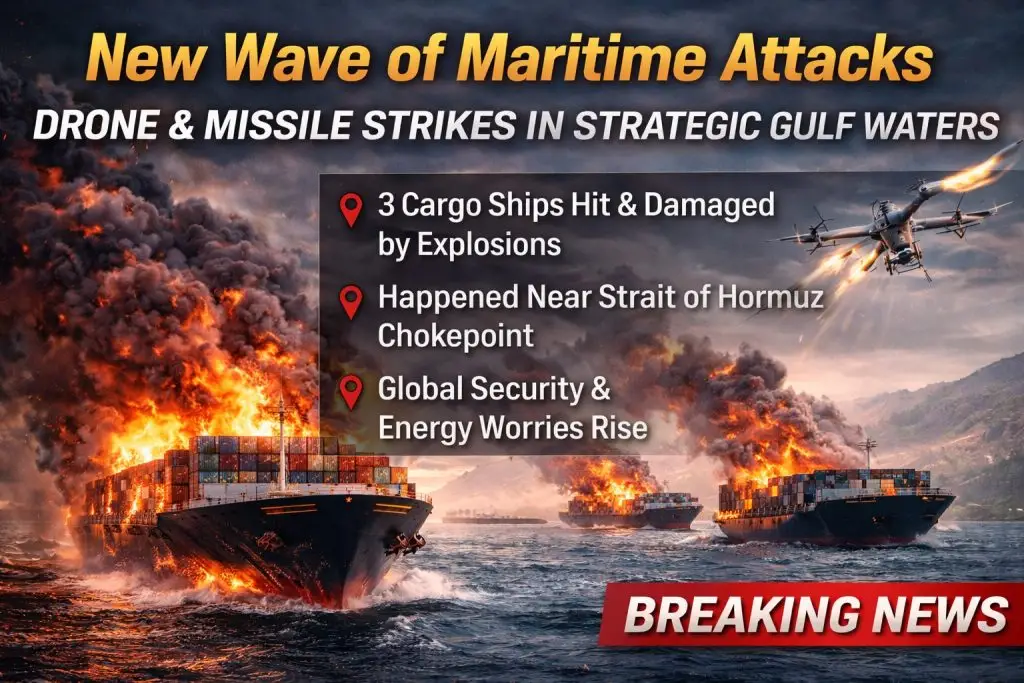
Two vessels reportedly caught fire after being hit, forcing their crews to send distress signals and temporarily abandon sections of the ships. A third vessel suffered structural damage but remained afloat and managed to continue toward a nearby port with escort support.
Shipping authorities confirmed that all crew members were rescued or accounted for, though several sailors sustained minor injuries.
The attacks reportedly occurred near the shipping corridor leading to the Strait of Hormuz, one of the most strategically important maritime chokepoints in the world. Nearly one-fifth of global oil shipments pass through this narrow waterway, making any disruption a major concern for global energy markets.
Strategic Importance of the Gulf Shipping Route
The Strait of Hormuz serves as a vital maritime passage linking the Persian Gulf to the Gulf of Oman and the wider Indian Ocean . Oil exports from major producers such as Saudi Arabia, United Arab Emirates, Kuwait, and Iraq rely heavily on this route.
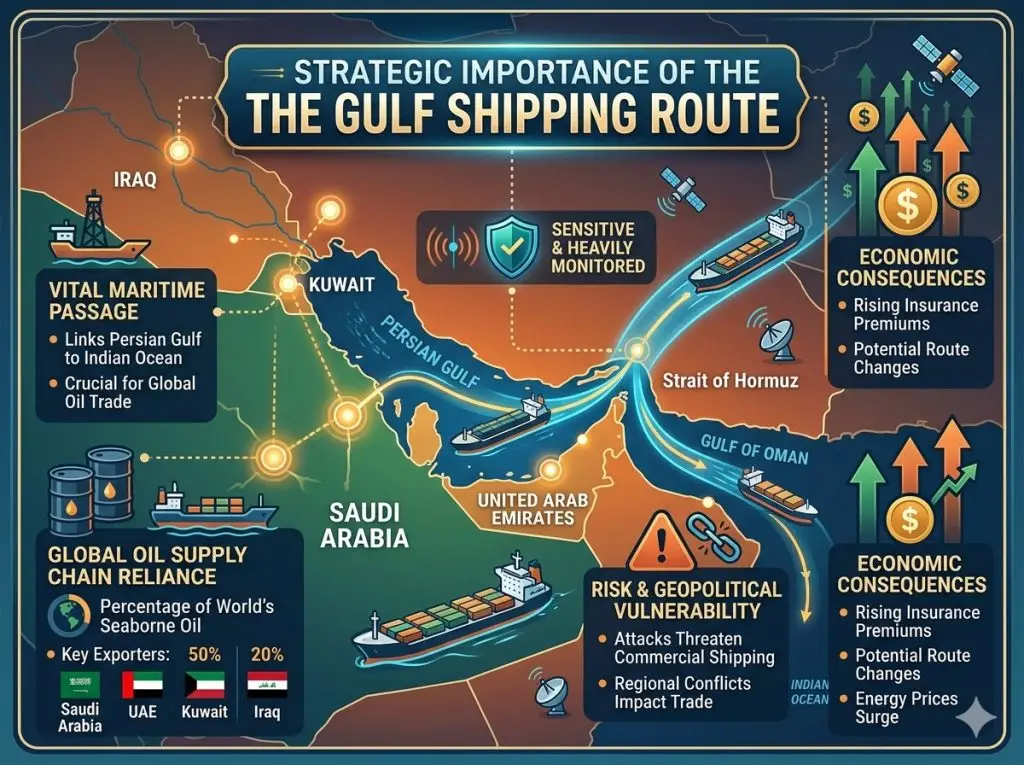
Because of its importance, the waterway has long been considered one of the most sensitive and heavily monitored shipping passages in the world. Any attack on vessels passing through this corridor is immediately viewed as a potential threat to the global oil supply chain.
Security analysts say the latest attacks highlight how vulnerable maritime trade remains during periods of geopolitical conflict.
“Commercial shipping is increasingly becoming a pressure point in regional conflicts,” said a maritime security expert based in London. “If these attacks continue, insurance premiums will skyrocket, shipping routes may change, and energy prices will inevitably rise.”
Oil Markets React Immediately
Global oil markets responded quickly to the news of the attacks. Within hours, benchmark crude prices climbed sharply, approaching the $100 per barrel mark as traders reacted to fears of supply disruptions.

Energy analysts say the price increase reflects a classic market reaction: uncertainty about supply routes leads to rapid price spikes.
Several factors are driving the surge:
- Risk to tanker routes in the Gulf
- Potential escalation of regional conflict
- Insurance costs for shipping companies
- Speculation in global energy markets
Members of OPEC are closely monitoring the situation, as many of their member states rely on Gulf shipping lanes to export crude oil.
If the attacks continue, oil prices could easily exceed $100 per barrel, analysts warn.
Shipping Industry on High Alert
Global shipping companies have begun issuing emergency advisories to vessels operating near the Gulf region. Several companies are instructing captains to remain on maximum security alert while transiting the area.
Some vessels have already begun rerouting or delaying voyages until more information becomes available.
Maritime insurance providers are also reviewing risk assessments for ships entering the region. In previous periods of Gulf instability, insurance premiums for vessels traveling through the Strait of Hormuz increased dramatically.
If the situation deteriorates further, shipping companies may face:
- Higher insurance costs
- Longer routes around conflict zones
- Increased naval escorts
- Potential delays in global trade deliveries
For industries dependent on maritime supply chains, these disruptions could ripple through the global economy.
Rising Geopolitical Tensions
The attacks occurred amid escalating tensions between Iran and Israel, with the United States also heavily involved in the regional security situation.
Over the past several months, military strikes, cyberattacks, and threats against energy infrastructure have raised fears that a broader regional conflict could erupt.
While no group has officially claimed responsibility for the latest cargo ship attacks, security analysts believe the incidents are likely linked to the wider geopolitical confrontation unfolding in the Middle East.
Both Western and regional intelligence agencies are currently investigating whether the attacks were carried out by state actors, proxy militias, or independent militant groups operating in the area.
Naval Forces Increase Patrols
In response to the attacks, naval forces from several countries have stepped up patrols in Gulf waters. Warships from the United States, United Kingdom, and regional allies have increased surveillance missions around critical shipping routes.
Military officials say the goal is to protect commercial vessels and prevent further incidents.
Several naval coalitions already operate in the region to safeguard maritime trade. These operations typically include:
- Monitoring shipping traffic
- Escorting vulnerable vessels
- Detecting drones or missiles
- Responding to distress signals
Defense analysts say a stronger naval presence could help deter additional attacks but may also increase tensions if rival forces operate in close proximity.
Global Economic Concerns
The renewed instability in Gulf waters comes at a time when the global economy is already facing significant challenges. Rising inflation, supply chain disruptions, and energy price volatility have placed pressure on many national economies.
If oil prices climb above $100 per barrel, economists warn that several consequences could follow:
- Higher fuel prices worldwide
- Increased transportation costs
- Rising inflation in many countries
- Slower economic growth
Developing nations that depend heavily on imported fuel could face particularly severe economic pressure.
Countries in South Asia, including Bangladesh, are especially vulnerable to oil price fluctuations because energy imports make up a large portion of national expenditure.
Energy Security Under Threat
Energy security has become a major concern for governments worldwide as geopolitical conflicts increasingly affect global supply routes.
The Gulf region plays a critical role in supplying oil and liquefied natural gas (LNG) to markets across Asia, Europe, and North America.
Any prolonged disruption could force energy-importing nations to search for alternative suppliers or draw down strategic petroleum reserves.
Several governments are already reviewing emergency plans in case the situation escalates further.
Energy analysts say the attacks demonstrate how quickly political conflict can impact global energy stability.
Calls for International Response
Following the attacks, several governments called for restraint and international cooperation to ensure safe maritime navigation.
Diplomatic sources say discussions are underway among major powers to prevent further escalation and maintain stability in the region.
International maritime organizations have also urged all parties to respect the safety of commercial shipping.
“Civilian maritime routes must never become battlefields,” one official from a global shipping authority said. The impact of such a situation would be felt across the globe.
Historical Pattern of Gulf Shipping Attacks
The Gulf region has experienced several similar incidents over the past decade. Cargo ships, oil tankers, and naval vessels have previously been targeted during periods of heightened geopolitical tension.
Past attacks have included:
- Drone strikes on tankers
- Mine explosions near shipping routes
- Missile attacks on commercial vessels
- Sabotage operations in regional ports
Each incident has raised fears of a broader maritime conflict that could disrupt global trade.
The latest attacks appear to follow a similar pattern, though investigators are still working to determine who carried them out.
Shipping Companies Seek Greater Protection
As security risks increase, shipping companies are urging governments to strengthen maritime protection measures.
Industry leaders say commercial vessels often lack adequate defenses against modern threats such as drones and guided missiles.
Some companies are exploring new security technologies, including:
- Drone detection systems
- Electronic countermeasures
- Advanced radar monitoring
- Satellite tracking of potential threats
However, experts warn that protecting thousands of ships traveling through international waters remains a major challenge.
What Happens Next?
The coming days will likely determine whether the situation stabilizes or escalates further.
If additional attacks occur, several developments could follow:
- Expanded naval operations in Gulf waters
- New sanctions or diplomatic pressure on suspected attackers
- Higher oil prices and market volatility
- Increased global concern about maritime security
For now, international shipping companies, governments, and energy markets remain on high alert.
Conclusion : Persian Gulf cargo ship attacks
The reported attacks on three more cargo ships in the Persian Gulf mark a dangerous escalation in an already tense geopolitical environment. With global oil prices nearing $100 per barrel, the world is once again being reminded of how vulnerable critical energy supply routes can be.
The Strait of Hormuz remains one of the most strategically vital waterways on Earth, and any instability there has immediate consequences for global trade, energy markets, and economic stability.
While naval forces and international organizations are working to secure the region, the risk of further incidents remains high.
For governments, businesses, and consumers worldwide, the events unfolding in the Gulf serve as a powerful reminder: regional conflicts can quickly become global economic crises.