
After a week of war, Donald Trump demands Iran’s unconditional surrender as Middle East tensions explode, raising fears of global conflict and economic crisis.
Introduction
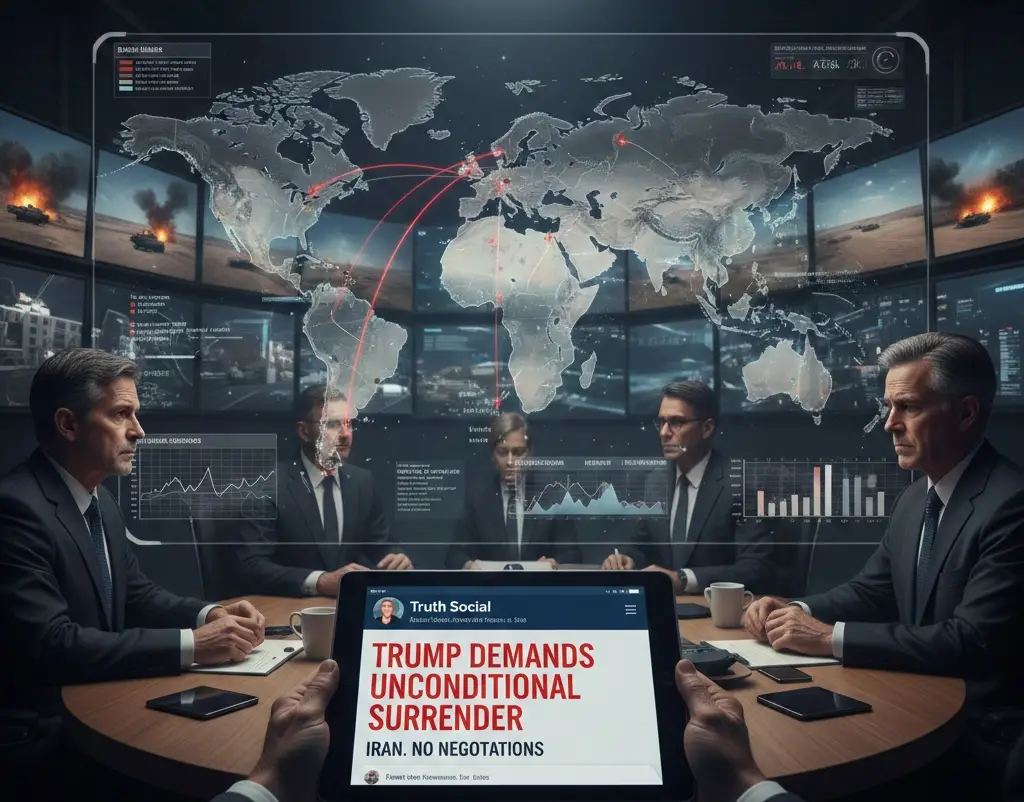
A week after a devastating war erupted between the United States, Israel, and Iran, global tensions have escalated dramatically. The conflict, which has already caused thousands of casualties and widespread destruction across the Middle East, entered a new and more dangerous phase when U.S. President Donald Trump publicly demanded Iran’s “unconditional surrender.” The statement marked a significant shift in the rhetoric of the war and signaled that Washington might pursue a far more aggressive strategy against Tehran.
Trump’s message, posted on his social media platform Truth Social, rejected any immediate negotiations with Iran and insisted that the only acceptable outcome for ending the war would be Iran’s complete surrender. According to the U.S. president, only after surrender would the United States and its allies assist in rebuilding Iran and establishing a new leadership structure in the country.
The declaration has triggered widespread international concern. Diplomats warn that such a demand could complicate ongoing mediation efforts and prolong the war, while military analysts fear it may push the region closer to a broader conflict involving several global powers. As the war spreads beyond Iran’s borders and threatens energy supplies and global markets, the world is watching anxiously to see whether diplomacy or further escalation will define the next phase of the crisis.
Origins of the War
Rising Tensions Before the Conflict
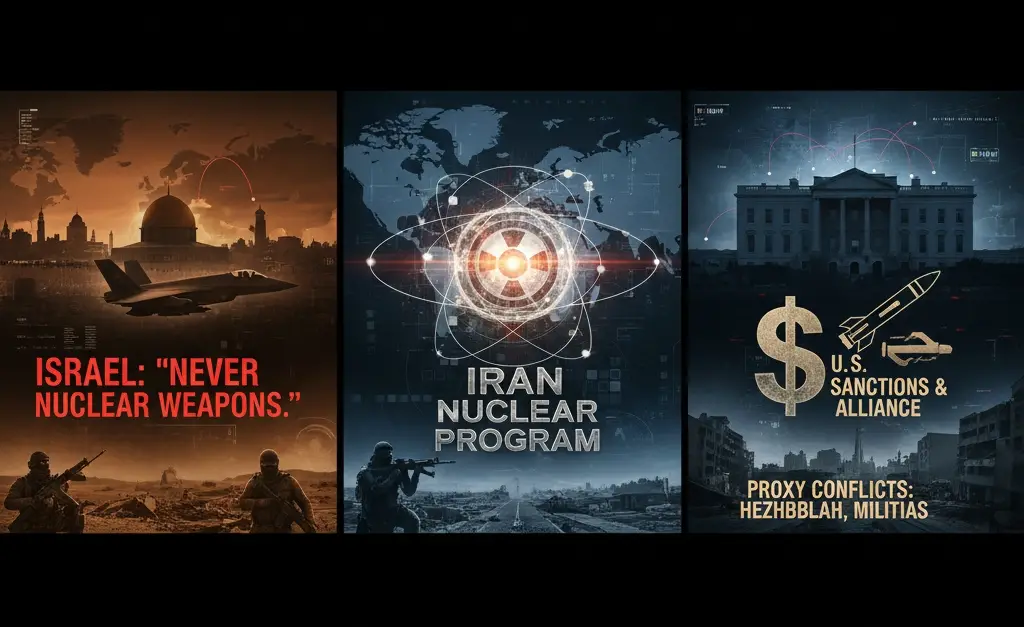
The conflict did not emerge overnight. For years, tensions between Iran, Israel, and the United States had been rising due to disputes over nuclear programs, regional influence, and military alliances. Iran’s nuclear ambitions have long been a central issue in global politics, with Western countries accusing Tehran of pursuing nuclear weapons while Iranian leaders insist their program is purely for civilian energy purposes.
Israel has repeatedly warned that it would not allow Iran to obtain nuclear weapons, arguing that such a development would threaten its national security. Meanwhile, the United States has imposed severe economic sanctions on Iran and supported Israel diplomatically and militarily.
Over time, the rivalry intensified through proxy conflicts across the Middle East. Iranian-backed groups such as Hezbollah in Lebanon and various militias in Iraq and Syria frequently clashed with Israeli forces or U.S. interests in the region. These tensions created a volatile environment where a direct confrontation became increasingly likely.
The Spark That Ignited the War
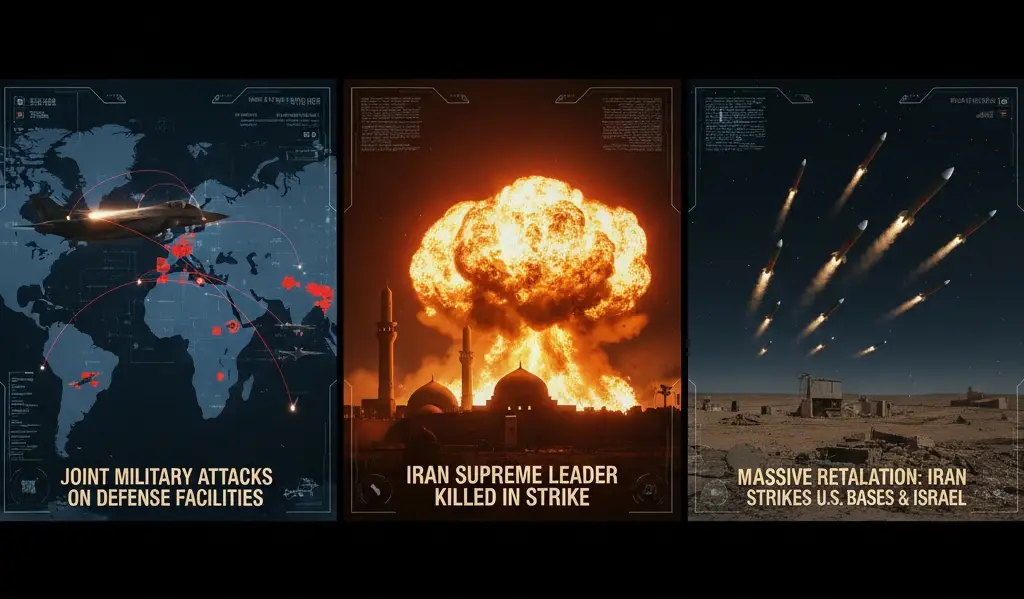
The immediate trigger for the war came when U.S. and Israeli troops carried out joint military attacks aimed at key Iranian defense facilities. According to multiple reports, the strikes included attacks on strategic facilities and command centers believed to be linked to Iran’s military leadership.
One of the most dramatic developments occurred during the opening stage of the conflict when Iran’s Supreme Leader, Ayatollah Ali Khamenei, was reportedly killed during a strike on a compound in Tehran. The incident shocked the world and triggered massive retaliation from Iran.
Iran responded by launching missiles and drones against Israeli territory and U.S. military bases across the Middle East. The strikes targeted locations in countries such as Qatar, Kuwait, Saudi Arabia, and Bahrain, where American forces are stationed. The war rapidly expanded beyond the original battlefield, turning into a regional conflict involving several countries.
The First Week of War
Massive Military Operations

Within days of the initial strikes, both sides intensified their military campaigns. Israel carried out extensive airstrikes on Iranian facilities and Hezbollah positions in Lebanon. Iranian forces responded with ballistic missile attacks aimed at Israeli cities and military installations.
According to early estimates, the conflict has already resulted in over 1,200 deaths in Iran, with additional casualties reported in Israel, Lebanon, and among U.S. troops.
Entire neighborhoods in major cities have been damaged, while infrastructure such as airports, communication networks, and military bases have been targeted. Civilian casualties have also been reported, raising concerns about humanitarian consequences.
Regional Spread of the Conflict
The war quickly expanded beyond Iran and Israel. Hezbollah, the Iranian-backed militant group based in Lebanon, entered the conflict by launching rockets toward Israel. Israel retaliated with large-scale strikes on Beirut, forcing hundreds of thousands of civilians to flee their homes.
Meanwhile, U.S. forces stationed across the Gulf region came under attack from Iranian missiles and drones. This raised fears that the conflict could spread further, potentially drawing in other regional powers.
Several countries in the Middle East placed their military forces on high alert, while international airlines suspended flights to multiple cities in the region.
Trump’s Demand for “Unconditional Surrender”
The Statement That Escalated the Crisis
After a week of fighting, President Donald Trump made a dramatic announcement on social media that changed the tone of the conflict. He wrote that the United States would accept “no deal with Iran except unconditional surrender.”
Trump’s statement suggested that the war would continue until Iran agreed to completely give up its resistance and accept the conditions imposed by the United States and its allies.
He also said that after Iran surrendered, Washington and its partners would help rebuild the country’s economy and guide it toward a more stable future.
Political Goals Behind the Demand
Trump’s demand goes beyond simply ending the war. According to reports, he has indicated that the United States should play a role in selecting Iran’s next leader following the death of Ayatollah Khamenei.
This idea suggests that Washington might be seeking a broader regime change in Iran. The president reportedly believes that installing a new leader who is more cooperative with the United States and its allies could stabilize the region.
Such a strategy, however, has raised serious concerns among political analysts. Historically, attempts to influence leadership changes in other countries have often led to long-term instability and resistance.
Iran’s Response
Defiant Reaction from Tehran
Iranian officials have strongly rejected Trump’s demand for unconditional surrender. Iranian President Masoud Pezeshkian declared that the country would defend its sovereignty and dignity against foreign aggression.
In a statement, he emphasized that Iran is committed to peace but will not accept conditions imposed through military force. He also revealed that several countries had begun mediation efforts to end the conflict.
Iran’s leadership has portrayed the war as a defense of national independence, rallying domestic support against external threats.
Military Retaliation
Despite heavy bombardment, Iran has continued launching missile and drone attacks across the region. These strikes have targeted Israeli military positions as well as U.S. bases in neighboring countries.
Iranian forces have also attempted to disrupt global energy infrastructure, including oil facilities in the Gulf. Such actions have raised fears that the war could severely disrupt global oil supplies.
Impact on Global Energy and Markets
The crisis is already putting pressure on international energy supplies and prices> The Middle East is one of the world’s most important oil-producing regions, and any conflict there can cause dramatic changes in supply.
Following Trump’s statement and the intensification of the war, oil prices surged sharply. Investors worried that attacks on oil facilities or shipping routes could reduce global supply and drive prices even higher.
Stock markets around the world also reacted negatively, with major indexes falling as investors sought safer assets.
Energy analysts warn that if the conflict continues or expands, oil prices could rise dramatically, affecting economies across the globe.
International Reactions
Calls for De-escalation
Many world leaders have urged the United States, Israel, and Iran to de-escalate the conflict. The United Nations has called for an immediate ceasefire and negotiations to prevent further civilian casualties.
European governments expressed concern that the demand for unconditional surrender might undermine diplomatic efforts aimed at ending the war.
Several countries are reportedly trying to mediate between the two sides, though details of those efforts remain unclear.
Risk of a Wider War
One of the biggest fears among international observers is that the conflict could expand into a broader regional or even global war.
Russia has reportedly provided intelligence assistance to Iran, while several Western nations have increased their military presence in the Middle East.
If more countries become directly involved, the conflict could escalate far beyond its current scope.
Humanitarian Consequences
The war has already created a severe humanitarian crisis. Thousands of civilians have been killed or injured, and many more have been forced to flee their homes.
In Lebanon alone, hundreds of thousands of people have been displaced due to the fighting between Israel and Hezbollah.
Infrastructure damage has disrupted electricity, water supplies, and medical services in several cities. Humanitarian organizations warn that the situation could worsen rapidly if the war continues.
Political Debate in the United States
Trump’s decision to escalate the conflict has sparked intense debate within the United States. Some lawmakers support the president’s actions, arguing that Iran must be confronted aggressively.
Others, however, have criticized the administration for launching military operations without clear authorization from Congress.
A recent vote in the U.S. House of Representatives rejected a resolution that would have limited the president’s war powers, reflecting the deep political divisions surrounding the conflict.
The debate highlights broader questions about America’s role in global conflicts and the limits of presidential authority in wartime.
Possible Future Scenarios
Scenario 1: Negotiated Settlement
One possible outcome is that international mediation efforts succeed in bringing the parties to the negotiating table. In this scenario, both sides might agree to a ceasefire and begin discussions about political and security arrangements.
However, Trump’s demand for unconditional surrender could make such negotiations extremely difficult.
Scenario 2: Prolonged War
Another possibility is a prolonged conflict lasting weeks or months. Military analysts believe that Iran’s geography and military capabilities could make a quick victory unlikely.
A prolonged war could lead to further destruction, higher casualties, and severe economic consequences.
Scenario 3: Regional Escalation
The most dangerous scenario would involve additional countries entering the conflict. If major powers become directly involved, the war could expand into a much larger international crisis.
Conclusion
The demand for Iran’s “unconditional surrender” has marked a critical turning point in the Middle East conflict. What began as a series of military strikes has now evolved into a broader geopolitical crisis with global implications.
With thousands already dead, millions affected, and the risk of a wider war looming, the coming weeks will be crucial. Diplomacy, military strategy, and international pressure will all play a role in determining whether the conflict moves toward resolution or deeper escalation.
For now, the world remains on edge as leaders weigh their next moves in one of the most dangerous confrontations of the modern era.