
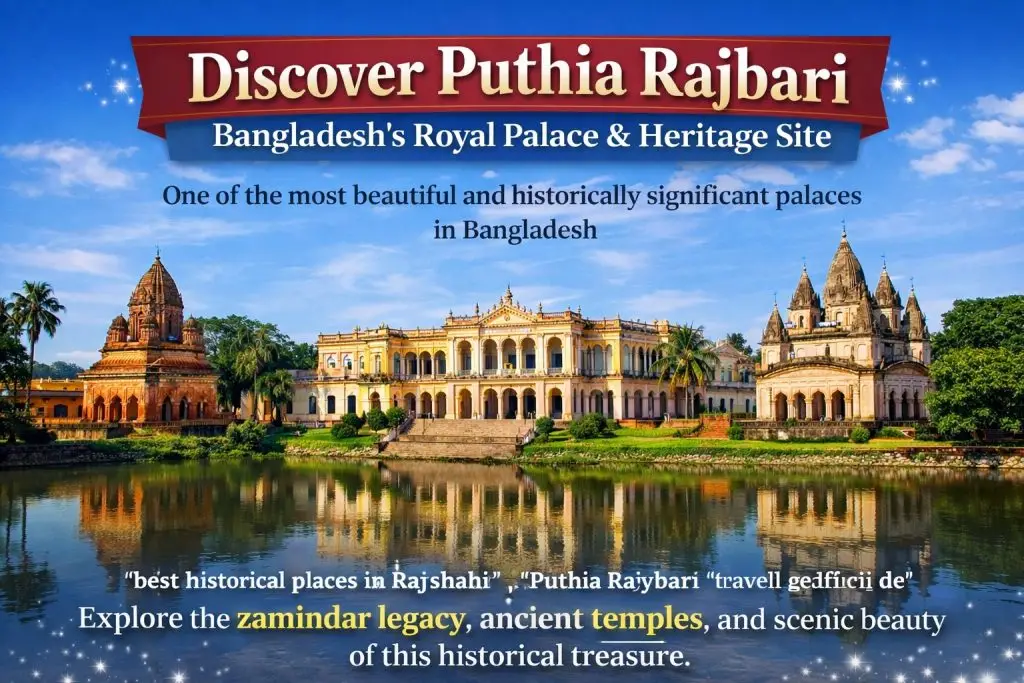
Explore Puthia Rajbari in Rajshahi, a historic zamindar palace surrounded by terracotta temples, royal heritage, and stunning architecture in Bangladesh.
Introduction: Puthia Rajbari
Puthia Rajbari is one of the most beautiful and historically significant royal palaces in Bangladesh. Located in Puthia Upazila of Rajshahi District, this magnificent palace complex is famous for its zamindar heritage, Hindu temples, royal architecture, and scenic surroundings. Travelers searching for “best historical places in Rajshahi”, “Puthia Rajbari travel guide”, or “heritage sites in Bangladesh” will find this destination truly unforgettable.
Surrounded by ancient temples, ponds, gardens, and red-brick heritage structures, Puthia Rajbari offers a unique glimpse into the royal lifestyle of Bengal’s zamindars during the Mughal and British periods.
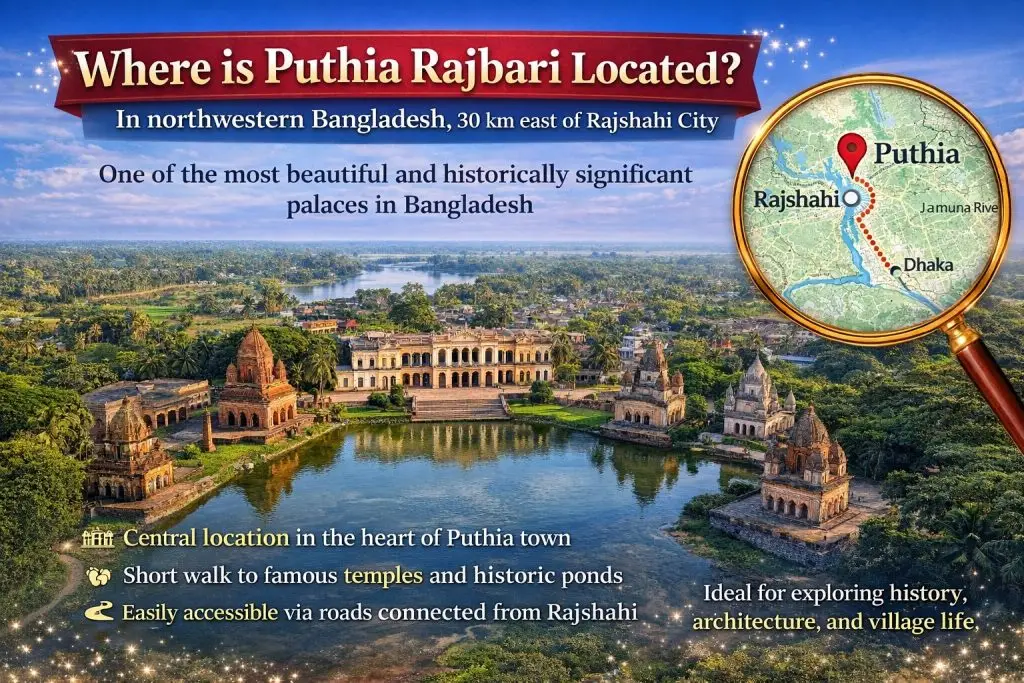
📍 Where is Puthia Rajbari Located?
Puthia Rajbari is situated approximately 30 kilometers east of Rajshahi city, in the heart of northwestern Bangladesh, a region well known for its rich history and cultural heritage.
The palace complex stands prominently in the center of Puthia town, making it one of the most accessible historical attractions in the area. Because of its central location, visitors can easily walk from the Rajbari to several famous temples, large historic ponds, and other heritage structures without needing transportation.
The surrounding town has a peaceful, semi-rural atmosphere, offering a pleasant contrast to busy city life. Roads leading to Puthia are well connected from Rajshahi, making day trips simple and convenient. This prime location allows travelers to explore architecture, religion, and local village scenery all in one memorable visit.
🕰️ Full History of Puthia Rajbari
👑 Origin of the Puthia Zamindari
The history of Puthia Rajbari dates back over 400 years. The estate was originally granted to a noble family during the Mughal period. The Puthia Raj family became one of the most influential zamindar families in Bengal, known for their wealth, education, and contributions to religion and culture.
The zamindars of Puthia were especially devoted to Hinduism, and they built numerous temples, ponds, guest houses, and religious structures throughout the region. These temples remain some of the finest examples of terracotta temple architecture in Bangladesh.

🏛️ Construction of the Rajbari Palace
The current palace structure was mainly built in the late 19th century during the British colonial era. It served as the official residence of the Puthia Raj family.
The Rajbari complex was not just a home; it was an administrative and cultural center. Important meetings, religious festivals, and royal ceremonies were held here.
The Era of Rani Hemanta Kumari
One of the most important figures in Puthia’s history was Rani Hemanta Kumari Devi, a respected queen of the Raj family. She played a major role in temple construction, charity work, and education. Under her leadership, many structures were built, including temples that still stand today.
She is remembered as a philanthropic queen who supported schools, religious activities, and social development.
British Colonial Period
During British rule, the Puthia zamindars maintained close relationships with colonial authorities. The palace became a symbol of wealth and power in the Rajshahi region. Western architectural influence can be seen in the palace’s European-style columns, balconies, and design patterns.
However, the influence of the zamindars declined after the Permanent Settlement Act and later during the end of the zamindari system.
After the Independence of Bangladesh
After 1947 and later in 1971 (Bangladesh Liberation War), the zamindari system officially ended. The Rajbari lost its royal function and eventually came under government management.
Today, Puthia Rajbari stands as a protected heritage site, though preservation efforts are still ongoing.
🏗️ Architecture of Puthia Rajbari
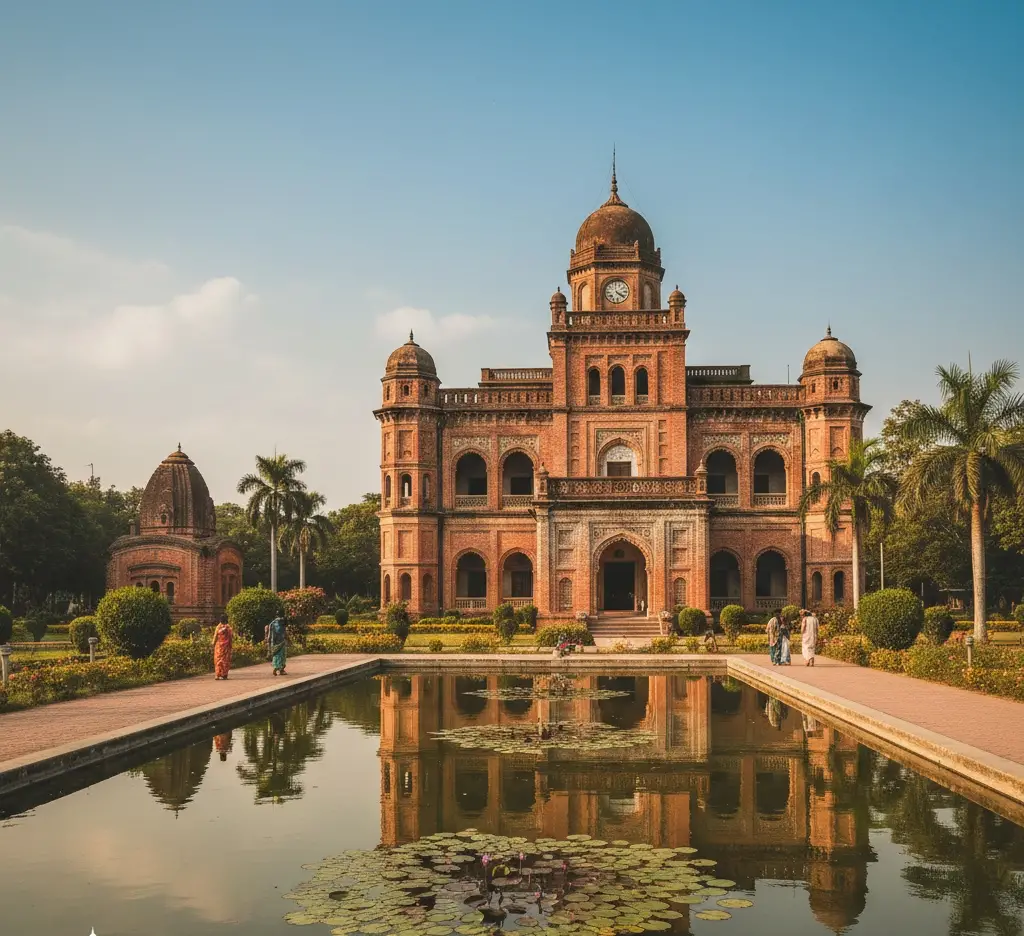
Puthia Rajbari is a remarkable showcase of Indo-European architectural style, blending traditional Bengali design with colonial-era influences.
The two-storied palace stands gracefully with its symmetrical layout and elegant proportions, reflecting the wealth and refined taste of the Puthia zamindar family. Grand arched windows and doorways allow natural light and air to flow through the structure, while decorative pillars and fluted columns add a touch of European sophistication. The palace’s wide verandas and open balconies were designed for comfort in the tropical climate, offering scenic views of the surrounding gardens and temple spires.
At the heart of the complex lies a spacious central courtyard, once used for royal gatherings, ceremonies, and cultural events. Delicate ornamental plasterwork decorates the walls and ceilings, featuring floral and geometric motifs. Painted in soft pastel tones, the palace creates a beautiful contrast against lush greenery and open blue skies, making it a prime example of Rajbari architecture in Bangladesh and a highlight of heritage architecture in Rajshahi.
🛕 Famous Temples Near Puthia Rajbari
Puthia proudly carries the title “Temple Town of Bangladesh” thanks to its remarkable concentration of historic Hindu temples, many built under the patronage of the Puthia zamindar family.
These temples are not only religious landmarks but also outstanding examples of Bengal temple architecture, attracting historians, pilgrims, photographers, and cultural travelers alike.
🔱 Govinda Temple
Constructed in the 19th century, the Govinda Temple is one of the finest terracotta temples in Bangladesh.
Its exterior walls are covered with detailed terracotta plaques illustrating stories from the Ramayana, Mahabharata, and scenes of daily life from that era. The craftsmanship displays exceptional artistry, making it a must-see for lovers of heritage architecture.
🛕 Shiva Temple (Pancharatna Temple)
This striking five-spired temple stands beside a large historic pond, creating a breathtaking reflection in the water.
Its tall central tower and four smaller corner spires represent the classic Pancharatna style. It is one of the most iconic and photographed landmarks in Puthia.
🌺 Jagannath Temple
Believed to be one of the older temples in the area, Jagannath Temple features ornate carvings, curved cornices, and traditional Bengali design elements that highlight early regional temple styles.
🕉️ Boro Ahnik Temple
One of the largest temple complexes in Puthia, this site reflects the deep religious devotion and cultural patronage of the zamindar family, who supported temple construction as a symbol of faith, art, and community life.
🌿 Natural Beauty Around the Rajbari
The palace is surrounded by:
🌳 Lush green fields
🌊 Historic ponds
🌺 Flower gardens
🦋 Peaceful village landscapes
The reflection of temples and palace walls in nearby ponds creates an incredibly photogenic scene, especially during sunrise and sunset.
📸 Why Puthia Rajbari is a Photographer’s Paradise
If you search for “best photography spots in Rajshahi”, Puthia Rajbari always appears on the list.
Best photo opportunities:
- Palace façade at golden hour
- Reflection of Shiva Temple in water
- Terracotta temple details
- Traditional rural life nearby
🚗 How to Reach Puthia Rajbari
From Dhaka
🚌 Bus to Rajshahi (6–7 hours)
🚗 Local bus or CNG from Rajshahi to Puthia (40 minutes)
From Rajshahi City
Auto-rickshaw, bus, or rented bike can take you directly to Puthia Rajbari.
🗓️ Best Time to Visit
Plan your visit between November and February for mild temperatures and refreshing weather.
Avoid:
☀️ Peak summer heat
🌧️ Heavy monsoon rains
Winter mornings offer soft light perfect for photography.
🎟️ Entry Fee & Visiting Hours
Currently, entry is either free or has a very small local fee (may change). There are no strict time limits, but daytime visits are recommended for safety and better visibility.
🧭 Travel Tips for Visitors
✔️ Wear comfortable walking shoes
✔️ Carry drinking water
✔️ Respect religious sites
✔️ Avoid littering
✔️ Hire a local guide to learn deeper history
🏨 Where to Stay
Most visitors stay in Rajshahi city hotels and take a day trip to Puthia. Rajshahi offers budget to mid-range accommodations.
Search-friendly terms included:
Hotels near Puthia Rajbari, Rajshahi travel stay options
🍛 What to Eat Nearby
While Puthia is a small town, local restaurants offer:
🍚 Traditional Bengali meals
🐟 Fresh river fish
🥘 Bhorta varieties
🍛 Dal and vegetable curries
Rajshahi city has more dining options.
🎉 Festivals & Cultural Importance
During Hindu festivals like Durga Puja and Janmashtami, the temples in Puthia become vibrant centers of worship and celebration.
The Rajbari and temples together represent religious harmony, art, and Bengal’s zamindar culture.
🧱 Preservation Challenges
Despite its historical beauty and cultural importance, Puthia Rajbarifaces several serious preservation challenges. Over the years, weather damage has taken a toll on the palace structure. Heavy monsoon rains, humidity, and intense sunlight have weakened walls, faded decorative elements, and caused plaster to peel away. In addition, the site suffers from a lack of proper restoration and regular maintenance, which allows small cracks and surface damage to grow into larger structural problems.
Natural aging is another concern, as parts of the building are more than a century old. Structural aging has led to weakened foundations, worn staircases, and fragile balconies that require urgent attention. Without professional conservation efforts and government-supported restoration projects, this valuable symbol of Bangladesh’s zamindar heritage and architectural history risks further deterioration over time.
💡 Why Puthia Rajbari is Important for Bangladesh Tourism
Puthia Rajbari is far more than an old palace—it stands as a powerful symbol of Bengal’s architectural brilliance, cultural depth, and religious harmony. As one of the most impressive heritage sites in Bangladesh, it plays a vital role in promoting historical tourism in the Rajshahi region. The palace complex, together with the surrounding temples, offers visitors a rare opportunity to experience zamindar-era history, traditional art, and spiritual heritage in one location.
🎒 Students visit to learn about colonial-era architecture, regional history, and the social system of Bengal’s zamindars.
📚 Historians and researchers are drawn to its preserved structures, temple art, and inscriptions that provide insight into 18th–19th century Bengal.
📷 Photographers find endless inspiration in the palace façade, terracotta temple details, reflections in ponds, and rural scenery.
🌍 Domestic and international tourists come to enjoy a peaceful, culturally rich destination away from crowded urban attractions.
Puthia Rajbari strengthens heritage tourism in Bangladesh, supports local communities through visitor spending, and raises awareness about the need to protect historical landmarks. Its unique blend of architecture, religion, and history makes it one of the country’s most valuable and educational travel destinations.
✨ Final Thoughts
A journey to Puthia Rajbari truly feels like traveling back in time to a royal era of Bengal’s glorious past. The palace complex, surrounded by centuries-old temples, tranquil ponds, and open green landscapes, offers an atmosphere that is both peaceful and historically rich. Walking through the grounds, visitors can admire elegant architecture, intricate temple art, and the legacy of the zamindar families who shaped the region’s cultural identity.
This destination is perfect for travelers who appreciate history, heritage architecture, photography, and cultural exploration. Unlike crowded modern attractions, Puthia provides a calm environment where stories of the past still echo through its walls and courtyards. Whether you are a student, researcher, or casual tourist, the experience is both educational and visually rewarding. For anyone planning to explore historical places in Bangladesh, Puthia Rajbari deserves a top spot on the travel list. 🏰