
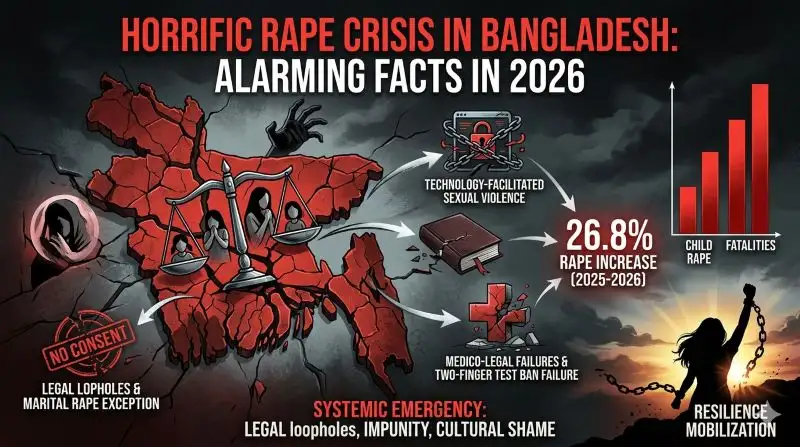
Horrific Rape Crisis in Bangladesh: Shocking 2026 facts, rising violence, survivor struggles, and urgent calls for justice across the nation.
Introduction : Rape Crisis in Bangladesh: Alarming Facts
The year 2026 has brought severe socio-political transitions for Bangladesh. Following historic political upheavals, structural reorganizations, and immense civilian mobilization over the past two years, the country continues to grapple with a deep-rooted humanitarian emergency. Beyond macroeconomic shifts and institutional changes, a silent and devastating epidemic threatens the core of Bangladeshi society: a severe, systemic gender-based violence crisis.
The Rape Crisis in Bangladesh is not a series of isolated criminal incidents. It is an ongoing structural emergency fueled by legal loopholes, deep-seated patriarchal structures, shockingly low conviction rates, and a culture of impunity that silences survivors while protecting perpetrators.
This comprehensive, data-driven analysis explores the alarming realities of the Rape Crisis in Bangladesh in 2026. It examines recent crime trends, the compounding impact of technology on sexual violence, structural flaws within the legal framework, and the critical institutional reforms required to safeguard the fundamental human rights of women and children.
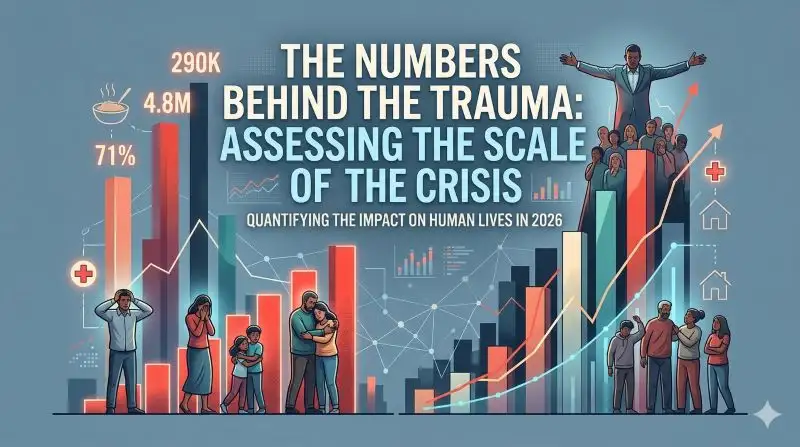
1. The Numbers Behind the Trauma: Assessing the Scale of the Crisis
Quantifying the exact scale of sexual violence in Bangladesh has historically been challenging due to widespread underreporting. Fear of social ostracization, direct threats from perpetrators, and a lack of faith in police infrastructure mean that a substantial portion of sexual assaults never enter official record books. However, domestic human rights tracking and medical documentation paint a harrowing picture of the current landscape.
Shocking Statistics and Rising Curves
Data compiled from human rights watchdogs like the Bangladesh Mahila Parishad (BMP) and Ain o Salish Kendra (ASK) paint a grim picture of recent trends. In 2025, police headquarters data recorded an alarming 7,068 filed rape cases across the nation—a sharp increase from 5,570 cases in 2024. This marks an escalation of over 26.8% in documented reports within a single 12-month period.
The momentum of this crisis has explicitly carried into 2026. For instance, mid-May 2026 data released by ASK confirmed that at least 118 children were victims of rape between January 1 and May 20, 2026 alone. Additionally, 46 other children were subjected to attempted rape during this brief window. This indicates that far from being a temporary spike, the crisis has firmly accelerated.
Newspaper Tracking and Underreporting
According to aggregated human rights monitoring data, media documentation captures only a fraction of the actual occurrences. Out of hundreds of explicitly reported rapes of females in mainstream daily newspapers, a substantial percentage conclude without even an official police case—known as a First Information Report (FIR)—being filed. This represents a severe institutional disconnect where verified survivors are denied access to the foundational stage of the criminal justice system.
The Realities of Intimate Partner and Localized Violence
The data becomes even more concerning when assessing domestic and localized environments. Public health evaluations indicate that merely 7% of ever-married women in Bangladesh who experience physical or sexual intimate partner violence ever pursue formal legal actions. The remaining 93% suffer in silence due to family pressure, lack of financial independence, or the legal non-recognition of specific offenses.
2. The Technological Evolution of Harm: Technology-Facilitated Sexual Violence (TFSV)
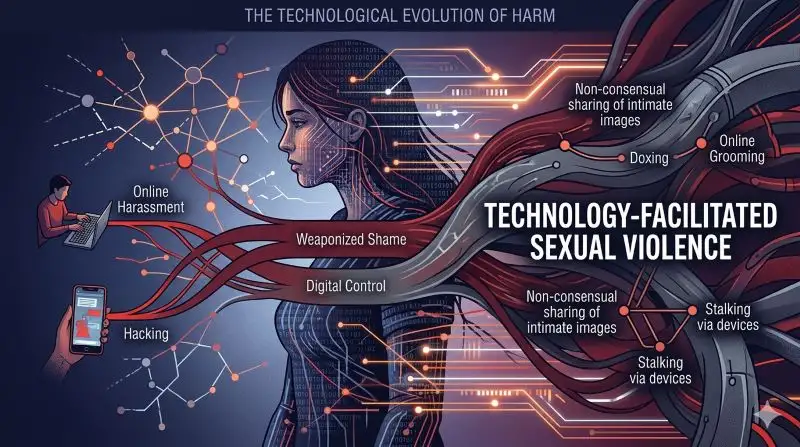
As Bangladesh’s digital infrastructure expands, the geography of sexual violence has evolved. The Rape Crisis in Bangladesh is no longer restricted to physical spaces. It has expanded aggressively into the digital landscape through what international human rights frameworks categorize as Technology-Facilitated Sexual Violence (TFSV).
The Online-Offline Continuum of Abuse
Recent investigations by UN bodies and digital rights groups emphasize that TFSV acts as a direct extension of physical violence, creating a continuous cycle of harm. Report metrics from local watchdogs show that online grooming via social media platforms like Facebook accounts for nearly 16% of sexual exploitation cases tracking young demographics.
Perpetrators leverage online anonymity, algorithmic content distribution, and rapid sharing capabilities to target women and adolescent girls remotely. These actions have severe real-world impacts, inducing profound psychological distress and isolating survivors from their support systems.
Weaponizing Shame to Restrict Public Participation
The intersection of digital harm and political transition became highly visible during recent cross-societal uprisings. As women took to the streets at an unprecedented scale, leading frontline barricades and serving as symbols of socio-political transformation, they faced targeted, digitally mediated misogynistic campaigns.
Monitored trends in 2026 reveal how gendered disinformation—defined as the deliberate deployment of false, highly sexualized, or altered media—is actively weaponized to silence outspoken women, female journalists, and activists:
- Visual Manipulation: The fabrication of deepfakes, altered screenshots, and highly derogatory memes designed to damage a survivor’s reputation.
- Sextortion: The use of intimate imagery or hacked personal data to blackmail victims into compliance or silence.
- Online Rape Threats: The systematic deployment of explicit threats of sexual violence across public platforms, forcing targets to live in constant fear of physical retaliation.
By framing women through tropes of moral deviance, these digital campaigns leverage societal biases to shift public focus away from criminal behavior and place the burden of shame entirely onto the survivor.
3. Structural Blind Spots: Legally Sanctioned Impunity
A primary factor driving the Rape Crisis in Bangladesh is the country’s outdated legal architecture. Pieces of legislation dating back to the colonial era contain systemic loopholes that actively hinder justice.
The Exception of Marital Rape
One of the most glaring human rights discrepancies in Bangladesh’s current legal framework is the statutory exclusion of marital rape. Under Section 375 of the Penal Code of 1860, a husband cannot be criminally charged with raping his adult wife unless she is under a specific statutory age limit.
Because Bangladesh fails to consider marital rape as a distinct criminal offense, its laws do not provide protective provisions or structural safety for married survivors. Women’s historical legal status as dependents or property belonging to their husbands justifies why marital rape remains outside legal recognition, implicitly mandating spouses to submit to their partners’ discretion.
This legal structure leaves millions of married women entirely unprotected from non-consensual sexual acts within marriage. While over 150 nations globally have updated their legal codes to fully outlaw spousal sexual violence, Bangladesh remains among a minority of countries that maintain this statutory exception. This legal gap reinforces the patriarchal notion of absolute male sexual entitlement, validating abusive behavior behind closed doors.
The General Statutory Framework and Enforcement Delays
The nation’s core legal framework defines sexual assault using outdated criteria that rely strictly on proof of physical penetration. This narrow scope excludes various forms of non-consensual sexual coercion, forced digital exposure, and sexualized mutilation. These gaps complicate prosecutions and make it easier for defense teams to secure acquittals on technical grounds. Furthermore, case trackers indicate that nearly 100% of reported cases face immense delays in investigation or trial, causing victims to entirely lose faith in the judicial machinery.
4. Institutional Obstacles: Medico-Legal Failures and Police Hostility
When a survivor decides to navigate the criminal justice system in Bangladesh, they encounter a series of institutional hurdles. From the initial filing of a complaint to the collection of forensics, the process often inflicts secondary trauma.
The Persistence of the Banned “Two-Finger Test”
A critical flashpoint in the medical-forensic space is the continued use of the unscientific and invasive “two-finger test” (TFT). Although the High Court Division of the Supreme Court of Bangladesh formally banned the practice following years of civil society litigation, implementation remains highly uneven across the country.
Qualitative field assessments conducted across healthcare infrastructure show a stark divide between the capital and outlying regions. In urban centers like Dhaka, awareness of the judicial ban is relatively high among healthcare professionals, and central courts regular reject TFT evidence.
However, in many regional facilities and rural districts, medical staff continue to administer the test, driven by an outdated belief in its forensic utility and the fact that local judiciaries continue to accept these reports. This ongoing practice violates the bodily autonomy of survivors and acts as a significant deterrent to reporting crimes.
Character Assassination in the Courtroom
Once a case goes to trial, survivors are frequently subjected to intense character scrutiny. Defense lawyers often exploit Section 155(4) of the Evidence Act of 1872, which historical amendments have attempted to curb but have failed to eliminate in daily practice. This legal loophole enables defense attorneys to attack a survivor’s credibility by aggressively scrutinizing and cross-examining their personal morality and private life in the courtroom. This tactic shifts the courtroom focus from the actions of the accused to the personal history and behavior of the survivor, effectively trying the victim instead of the perpetrator.
5. Societal Drivers: The Maintenance of Patriarchal Power
To address the Rape Crisis in Bangladesh, it is necessary to examine the underlying cultural norms that allow sexual violence to persist. Sexual violence is not simply a failure of law enforcement; it is a structural mechanism used to maintain gender hierarchies.
| Cultural Dimension | Manifestation in Society | Impact on the Rape Crisis |
| Rigid Masculinity Norms | Equating manhood with control, entitlement, and physical dominance. | Normalizes aggressive sexual behavior and reduces empathy for survivors. |
| Culture of Collective Shame | Viewing a woman’s body as the repository of family and community “honor.” | Shifts blame onto the victim, leading to family pressure to conceal the crime. |
| The Shalish System | Local, informal dispute resolution councils led by village elders. | Bypasses criminal courts to negotiate financial settlements or forced marriages. |
The Normalization of Violence via Masculinity Frameworks
Global and regional assessments indicate that rigid expectations linking masculinity to control and emotional suppression create environments where young men are more susceptible to misogynistic rhetoric. In situations of economic insecurity or social change, these dynamics can manifest as physical aggression or digital harassment, serving as a way to reassert social dominance.
The Arbitrative Failure of Informal Settlements
In rural and semi-urban areas, communities frequently bypass the formal judiciary in favor of local arbitration councils, known as Shalish. These informal bodies are typically comprised of influential male village leaders who prioritize maintaining local social harmony over delivering justice.
When handling rape cases, Shalish councils often impose informal financial penalties on the perpetrator’s family or, in worst-case scenarios, pressure the survivor to marry their attacker. This practice effectively silences the criminal nature of the offense and integrates the perpetrator into the victim’s family structure, compounding the trauma.
6. The Vulnerability of Children: An Unfolding National Emergency
The most heartbreaking aspect of the 2026 data is the disproportionate targeting of minors. Children have become the primary victims of the ongoing Rape Crisis in Bangladesh, presenting a fundamental breakdown of the moral and legal fabric of society.
Trust Violations in Safe Havens
Recent statements by international bodies like UNICEF have expressed grave concern over the rising surge of child rape and sexual violence. Alarmingly, many of these incidents occur in places explicitly meant to protect and nurture children, such as educational institutions, schools, and religious residential facilities like madrasas.
In many documented cases, the perpetrators are individuals in direct positions of trust—including teachers, local mentors, and religious figures. This structural vulnerability means children are unsafe even within their standard daily environments.
Fatalities and Psychological Aftershocks
The physical brutality associated with these crimes has reached historic highs. Human rights groups reported that out of the child rape cases recorded in early 2026, a devastating number resulted in the outright murder of the victim post-assault.
For survivors who escape with their lives, the lack of accessible psychosocial support networks leaves them to deal with severe psychological trauma, including deep depression, Post-Traumatic Stress Disorder (PTSD), and suicidal tendencies. The social stigma attached to sexual violence in Bangladesh frequently causes families to isolate the child further, obstructing any genuine path toward long-term psychological healing.
7. The Intersection of Displacement and Crisis: The Rohingya Refugee Camps
The Rape Crisis in Bangladesh is further complicated by the country’s protracted humanitarian challenges. The refugee camps in Cox’s Bazar, which house nearly one million Rohingya refugees, present a unique set of vulnerabilities regarding gender-based violence (GBV).
Protection Vulnerabilities in High-Density Camps
The Joint Response Plan (JRP) for the Rohingya Humanitarian Crisis underscores that camp populations face persistent protection risks and safety concerns. The combination of dense living conditions, temporary shelter infrastructure made of tarpaulin and bamboo, limited lighting at night, and complex security dynamics leaves women and children highly vulnerable to assault.
Exploitative Economies and Impunity
Research into displacement-linked sexual violence demonstrates that institutional breakdowns and illicit resource networks often lead to increased exploitation of women’s bodies. In displacement settings, sexual violence can function as a tool of control within local power structures or gang networks operating inside the camps.
While law enforcement has taken steps to improve security within the camps, funding shortfalls and infrastructure degradation continue to challenge protection networks. This leaves thousands of displaced women with limited access to formal legal protections or comprehensive medical and psychological care.
8. Path Toward Reform: A Multi-Sectoral Roadmap
Addressing the Rape Crisis in Bangladesh requires shifting away from temporary, reactive measures. The country needs a comprehensive, structural overhaul that spans the legal system, medical frameworks, law enforcement protocols, and educational systems.
Comprehensive Judicial and Legislative Reforms
- Criminalize Marital Rape: The legislature must remove the spousal exception from Section 375 of the Penal Code of 1860, ensuring that non-consensual sexual acts are treated as criminal offenses regardless of marital status.
- Modernize Definitions of Sexual Assault: Update statutory definitions to encompass non-penetrative sexual violence, coercive acts, and technology-facilitated offenses.
- Enforce the Evidence Act Protections: Ensure strict enforcement of bans on character assassination tactics in courtrooms, making a survivor’s sexual history completely inadmissible during trials.
- Strict Adherence to Judicial Timelines: Enforce the statutory 90-day case resolution target for gender desks and specialized tribunals to prevent prolonged legal delays that exhaust survivors.
Institutional Standardization and Accountability
- Enforce the Two-Finger Test Ban: Implement strict accountability measures and administrative penalties for medical professionals who continue to perform this banned test, particularly in regional and rural healthcare facilities.
- Establish Specialized Forensic Units: Deploy modernized, evidence-based forensic collection kits and train regional medical staff on trauma-informed protocols.
- Trauma-Informed Police Training: Establish dedicated, fully resource-supported gender desks staffed by trained female officers across all police precincts to ensure survivors can report crimes safely and without fear of judgment.
Digital Safety and Platform Governance
- Define Technology-Facilitated Sexual Violence: Introduce clear legal definitions for TFSV into cyber-security frameworks to enable the effective prosecution of online harassment, digital extortion, and deepfake generation.
- Mandate Platform Responsibility: Require digital platforms and social media networks operating within Bangladesh to establish rapid-response systems for reporting and removing non-consensual intimate imagery and gendered disinformation.
Community-Based and Educational Programs
- Engage Men and Boys: Develop educational programs through civil society organizations that critique harmful masculinity norms and promote gender equality.
- De-stigmatize Reporting: Transforming Societal Mindsets: Deploy sustained public awareness initiatives that move public disgrace off the victims and onto the offenders, motivating households to pursue formal judicial accountability instead of resorting to community-led compromise hearings.
Conclusion
The Rape Crisis in Bangladesh remains a defining roadblock to the nation’s social development and human rights commitments in 2026. This ongoing humanitarian emergency is fueled by severe underreporting, antiquated legal frameworks like the colonial-era Penal Code, inconsistent forensic practices, and the dangerous escalation of technology-facilitated sexual violence. To dismantle these deeply embedded networks of abuse, Bangladesh requires an absolute overhaul of its institutional machinery rather than temporary fixes.
Achieving genuine democratic renewal and social equity is impossible while half the population lives under a constant threat of violence. True justice demands an uncompromising, multi-sectoral commitment from state institutions, legal authorities, healthcare providers, and grassroots civic organizations to enforce strict legal accountability, eliminate harmful local arbitration shortcuts, and guarantee comprehensive digital and physical safety. Only by replacing a deeply entrenched culture of impunity with robust, trauma-informed survivor protections can the country break this cycle of trauma and safeguard the fundamental rights of its women and children.