
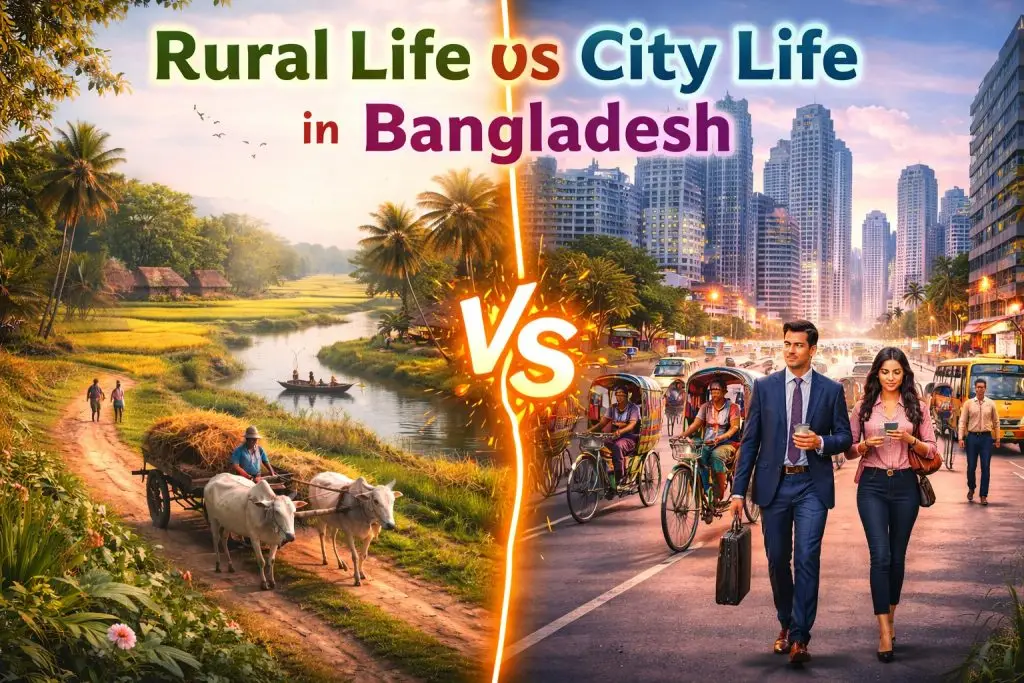
Explore the shocking reality of rural life vs city life in Bangladesh 2026. Discover key differences, lifestyle insights, and surprising cultural contrasts.
Introduction: Rural Life vs City Life in Bangladesh 2026
Bangladesh in 2026 presents a striking contrast between rural life and city life. While urban centers like Dhaka, Chattogram, and Sylhet thrive with modern infrastructure, technology, and fast-paced lifestyles, rural areas remain deeply rooted in tradition, agriculture, and close-knit communities. Understanding the differences between rural life vs city life is essential for appreciating the country’s social, economic, and cultural diversity.
City dwellers often enjoy access to advanced healthcare, education, digital technology, and varied employment opportunities, but they face challenges such as traffic congestion, high living costs, and environmental pollution. In contrast, villagers experience cleaner air, slower daily routines, and strong community bonds, yet they often contend with limited access to modern facilities, quality healthcare, and higher education.
This article explores the shocking reality of rural and urban lifestyles in Bangladesh, highlighting differences in population, economy, education, healthcare, culture, and daily life. Whether you are a researcher, traveler, or curious reader, understanding these contrasts provides insight into the evolving dynamics of Bangladesh in 2026.
1. Population and Density Differences
Urban centers in Bangladesh are experiencing rapid population growth, leading to high density, traffic congestion, and strain on resources. Dhaka alone houses over 22 million residents, whereas rural villages often have populations under a few thousand.
City Life: High-rise apartments, crowded markets, fast commuting, constant social interaction. Residents navigate traffic jams daily and face noise pollution from vehicles and construction. Life in the city is often fast-paced, leaving little time for relaxation. Despite the hustle, urban areas offer access to shopping malls, entertainment centers, and diverse dining options.
Rural Life: Spacious homes, open fields, fewer people, slower pace, and less crowding. Villagers enjoy fresh air, natural surroundings, and a closer connection to agricultural life. Daily routines are guided by seasonal cycles and community activities, offering a more relaxed and peaceful lifestyle compared to the city.
Additional Points:
- Resource Pressure: Cities face higher demand for water, electricity, and housing, often resulting in shortages or higher costs.
- Social Dynamics: Urban residents experience diverse social networks but often face isolation due to fast-paced lifestyles.
- Migration Trends: Many villagers move to cities for education and jobs, increasing urban population density.
- Community Life: Rural populations enjoy tight-knit communities and strong social support systems.
Impact: Overcrowding in cities affects quality of life, pollution, and mental health, while rural areas enjoy clean air, greenery, and a calmer environment, making lifestyle and daily experiences drastically different between the two.

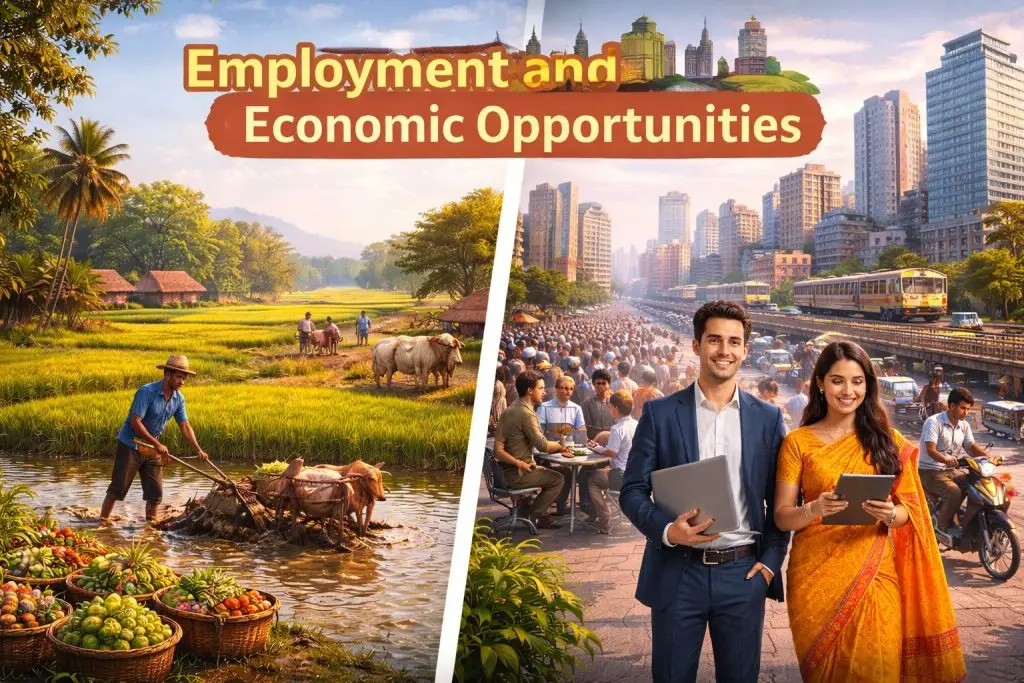
2. Employment and Economic Opportunities
City Life: Urban areas like Dhaka and Chattogram offer diverse job opportunities in IT, business, education, healthcare, and manufacturing industries. Salaries are generally higher, but competition is intense, and the cost of living—including rent, transport, and food—is significantly higher.
Rural Life: Villagers mainly rely on agriculture, fishing, small-scale cottage industries, and local businesses. Income is lower, but living costs are minimal. Many households grow their own food, reducing daily expenses and maintaining a self-sustaining lifestyle.
Additional Points:
- Skill Development: City jobs often require higher education and specialized skills, while rural work relies on traditional knowledge and hands-on experience.
- Entrepreneurship: Small-scale businesses in villages, such as handicrafts and local trade, provide economic opportunities for residents.
- Economic Migration: Many young people move from rural areas to cities seeking better employment, contributing to urban population growth and labor challenges.
- Seasonal Work: Rural employment often depends on agricultural seasons, while cities offer year-round job stability.
Insight: Migration from villages to cities is common due to economic pressures, creating urban growth, higher competition, and infrastructure challenges while highlighting the contrast in lifestyles between rural and urban Bangladesh.
3. Education and Literacy
City Life: Urban areas in Bangladesh have access to better schools, colleges, universities, and private coaching centers. Students in cities benefit from digital resources, modern libraries, and exposure to global knowledge. Access to extracurricular activities, language classes, and STEM programs further enhances learning opportunities.
Rural Life: Rural education is improving, but villages often face limited infrastructure, teacher shortages, and fewer technology-based resources. Many schools lack modern classrooms, laboratories, or libraries, which can affect learning quality. However, rural children often gain practical skills through community work, agriculture, and family-based learning.
Additional Points:
- Digital Access: City students are more likely to use computers, tablets, and online learning platforms, while rural students have limited internet access.
- Educational Programs: NGOs and government programs are helping improve literacy and promote school enrollment in rural areas.
- Higher Education Opportunities: Urban residents have easier access to universities and vocational training, enhancing future career prospects.
- Skill Development: Rural children often acquire practical problem-solving, teamwork, and resilience skills through daily village life.
Rural Life vs City Life Impact: Children in cities often have higher literacy and formal skills, while rural children develop hands-on abilities, cultural awareness, and a strong sense of community.

4. Healthcare Access
City Life: Urban areas in Bangladesh have numerous hospitals, specialized doctors, emergency care units, and private clinics. Advanced diagnostic tools, modern medical equipment, and 24/7 pharmacies are widely available. Residents can access specialized treatments, surgeries, and maternal care with relatively shorter waiting times.
Rural Life: Healthcare facilities in villages are limited, often consisting of small clinics or community health centers. Villagers may travel long distances to reach hospitals, sometimes taking hours on poor roads. Traditional medicine, herbal remedies, and local healers are still common due to accessibility and affordability.
Additional Points:
- Telemedicine: Recent initiatives are introducing telemedicine in rural areas, providing remote consultations and advice.
- Preventive Care: Urban residents benefit from regular check-ups, vaccinations, and health awareness programs, while rural preventive measures are less consistent.
- Emergency Response: Cities have faster ambulance services and emergency response systems; rural emergencies can face delays due to terrain and transport challenges.
- Health Awareness: Public health campaigns are more frequent in cities, contributing to higher awareness about hygiene, nutrition, and disease prevention.
Consequence: Urban residents enjoy advanced medical care and quicker emergency support, while rural residents face higher health risks and limited access despite cleaner environments and lower stress.
5. Lifestyle and Daily Routine
City Life: Urban areas in Bangladesh offer fast-paced routines, with residents juggling work, commuting, and social activities. Cities provide modern conveniences like online shopping, cafes, gyms, cinemas, and nightlife. Daily life is often structured around office hours, traffic patterns, and digital connectivity, leaving little time for relaxation or community interaction.
Rural Life: Villages follow a slower, nature-connected rhythm, often dictated by farming schedules, local markets, and seasonal activities. Daily routines involve household chores, agricultural work, attending community events, and interacting with neighbors. Villagers enjoy fresh air, open spaces, and strong social connections, although modern amenities are limited.
Additional Points:
- Recreation: City residents have access to gyms, parks, cinemas, and clubs; rural residents rely on natural surroundings for recreation and sports.
- Food Habits: Urban diets are fast-paced and often processed; rural diets are fresher, home-cooked, and locally sourced.
- Time Management: City life involves strict schedules, deadlines, and time pressure; rural life allows more flexibility and relaxed routines.
- Cultural Engagement: Villagers engage in traditional festivals, folk music, and community gatherings more frequently than urbanites.
Rural Life vs City Life Impact: City dwellers enjoy convenience, entertainment, and technology but face higher stress and time pressure. Villagers experience tranquility, stronger community bonds, and connection to nature, but with fewer modern amenities.
6. Infrastructure and Technology
City Life: Urban areas in Bangladesh are equipped with reliable electricity, high-speed internet, smartphones, modern roads, and extensive public transport networks. Residents benefit from online banking, e-commerce, ride-sharing apps, and access to digital services for education, work, and entertainment. Well-planned infrastructure supports businesses, healthcare, and emergency services, contributing to a more convenient and connected lifestyle.
Rural Life: Villages often face inconsistent electricity, limited internet access, and slower transport options such as bicycles, rickshaws, or local vans. Roads may be unpaved, and digital services are less accessible. Villagers rely more on traditional methods for communication, commerce, and farming, maintaining a lifestyle deeply connected to nature.
Additional Points:
- Education Access: Urban students benefit from online classes, digital libraries, and e-learning platforms, while rural students often lack these resources.
- Business & Trade: Cities thrive on tech-driven businesses and startups; rural economies depend on agriculture, handicrafts, and local markets.
- Communication: Smartphones and social media make city communication instant, whereas rural communities rely on word-of-mouth or limited mobile connectivity.
- Government Services: Urban residents have easier access to e-governance, digital payments, and online applications compared to rural counterparts.
Impact: Technology and modern infrastructure boost city productivity, convenience, and connectivity, while rural areas maintain traditional ways of life but lag in digital access and modern facilities.
7. Environment and Living Conditions
City Life: Urban areas in Bangladesh face high levels of air and noise pollution, traffic congestion, and crowded streets. Green spaces are limited, and residents often live in high-rise apartments or densely packed neighborhoods. Despite these challenges, cities offer modern conveniences such as shopping malls, hospitals, entertainment centers, and reliable utilities that make daily life easier.
Rural Life: Villages enjoy fresh air, rivers, agricultural fields, forests, and open spaces. Residents live closer to nature, which promotes a healthier lifestyle and lower stress levels. Rural environments encourage outdoor activities, social interactions, and a slower, more relaxed pace of life.
Additional Points:
- Climate Impact: Cities face higher urban heat due to concrete structures and limited vegetation, while rural areas benefit from natural cooling from trees, rivers, and open land.
- Sanitation: Urban areas have access to modern sanitation facilities, whereas some rural regions still rely on traditional methods.
- Noise Levels: Villages are quieter, with natural sounds replacing urban traffic noise.
- Health Benefits: Cleaner air and green surroundings in rural areas reduce respiratory issues and improve overall well-being.
Observation: Rural areas provide healthier physical environments, natural beauty, and tranquility, while urban areas offer modern amenities, convenience, and faster-paced living, highlighting the sharp contrast in lifestyle and living conditions between the two.
8. Social Life and Community
City Life: Urban living in Bangladesh often emphasizes individualism, with people moving away from extended families for work or education. Social interactions are frequently limited to colleagues, friends, or online networks. While cities provide opportunities for entertainment, clubs, cafes, and cultural events, the fast-paced lifestyle can sometimes lead to social isolation and weaker personal connections.
Rural Life: Villages emphasize collective living, where neighbors and extended families maintain close relationships. Festivals, weddings, religious ceremonies, and local gatherings strengthen community ties. Rural residents often help each other with daily tasks, agricultural work, and celebrations, fostering trust, cooperation, and a sense of belonging.
Additional Points:
- Support Systems: Rural communities provide natural support networks for childcare, emergencies, and moral support, whereas urban residents often rely on paid services.
- Cultural Preservation: Villages maintain traditional music, dance, folklore, and local customs that cities may have lost.
- Community Participation: Rural life encourages participation in local councils, farming cooperatives, and volunteer work.
- Privacy vs Interaction: Cities offer more personal privacy but fewer communal interactions, while villages provide strong bonds but limited private space.
Rural Life vs City Life Impact: Urban residents enjoy freedom, modern social opportunities, and diverse experiences but may face loneliness. Rural villagers benefit from strong social cohesion, shared responsibilities, and a vibrant community life, though personal privacy is limited.
9. Cost of Living and Expenses
City Life: Urban living in Bangladesh comes with high costs. Housing, rent, utilities, food, transport, and healthcare can consume a significant portion of income. Modern conveniences like shopping malls, cafes, and entertainment add extra expenses. Even daily essentials such as groceries, fuel, and mobile/internet plans are comparatively more expensive than in rural areas.
Rural Life: Villages have much lower living costs. Many households grow their own food, reducing grocery expenses. Homes are generally smaller, utilities are cheaper, and consumerism is minimal. Transportation often relies on bicycles, rickshaws, or local vans, which cost far less than city transport.
Additional Points:
- Education Costs: Urban parents often spend more on schools, coaching, and extracurricular activities, while rural children often attend local government schools at minimal cost.
- Healthcare Expenses: Urban residents pay more for private clinics and medicines, whereas rural residents rely on local health centers or traditional remedies.
- Leisure Spending: Entertainment and leisure activities in cities increase monthly expenses; rural leisure is largely free or low-cost, like community gatherings or natural surroundings.
- Savings Potential: While incomes may be higher in cities, expenses often reduce savings; rural families can save more relative to their living costs despite lower incomes.
Observation: Urban life offers modern conveniences and opportunities but comes with higher expenses, while rural life provides a simpler, affordable lifestyle with lower financial stress.
10. Transportation
City Life: Urban areas in Bangladesh offer a variety of transportation options, including buses, local trains, ride-sharing apps, taxis, and well-developed highways. Commuting is faster in cities due to frequent public transport, but traffic congestion, pollution, and crowded streets can cause stress and delays. Modern transport infrastructure allows city residents to travel for work, education, shopping, and entertainment with relative ease.
Rural Life: Villages rely on bicycles, motorbikes, small boats, rickshaws, and walking. Roads may be unpaved or narrow, and public transport options are limited. Despite slower mobility, rural travel is often scenic, peaceful, and closer to nature, providing a more relaxed and stress-free experience.
Additional Points:
- Accessibility: Urban areas have better connectivity to airports, bus terminals, and intercity train stations. Rural areas may require longer travel to reach major transport hubs.
- Cost Efficiency: Rural transport is cheaper and often self-operated, while urban commuting can be expensive due to fuel, parking, or ride-sharing fares.
- Environmental Impact: Rural travel has a smaller carbon footprint due to low traffic and non-motorized options.
- Flexibility: City transport is frequent but constrained by schedules; rural travel allows flexible, personal-paced journeys.
Effect: Mobility in cities is faster and more convenient but often stressful, while rural transportation is slower yet scenic, calm, and closely connected to the environment.
Conclusion: Rural Life vs City Life in Bangladesh 2026
The contrast between rural life vs city life in Bangladesh in 2026 is striking, revealing a blend of opportunity, challenge, and cultural richness. Urban centers like Dhaka, Chattogram, and Sylhet offer advanced infrastructure, diverse job opportunities, modern education, healthcare, and digital connectivity. Residents enjoy convenience, entertainment, and faster-paced lifestyles, but they also face high living costs, traffic congestion, pollution, and social stress.
In contrast, rural areas retain traditional lifestyles, strong community bonds, and close connections to nature. Villagers enjoy fresh air, open spaces, affordable living, and practical skill development, though they often contend with limited access to quality healthcare, education, and modern technology. Seasonal work, dependence on agriculture, and migration pressures are common challenges.
Understanding rural life vs city life helps appreciate Bangladesh’s diverse social fabric and economic landscape. Each lifestyle offers unique advantages and drawbacks: urban life brings growth and opportunities, while rural life provides peace, health, and cultural preservation. For policymakers, travelers, and researchers, recognizing these contrasts is essential for balanced development, improved rural infrastructure, and sustainable urban planning.
Ultimately, the 2026 reality highlights that both rural and urban Bangladesh are integral to the nation’s identity, shaping the experiences, values, and aspirations of its people.