
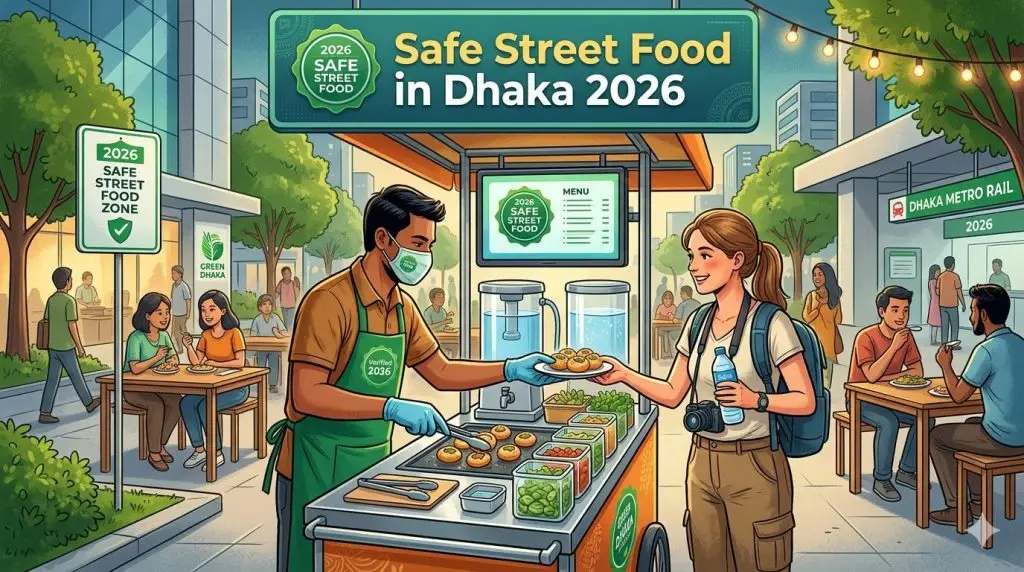
7 expert tips for enjoying safe street food in Dhaka 2026. Avoid getting sick with our traveler’s guide to the best hygienic stalls and local snacks.
Introduction: Safe Street Food in Dhaka 2026
Dhaka, the energetic capital of Bangladesh, offers a sensory journey unlike any other. For most international explorers, the true spirit of this metropolis isn’t found within its historic architecture, but rather amidst the rhythmic clanking of spatulas and the enticing aromas of roasting spices wafting from every alleyway. Despite this culinary richness, many visitors hesitate, haunted by the notorious reputation of “traveler’s tummy” or local waterborne concerns. This fear often prevents them from experiencing some of the most flavorful heritage dishes in the world.
As we move through 2026, the local food landscape has undergone a significant transformation. Driven by a surge in health consciousness and proactive urban safety programs, finding safe street food in Dhaka 2026 has become a seamless experience for those who possess the right knowledge. From the introduction of hygienic food zones in Puran Dhaka to the digital certification of vendors, the city is prioritizing diner safety.
This comprehensive guide provides seven indispensable tips for navigating the bustling food stalls with confidence. We will teach you how to distinguish the most reliable vendors, identify high-heat cooking methods that ensure safety, and choose the right refreshments. Prepare to embark on a worry-free gastronomic adventure through the most authentic and safe flavors South Asia has to offer.
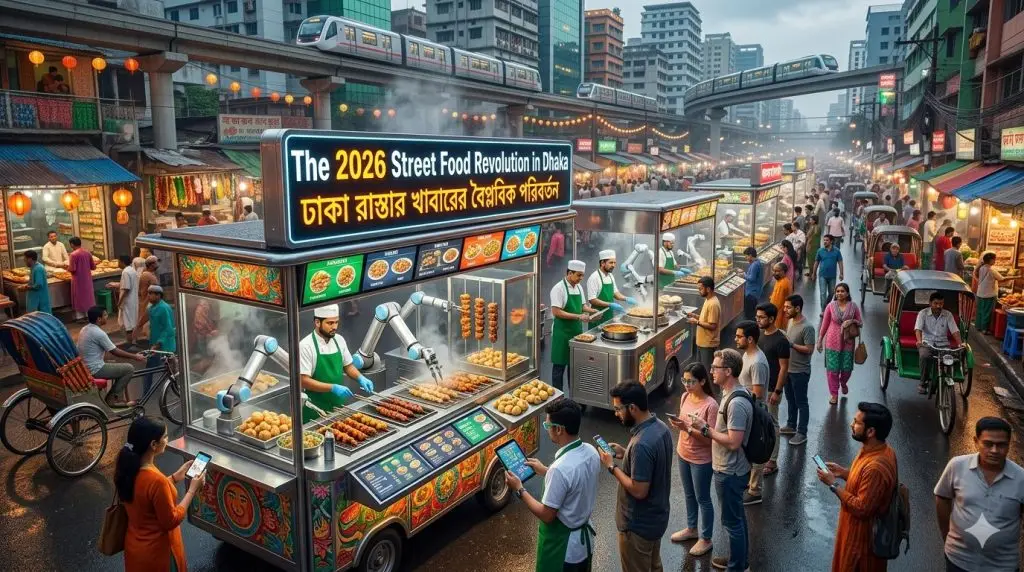
The 2026 Street Food Revolution in Dhaka
The landscape of gastronomy in Bangladesh has shifted dramatically with the 2026 Street Food Revolution in Dhaka. For years, the informal nature of roadside dining made international visitors cautious, but recent systematic changes have redefined the experience. Before exploring specific safety strategies, it is essential to recognize the transformative efforts led by the Dhaka North and South City Corporations. Throughout late 2025 and into early 2026, municipal authorities launched specialized “Hygienic Street Food Zones” designed to bridge the gap between traditional flavors and modern sanitary standards.
In prominent hubs like Dhanmondi, Banani, and the historic quarters of Puran Dhaka, the chaotic street scene has been upgraded with organized, color-coded carts. These vendors are no longer just independent operators; many now carry official health certifications and have undergone basic food safety training. This initiative has replaced uncertainty with transparency, making the search for safe street food in Dhaka 2026 a much more predictable and secure endeavor for tourists. By standardizing waste disposal and water usage in these zones, the city has successfully preserved its culinary heritage while protecting the health of its diners. This new era of urban dining ensures that you can enjoy the city’s legendary snacks with newfound peace of mind.
1. Follow the “High Turnover” Rule
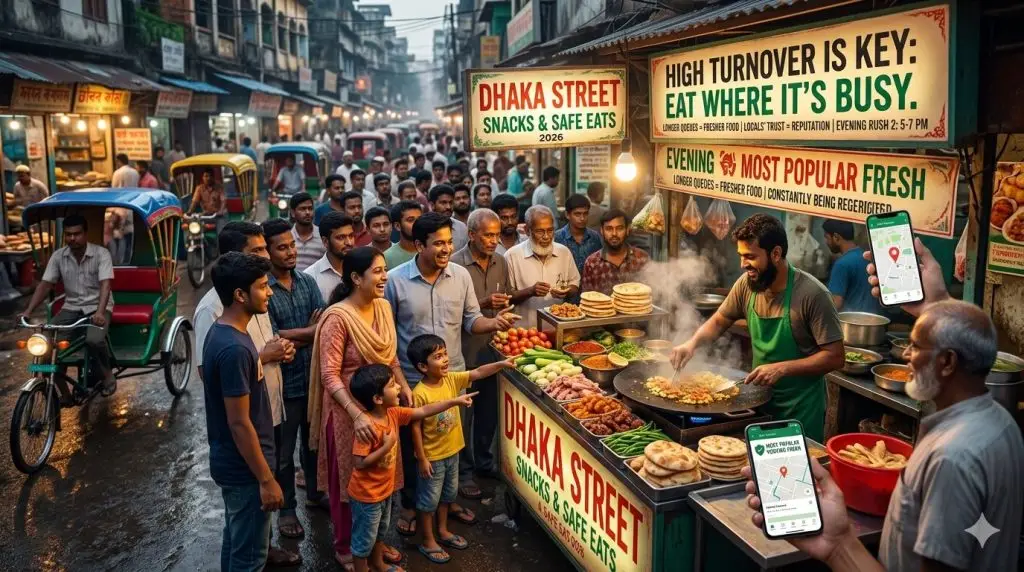
When seeking safe street food in Dhaka 2026, the “High Turnover” rule is your most reliable strategy for avoiding illness while enjoying local flavors. This principle relies on the collective wisdom of the community to filter out subpar vendors.
Here are three reasons why eating at a busy stall is a superior safety choice:
- Guaranteed Ingredient Freshness: A bustling stall means the inventory is moving at a rapid pace. In a tropical climate, raw materials like dough, meat, and spices can degrade quickly if left exposed. At a high-volume stall, ingredients are replenished every few hours, ensuring that the Singara or Kabab you are served was prepared only moments before, rather than sitting under the sun.
- Verified Local Reputation: Residents are the ultimate food critics. A local won’t return to a vendor that has a history of causing stomach distress. A persistent crowd is a living testimonial of the vendor’s commitment to quality. If you see a line of regular commuters or students, it is a strong signal that the food is both delicious and consistently prepared with care.
- The Family Safety Indicator: In 2026, pay close attention to who is in the queue. Stalls that attract families with young children are the “gold standard” for safety. Parents are exceptionally cautious about what their children eat; if they trust a vendor with their family’s health during the 5:00 PM to 7:00 PM rush, you can eat there with high confidence.
2. Prioritize “Flash-Fried” and Piping Hot Dishes
To ensure a healthy culinary journey, focusing on thermal safety is a non-negotiable strategy. Heat acts as a natural purifier, and in the context of safe street food in Dhaka 2026, choosing items cooked at extreme temperatures is your best defense against foodborne bacteria.
Here are three categories of high-heat dishes you should prioritize:
- Deep-Fried Savories (Puri and Singara): These iconic snacks are submerged in bubbling, boiling oil reaching temperatures well above what most pathogens can survive. The intense frying process not only creates a delicious, crispy texture but also ensures the interior is thoroughly cooked. When you see a vendor pulling a fresh batch of Singaras directly from the large iron wok (karai), you are getting a meal that is effectively “heat-sanitized.”
- Charcoal-Grilled Specialties (Seekh Kebabs): Kebabs in Dhaka are traditionally skewered and placed over glowing red-hot coals. This direct exposure to fire and high radiant heat ensures that meats are safely seared. The smoke and intense temperature make Seekh Kebabs or Chicken Tikka a reliable choice, provided you watch the vendor cook them to order.
- Freshly Griddled Mughlai Paratha: This dish involves a stuffed flatbread fried on a flat tawa. To ensure maximum safety, always request that your Mughlai Paratha be toasted until the exterior is golden-brown and the egg and meat filling inside are steaming and fully set. Avoid any pre-prepared slices; the “cooked-to-order” rule is essential here.
Pro Tip: While heat protects you, raw items do the opposite. Strictly avoid pre-cut fruit platters or open salads. Dhaka’s humidity is a breeding ground for bacteria on moist, raw surfaces that haven’t met the flame.

3. The “Water Secret”: Bottled vs. Filtered
In the quest for safe street food in Dhaka 2026, managing your liquid intake is just as critical as choosing the right snacks. Waterborne pathogens remain a primary concern for travelers, and understanding the local “water logic” can be the difference between a successful trip and a ruined itinerary.
Here are three essential rules for staying hydrated and healthy:
- Strict Adherence to Bottled Water: You should exclusively consume water from reputable, sealed bottles. Even if a vendor claims to use a modern filtration system, the risk of secondary contamination in a bustling street environment is high. Always inspect the cap to ensure the factory seal is unbroken. In 2026, many authorized vendors now stock “Smart-Sealed” bottles to provide extra peace of mind for international visitors.
- The Absolute “No Ice” Policy: The most common mistake travelers make is adding ice to a safe soda or juice. In the street food circuit, ice is often manufactured from untreated tap water and transported in blocks that may touch unsanitary surfaces. Since freezing does not kill most bacteria, a single cube can contaminate an otherwise safe drink. Always request your beverages “no ice” (borof chara), even on the most humid Dhaka afternoons.
- The Safety of Boiled Tea (Cha): If you are looking for a safe, local refreshment, the city’s ubiquitous milk tea is your best friend. Because the water and milk are boiled vigorously in a kettle or pot for several minutes, any harmful microorganisms are neutralized. Drinking a steaming cup of Malai Cha is not only a cultural staple but also one of the safest ways to hydrate while exploring the city.
By treating water safety as a priority, you can focus on the incredible flavors of Bangladesh without the anxiety of waterborne illness.
4. Observe the Vendor’s “Food Logic”
Before you commit to a meal, performing a quick, 30-second “sanitation audit” is a vital skill for identifying safe street food in Dhaka 2026. Observing the vendor’s workflow reveals their commitment to hygiene. A professional vendor who values customer health will instinctively follow a specific “food logic” that prevents cross-contamination.
Here are three key indicators to look for during your audit:
- Strict Hand Separation: Observe how the vendor manages transactions. Currency is a major carrier of pathogens; therefore, a hygiene-conscious vendor will never touch your food with the same hand used to handle money. Look for those who use a dedicated glove for food preparation, employ a metal tong for serving, or have a separate person specifically assigned to handle payments. This separation is a hallmark of a vendor who understands modern safety standards.
- Protection of Raw Ingredients: Take a look at the workstation. Are the spices, chopped vegetables, and sauces kept in sealed or covered containers? In the bustling environment of Dhaka, open ingredients are quickly compromised by road dust and insects. Vendors prioritizing safety will use stainless steel or glass lids to keep their supplies shielded from the environment until the exact moment they are needed for cooking.
- Organized Waste Management: A clean cooking area usually indicates a clean kitchen philosophy. Check if the stall has a designated, covered waste bin nearby. If trash, such as used paper plates or food scraps, is allowed to pile up directly next to the cooking surface, it attracts pests and increases the risk of contamination. A tidy workspace is a clear sign that the vendor maintains a disciplined approach to food safety.
By looking for these three habits, you can confidently select stalls that provide a delicious and worry-free experience of Bangladesh’s vibrant street culture.
5. Embrace the “Digital Hygiene” Check
In 2026, navigating the food scene requires more than just your physical senses; it demands a “Digital Hygiene” mindset. Dhaka’s street food culture has moved online, and savvy travelers are using technology to filter out risks before they even arrive at a stall.
Here are three ways to leverage the digital revolution for safe street food in Dhaka 2026:
- Real-Time Visual Verification: Use Google Maps “Live View” and augmented reality (AR) features to scan stalls in popular areas like Dhanmondi or Gulshan. In 2026, many users upload high-definition, 360-degree photos and videos directly to business profiles. Before ordering, do a quick digital scroll to check for recent “Live” updates—if the vendor’s workstation looks cluttered or unsanitary in today’s uploads, move to the next location.
- Targeted Keyword Filtering: When browsing local review apps or Google Maps, don’t just look at the star rating. Use the search-within-reviews feature for specific safety keywords like “hygienic,” “bottled water,” “gloves,” or “clean.” Reviews from early 2026 are particularly valuable, as they reflect the latest post-revolution safety standards and municipal certifications. A stall with a 4.5-rating but recent mentions of “uncovered ingredients” is a red flag.
- Following the “Clean Food” Influencer Wave: Social proof has evolved. Many Bangladeshi food vloggers, such as Food BD or Rafsan TheChotoBhai, now feature segments dedicated to “Street Safety Audits.” Follow local hashtags like #DhakaStreetFood2026 or #CleanStreetEatsBD on TikTok and Instagram. These influencers often go behind the scenes to show how a stall sources its water and manages waste, providing a transparent look at the vendor’s operations that you won’t get from a distance.
By integrating these digital tools into your routine, you can turn your smartphone into a powerful shield against foodborne illness.
6. Start Slow and Acclimatize
Success in exploring safe street food in Dhaka 2026 is a marathon, not a sprint. Your digestive system requires a strategic “onboarding” period to adjust to the unique spice profiles and cooking oils used in South Asian cuisine. By following a tiered introduction, you can build “gut stamina” and enjoy the city’s flavors without interruption.
Here is a three-stage plan for a safe and delicious acclimatization:
- The “Dry” Introduction (Days 1–2): Begin your journey with low-moisture snacks. Options like Muri (spiced puffed rice) or Chanachur (savory lentil mixes) are excellent starting points. Because these items are dry, they have a significantly lower risk of harboring bacteria compared to wet dishes. They allow your palate to get used to local chili and mustard oil levels without overwhelming your system.
- The “Cooked & Water-Safe” Transition (Days 3–4): Once you feel comfortable, move on to legendary snacks like Chotpoti or Fuchka. In 2026, many reputable street vendors—especially in areas like Rabindra Sarobar—explicitly advertise the use of bottled or RO-filtered water for their signature tamarind sauces. Always verify this “Water Secret” before ordering, as it ensures you enjoy these complex, tangy flavors with minimal risk.
- The “Full Exploration” (Day 5+): After a few days of successful snacking, your system is ready for the heavyweights. This is the time to venture into Puran Dhaka for the rich, slow-cooked Kacchi Biryani or succulent Seekh Kebabs. By waiting until Day 5, your gut biome has developed the necessary resilience to process the higher fat content and intense spice blends that make Dhaka’s main courses so unforgettable.
Pro Tip: Pair your early meals with local yogurt or Labang to provide your digestive system with helpful probiotics during this transition phase.
7. Carry Your Own “Sanitation Kit”
Even when a vendor follows every safety protocol, your own environment can introduce risks. Navigating the vibrant streets of Dhaka involves constant contact with high-touch surfaces like rickshaw handles, public railings, and physical currency—all of which are major vectors for germs. In 2026, the ultimate defense for enjoying safe street food in Dhaka is carrying a personal “Sanitation Kit.”
Here are three essential components of your mobile defense strategy:
- Frequent Hand Sanitization: This is your first line of defense. Before your hands touch a piece of Puri or a Singara, use a high-quality hand sanitizer with at least 70% alcohol. In a city where communal hand-washing stations can sometimes be overcrowded or lack soap, having your own supply ensures that the “money-to-mouth” contamination cycle is broken every time you eat.
- Tactical Use of Biodegradable Wipes: Sometimes a vendor’s plates or spoons may appear slightly damp from being rinsed in local water. Carrying a small pack of biodegradable wipes allows you to quickly sanitize utensils or your seating area. This extra step ensures that no residual tap water or surface dust interferes with your meal, giving you an added layer of psychological and physical safety.
- The “Probiotic” Defensive Prep: Preparedness begins before you even land. Many seasoned travelers in 2026 recommend a two-week “gut-loading” phase with high-quality probiotic supplements. By strengthening your natural gut flora before arrival, you enhance your body’s ability to process new spice profiles and ward off minor bacterial variations, making your culinary exploration much smoother.
By taking personal responsibility for hygiene, you can focus entirely on the incredible tastes and textures of Dhaka’s world-class street food scene.
Must-Try “Safe” Street Food Hubs in 2026
To maximize your culinary experience while maintaining health standards, visiting designated hubs is essential. Here are the three premier locations for finding safe street food in Dhaka 2026, each offering a unique atmosphere and specific food specializations:
- Justice Shahabuddin Ahmed Park (Gulshan): This is the gold standard for hygienic street dining in the city. Located in the diplomatic zone, this park features high-end, modern food carts that strictly follow municipal safety guidelines. It is the best place for beginners to try street-style snacks like grilled corn, gourmet kebabs, and fresh juices in a clean, tranquil environment. The vendors here often use eco-friendly packaging and mineral water for all preparations, making it a “zero-risk” starting point for international travelers.
- Rabindra Sarobar (Dhanmondi): As the cultural heart of the city, this lakeside amphitheater is the ultimate hub for Fuchka and Chotpoti. Because it serves a large student and health-conscious professional crowd, the vendors are well-versed in maintaining high standards. In 2026, most stalls here use filtered water for their spicy tamarind sauces. It offers a perfect blend of authentic local atmosphere and reliable food safety, especially during the vibrant evening hours.
- Puran Dhaka (Nazira Bazar): For those seeking the most legendary flavors, Nazira Bazar is a must-visit. While the narrow lanes appear chaotic, the sheer volume of customers acts as a natural safety mechanism. The high turnover ensures that iconic dishes like Haji Biryani and freshly charred Seekh Kebabs never sit idle. In 2026, this area remains the best spot to witness the “flash-fried” rule in action, where the intense heat of the massive cooking pots serves as the ultimate sanitizer for your meal.
Conclusion: Embracing Dhaka’s Flavors in 2026
Exploring local cuisine is one of the most exciting parts of travel, and enjoying Safe Street Food in Dhaka 2026 is absolutely possible with the right approach. By choosing busy stalls, observing hygiene practices, eating freshly cooked meals, and avoiding risky ingredients, travelers can significantly reduce health concerns while still experiencing authentic flavors. Staying hydrated with sealed water, carrying basic medication, and trusting your instincts also play a key role in maintaining food safety.
Dhaka’s street food scene is vibrant, affordable, and deeply rooted in culture, offering everything from spicy snacks to sweet treats. With proper awareness and a few smart habits, visitors can confidently enjoy these culinary delights without compromising their well-being. Remember, safe eating doesn’t mean missing out—it simply means being mindful of where and what you eat.
In 2026, as tourism continues to grow, food safety awareness is improving across many street vendors in Dhaka. This makes it even easier for travelers to indulge in local dishes with confidence. By following these simple yet effective tips, your journey through Dhaka will be not only delicious but also safe and memorable.