
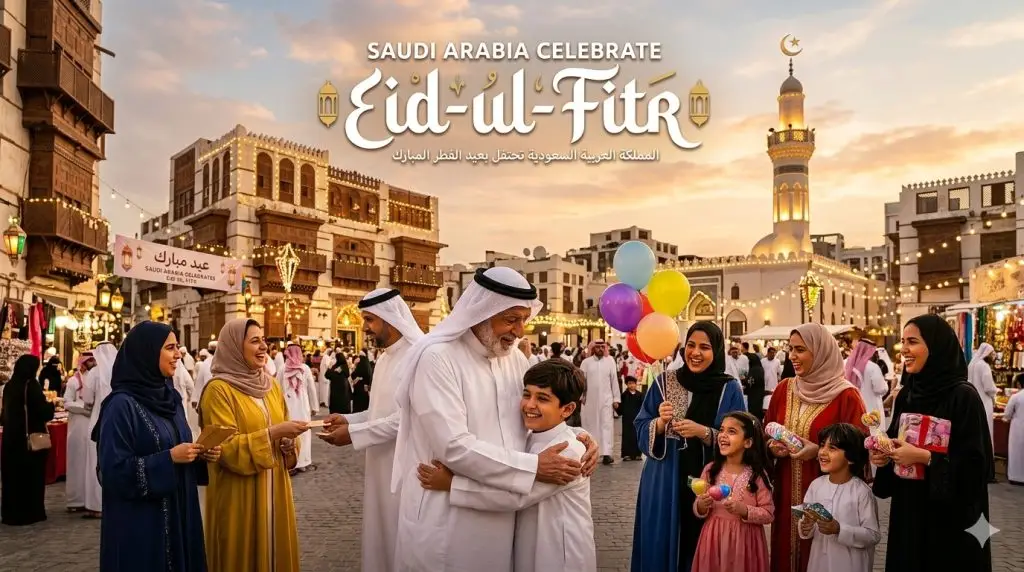
Saudi Arabia Celebrate Eid-ul-Fitr officially on March 20 as moon sighting confirms Shawwal. Muslims prepare for prayers, festive meals, and joyful celebration.
Introduction: Saudi Arabia Celebrate Eid-ul-Fitr Officially on March 20
The Kingdom of Saudi Arabia has officially announced that Eid-ul-Fitr will be celebrated on March 20 this year, signaling the conclusion of the holy month of Ramadan. This important declaration comes after the traditional moon sighting process, which is used to determine the beginning of Shawwal, the tenth month of the Islamic lunar calendar. Religious authorities carefully observe the crescent moon, and once confirmed, the announcement is made to guide millions of Muslims in marking the end of fasting.
Eid-ul-Fitr is one of the most cherished and spiritually significant festivals in Islam, celebrated with great enthusiasm across the globe. It represents a time of gratitude, unity, and renewal after a month of fasting, prayer, and self-discipline. Families come together to offer special prayers, share meals, and extend acts of charity to those in need. The occasion not only brings joy and celebration but also encourages reflection on faith, compassion, and community values among Muslims worldwide.
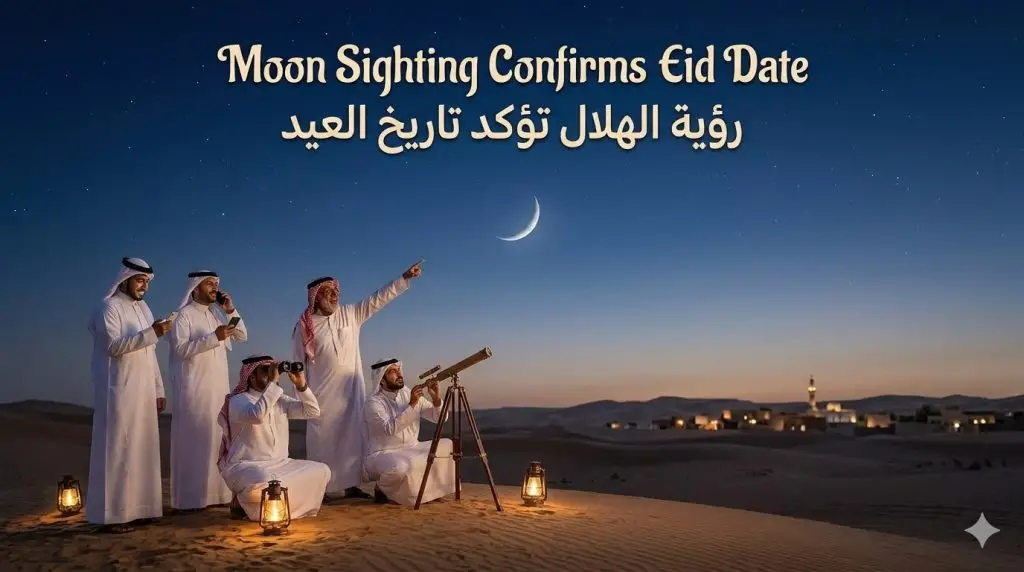
Moon Sighting Confirms Eid Date
The confirmation of Eid-ul-Fitr in Saudi Arabia comes after the crescent moon was sighted on the evening of March 19. In Islam, months are based on the lunar calendar, meaning each new month begins with the visible appearance of the crescent moon. This sighting marks the end of Ramadan, a sacred period of fasting, prayer, and reflection observed by Muslims worldwide. Depending on the lunar cycle, Ramadan lasts either 29 or 30 days, making the moon sighting a crucial moment for determining the exact date of Eid celebrations.
Saudi authorities, including the Supreme Court and official moon sighting committees, play a vital role in verifying the authenticity of the moon’s visibility. Trained observers monitor the sky from different regions to ensure accuracy before making an official declaration. Once the sighting is confirmed, the announcement is rapidly communicated across the country and beyond. Many Muslim-majority nations and communities around the world look to Saudi Arabia’s decision when determining their own Eid dates, making this announcement highly influential on a global scale and uniting millions in celebration.
Significance of Eid-ul-Fitr in Islam
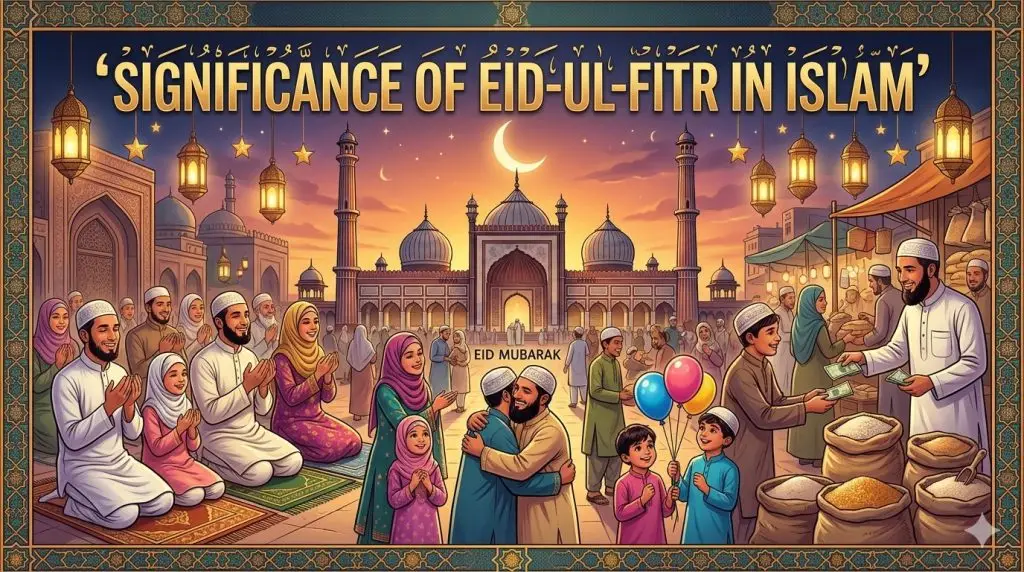
Eid-ul-Fitr is one of the two most important festivals in Islam, the other being Eid-ul-Adha. It marks the end of Ramadan, a sacred month devoted to fasting, prayer, charity, and spiritual growth. During Ramadan, Muslims refrain from eating, drinking, and other physical needs from dawn to sunset as an act of devotion and self-discipline. This period encourages believers to strengthen their faith, practice patience, and develop a deeper connection with Allah through regular prayers and good deeds.
The festival of Eid-ul-Fitr symbolizes gratitude to Allah for granting the strength and perseverance to complete the month of fasting. It is also a time of forgiveness, generosity, and unity, where people mend relationships and reconnect with family and friends. A key highlight of the day is the special congregational prayer, known as the Eid prayer, which is performed shortly after sunrise in mosques and open spaces. Additionally, giving charity, especially Zakat al-Fitr, ensures that the less fortunate can also take part in the celebrations, reinforcing the values of compassion and community.
Preparations Across Saudi Arabia
Following the official announcement of Eid-ul-Fitr, preparations for the festive occasion quickly intensify across Saudi Arabia. Major cities such as Riyadh, Jeddah, and Mecca come alive with vibrant decorations, including colorful lights and banners that reflect the joy of the upcoming celebration. Markets and shopping centers become increasingly crowded as people rush to buy new clothes, gifts, and traditional foods. The festive atmosphere spreads across neighborhoods, creating a sense of excitement and unity among residents.
Families take time to clean and decorate their homes, preparing to welcome relatives and guests during Eid. Shopping malls extend their operating hours to accommodate the surge in customers, while local markets remain busy late into the night. Bakeries and sweet shops experience a significant rise in demand, offering a variety of popular Eid treats such as dates, cookies, and pastries. These preparations not only reflect cultural traditions but also highlight the importance of togetherness, hospitality, and celebration that define Eid-ul-Fitr in Saudi Arabia.
Eid Traditions and Customs In Saudi Arabia
Eid-ul-Fitr in Saudi Arabia is celebrated with a beautiful blend of religious devotion and cultural customs that bring communities together. The day begins with a ritual bath, known as Ghusl, followed by wearing new or freshly cleaned clothes to mark the festive spirit. Families then proceed to mosques or open prayer grounds to perform the special congregational Eid prayers, which are offered shortly after sunrise. These prayers symbolize gratitude, humility, and unity among Muslims.
After completing the prayers, people greet one another warmly with the phrase “Eid Mubarak,” which translates to “Blessed Eid,” spreading joy and goodwill. Families and friends gather for elaborate meals, often featuring traditional dishes such as kabsa, grilled meats, rice, and a variety of sweet desserts, reflecting the rich culinary heritage of the region. A central aspect of Eid in Saudi Arabia is giving Zakat al-Fitr, a charitable donation made before the Eid prayer. This act ensures that even the less fortunate can partake in the festivities, reinforcing the values of generosity, compassion, and social responsibility. Through these cherished traditions, Eid-ul-Fitr becomes not only a day of celebration but also a meaningful reminder of faith, community, and togetherness.

Economic Impact of Eid Celebrations
Eid-ul-Fitr has a notable economic impact in Saudi Arabia, driving increased activity across multiple sectors. Retail businesses, in particular, experience a significant surge during the final days of Ramadan, as shoppers purchase new clothing, gifts, and festive items to prepare for the celebrations. Food markets, bakeries, and sweet shops also see higher demand for traditional Eid delicacies, contributing to the boost in overall sales. Electronics and home goods sectors often benefit as families buy gadgets, appliances, and other items for gifting or personal use.
The hospitality and travel industries also experience heightened activity during Eid. Many people travel within the country or internationally to visit family, take vacations, or participate in religious events. Hotels, airlines, and transportation services see a spike in bookings, while local restaurants and entertainment venues experience higher foot traffic. This seasonal increase in demand provides a substantial economic stimulus, supporting businesses and generating temporary employment opportunities. Overall, Eid-ul-Fitr not only strengthens social and cultural bonds but also serves as a key driver of economic activity, highlighting the festival’s importance both spiritually and financially for Saudi Arabia.
Global Implications of Saudi Arabia’s Announcement
The announcement of Eid-ul-Fitr in Saudi Arabia holds significant influence across the global Muslim community. As the birthplace of Islam and home to its two holiest cities, Mecca and Medina, Saudi Arabia’s declaration often serves as a reference point for many Muslim-majority countries when determining the start of Eid celebrations. While some nations conduct their own local moon sightings to confirm the date, others choose to follow Saudi Arabia’s announcement to ensure unity and simplify planning, particularly for families, schools, and businesses coordinating holiday observances.
Countries in the Middle East, such as the United Arab Emirates, Qatar, and Kuwait, typically align their Eid celebrations with Saudi Arabia’s official date, reinforcing regional cohesion. Meanwhile, countries in South Asia, including Bangladesh, India, and Pakistan, may independently verify the crescent moon locally before announcing Eid, reflecting a combination of tradition and astronomical observation. This interconnected approach ensures that Eid celebrations, though varying slightly in timing, maintain a shared sense of spiritual unity among Muslims worldwide, highlighting the global significance of Saudi Arabia’s declaration.
Eid-ul-Fitr Celebrations Around the World
Eid-ul-Fitr is celebrated by Muslims worldwide, and while customs and traditions may vary, the core spirit of the festival—gratitude, unity, and joy—remains consistent across cultures. In South Asia, countries like India, Pakistan, and Bangladesh celebrate Eid with special dishes such as biryani, a fragrant spiced rice with meat, and sheer khurma, a sweet vermicelli pudding prepared with milk, nuts, and dates. Families come together to share these meals, visit relatives, and exchange gifts, reflecting the festival’s emphasis on togetherness and generosity.
In Southeast Asia, countries such as Malaysia and Indonesia highlight traditional delicacies like ketupat, a rice cake wrapped in woven palm leaves, which is served alongside meat dishes and sweets. In Western nations, Muslim communities gather in community centers, mosques, or large open spaces for Eid prayers, followed by social events and festive meals. These celebrations not only honor religious devotion but also showcase the rich cultural diversity within the global Muslim community. Across continents, Eid-ul-Fitr fosters a sense of belonging, strengthens family and community bonds, and reminds believers of the values learned during Ramadan, making it a truly universal occasion of faith, joy, and unity.
Spiritual Reflection and Renewal
Beyond the celebrations and festive atmosphere, Eid-ul-Fitr holds profound spiritual meaning for Muslims around the world. It marks the conclusion of the holy month of Ramadan, a period dedicated to fasting, prayer, self-discipline, and reflection. Eid serves as a moment of spiritual renewal, allowing individuals to evaluate their actions, acknowledge personal growth, and set intentions to maintain the lessons learned during Ramadan throughout the year. This reflection strengthens the connection with Allah and reinforces the importance of living a life guided by faith and moral values.
The festival also emphasizes acts of kindness, forgiveness, and charity, which are central to its observance. Muslims are encouraged to reconcile with family, friends, and neighbors, resolving conflicts and fostering harmonious relationships. Giving Zakat al-Fitr, a form of charity, ensures that the less fortunate can also partake in the celebrations, highlighting compassion and social responsibility. By practicing generosity, humility, and gratitude, believers reinforce their spiritual development and community bonds. In essence, Eid-ul-Fitr is not only a day of joy and celebration but also a time for reflection, renewal, and recommitment to living a virtuous and spiritually enriched life.
Public Holidays and Festive Atmosphere
In Saudi Arabia, Eid-ul-Fitr is celebrated with several days of public holidays, giving people the opportunity to fully participate in the festivities. During this period, government offices, schools, and many businesses remain closed, allowing families and communities to focus on religious observances, family gatherings, and cultural celebrations. The extended holidays provide ample time for travel, visiting relatives, and engaging in social and communal activities, which are an integral part of the Eid experience.
Public spaces throughout the country, including parks, community centers, and entertainment venues, become hubs of celebration. Cities are adorned with colorful decorations and lights, creating a lively and joyful atmosphere. Cultural events, concerts, and exhibitions are organized to showcase traditional music, dance, and art. Fireworks displays light up the night sky, adding to the festive excitement. Neighborhoods and communities come together to share meals, host gatherings, and exchange greetings, strengthening social bonds. The widespread celebrations create a sense of unity, happiness, and national pride. Eid-ul-Fitr in Saudi Arabia is thus not only a religious occasion but also a time for cultural expression, social connection, and nationwide celebration.
Safety and Travel Considerations During Eid-ul-Fitr in Saudi Arabia
During Eid-ul-Fitr, travel activity in Saudi Arabia significantly increases as people journey to visit family, attend religious events, or take vacations. To manage the surge in travelers and ensure public safety, authorities implement comprehensive safety measures across airports, highways, and public transportation systems. Airports operate at full capacity, with additional staff deployed to facilitate smooth passenger flow and minimize delays. Traffic management strategies are enforced on highways and major roads to reduce congestion and prevent accidents, ensuring that holiday travel remains safe and organized.
Public transport services, including buses, trains, and metro systems, adjust schedules and add extra trips to accommodate the influx of passengers. Travelers are strongly advised to plan their trips well in advance, book tickets early, and remain aware of official travel guidelines to avoid inconvenience. Road safety campaigns and public announcements are also made to encourage safe driving, especially during peak travel times. By taking these precautions, Saudi authorities aim to provide a seamless travel experience during Eid while prioritizing safety and efficiency. Proper planning and adherence to guidelines allow families and individuals to enjoy the holiday with minimal disruption, ensuring that the joyous celebrations remain stress-free and memorable.
Role of Technology in Eid Celebrations
Modern technology has significantly transformed the way Eid-ul-Fitr is celebrated, making it easier for people to connect, share, and participate in festive activities. Social media platforms such as Facebook, Instagram, and WhatsApp allow Muslims around the world to send greetings, share photos, and post videos of their celebrations with friends and family, even across long distances. This digital connectivity ensures that loved ones can participate in the joyous spirit of Eid, regardless of where they are, fostering a sense of global community and togetherness.
Online shopping has also become an essential part of modern Eid preparations. People can conveniently purchase gifts, clothing, and festive items through e-commerce platforms, reducing the need to wait in crowded markets and stores. Additionally, digital payment systems have simplified charitable contributions, particularly Zakat al-Fitr, allowing individuals to make donations securely and efficiently. Mobile banking apps and online platforms ensure that charity reaches those in need promptly, enabling more people to participate in acts of generosity. Technology has therefore not only enhanced convenience but also strengthened the spirit of giving, connection, and celebration, making Eid-ul-Fitr a modern festival that balances tradition with innovation while maintaining its core spiritual and social values.
Cultural Unity and Joy
Eid-ul-Fitr serves as a powerful symbol of unity among Muslims. Regardless of cultural or geographical differences, the shared experience of fasting and celebration creates a sense of belonging and togetherness.
The festival brings people closer, strengthening family bonds and community ties. It is a time to set aside differences and embrace peace and harmony.
Looking Ahead
As Saudi Arabia prepares to celebrate Eid-ul-Fitr on March 20, millions of Muslims around the world eagerly anticipate the joyous occasion. The festival not only marks the end of Ramadan but also signifies a new beginning filled with hope, gratitude, and positivity.
With its rich traditions, spiritual depth, and cultural significance, Eid-ul-Fitr continues to be one of the most cherished celebrations in the Islamic calendar.
Conclusion
The announcement of Eid-ul-Fitr on March 20 in Saudi Arabia sets the stage for a vibrant and meaningful celebration filled with faith, joy, and togetherness. From early morning prayers to festive family gatherings, the occasion beautifully reflects the richness of Islamic traditions. Streets, homes, and mosques come alive with excitement as people prepare to mark the end of Ramadan with gratitude and happiness. The celebration highlights not only religious devotion but also the importance of unity, as communities gather to share special meals, exchange greetings, and strengthen bonds.
As Muslims across the world come together to celebrate, Eid-ul-Fitr serves as a powerful reminder of the values embraced during Ramadan, including patience, generosity, and compassion. It encourages individuals to carry forward the spirit of kindness and self-discipline beyond the holy month. Acts of charity, forgiveness, and gratitude remain central to the occasion, reinforcing a sense of shared humanity. Whether observed in Saudi Arabia or in different parts of the world, the essence of Eid-ul-Fitr remains universal, spreading happiness, peace, and a renewed sense of purpose among millions of people.