
Discover the Sundarban history and the best travel guide for 2026. Explore wildlife, attractions, travel tips, and unforgettable experiences in the Sundarbans.
🌍 Introduction: Why the Sundarban Is So Special
The Sundarban is not just a forest—it is aliving, breathing world of rivers, tides, wildlife, legends, and human survival 🌊🌱.
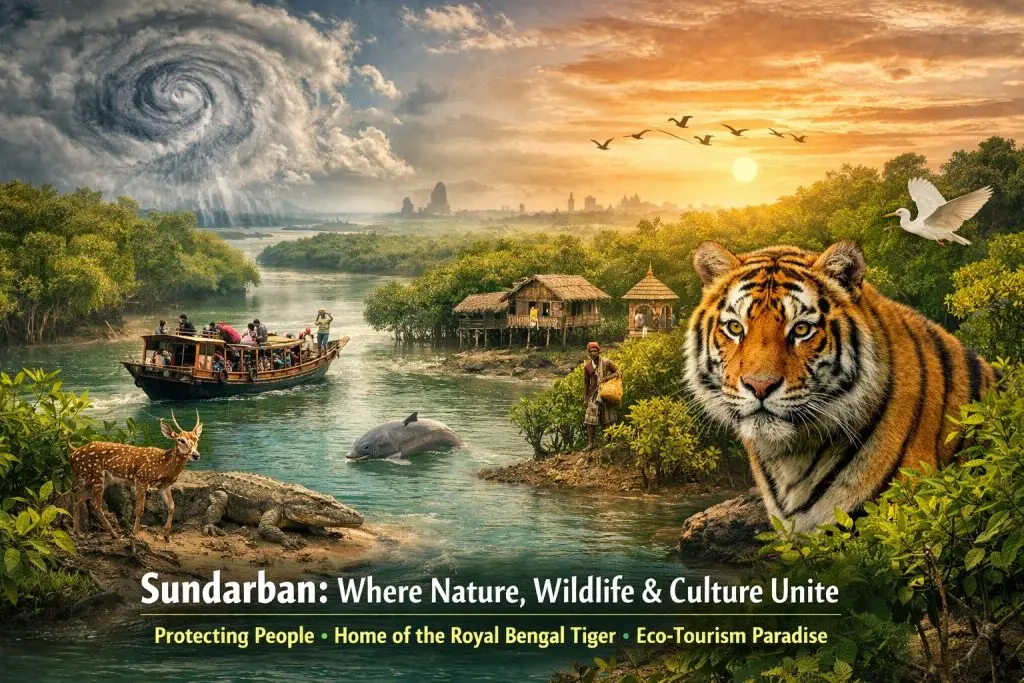
Located in the southern coastal region of Bangladesh and extending into India, the Sundarban is the largest mangrove forest on Earth and one of the most mysterious natural regions in the world.
This incredible forest is globally famous as the home of the Royal Bengal Tiger 🐯, but its importance goes far beyond that. It protects millions of people from cyclones, supports rare wildlife, preserves ancient culture, and plays a crucial role in fighting climate change 🌍.
For travelers in 2026, the Sundarban is one of the best eco-tourism destinations in South Asia, offering river cruises, wildlife watching, forest trekking, photography, and cultural experiences you won’t find anywhere else.
📜 Full History of the Sundarban (Easy & Friendly)
🏺 Ancient History: The Birth of the Delta
Thousands of years ago, the Sundarban did not look like it does today. This region was formed by the Ganges, Brahmaputra, and Meghna rivers, which carried massive amounts of silt from the Himalayas 🏔️.
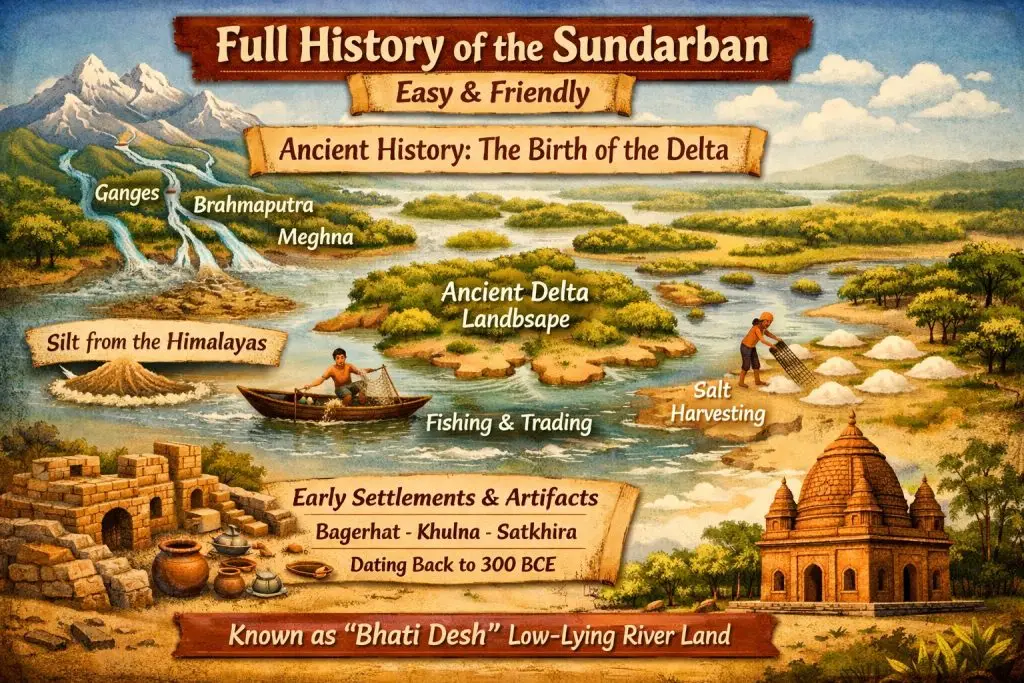
Over centuries, this silt created islands, mudflats, and river channels. Ancient people lived along the riverbanks, fishing, trading, and collecting salt. Archaeological evidence near Bagerhat, Khulna, and Satkhira suggests human activity dating back to 300 BCE.
Early Hindu kingdoms called this region “Bhati Desh”, meaning low-lying river land.
🛕 Mythology & Folk Beliefs (Very Important!)
The Sundarban is deeply connected with myths and folklore 📖.
The most powerful legend is Bonbibi, the forest goddess. She is worshipped by both Hindus and Muslims, which is rare and beautiful 🤝. People believe Bonbibi protects forest workers—honey collectors, fishermen, and woodcutters—from tigers and dangers.
Another feared figure is Dakshin Rai, the tiger god. According to belief, tigers are his messengers 🐅.
👉 These stories teach respect for nature, not domination.
🕌 Mughal Period
During the Mughal era (16th–18th century), the Sundarban remained mostly wild. Dense forests, crocodiles 🐊, and tigers made large settlements impossible.
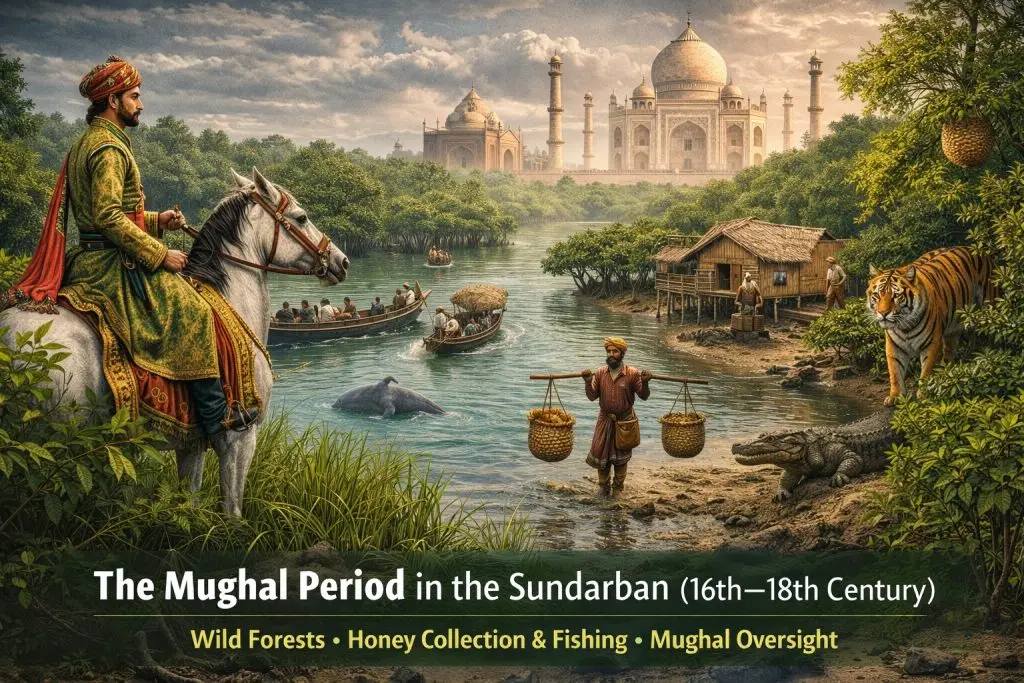
Some land was cleared for farming, but most of the forest stayed untouched. Local people depended on fishing, honey collection, and forest resources.
🇬🇧 British Colonial Era
The British began mapping the Sundarban in the late 1700s. In 1875, large areas were declared Reserved Forests, which helped protect the forest from complete destruction.

This was one of the earliest forest conservation efforts in South Asia 🌱.
🌍 Modern Era & UNESCO Status
- 1977 – Declared Wildlife Sanctuary
- 1992 – Ramsar Wetland Site
- 1997 – UNESCO World Heritage Site
- Today – Biosphere Reserve & climate shield
🌱 Geography & River System of the Sundarban
The Sundarban is one of the most geographically unique regions on Earth 🌍. It covers an area of approximately 10,000 square kilometers, stretching across the southern coastal belt of Bangladeshand extending into India.
What makes the Sundarban truly special is that it is not a single block of land, but a vast network of islands, rivers, canals, creeks, and tidal waterways—with more than 400 interconnected rivers and channelsflowing through it 🚤.
These rivers are part of the great Ganges–Brahmaputra–Meghna delta system, which constantly reshapes the landscape. The forest exists in a state of continuous change, as land is created and eroded by the movement of water. Some islands disappear within decades, while new mudflats slowly rise from the riverbeds.
🌊 Daily Tidal Flooding
One of the most defining features of the Sundarban is its daily tidal cycle. The forest is flooded twice a day—once during high tide and once during low tide. Seawater from the Bay of Bengal flows deep into the forest, submerging large areas, and then retreats again.
This regular flooding brings nutrients but also creates harsh living conditions. Only specially adapted plants and animals can survive here. For visitors, this means the landscape looks completely different depending on the time of day—sometimes dry and walkable, and other times fully underwater 🌊.
🧂 Salty and Freshwater Mix
The Sundarban lies in a transition zone between freshwater rivers and salty seawater. As a result, different areas of the forest experience varying salinity levels. Some parts receive more freshwater from upstream rivers, while others are heavily influenced by seawater.
This mix of salt and freshwatercreates multiple micro-ecosystems within the forest. Certain plant species grow only in low-salinity zones, while others thrive in high-salinity areas. This diversity is one of the reasons the Sundarban supports such rich wildlife 🌿.
🌳 Mangrove Roots Above Water
Mangrove trees in the Sundarban have evolved extraordinary root systems to survive in waterlogged, oxygen-poor soil. Many species have aerial roots that rise above the water surface, allowing them to breathe even during floods.
These tangled roots stabilize the soil, prevent erosion, and provide shelter for fish, crabs, and small animals 🦀🐟. They also act as natural barriers against storm surges.
🏝️ Mudflats, Islands & Natural Defense
The Sundarban landscape is filled with mudflats and low-lying islandsformed by sediment deposits. These muddy areas may look empty, but they are full of life—home to birds, crabs, and microorganisms 🐦.
Together, the rivers, tides, and mangroves form a natural shieldthat protects coastal Bangladesh from cyclones and tidal waves 🌪️. Without this unique geography, millions of people living nearby would face far greater risks.
🐯 Wildlife of the Sundarban 🌿
The Sundarban, the world’s largest mangrove forest and aUNESCO World Heritage Site, is a biodiversity hotspot that supports an extraordinary variety of wildlife. Spanning southern Bangladesh and eastern India, this unique ecosystem of tidal rivers, mudflats, and dense mangroves provides shelter to some of the most fascinating animals on Earth.
🐯 Famous Animals
The Sundarban is best known as the home of the Royal Bengal Tiger, the apex predator of the mangrove forest. These tigers are exceptional swimmers and are often seen crossing wide rivers in search of prey. Unlike other tigers, they have adapted to saline water and mangrove terrain. Spotted deer (Chital) are the most common prey species and are frequently seen grazing along riverbanks. Wild boars roam the forest floor, feeding on roots and small animals, while Rhesus monkeys are commonly found in mangrove trees near waterways. The elusive Fishing Cat, a skilled hunter, survives by catching fish and crabs in shallow waters.
🐊 Reptiles
Reptiles are a vital part of the Sundarban ecosystem. The fearsome Estuarine Crocodile, the largest living reptile in the world, inhabits tidal rivers and creeks. Water monitor lizardscan often be spotted basking on muddy banks, while pythons silently move through dense vegetation. The King Cobra, one of the world’s longest venomous snakes, also inhabits this forest, preying on other snakes and small animals.
🐬 Aquatic Life
The waterways of the Sundarban support rich aquatic biodiversity. Rare species such as the Irrawaddy Dolphinand the endangered Ganges River Dolphin thrive in the brackish rivers. Mudskippers, unique fish capable of surviving both on land and in water, are a common sight on mudflats. Numerous species of crabs and shrimp form the backbone of the aquatic food chain and support local fishing communities.
🐦 Birds (300+ Species)
Over 300 species of birds make the Sundarban a paradise for birdwatchers. Majestic White-bellied Sea Eagles soar above rivers, while rare birds like the Masked Finfoot hide among mangrove roots. Colorful kingfishers, graceful herons, and large storks are commonly seen feeding along waterways, adding vibrant life to this extraordinary forest.
🗓️ Best Time to Visit Sundarban (2026)
| Season | Advice |
|---|---|
| Nov – Feb | ⭐ Best time (cool & dry) |
| Mar – May | Hot, good wildlife |
| Jun – Sep | ❌ Avoid (monsoon) |
| Oct | Weather improving |
🚍 How to Reach the Sundarban (Bangladesh)
From Dhaka:
- Bus / Train to Khulna🚆
- Launch or road to Mongla Port
- Tourist boat into forest 🚤
🎟️ Entry Permit & Rules
- Forest entry permit (mandatory)
- Armed forest guard (required)
- Camera permit (extra)
👉 Tour operators handle all permissions.
🏞️ Top Tourist Spots in the Sundarban 🌿
The Sundarban, the world’s largest mangrove forest and a UNESCO World Heritage Site, is one of Bangladesh’s most captivating eco-tourism destinations. Rich in wildlife, rivers, and cultural heritage, the Sundarban offers visitors a rare opportunity to explore nature in its purest form. Several key tourist spots stand out for their natural beauty, biodiversity, and cultural significance.
Kotka Wildlife Sanctuaryis one of the most popular destinations in the Sundarban. It is famous for its rich wildlife, including spotted deer, wild boars, monkeys, and a wide variety of birds. Kotka also features wooden watchtowers that allow visitors to safely observe animals in their natural habitat. The nearby forest trails and canopy walks provide an immersive jungle experience, while the coastal landscape offers breathtaking views of the Bay of Bengal.
Karamjal Eco Center, located near Mongla Port, serves as the main entry point for many tourists. This eco-tourism center focuses on conservation and education, offering visitors insight into mangrove ecosystems, forest protection, and local wildlife. Well-marked walking paths, observation decks, and small animal enclosures make Karamjal ideal for short visits and family trips.
Hiron Point (Nilkamal) is a renowned wildlife observation area and a UNESCO-recognized monitoring station. It is one of the best places in the Sundarban to spot Royal Bengal Tigers, crocodiles, deer, and migratory birds. The serene rivers and dense mangroves surrounding Hiron Point create a peaceful atmosphere, perfect for nature photography and birdwatching.
Dublar Char 🐟 is a remote island located in the southern part of the Sundarban and is famous for its seasonal fishing activities. Every year, fishermen gather here during the fishing season, creating a vibrant temporary settlement. The island is also known for its dried fish production, scenic beaches, and the annual Rash Mela, a religious festival that attracts thousands of visitors.
Jamtola Sea Beach offers a rare coastal experience within the mangrove forest. Known for its quiet and untouched beauty, this beach provides stunning sunrise and sunset views over the Bay of Bengal. The gentle waves, fresh sea air, and isolated surroundings make it a peaceful retreat for travelers seeking solitude.
The Bonbibi Temple holds deep cultural and spiritual importance for local communities. Dedicated to Bonbibi, the guardian deity of the Sundarban, the temple symbolizes harmony between humans and nature. Forest workers and fishermen visit the shrine to seek protection before entering the forest, reflecting the spiritual connection between people and the mangrove ecosystem.
🏨 Best 20 Hotels Near Sundarban (With Location & Phone)
📍 Mostly Khulna & Mongla
- Tiger Garden International Hotel
📍 Shibbari, Khulna
📞 +880 41-720051
- Hotel Castle Salam
📍 Gollamari, Khulna
📞 +880 41-810007
- City Inn Hotel
📍 KDA Avenue, Khulna
📞 +880 41-720666
- Hotel Royal International
📍 Sonadanga, Khulna
📞 +880 41-723344
- Hotel Pushpo Bilash
📍 Mongla
📞 +880 1712-345678
- Hotel Noorjahan
📍 Mongla
📞 +880 1911-223344
- Western Inn International
📍 Sonadanga
📞 +880 41-731111
- Hotel Millennium
📍 Khulna
📞 +880 41-811999
- Hotel Rose Garden
📍 Khulna
📞 +880 41-725555
- Hotel Prime
📍 Khulna
📞 +880 1711-998877
- Hotel Green City – Khulna
- Hotel Sky View – Khulna
- Hotel Nest– Khulna
- Hotel Dream International – Khulna
- Hotel Comfort Inn– Khulna
- Hotel City Point – Khulna
- Hotel Rupsha – Rupsha Ghat
- Hotel Jashore View– Jashore
- Hotel Royal Tulip – Khulna
- Hotel Placid – Khulna
🍽️ Best Food & Restaurants Near Sundarban
🍛 Must-Try Foods
- Crab curry 🦀
- Prawn malai curry
- Shutki bhorta
- Sundarban honey 🍯
- Coconut fish curry
🍽️ Popular Restaurants
- Tiger Garden Restaurant
- Castle Salam Dining
- Hungry Bird
- Panshi Restaurant
- Rupsha Fish House
- Boithok Khana
- River View Restaurant (Mongla)
⚠️ Safety Tips (Very Important!)
- Always go with licensed tour operators
- Never walk alone 🚫
- No plastic inside forest ♻️
- Respect wildlife & silence rules
- Follow forest guards strictly
🌍 Why the Sundarban Is Important for the World
- Natural cyclone shield 🌪️
- Carbon absorber 🌱
- Protects coastal Bangladesh
- Home to rare species
- Climate change defense system
🌿 Final Words
The Sundarban, the world’s largest mangrove forest, is not just a tourist destination—it is a living lesson 📘 in nature, balance, and sustainability. As one of the most valuable parts of Bangladesh’s natural heritage, the Sundarban plays a crucial role in protecting the coastal ecosystem, supporting biodiversity, and reducing the impact of cyclones and climate change.
This unique forest demonstrates the importance of ecological balance, where mangrove trees, rivers, wildlife, and local communities coexist in harmony. Home to the Royal Bengal Tiger, rare dolphins, reptiles, and over 300 bird species, the Sundarban highlights why wildlife conservation and responsible eco-tourism in Bangladesh are essential for the future.
The Sundarban also represents survival and adaptation. Its plants and animals have evolved to withstand saline water, tidal floods, and harsh weather conditions, making it one of the most resilient ecosystems in the world. At the same time, it supports thousands of people whose livelihoods depend on fishing, honey collection, and forest resources.
If you want to truly understand Bangladesh’s natural beauty, biodiversity, and environmental importance, the Sundarban must be on your travel list 💚. Visiting the Sundarban is not only a journey into nature but also a step toward appreciating and protecting one of the world’s most extraordinary ecosystems.